

Kirjahaku
Etsi kirjoja tekijän nimen, kirjan nimen tai ISBN:n perusteella.
1000 tulosta hakusanalla Eugene C. Kennedy
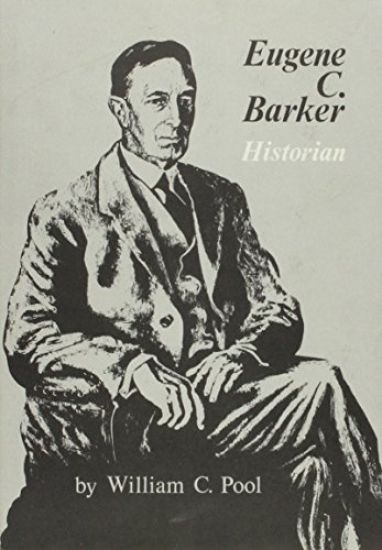
Eugene C. Barker, one of the most influential historians to teach at the University of Texas, has been described as "a granite monolith," "half sabre-toothed tiger and half St. Francis of Assisi," with "a mind like a surgeon's scalpel." The late William C. Pool, Barker's former student, presents a vivid portrait of Barker from knowledge-hungry youth to administrator, professor, leader, author, and historian.
Evaluation of and Standardization Tests for A.C. Signal Modifiers
Eugene C. Teasley William a. Moss
Hassell Street Press
2021
nidottu
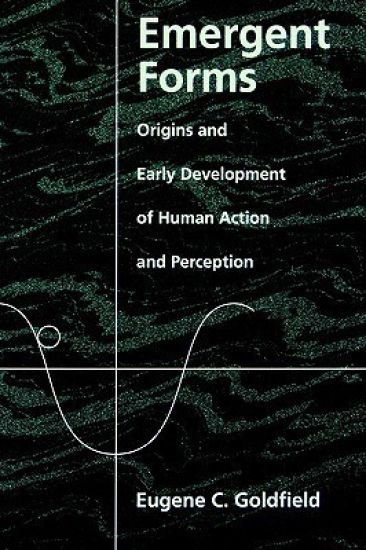
While it is often assumed that behavioural development must be based upon both physical law and the biological principles of morphogenesis and selection, forging a link between these disciplines has remained an elusive goal. This book addresses the question of how familiar human functional acts - eating, walking, manipulating objects, smiling, etc. - emerge during infancy due to both intrinsic dynamics and selective processes. The central thesis of the book is that during perceptually guided spontaneous activity, a variety of biodynamic devices for doing different kinds of work are assembled and adapted to specific tasks. Following the introductory chapters, which explore principles from the fields of dynamics and ecological psychology, the author introduces a theory of the development of action systems based upon both self-organisation in complex systems and perceptually guided selective processes. The theory is then examined in the context of development of each of several action systems. The book addresses many long-standing issues in behavioural development, including the apparent disappearance of so-called primitive behaviours, the emergence of new skills, and the role of the caregiver on skill acquisition. The prospects for extending the theory to atypical development and to other domains such as cognition and language are also considered.
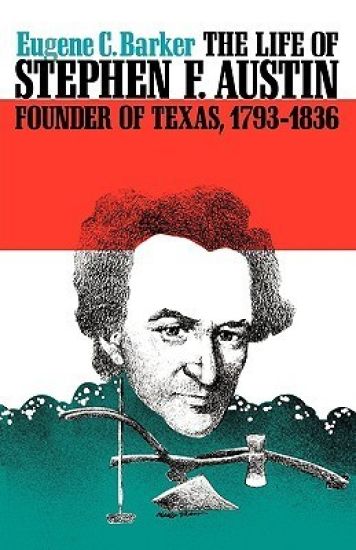
The Life of Stephen F. Austin, Founder of Texas, 1793-1836
Eugene C. Barker
University of Texas Press
1969
pokkari
Almost a hundred years after the death of Stephen F. Austin this first full-length biography was published. And for almost a quarter of a century-dividing his time between editing, teaching, textbook writing, and serving in various academic capacities-Eugene C. Barker pursued the study which resulted in The Life of Stephen F. Austin. His accomplishment has long been regarded as a fine example of biography in Texas literature.
This book provides comprehensive coverage of English-language serials in the area of religion. Designed both to help librarians make collection development decisions and aid scholars in determining whether a particular source will be useful for research purposes, Religion Journals and Serials includes over 300 separate entries arranged by subject. Each entry contains extensive bibliographic information as well as a descriptive and evaluative annotation. The bibliographic data is unusually complete and includes details such as date founded, title changes and mergers, frequency, price, circulation, manuscript selection criteria, availability of reprints, whether the journal includes book reviews, advertisements, or an index, target audience, and availability online or in indexing/abstracting services.

With the growth in interest in ethnographic materials, this is an essential publication for large public libraries serving patrons with interests in anthropology and art. Choice This indispensable directory of data on serials that contain information relevant to the study of ethnoart fills a gap long perceived by scholars of the indigenous arts of Africa, Oceania, and the Americas, an area of academic focus in which reference materials have been generally lacking. Culled from a database developed by compiler Eugene C. Burt to track potentially useful periodicals in connection with his publication, Ethnoarts Index, the volume is designed to aid those with an interest in ethnoart in determining which serial publications best suit their research needs. In the main directory users can find information on former titles, publisher, editorial focus, content features, and a relevancy rating on each of almost 700 individual serial titles that have an editorial focus related to ethnoart. Nine separate appendices list recommended titles in various categories as well as serials that include indexing, bibliographic or abstracting services, ceased titles, and more. Titles include publications from the fields of art history, anthropology, history, area studies, librarianship, museum studies, and general interest magazines.Prefatory material explains the book's organization and the rationale for its recommendations and is followed by the major portion of the volume, the database of serials arranged alphabetically by title. In each entry more than 20 categories of information are provided including an assigned relevancy rating that rates the level of relevancy of a publication to ethnoart based on the frequency that ethnoart-oriented articles, reviews, etc. appear. Several indices make collection development recommendations based on the relevancy ratings, with approximate cost information. Additional appendices list titles by country of publication, relevant ceased titles, and more. Finally, a unique, rotated-keyword-in-title index that includes subtitles and former titles provides easy access to the main database. All of this information will be welcomed by librarians, scholars, collectors, dealers, curators, and students of ethnoart. Highly recommended for librarians building ethnoart collections; for university libraries where courses on any aspect of ethnoart are taught; and for libraries of museums and research institutions with an interest in ethnoart.
Value by Design
Eugene C. Nelson; Paul B. Batalden; Marjorie M. Godfrey; Joel S. Lazar
John Wiley Sons Inc
2011
nidottu
Value by Design is a practical guide for real-world improvement in clinical microsystems. Clinical microsystem theory, as implemented by the Institute for Healthcare Improvement and health care organizations nationally and internationally, is the foundation of high-performing front line health care teams who achieve exceptional quality and value. These authors combine theory and principles to create a strategic framework and field-tested tools to assess and improve systems of care. Their approach links patients, families, health care professionals and strategic organizational goals at all levels of the organization: micro, meso and macrosystem levels to achieve the ultimate quality and value a health care system is capable of offering.
This title is part of UC Press's Voices Revived program, which commemorates University of California Press’s mission to seek out and cultivate the brightest minds and give them voice, reach, and impact. Drawing on a backlist dating to 1893, Voices Revived makes high-quality, peer-reviewed scholarship accessible once again using print-on-demand technology. This title was originally published in 1960.

This title is part of UC Press's Voices Revived program, which commemorates University of California Press’s mission to seek out and cultivate the brightest minds and give them voice, reach, and impact. Drawing on a backlist dating to 1893, Voices Revived makes high-quality, peer-reviewed scholarship accessible once again using print-on-demand technology. This title was originally published in 1960.


Miscellaneous Tests Of Electric Car Equipment
Eugene C. Parham; John C. Shedd
Kessinger Pub
2007
pokkari


The Enlightened Investor: A Personal Guide to Financial Independence
Eugene C. Wolfe
Greywolfe Publications
2012
nidottu
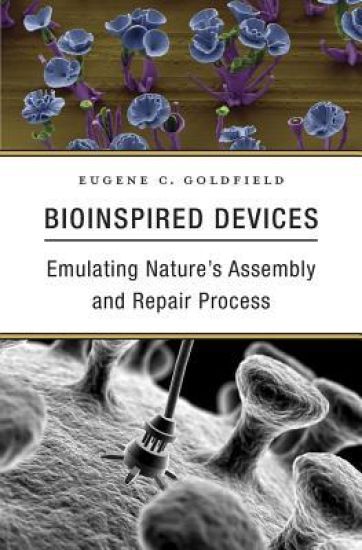
Robotic exoskeletons that allow stroke survivors to regain use of their limbs, 3D-printed replacement body parts, and dozens of other innovations still in schematic design are revolutionizing the treatment of debilitating injuries and nervous system disorders. What all these technologies have in common is that they are modeled after engineering strategies found in nature—strategies developed by a vast array of organisms over eons of evolutionary trial and error.Eugene Goldfield lays out many principles of engineering found in the natural world, with a focus on how evolutionary and developmental adaptations, such as sensory organs and spinal cords, function within complex organisms. He shows how the component parts of highly coordinated structures organize themselves into autonomous functional systems. For example, when people walk, spinal cord neurons generate coordinated signals that continuously reorganize patterns of muscle activations during the gait cycle. This self-organizing capacity is just one of many qualities that allow biological systems to be robust, adaptive, anticipatory, and self-repairing. To exploit the full potential of technologies designed to interact seamlessly with human bodies, properties like these must be better understood and harnessed at every level, from molecules to cells to organ systems.Bioinspired Devices brings together insights from a wide range of fields. A member of the Wyss Institute for Biologically Inspired Engineering, Goldfield offers an insider’s view of cutting-edge research, and envisions a future in which synthetic and biological devices share energy sources and control, blurring the boundary between nature and medicine.



The Handbook of Spiritual Development in Childhood and Adolescence
Eugene C. Roehlkepartain; Pamela Ebstyne King; Linda M. Wagener; Peter L. Benson
SAGE Publications Inc
2005
sidottu
"With sixty-seven scholars from four continents and many diverse disciplines contributing as authors to the volume; with fourteen scholars from around the world serving as editorial advisors; with financial support provided by the John Templeton Foundation via Search Institute; with frequent conversations occurring with colleagues at Fuller Theological Seminary; and with the careful attention of editorial work provided by Sage publications, this handbook provides a remarkable contribution toward those ends." —JOURNAL OF YOUTH AND THEOLOGY"Research into spiritual development during childhood and adolescence has . . . yearned for the stimulus of integration, cross-fertilization, and internationalization, across conceptual boundaries, methodological divisions, religious traditions, and local interests. The Handbook of Spiritual Development in Childhood and Adolescence sets out to meet this need and does so with skill and with authority, by identifying the key themes and by drawing on the best minds to address those themes. Research communities and faith communities have been well served by this pioneering initiative." - The Revd Professor Leslie J Francis PhD, ScD, DD, University of Wales, Bangor, UK The Handbook of Spiritual Development in Childhood and Adolescence breaks new ground by articulating the state of knowledge in the area of childhood and adolescent spiritual development. Featuring a rich array of theory and research from an international assortment of leading social scientists in multiple disciplines, this book represents work from diverse traditions and approaches – making it an invaluable resource for scholars across a variety of disciplines and organizations. Key Features: Presents a wealth of interdisciplinary theory and research, as well as proposals for future areas of inquiry, to help move spiritual development into a mainstream field of learning Provides the first comprehensive collection of social science research on spiritual development in childhood and adolescence to introduce the topic engagingly to students Features the works of scholars from around the world in multiple disciplines (psychology, sociology, anthropology, medicine, and educational philosophy) to present a diversity of traditions and approaches Includes introductions to the volume as well as to each section that provide overviews and syntheses of key concepts The Handbook of Spiritual Development in Childhood and Adolescence is a key resource for academics, researchers, and students in departments of Psychology, Family Studies, and Religious Studies. It is particularly useful for courses in Developmental Psychology, Human Development (especially child and adolescent development), Psychology of Religion, and Sociology of Religion. It also will be invaluable for professionals working with young people, including educators, religious leaders, and health practitioners.