

Kirjahaku
Etsi kirjoja tekijän nimen, kirjan nimen tai ISBN:n perusteella.
1000 tulosta hakusanalla Eugene Lanning
A history of the United States for young Americans from the landing of Columbus to the inauguration of Benjamin Harrison
Lynds Eugene Jones
Hansebooks
2017
pokkari
A history of the United States for young Americans from the landing of Columbus to the inauguration of Benjamin Harrison is an unchanged, high-quality reprint of the original edition of 1889. Hansebooks is editor of the literature on different topic areas such as research and science, travel and expeditions, cooking and nutrition, medicine, and other genres. As a publisher we focus on the preservation of historical literature. Many works of historical writers and scientists are available today as antiques only. Hansebooks newly publishes these books and contributes to the preservation of literature which has become rare and historical knowledge for the future.

The Doctor of the Happy Landings
Julia Lake; Eugene Kellersberger
Literary Licensing, LLC
2013
nidottu

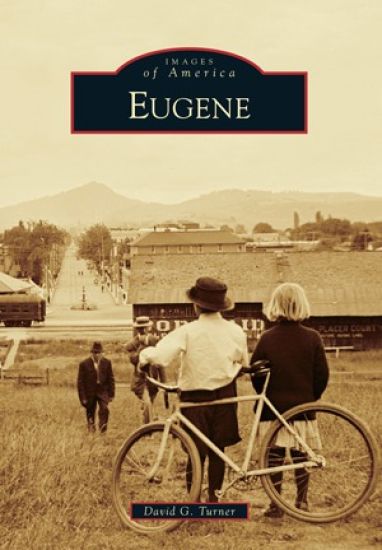
Since its beginnings in the 1850s, Eugene has attracted independent thinkers. Its early leaders sited the town in a picturesque location along the Willamette River and were confident that agriculture and timber businesses would guide its growth. As Eugene transformed from a settlement to a city, its citizens took an active voice in the creation of its identity, like advocating for a main railroad line to run through town and determining how the commercial district would branch out from the central downtown core. Today, the population continues to express strong and diverse feelings about politics, personal rights, and the environment as it shares the common experience of living and working in a place of great natural beauty.

Imagine this: you and your family, uprooted from the comfort of your home, thrust into an environment where the ruling elite have deemed you undesirable. Stripped of your freedom, you find yourself in captivity, surrounded by despair and hopelessness. But in the midst of darkness, a flicker of defiance burns within you. Will you succumb to the oppressive regime, or will you muster the courage to reclaim your freedom?Welcome to a world where survival isn't just about enduring, but about outsmarting, outmaneuvering, and outlasting those who seek to control you. This is the gripping premise of "Eugene," an action-packed dystopian adventure that unfolds in captivating rhyming verse. Written to enthrall young adult readers, this tale is a roller coaster ride of emotions, filled with suspense, bravery, and the unyielding spirit of resistance.

Francis Wey; precede d'une lettre a Eugene Sue / par Eugene de MirecourtDate de l'edition originale: 1858Sujet de l'ouvrage: Wey, Francis (1812-1882)"Collection: Les contemporains"Ce livre est la reproduction fidele d'une oeuvre publiee avant 1920 et fait partie d'une collection de livres reimprimes a la demande editee par Hachette Livre, dans le cadre d'un partenariat avec la Bibliotheque nationale de France, offrant l'opportunite d'acceder a des ouvrages anciens et souvent rares issus des fonds patrimoniaux de la BnF.Les oeuvres faisant partie de cette collection ont ete numerisees par la BnF et sont presentes sur Gallica, sa bibliotheque numerique.En entreprenant de redonner vie a ces ouvrages au travers d'une collection de livres reimprimes a la demande, nous leur donnons la possibilite de rencontrer un public elargi et participons a la transmission de connaissances et de savoirs parfois difficilement accessibles.Nous avons cherche a concilier la reproduction fidele d'un livre ancien a partir de sa version numerisee avec le souci d'un confort de lecture optimal. Nous esperons que les ouvrages de cette nouvelle collection vous apporteront entiere satisfaction.Pour plus d'informations, rendez-vous sur www.hachettebnf.fr

Francis Wey; precede d'une lettre a Eugene Sue / par Eugene de MirecourtDate de l'edition originale: 1858Sujet de l'ouvrage: Wey, Francis (1812-1882)Collection: Les contemporainsCe livre est la reproduction fidele d'une oeuvre publiee avant 1920 et fait partie d'une collection de livres reimprimes a la demande editee par Hachette Livre, dans le cadre d'un partenariat avec la Bibliotheque nationale de France, offrant l'opportunite d'acceder a des ouvrages anciens et souvent rares issus des fonds patrimoniaux de la BnF.Les oeuvres faisant partie de cette collection ont ete numerisees par la BnF et sont presentes sur Gallica, sa bibliotheque numerique.En entreprenant de redonner vie a ces ouvrages au travers d'une collection de livres reimprimes a la demande, nous leur donnons la possibilite de rencontrer un public elargi et participons a la transmission de connaissances et de savoirs parfois difficilement accessibles.Nous avons cherche a concilier la reproduction fidele d'un livre ancien a partir de sa version numerisee avec le souci d'un confort de lecture optimal. Nous esperons que les ouvrages de cette nouvelle collection vous apporteront entiere satisfaction.Pour plus d'informations, rendez-vous sur www.hachettebnf.fr

Eugene Onegin is the master work of the poet whom Russians regard as the fountainhead of their literature. Set in 1820s Russia, Pushkin's verse novel follows the fates of three men and three women. Engaging, full of suspense, and varied in tone, it contains a large cast of characters and offers the reader many literary, philosophical, and autobiographical digressions, often in a highly satirical vein. Eugene Onegin was Pushkin's own favourite work, and this new translation by Stanley Mitchell conveys the literal sense and the poetic music of the original.

Eugene Onegin is the master work of the poet whom Russians regard as the fountainhead of their literature. Set in 1820s imperial Russia, Pushkin's novel in verse follows the emotions and destiny of three men - Onegin the bored fop, Lensky the minor elegiast, and a stylized Pushkin himself - and the fates and affections of three women - Tatyana the provincial beauty, her sister Olga, and Pushkin's mercurial Muse. Engaging, full of suspense, and varied in tone, it also portrays a large cast of other characters and offers the reader many literary, philosophical, and autobiographical digressions, often in a highly satirical vein. Eugene Onegin was Pushkin's own favourite work, and it shows him attempting to transform himself from a romantic poet into a realistic novelist. This new translation seeks to retain both the literal sense and the poetic music of the original, and capture the poem's spontaneity and wit. The introduction examines several ways of reading the novel, and text is richly annotated. ABOUT THE SERIES: For over 100 years Oxford World's Classics has made available the widest range of literature from around the globe. Each affordable volume reflects Oxford's commitment to scholarship, providing the most accurate text plus a wealth of other valuable features, including expert introductions by leading authorities, helpful notes to clarify the text, up-to-date bibliographies for further study, and much more.

Eugene O’Neill’s One-Act Plays
Palgrave Macmillan
2012
sidottu
Eugene O'Neill, Nobel Laureate in Literature and Pulitzer Prize winner, is widely known for his full length plays. However, his one-act plays are the foundation of his work - both thematically and stylistically, they telescope his later plays. This collection aims to fill the gap by examining these texts, during what can be considered O'Neill's formative writing years, and the foundational period of American drama. A wide-ranging investigation into O'Neill's one-acts, the contributors shed light on a less-explored part of his career and assist scholars in understanding O'Neill's entire oeuvre.

A leading African American intellectual, Eugene Kinckle Jones (1885–1954) was instrumental in professionalizing black social work in America. Jones used his position was executive secretary of the National Urban League to work with social reformers advocating on behalf of African Americans and against racial discrimination. He also led the Urban League's efforts at campaigning for equal hiring practices and the inclusion of black workers in labor unions, and promoted the importance of vocational training and social work. Drawing on interviews with Jones's colleagues and associates, as well as recently opened family and Urban League archives, Felix L. Armfield blends biography with an in-depth discussion of the roles of black institutions and organizations. The result is a work that offers new details on the growth of African American communities, the evolution of African American life, and the role of black social workers in the years before the civil rights era.
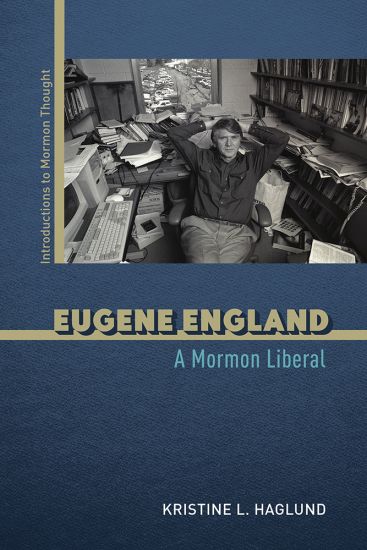
Eugene England championed an optimistic Mormon faith open to liberalizing ideas from American culture. At the same time, he remained devoted to a conservative Mormonism that he saw as a vehicle for progress even as it narrowed the range of acceptable belief. Kristine L. Haglund views England's writing through the tensions produced by his often-opposed intellectual and spiritual commitments. Though labeled a liberal, England had a traditional Latter-day Saint background and always sought to address fundamental questions in Mormon terms. His intellectually adventurous essays sometimes put him at odds with Church authorities and fellow believers. But he also influenced a generation of thinkers and cofounded Dialogue, a Mormon academic and literary journal acclaimed for the broad range of its thought. A fascinating portrait of a Mormon intellectual and his times, Eugene England reveals a believing scholar who emerged from the lived experiences of his faith to engage with the changes roiling Mormonism in the twentieth century.

Eugene Debs (1855-1926) is regarded by many as American history's premier labor advocate. He was the leader of the Socialist party, five-time Socialist candidate for president, outspoken on the rights of all workers, and a persistent defender of America's democratic traditions. Nick Salvatore's acclaimed biography offers a major reevaluation of Debs, the movements he launched, and his belief in American Socialism as an extension of the nation's democratic traditions. He also shows the relationship between Debs's public image and his private life as child, sibling, husband, and lover. Salvatore's Debs--weaknesses intact--emerges as a complex man, frustrated and angered by the glaring inequities of a new economic order, and willing to risk his freedom to preserve the essence of democratic society.

A leading African American intellectual, Eugene Kinckle Jones (1885–1954) was instrumental in professionalizing black social work in America. Jones used his position was executive secretary of the National Urban League to work with social reformers advocating on behalf of African Americans and against racial discrimination. He also led the Urban League's efforts at campaigning for equal hiring practices and the inclusion of black workers in labor unions, and promoted the importance of vocational training and social work. Drawing on interviews with Jones's colleagues and associates, as well as recently opened family and Urban League archives, Felix L. Armfield blends biography with an in-depth discussion of the roles of black institutions and organizations. The result is a work that offers new details on the growth of African American communities, the evolution of African American life, and the role of black social workers in the years before the civil rights era.

Eugene England championed an optimistic Mormon faith open to liberalizing ideas from American culture. At the same time, he remained devoted to a conservative Mormonism that he saw as a vehicle for progress even as it narrowed the range of acceptable belief. Kristine L. Haglund views England's writing through the tensions produced by his often-opposed intellectual and spiritual commitments. Though labeled a liberal, England had a traditional Latter-day Saint background and always sought to address fundamental questions in Mormon terms. His intellectually adventurous essays sometimes put him at odds with Church authorities and fellow believers. But he also influenced a generation of thinkers and cofounded Dialogue, a Mormon academic and literary journal acclaimed for the broad range of its thought. A fascinating portrait of a Mormon intellectual and his times, Eugene England reveals a believing scholar who emerged from the lived experiences of his faith to engage with the changes roiling Mormonism in the twentieth century.

In Eugene O'Neill's Creative Struggle, Doris Alexander gives us a new kind of inside biography that begins where the others leave off. It follows O'Neill through the door into his writing room to give a blow-by-blow account of how he fought out in his plays his great life battles—love against hate, doubt against belief, life against death—to an ever-expanding understanding. It presents a new kind of criticism, showing how O'Neill's most intimate struggles worked their way to resolution through the drama of his plays. Alexander reveals that he was engineering his own consciousness through his plays and solving his life problems—while the tone, imagery, and richness of the plays all came out of the nexus of memories summoned up by the urgency of the problems he faced in them. By the way of O'Neill, this study moves toward a theory of the impulse that sets off a writer's creativity, and a theory of how that impulse acts to shape a work, not only in a dramatist like O'Neill but also in the case of writers in other mediums, and even of painters and composers. The study begins with Desire Under the Elms because that play's plot was consolidated by a dream that opened up the transfixing grief that precipitated the play for O'Neill, and it ends with Days Without End when he had resolved his major emotional-philosophical struggle and created within himself the voice of his final great plays. Since the analysis brings to bear on the plays all of his conscious decisions, ideas, theories, as well as the life-and-death struggles motivating them, documenting even the final creative changes made during rehearsals, this book provides a definitive account of the nine plays analyzed in detail (Desire Under the Elms, Marco Millions, The Great God Brown, Lazarus Laughed, Strange Interlude, Dynamo, Mourning Becomes Electra, Ah, Wilderness!, and Days Without End, with additional analysis of plays written before and after.