

Kirjahaku
Etsi kirjoja tekijän nimen, kirjan nimen tai ISBN:n perusteella.
1000 tulosta hakusanalla Eugene O Bailey


Eugene O’Neill’s One-Act Plays
Palgrave Macmillan
2012
sidottu
Eugene O'Neill, Nobel Laureate in Literature and Pulitzer Prize winner, is widely known for his full length plays. However, his one-act plays are the foundation of his work - both thematically and stylistically, they telescope his later plays. This collection aims to fill the gap by examining these texts, during what can be considered O'Neill's formative writing years, and the foundational period of American drama. A wide-ranging investigation into O'Neill's one-acts, the contributors shed light on a less-explored part of his career and assist scholars in understanding O'Neill's entire oeuvre.

In Eugene O'Neill's Creative Struggle, Doris Alexander gives us a new kind of inside biography that begins where the others leave off. It follows O'Neill through the door into his writing room to give a blow-by-blow account of how he fought out in his plays his great life battles—love against hate, doubt against belief, life against death—to an ever-expanding understanding. It presents a new kind of criticism, showing how O'Neill's most intimate struggles worked their way to resolution through the drama of his plays. Alexander reveals that he was engineering his own consciousness through his plays and solving his life problems—while the tone, imagery, and richness of the plays all came out of the nexus of memories summoned up by the urgency of the problems he faced in them. By the way of O'Neill, this study moves toward a theory of the impulse that sets off a writer's creativity, and a theory of how that impulse acts to shape a work, not only in a dramatist like O'Neill but also in the case of writers in other mediums, and even of painters and composers. The study begins with Desire Under the Elms because that play's plot was consolidated by a dream that opened up the transfixing grief that precipitated the play for O'Neill, and it ends with Days Without End when he had resolved his major emotional-philosophical struggle and created within himself the voice of his final great plays. Since the analysis brings to bear on the plays all of his conscious decisions, ideas, theories, as well as the life-and-death struggles motivating them, documenting even the final creative changes made during rehearsals, this book provides a definitive account of the nine plays analyzed in detail (Desire Under the Elms, Marco Millions, The Great God Brown, Lazarus Laughed, Strange Interlude, Dynamo, Mourning Becomes Electra, Ah, Wilderness!, and Days Without End, with additional analysis of plays written before and after.
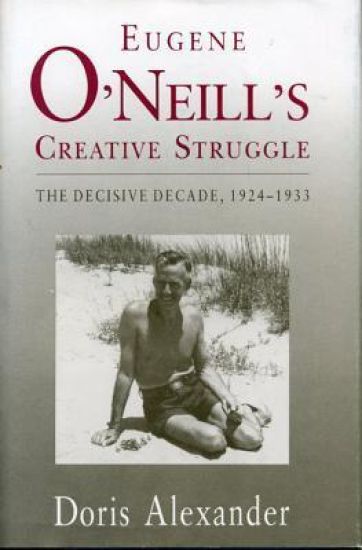
In Eugene O'Neill's Creative Struggle, Doris Alexander gives us a new kind of inside biography that begins where the others leave off. It follows O'Neill through the door into his writing room to give a blow-by-blow account of how he fought out in his plays his great life battles—love against hate, doubt against belief, life against death—to an ever-expanding understanding. It presents a new kind of criticism, showing how O'Neill's most intimate struggles worked their way to resolution through the drama of his plays. Alexander reveals that he was engineering his own consciousness through his plays and solving his life problems—while the tone, imagery, and richness of the plays all came out of the nexus of memories summoned up by the urgency of the problems he faced in them. By the way of O'Neill, this study moves toward a theory of the impulse that sets off a writer's creativity, and a theory of how that impulse acts to shape a work, not only in a dramatist like O'Neill but also in the case of writers in other mediums, and even of painters and composers. The study begins with Desire Under the Elms because that play's plot was consolidated by a dream that opened up the transfixing grief that precipitated the play for O'Neill, and it ends with Days Without End when he had resolved his major emotional-philosophical struggle and created within himself the voice of his final great plays. Since the analysis brings to bear on the plays all of his conscious decisions, ideas, theories, as well as the life-and-death struggles motivating them, documenting even the final creative changes made during rehearsals, this book provides a definitive account of the nine plays analyzed in detail (Desire Under the Elms, Marco Millions, The Great God Brown, Lazarus Laughed, Strange Interlude, Dynamo, Mourning Becomes Electra, Ah, Wilderness!, and Days Without End, with additional analysis of plays written before and after.

Within little more than three years of the opening of his first successful play on Broadway, Eugene O'Neill endured the deaths of his father, mother, and brother. These devastating losses plunged the young playwright into a period of guilt and profound mourning that consumed two decades of his life. In this enlightening critical biography, deeply informed by the insights of psychoanalysis, Stephen Black presents a new understanding of Eugene O'Neill's life (1888-1953), from his troubled childhood and adolescence through a glacially slow period of mourning for his family to his ultimate emergence from the preoccupation with grief and loss that had pervaded his life and his writings. Black argues that O'Neill consciously and deliberately used playwriting as a medium of self-psychoanalysis—an endeavor that led to the creation of some of the finest American plays ever written and, eventually, to a successful therapeutic outcome. Through close analysis of O'Neill's plays and literary writings, some five thousand surviving letters, other personal documents, and accounts of people who knew him, Black reaches new conclusions about important aspects of the playwright's life and work. He follows the slow course of O'Neill's mourning by studying the many grieving characters in O'Neill's plays, and when at last the playwright accepts his losses and moves on, his characters do likewise. The changed tone and form of O'Neill's final plays, including Hughie and A Moon for the Misbegotten, reflect the playwright's psychological and artistic growth and his hard-won victory over mourning and tragedy.

A major new biography of Eugene O'Neill, the Nobel Prize–winning dramatist who revolutionized American theater“Restores balance to the slightly skewed twenty-first century reputation of America’s greatest playwright. . . . [An] important story, perceptively recounted.”—Wendy Smith, Washington PostFinalist for the Los Angeles Times Book Prize This extraordinary new biography fully captures the intimacies of Eugene O’Neill’s tumultuous life and the profound impact of his work on American drama. Robert M. Dowling innovatively recounts O’Neill’s life in four acts, thus highlighting how the stories he told for the stage interweave with his actual life stories. Each episode also uncovers how O’Neill’s work was utterly intertwined with, and galvanized by, the culture and history of his time. Much is new in this extensively researched book: connections between O’Neill’s plays and his political and philosophical worldview; insights into his Irish upbringing and lifelong torment over losing faith in God; his vital role in African American cultural history; unpublished photographs, including a unique offstage picture of him with his lover Louise Bryant; new evidence of O’Neill’s desire to become a novelist and what this reveals about his unique dramatic voice; and a startling revelation about the release of Long Day’s Journey Into Night in defiance of his explicit instructions. This biography is also the first to discuss O’Neill’s lost play Exorcism (a single copy of which was only recently recovered), a dramatization of his own suicide attempt. Written with lively informality yet a scholar’s strict accuracy, Eugene O’Neill: A Life in Four Acts is a biography that America’s foremost playwright richly deserves.

Shaughnessy's Eugene O'Neill in Ireland: The Critical Response is both more and less than a detailed study of how O'Neill's plays have fared in his ancestral homeland. Part theater history and part influence study, part production sourcebook and part anthology of criticism, this volume touches on all the possible connections between the playwright and the country to which he was so closely tied. American LiteratureAlthough Eugene O'Neill felt that his Irishness was the single feature that came closest to explaining his work, the reaction of the Irish critics and public to his plays has never been systematically explored. This new study is the first to focus on Irish perceptions of O'Neill. It traces the discussion carried on by Irish critics, scholars, and theatre professionals and reveals, in the process, many exciting new insights into the nature and significance of the dramatist's work. A balanced and informative treatment, it includes the author's penetrating analysis of the ways O'Neill's Irish heritage affected his work, a selection of essays by Irish critics, and information on Irish productions of his plays.Shaughnessy first examines the dimensions of the playwright's Irish connections -- his ancestry and cultural heritage and his use of Irish-related themes, symbols, and language. He looks at the history of productions staged in Ireland between 1922 and 1987 and at the Irish perceptions of 'the O'Neill issue.' Drawing on reviews, personal interviews, questionnaires, and letters, Shaughnessy reveals the complexity of the controversy surrounding the playwright's work. Selected essays, editorials, reviews, and scholarly commentaries -- many reprinted here for the first time -- demonstrate the range of opinion and the continuing impact of O'Neill plays on Irish thought. A catalog of productions of O'Neill plays in both the Irish Republic and Northern Ireland provides information on the dates and locations of productions as well as casts and directors. This lively and informative work also includes a selection of superb photos of O'Neill productions staged by the Abbey Theatre, Dublin Gate Theatre, and Belfast Lyric Players.
This collection commemorating the centennial of American playwright Eugene O'Neill's birth presents a spectrum of critical views unusual for its variety and breadth of scholarship. Contributors from such diverse fields as Psychology, English Literature, Germanic Studies, Philosophy, the Classics, and Theatre Arts offer fresh perspectives on and penetrating interpretations of America's one indisputable world dramatist. Following editor Richard F. Moorton, Jr.'s introduction, which considers critical problems in O'Neill scholarship, the work is organized into three sections devoted to the nature of O'Neill's dramaturgy, the cultural and autobiographical sources for his art, and the challenges of bringing that art to the stage. The essays' range encompasses literary criticism of O'Neill, psychoanalytic and feminist interpretations of the plays, O'Neill in translation, and a look at the playwright from an actor's perspective. An essay on O'Neill and film contains an invaluable appendix of television adaptations of the playwright's work. Eugene O'Neill's Century opens with Moorton's vigorous defense of O'Neill's tragedy and locates its genius in the violation of intimate relationships, especially the family, a notion crucial to Aristotle's definition of tragedy. The six essays in the collection's first section, O'Neill's Tragic Art, analyze O'Neill's drama on its own terms. Found here are a new theory of O'Neill's conception of drama; a Russian Formalist approach to Long Day's Journey into Night; an analysis of the plays' verbal violence; a feminist psychoanalysis of Mourning Becomes Electra; a study of film adaptations of the plays; and a look at O'Neill in translation. The five essays of section two, Art and Life: Wellsprings of Genius, locate the influences that helped to shape the artist's work: both in his own life and in other works of art such as Aeschylus' Eumenides. Views of O'Neill's work from the perspective of the living theatre compose section three, O'Neill Onstage, in which the playwright's stage directions for the actor are examined in terms of the nature of his art; and the common pursuit of O'Neill scholars and theatrical practitioners is explored. Readers of O'Neill will find this presentation indispensable. It should be on the shelves of both university and public libraries.

The year 1988 was notable for being the centennial of playwright Eugene O'Neill's birth and a time of unprecedented democratization in the People's Republic of China and rapprochement with the West. In this optimal climate, a remarkable festival and conference devoted to O'Neill was held in Nanjing, China, orchestrated mainly by Haiping Liu, who secured the funds and cooperation necessary to lure noted O'Neill scholars and theatre artists from around the world. Liu selected and edited papers for publication after the conference, but he realized that this would be a difficult task conducted from China. At his invitation Lowell Swortzell, a conference participant, became co-editor, and in the dark days following the political upheaval in China in 1989, Swortzell assumed much of the burden of editing, organizing, clearing rights, and generally readying the final volume.The essays included capture the intellectual and artistic stimulation of the conference. Organized in divisions similar to the order in which the papers were delivered, they explore the major areas of O'Neill scholarship by some of the most renowned scholars from the United States, Western and Eastern Europe, Japan, and China. They emphasize O'Neill's international reputation and productions, particularly in Asia. Included is an open forum discussion of the festival productions, as well as photographs. The circumstances of the festival and conference are a story unto themselves, and in their individual introductions, the co-editors relate some of the background and convey some of the flavor of the events--providing insights into the continued appeal of O'Neill in China and the world.

Through a close re-examination of Eugene O’Neill’s oeuvre, from minor plays to his Pulitzer-winning works, this study proposes that O’Neill’s vision of tragedy privileges a particular emotional response over a more “rational” one among his audience members. In addition to offering a new paradigm through which to interpret O’Neill’s work, this book argues that O’Neill’s theory of tragedy is a robust account of the value of difficult theatre as a whole, with more explanatory scope and power than its cognitivist counterparts. This paradigm reshapes our understanding of live theatrical tragedy’s impact and significance for our lives. The book enters the discussion of tragic value by way of the plays of Eugene O’Neill, and through this study, Killian makes the case that O’Neill has refused to allow Plato to define the terms of tragedy’s merit, as the cognitivists have. He argues that O’Neill’s theory of tragedy is non-cognitive and locates the value of a play in its ability to trigger certain emotional responses from the audience. This would be of great interest to students and scholars of performance studies, literature and philosophy.

Through a close re-examination of Eugene O’Neill’s oeuvre, from minor plays to his Pulitzer-winning works, this study proposes that O’Neill’s vision of tragedy privileges a particular emotional response over a more “rational” one among his audience members. In addition to offering a new paradigm through which to interpret O’Neill’s work, this book argues that O’Neill’s theory of tragedy is a robust account of the value of difficult theatre as a whole, with more explanatory scope and power than its cognitivist counterparts. This paradigm reshapes our understanding of live theatrical tragedy’s impact and significance for our lives. The book enters the discussion of tragic value by way of the plays of Eugene O’Neill, and through this study, Killian makes the case that O’Neill has refused to allow Plato to define the terms of tragedy’s merit, as the cognitivists have. He argues that O’Neill’s theory of tragedy is non-cognitive and locates the value of a play in its ability to trigger certain emotional responses from the audience. This would be of great interest to students and scholars of performance studies, literature and philosophy.


Eugene O'Neill wrote his plays for a theatre in which the playwright would take a central position. He presented himself as a controlling personality both in the texts--in the form of ample stage directions--and in performances based on these texts. His plays address several audiences--reader, spectator, and production team--and scripts were often different from the published versions. This study examines O'Neill's multiple roles as a writer for many audiences. After a description of O'Neill's working conditions and the multiple audiences of the plays, this study examines the various formal aspects of the plays: titles, settings in time and place, names and addresses, language, and connections and allusions to other works. An examination of the plays follows, with particular emphasis on Bound East for Cardiff, Long Day's Journey Into Night, and A Touch of the Poet.

Eugene O'Neill and His Early Contemporaries
McFarland Co Inc
2011
pokkari
Eugene O'Neill was one of the great American playwrights of the twentieth century. Spanning the years 1910-1930, the 14 essays in this volume address the milieu he knew best--his friends in bohemian Greenwich Village, Provincetown, on waterfronts around the globe, and in the other beloved communities that comprised his early circle. At a time when O'Neill's creative powers were in their infancy, these influences formed the backdrop of his creative development and, consequently, demand more intensive study than they have received to date. This collection also highlights the larger modernist period and its impact on the First World War, the Little Theater Movement, the Abbey Players of Dublin, philosophical anarchism, and other contemporary upheavals that permeate his drama. Interspersed with rare period photos and illustrations, this volume contextualizes O'Neill's plays in the tumult of his historical and cultural moment, offering scholars a fresh approach to his life and art.

Eugene O'Neill and Oriental Thought
Southern Illinois Univ Pr
1982
sidottu


Eugene O'Neill - American Writers 45 was first published in 1965. Minnesota Archive Editions uses digital technology to make long-unavailable books once again accessible, and are published unaltered from the original University of Minnesota Press editions.

Eugene O'Neill Remembered
The University of Alabama Press
2016
sidottu
Eugene O’Neill Remembered offers new views into the playwright’s life by capturing the direct memories of those who were close to him through interviews, memoirs, and other recollections. These sixty-two remembrances create an unprecedented image of O’Neill. O'Neill is known principally as the author of some of the most significant plays in the American dramatic canon and as one of America's Nobel Laureates in literature. However, O'Neill's life has long been shrouded in myth. O'Neill rarely gave interviews and was not forthcoming about the details of his life. He also abetted some of the misconceptions about his youth by, for example, advocating the story that he was expelled from Princeton for throwing a rock through Woodrow Wilson's window or by exaggerating the amount of time he had spent at sea. The legend of the hard-drinking, tormented playwright with a grim view of life was further reinforced when Long Day's Journey into Night was produced in 1956, three years after his death instead of the twenty-five years he had insisted on. The portrayal of O’Neill as a tragic figure has been solidified in a number of biographies. The purpose of this collection, however, is to present O'Neill as others saw him and described him in their first-person accounts. In the course of these reminiscences, many of the vast and various narrators conflict with and contradict each other. Unlike other accounts of O’Neill’s life, much of the focus is on impressions instead of facts. The result is a revealing composite portrait of a key figure in twentieth-century American literary history. This extensive collection offers insights unavailable in any other book and will hold massive appeal for scholars and students interested in American literature, Eugene O’Neill, and theater history, as well as anyone keen to uncover intimate details of the life of one of America’s greatest writers.

Eugene O'Neill Remembered
THE UNIVERSITY OF ALABAMA PRESS
2021
nidottu
Eugene O’Neill Remembered offers new views into the playwright’s life by capturing the direct memories of those who were close to him through interviews, memoirs, and other recollections. These sixty-two remembrances create an unprecedented image of O’Neill. Known principally as the author of some of the most significant plays in the American dramatic canon and as one of America’s Nobel Laureates in literature, O'Neill rarely gave interviews and offered few details about himself. As a consequence, his life has long been shrouded in myth. He also abetted some of the misconceptions about his youth by, for example, advocating the story that he was expelled from Princeton for throwing a rock through Woodrow Wilson's window or by exaggerating the amount of time he had spent at sea. The legend of the hard-drinking, tormented playwright with a grim view of life was further reinforced when Long Day's Journey into Night was produced in 1956, three years after his death instead of the twenty-five years he had insisted on. The portrayal of O’Neill as a tragic figure has been solidified in a number of biographies. The purpose of this collection, however, is to present O'Neill as others saw him and described him in their first-person accounts. In the course of these reminiscences, many of the vast and various narrators conflict with and contradict each other. Unlike other accounts of O’Neill’s life, much of the focus is on impressions instead of facts. The result is a revealing composite portrait of a key figure in twentieth-century American literary history. This extensive collection offers insights unavailable in any other book and will hold massive appeal for scholars and students interested in American literature, Eugene O’Neill, and theater history, as well as anyone keen to uncover intimate details of the life of one of America’s greatest writers.