Kirjahaku
Etsi kirjoja tekijän nimen, kirjan nimen tai ISBN:n perusteella.
186 tulosta hakusanalla Eurydice Moore


The book is comprised of three divisions which are as follows: Division I - Not-for-Profit Business (NFP) Division II - Resource Development Division III- Funding and Grant WritingThe Not-for-Profit division gives information regarding how to set up a Not-for-Profit such as incorporation, the 501c3 determination status, and focus on the business side of the Not-for-Profit. The resource development division is the NEXT step once an organization has been incorporated and has obtained the 501c3 determination. The last division explains funding and grant writing which provides information on various fundraising projects, and explains the letter of intent's purpose as well as how to write it and a standard grant proposal.

Eurydice
Oxford University Press
2007
muu
for solo clarinet Eurydice is based on a work by the great Scottish artist Ian Hamilton Finlay - a series of six large stones installed in a garden in Provence, set in a sea of lavender (representing water) and inscribed with a simple poetic text, each line of which begins with 'Eurydice' and is followed by a natural phenomenon, 'the mountain-tops', 'the oaks' etc. The piece is in eleven sections. Each section begins with a refrain - 'Eurydice' - followed by differently characterized music for 'the woods', 'the clouds' etc.
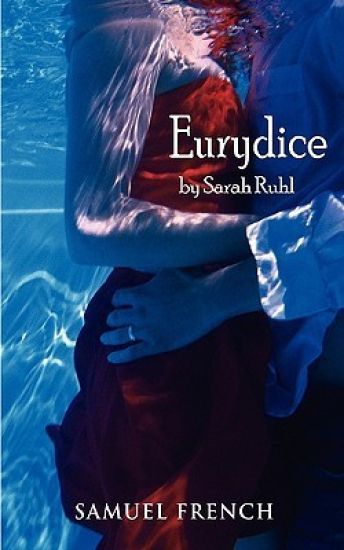
Dramatic Comedy / 5m, 2f / Unit Set In Eurydice, Sarah Ruhl reimagines the classic myth of Orpheus through the eyes of its heroine. Dying too young on her wedding day, Eurydice must journey to the underworld, where she reunites with her father and struggles to remember her lost love. With contemporary characters, ingenious plot twists, and breathtaking visual effects, the play is a fresh look at a timeless love story. "RHAPSODICALLY BEAUTIFUL. A weird and wonderful new play - an inexpressibly moving theatrical fable about love, loss and the pleasures and pains of memory." - The New York Times "EXHILARATING!! A luminous retelling of the Orpheus myth, lush and limpid as a dream where both author and audience swim in the magical, sometimes menacing, and always thrilling flow of the unconscious." - The New Yorker "Exquisitely staged by Les Waters and an inventive design team...Ruhl's wild flights of imagination, some deeply affecting passages and beautiful imagery provide transporting pleasures. They conspire to create original, at times breathtaking, stage pictures." - Variety

An inventive take on the classic myth, Eurydice is by the highly-acclaimed US playwright Sarah Ruhl and includes magical, dreamlike surrealism, lyrical beauty and heart-rending pathos. Eurydice is in love with Orpheus. Her dead father has advice for her wedding but his letters can't get through to the land of the living. At last one does. With her father's words in her hand, she crashes down a flight of stairs and wakes in the underworld, her memory wiped. How will she ever get home? With a style that is light and precise, but also wildly imaginative, this play sees Alice in Wonderland meet Greek myth. Eurydice is a playful and highly original take on a timeless tale of loss, grief and redemption. When she received her MacArthur Foundation 'genius' grant, she was given this verdict: "Sarah Ruhl, 32, playwright, New York City. Playwright creating vivid and adventurous theatrical works that poignantly juxtapose the mundane aspects of daily life with mythic themes of love and war."
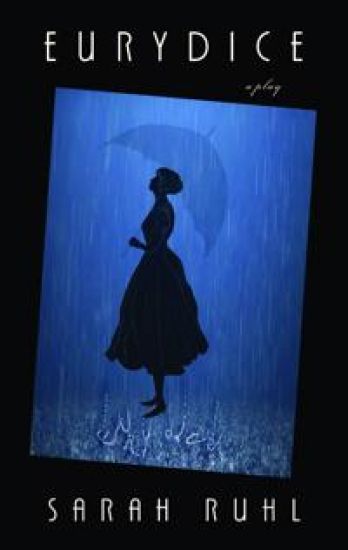
"Eurydice is a luminous retelling of the Orpheus myth from his beloved wife's point of view. Watching it, we enter a singular, surreal world, as lush and limpid as a dream--an anxiety dream of love and loss--where both author and audience swim in the magical, sometimes menacing, and always thrilling flow of the unconscious... Ruhl's theatrical voice is reticent and daring, accurate and outlandish." --John Lahr, New YorkerA reimagining of the classic myth of Orpheus through the eyes of its heroine. Dying too young on her wedding day, Eurydice journeys to the underworld, where she reunites with her beloved father and struggles to recover lost memories of her husband and the world she left behind.
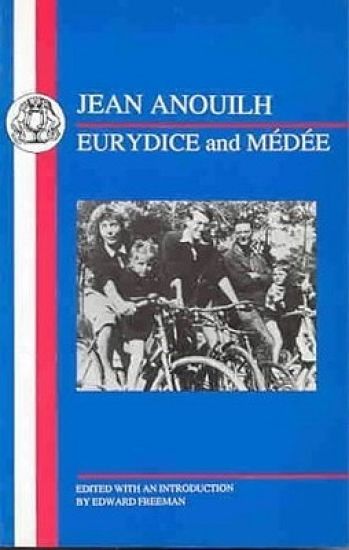
Throughout his long and prolific career as one of France's leading modern dramatists, Jean Anouilh has been fascinated by the theme of the fragility of youthful idealism. Is it possible for the illusions of adolescence to accommodate the compromises and hard truths of middle age? Can love survive in an absolute form, as the young may be led to hope by some of the most venerable fables of European literature and of Greek mythology? Indeed can love survive in any form whatsoever? Modern French theatre in particular has been drawn to Greek myth as a vehicle for an examination of eternal human dilemmas. Anouilh joins Cocteau, Giraudoux and Sartre at the head of a large group of French dramatists who used Greek themes in this way from the 1920s onwards. The particular theme that Anouilh explores is the anarchy created by the conflict between ego and Eros. Eurydice and Medee, although somewhat different in style (and instructively so for the student of Anouilh's theatre), may be regarded as complementary studies in the neo-Greek vein of the key Anouilh theme: 'Il y a l'amour bien sur. Et puis il y a la vie, son ennemie.'Eurydice and Medee represent two powerful treatments of this theme, which is central not only to Anouilh's work, but also, as the editor suggests in his introduction, to the personal life of this notoriously private author.

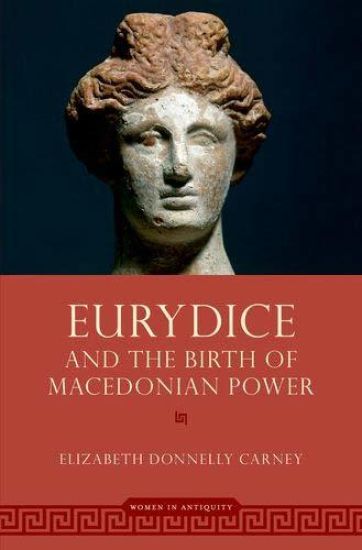
Eurydice and the Birth of Macedonian Power
Elizabeth Donnelly Carney
Oxford University Press Inc
2019
sidottu
Eurydice (c.410-340s BCE) played a part in the public life of ancient Macedonia, the first royal Macedonian woman known to have done so, though hardly the last. She was the wife of Amyntas III, the mother of Philip II (and two other short-lived kings of Macedonia), and grandmother of Alexander the Great, Her career marks a turning point in the role of royal women in Macedonian monarchy, one that coincides with the emergence of Macedonia as a great power in the Hellenic world. This study examines the nature of her public role as well as the factors that contributed its expansion and to the expanding power of Macedonia. Some ancient sources picture Eurydice as a murderous adulteress willing to attempt the elimination of her husband and her three sons for the sake of her lover, whereas others portray her as a doting and heroic mother whose actions led to the preservation of the throne for her sons. While the latter view is likely closer to historical reality, both the "good" and "bad" Eurydice traditions portray her as the leader of a faction, an active figure at court and in international affairs. Eurydice's activity, sinister or not, directly related to the fact that, at the time of her husband's death, the eldest of her three sons was barely old enough to rule and enemies, foreign and domestic, threatened. Two of Eurydice's sons were assassinated and the third died in battle. Eurydice functioned not only a succession advocate for her sons but she also played a part in the construction of the public image of the dynasty, both because of her own actions and because of the ways in which her son Philip II chose to depict and commemorate her. Archaeological discoveries since the 1980s enable us to better understand this development.
Eurydice and the Birth of Macedonian Power
Elizabeth Donnelly Carney
OXFORD UNIVERSITY PRESS INC
2022
nidottu
Eurydice (c.410-340s BCE) played a significant part in the public life of ancient Macedonia, the first royal Macedonian woman known to have done so, though hardly the last. She was the wife of Amyntas III, the mother of Philip II (and two other short-lived kings of Macedonia), and grandmother of Alexander the Great. Her career marks a turning point in the role of royal women in Macedonian monarchy, one that coincides with the emergence of Macedonia as a great power in the Hellenic world. This study examines the nature of her public role as well as the factors that contributed to its expansion and to the expanding power of Macedonia. Some ancient sources picture Eurydice as a murderous adulteress willing to attempt the elimination of her husband and her three sons for the sake of her lover, whereas others portray her as a doting and heroic mother whose actions led to the preservation of the throne for her sons. While the latter view is likely closer to historical reality, both the "good" and "bad" Eurydice traditions portray her as the leader of a faction, an active figure at court and in international affairs. Eurydice's activity, sinister or not, directly related to the fact that, at the time of her husband's death, the eldest of her three sons was barely old enough to rule and enemies, foreign and domestic, threatened. Two of Eurydice's sons were assassinated and the third died in battle. Eurydice functioned not only a succession advocate for her sons but she also played a part in the construction of the public image of the dynasty, both because of her own actions and because of the ways in which her son Philip II chose to depict and commemorate her. Drawing on recent archaeological discoveries and all surviving literary evidence, this portrait illuminates the life of a remarkable queen at the birth of a celebrated epoch.
![Eurydice; A Tragedy in Five Acts and in Verse. [By D. Mallet.]](/covers/9781241210847.jpg)
Eurydice; A Tragedy in Five Acts and in Verse. [By D. Mallet.]
Anonymous
British Library, Historical Print Editions
2011
pokkari

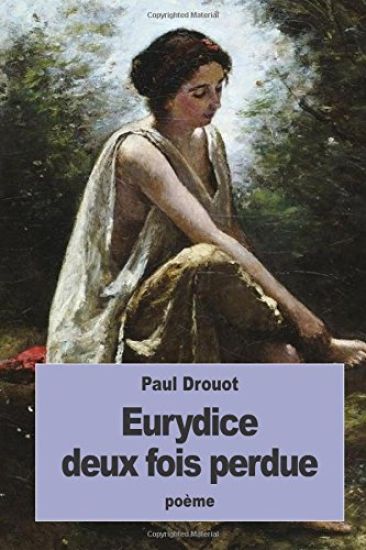
Eurydice deux fois perdue est une oeuvre que Paul Drouot n'eut pas le temps d'achever cause de sa mort en 1915. C'est Paule R gnier, une amie, qui fit diter le texte, en 1921. Il s'agit d'un po me en prose traitant la probl matique du deuil et la doctrine de l'orphisme montrant qu'il existe une sublimation possible apr s la double perte d'Eurydice.