Kirjojen hintavertailu. Mukana 11 238 394 kirjaa ja 12 kauppaa.

Kirjahaku

Etsi kirjoja tekijän nimen, kirjan nimen tai ISBN:n perusteella.

1000 tulosta hakusanalla Eva Elizabeth Rea

Willow Ashwood: The Girl Who Danced with Dragons
A story for teenagers & grown-ups-Realise your potential-Improve your relationship 1st Edition 2019"For some, reading this novel could be the best therapy they could do, without even realising they have had it " - Dr Richard Stevens, PsychologistThis is a story about a lonely teenager who is struggling with a rejecting mother and witnessing her parents' quarrels.The novel will help you to let go of an unhappy childhood and open new doors to friendships and personal growth.In this novel, covert psychology is interwoven into the fabric of the story. Reading it will help you to: Understand teenagers who struggle with emotional difficulties.Let go of the past and improve your relationships.Accompany Willow on her journey of self-discovery.Find out what can help you to achieve your goals.Running, love of dogs, creativity and belief in the extraordinary help Willow to survive her mother and make friends.Let Willow show you the way
Sung Birds

Sung Birds

Elizabeth Eva Leach

Cornell University Press
2006
sidottu
Is birdsong music? The most frequent answer to this question in the Middle Ages was resoundingly "no." In Sung Birds, Elizabeth Eva Leach traces postmedieval uses of birdsong within Western musical culture. She first explains why such melodious sound was not music for medieval thinkers and then goes on to consider the ontology of music, the significance of comparisons between singers and birds, and the relationship between art and nature as enacted by the musical performance of late-medieval poetry. If birdsong was not music, how should we interpret the musical depiction of birdsong in human music-making? What does it tell us about the singers, their listeners, and the moral status of secular polyphony? Why was it the fourteenth century that saw the beginnings of this practice, continued to this day in the music of Messiaen and others? Leach explores medieval arguments about song, language, and rationality whose basic terms survive undiminished into the present. She considers not only lyrics that have their singers voice the songs or speech of birds but also those that represent other natural, nonmusical, sounds such as human cries or the barks of dogs. The dangerous sweetness of birdsong was invoked in discussions of musical ethics, which, because of the potential slippage between irrational beast and less rational woman in comparisons with rational human masculinity, depict women's singing as less than fully human. Leach's argument comes full circle with the advent of sound recording. This technological revolution-like its medieval equivalent, the invention of the music book-once again made the relationship between music and nature an acute preoccupation of Western culture.
Guillaume De Machaut

Guillaume De Machaut

Elizabeth Eva Leach

Cornell University Press
2011
sidottu
At once a royal secretary, a poet, and a composer, Guillaume de Machaut was one of the most protean and creative figures of the late Middle Ages. Rather than focus on a single strand of his remarkable career, Elizabeth Eva Leach gives us a book that encompasses all aspects of his work, illuminating it in a distinctively interdisciplinary light. The author provides a comprehensive picture of Machaut's artistry, reviews the documentary evidence about his life, charts the different agendas pursued by modern scholarly disciplines in their rediscovery and use of specific parts of his output, and delineates Machaut's own poetic and material presentation of his authorial persona. Leach treats Machaut's central poetic themes of hope, fortune, and death, integrating the aspect of Machaut's multimedia art that differentiates him from his contemporaries' treatment of similar thematic issues: music. In restoring the centrality of music in Machaut's poetics, arguing that his words cannot be truly understood or appreciated without the additional layers of meaning created in their musicalization, Leach makes a compelling argument that musico-literary performance occupied a special place in the courts of fourteenth-century France.
Guillaume De Machaut

Guillaume De Machaut

Elizabeth Eva Leach

CORNELL UNIVERSITY PRESS
2014
pokkari
At once a royal secretary, a poet, and a composer, Guillaume de Machaut was one of the most protean and creative figures of the late Middle Ages. Rather than focus on a single strand of his remarkable career, Elizabeth Eva Leach gives us a book that encompasses all aspects of his work, illuminating it in a distinctively interdisciplinary light. The author provides a comprehensive picture of Machaut's artistry, reviews the documentary evidence about his life, charts the different agendas pursued by modern scholarly disciplines in their rediscovery and use of specific parts of his output, and delineates Machaut's own poetic and material presentation of his authorial persona. Leach treats Machaut's central poetic themes of hope, fortune, and death, integrating the aspect of Machaut's multimedia art that differentiates him from his contemporaries' treatment of similar thematic issues: music. In restoring the centrality of music in Machaut's poetics, arguing that his words cannot be truly understood or appreciated without the additional layers of meaning created in their musicalization, Leach makes a compelling argument that musico-literary performance occupied a special place in the courts of fourteenth-century France.
Medieval Sex Lives

Medieval Sex Lives

Elizabeth Eva Leach

CORNELL UNIVERSITY PRESS
2023
sidottu
Medieval Sex Lives examines courtly song as a complex cultural product and social force in the early fourteenth century, exploring how it illuminates the relationship between artistic production and the everyday lives of the elites for whom this music and poetry was composed and performed. In a focused analysis of the Oxford Bodelian Library's Douce 308 manuscript—a fourteenth-century compilation that includes over five hundred Old French lyrics composed over two centuries alongside a narrative account of elaborate courtly festivities centered on a week-long tournament—Elizabeth Eva Leach explores two distinct but related lines of inquiry: first, why the lyric tradition of "courtly love" had such a long and successful history in Western European culture; and, second, why the songs in the Bodleian manuscript would have been so important to the book's compilers, owners, and readers. The manuscript's lack of musical notation and authorial attributions make it unusual among Old French songbooks; its arrangement of the lyrics by genre invites inquiry into the relationship between this long musical tradition and the emotional and sexual lives of its readers. Combining an original account of the manuscript's contents and their likely social milieu with in-depth musical and poetic analyses, Leach proposes that lyrics, whether read or heard aloud, provided a fertile means of propagating and enabling various sexual scripts in the Middle Ages. Drawing on musicology, literary history, and the sociology and psychology of sexuality, Medieval Sex Lives presents a provocative hypothesis about the power of courtly songs to model, inspire, and support sexual behaviors and fantasies.
Performing Desire

Performing Desire

Elizabeth Eva Leach; Jonathan Morton

CORNELL UNIVERSITY PRESS
2025
sidottu
Performing Desire examines the intellectual and philosophical complexity of a monument of medieval literature: the mid-thirteenth-century Bestiaire d'amours of Richard de Fournival. Although the Bestiaire was recognized in its time as significant, as evinced by numerous surviving manuscript copies and its influence on other literary works, modern scholarship has tended to neglect it. Performing Desire remedies this omission by detailing the contributions of the Bestiaire to medieval literature and thought. Attending to the phenomenology, psychology, and philosophy of Fournival's Bestiaire, Elizabeth Eva Leach and Jonathan Morton reconsider the work as a literary experiment that explores erotic desire and the construction of a self. Leach and Morton further show that the Bestiaire is as much a meditation on sound and performance as it is a study of desire. Synthesizing methods from musicology, literary studies, and manuscript studies, Leach and Morton consider the complex and hybridized workings of text, image, sound, and cues for performance in the surviving manuscripts of the Bestiaire. Through their analysis, Leach and Morton find that the distinctive aspect of the Bestiaire's philosophical method is its self-conscious status as a performance between the oral and the literary, the voice and the page. It is this aspect, they contend, that left such a mark on the medieval European tradition of philosophical fiction. In Performing Desire, Richard de Fournival's hybrid text emerges as one of the most philosophically sophisticated and important works of medieval literature not only in French but in any language.
In the days of Queen Elizabeth. By: Eva March Tappan (Illustrated)

In the days of Queen Elizabeth. By: Eva March Tappan (Illustrated)

Eva March Tappan

Createspace Independent Publishing Platform
2017
nidottu
Eva March Tappan (December 26, 1854 - January 29, 1930) was a teacher and American author born in Blackstone, Massachusetts, the only child of Reverend Edmund March Tappan and Lucretia Log e. Eva graduated from Vassar College in 1875. She was a member of Phi Beta Kappa and an editor of the Vassar Miscellany. After leaving Vassar she began teaching at Wheaton College where she taught Latin and German from 1875 until 1880. From 1884-94 she was the Associate Principal at the Raymond Academy in Camden, New Jersey. She received graduate degrees in English Literature from the University of Pennsylvania. Tappan was the head of the English department at the English High School at Worcester, Massachusetts. She began her literary career writing about famous characters in history and developed an interest in writing children books. Tappan never married.
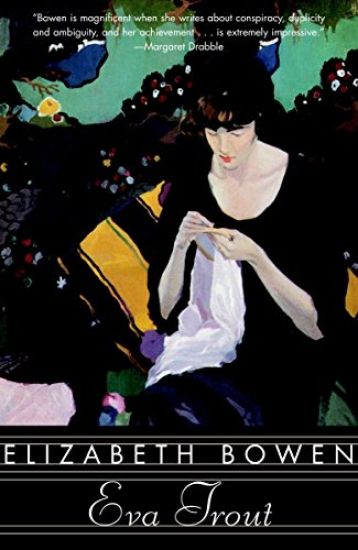
Eva Trout

Eva Trout

Elizabeth Bowen

Vintage
1999
pokkari
Eva Trout has a 'capacity for making trouble, attracting trouble, strewing trouble around her' that is endless. Eva Trout was Elizabeth Bowen's last completed novel, and in it her elegant style, her gift for social comedy and her intense sensibility combine to create one of her most formidable - and moving - heroines.
Eva Trout

Eva Trout

Elizabeth Bowen

Bantam Doubleday Dell
2003
pokkari
After an unhappy and fanciful childhood, orphan Eva Trout travels throughout Europe and America in search of love and serenity, in a new edition of the final novel by the acclaimed late author of The Death of the Heart. Reprint. 12,500 first printing.
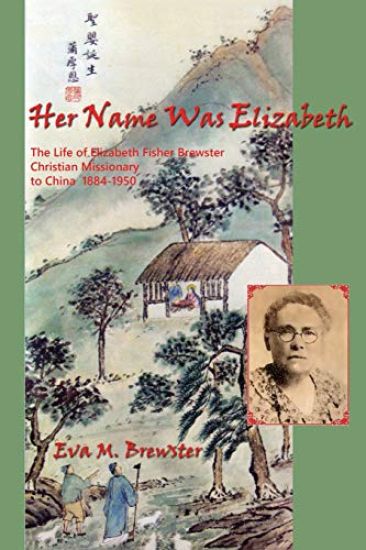
Her Name Was Elizabeth

Her Name Was Elizabeth

Eva M Brewster

Four Wild Geese Design
2018
pokkari
Part biography/spiritual memoir, part adventure tale, Her Name Was Elizabeth, by Eva M. Brewster is the inspiring story of Elizabeth Fisher Brewster, Christian missionary to China for 67 years. Elizabeth Brewster was one of the many single women missionaries in the late 19th and early 20th centuries who left their homes and sailed to far-off exotic places, dedicating themselves to lives of Christian service. In a time when women's roles were largely circumscribed by home and family, single women missionaries with few professional credentials and no special status thrust themselves into adventurous and sometimes heart-breaking lives of great toil and achievement.Elizabeth was just 22 years-old when she arrived in a China still ruled by the dying Manchu Dynasty. The Chinese masses lived lives of crushing toil in rural poverty with little hope of a better life. Among her many duties, it was the downtrodden women, who were considered unworthy of being educated, that were Elizabeth's strong concern. Travelling to country villages, she was paraded before the populace, who wished to see the "big heavenly feet" of the foreign lady missionary. Elizabeth labored mightily to change the cruel practice of foot-binding and the attitudes and customs that literally hobbled women, seeking to instill an ideal of education as the way forward for women.In 1890 Elizabeth married fellow Methodist missionary and minister, William Nesbitt Brewster. They settled in Hinghwa on the Min River near the coastal city of Fuzhou in the south of China, raising a family of six children and carrying on the work of the mission. The essence of their mission was "Christ made visible through deeds." Material things are holy, too, they believed, and they made every effort to improve the lot of their adopted countrymen. They persisted in the face of criticism from the mission board, some of whom felt that missionaries should limit their efforts to evangelism.When William died in 1916, Elizabeth stayed on another 34 years, leaving only when all foreigners were ousted in 1950 by the Communist regime. Entrusting her life and work into God's hands, like the story of Ruth in the Bible, she had made the Chinese people her own people. When China was plunged into civil war, Elizabeth strove to keep the mission's schools, hospitals and churches oases of neutrality. Under bombardment and imminent danger of total destruction, she kept her equilibrium, saying, "It is often necessary to go quietly on with work in hand, knowing the spirit will speak when it is necessary."Her "outsider" status as a missionary and her spirit-led decisions were, on several occasions, crucial in saving lives and averting catastrophes.The local Chinese people found much to admire in this woman of enduring selfless service. They called her "Miss Star" when she was a young, spirited woman freshly arrived in their country. Later they called her "Mother Shepherdess"and even "Friend of the Bandits." Elizabeth traveled safely in rural areas between feuding factions, displaying a white flag. All of the involved parties knew her as the kindly foreign missionary woman who had taught their countrymen and cared for them when they were children.Daughter-in-law Eva tells an engaging story of daily life; hearts touching hearts in a foriegn land. The narrative unfolds in the context of conversations between the two women - one an artist by temperament, the other a seasoned missionary and revered family elder. The tenderness of their relationship gives this book, written almost 70 years ago, a freshness and warmth which shines through and imparts timeless lessons of faith and hope to today's reader.