Kirjojen hintavertailu. Mukana 11 244 527 kirjaa ja 12 kauppaa.

Kirjahaku

Etsi kirjoja tekijän nimen, kirjan nimen tai ISBN:n perusteella.

1000 tulosta hakusanalla Evan McGilvray

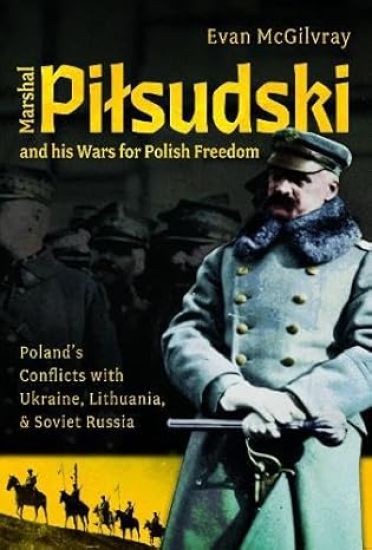
Marshal Pilsudski and his Wars for Polish Freedom

Marshal Pilsudski and his Wars for Polish Freedom

Evan McGilvray

PEN SWORD BOOKS LTD
2025
sidottu
Pilsudski was the leading proponent of armed Polish resistance to Tsarist Russian rule in the early years of the twentieth century. During the Russo-Japanese War he went to Japan to seek armed and funds for a Polish uprising. In WW1 he skilfully walked a perilous line. He raised the Polish Legion to fight alongside the Central Powers against the Russians. In the war’s closing stages he distanced himself from the Central Powers and secured independence for Poland. Having attained his great goal of a free Poland, he fought a series of wars. These little-known conflicts (with Ukraine and Lithuania) are illuminated by Evan McGilvray. When it became clear that Bolshevik Russia was preparing to invade Poland, Pilsudski launched a pre-emptive attack in 1920. Despite early successes, the Russians were able to gain the upper hand and were almost at the gates of Warsaw before Pilsudski’s masterful counterattack brought about ‘the miracle of the Vistula’ and turned the tide. This is a fascinating and long overdue study of a key figure in modern European history.
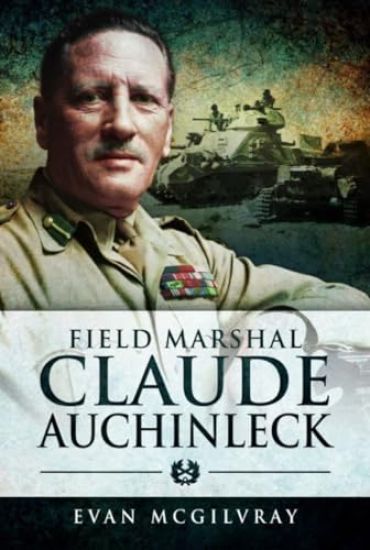
Field Marshal Claude Auchinleck

Field Marshal Claude Auchinleck

Evan McGilvray

PEN SWORD BOOKS LTD
2024
nidottu
Field Marshal Claude Auchinleck is a study not only of the individual but also of how the British Army, Indian Army and the Empire were transformed during his long military career. Auchinleck was commissioned into the Indian Army from 1904 and served with distinction against the Turks in Egypt and the Mesopotamian campaign, earning a DSO. Between the wars he was involved in the pacification of the Northwest Frontier (now Pakistan). In the Second World War he briefly led a division in the ill-fated Norway campaign before being appointed Commander-in-Chief, India. He is best remembered for his controversial stint in command in North Africa, where he replaced Wavell in July 1941\. He halted Rommel at the First Battle of El Alamein but was then replaced by Montgomery and resumed as C-in-C India, where his logistical support for Fourteenth Army was vital to success in Burma. Post-war he planned and oversaw Partition and British withdrawal from India. Here, as in North Africa, interference from his political masters added to the burdens of command. Evan McGilvray appraises Auchinleck’s long and varied career in its entirety.
Poland and the Second World War, 1938-1948

Poland and the Second World War, 1938-1948

Evan McGilvray

Pen Sword Military
2019
sidottu
The invasion of Poland by German forces (quickly joined by their then-allies the Soviets) ignited the Second World War. Despite determined resistance, Poland was quickly conquered but Poles continued the struggle to the very last day of the war against Germany, resisting the occupier within their homeland and fighting in exile with the Allied forces. Evan McGilvray, drawing on intensive research in Polish sources, gives a comprehensive account of Poland's war. He reveals the complexities of Poland's relationship with the Allies (forced to accept their Soviet enemies as allies after 1941, then betrayed to Soviet occupation in the post-war settlement), as well as the divisions between Polish factions that led to civil war even before the defeat of Germany. The author narrates all the fighting involving Polish forces, including such famous actions as the Battle of Britain, Tobruk, Normandy, Arnhem and the Warsaw Rising, but also lesser known aspects such as Kopinski's Carpathian Brigade in Italy, Polish troops under Soviet command and the capture of Wilhelmshaven on the last day of the war.
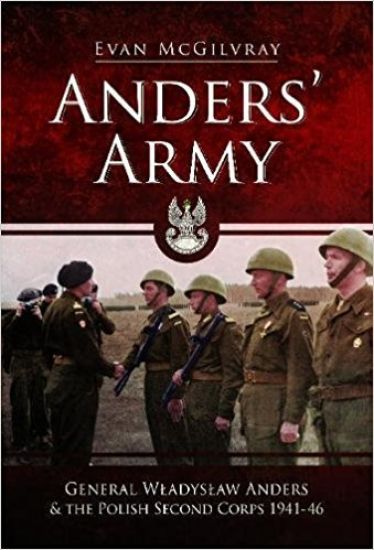
Anders' Army

Anders' Army

Evan McGilvray

Pen Sword Military
2018
sidottu
Along with thousands of his compatriots, Wladyslaw Anders was imprisoned by the Soviets when they attacked Poland with their German allies in 1939\. They endured terrible treatment until the German invasion of the Soviet Union in 1941 suddenly put Stalin in the Allied camp, after which they were evacuated to Iran and formed into the Polish Second Corps under Anders command. Once equipped and trained, the corps was eventually committed to the Italian campaign, notably at Monte Cassino. The author assesses Anders performance as a military commander, finding him merely adequate, but his political role was more significant and caused friction in the Allied camp. From the start he often opposed Sikorski, the Polish Prime Minister in exile and Commander in Chief of Polish armed forces in the West. Indeed, Anders was suspected of collusion in Sikorski s death in July 1943 and of later sending Polish death squads into Poland to eliminate opponents, charges that Evan McGilvray investigates. Furthermore, Anders voiced his deep mistrust of Stalin and urged a war against the Soviets after the defeat of Hitler.
Field Marshal Claude Auchinleck

Field Marshal Claude Auchinleck

Evan McGilvray

Pen Sword Military
2020
sidottu
Field Marshal Claude Auchinleck is a study not only of the individual but also of how the British Army, Indian Army and the Empire were transformed during his long military career. Auchinleck was commissioned into the Indian Army from 1904 and served with distinction against the Turks in Egypt and the Mesopotamian campaign, earning a DSO. Between the wars he was involved in the pacification of the Northwest Frontier (now Pakistan). In the Second World War he briefly led a division in the ill-fated Norway campaign before being appointed Commander-in-Chief, India. He is best remembered for his controversial stint in command in North Africa, where he replaced Wavell in July 1941\. He halted Rommel at the First Battle of El Alamein but was then replaced by Montgomery and resumed as C-in-C India, where his logistical support for Fourteenth Army was vital to success in Burma. Post-war he planned and oversaw Partition and British withdrawal from India. Here, as in North Africa, interference from his political masters added to the burdens of command. Evan McGilvray appraises Auchinleck's long and varied career in its entirety.
First Polish Armoured Division 1938-47

First Polish Armoured Division 1938-47

Evan McGilvray

PEN SWORD BOOKS LTD
2022
sidottu
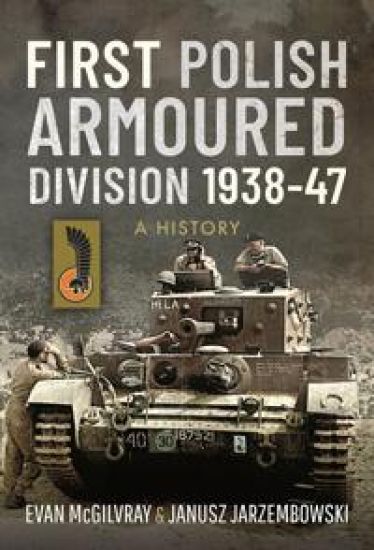
The First Polish Armoured Division was formed in Scotland in February 1942 from Polish exiles who had escaped first Poland and then France. Its commander, Stanislaw Maczek, and many of its men had previously served in Polish 10th Motorized Cavalry Brigade (10 BKS), which had taken part in the Polish invasion of Czechoslovakia in 1938 and given a good account of itself in the defence of Poland against German and Soviet invasion of 1939\. Under Maczek's leadership the division was trained and equipped along British lines in preparation for the invasion of France. Attached to 1st Canadian Army, the division was sent to Normandy in late July 1944\. It suffered heavily during Operation Totalize but went on to play a crucial role in preventing an orderly German withdrawal from the Falaise Pocket by its stand at Hill 262\. They then played their part in the advance across Western Europe and into Germany. This detailed history, supported by dozens of archive photos, concludes by looking at the often-poor treatment of Maczek and his men after the war.
De Gaulle and Churchill

De Gaulle and Churchill

Evan McGilvray

PEN SWORD BOOKS LTD
2024
sidottu
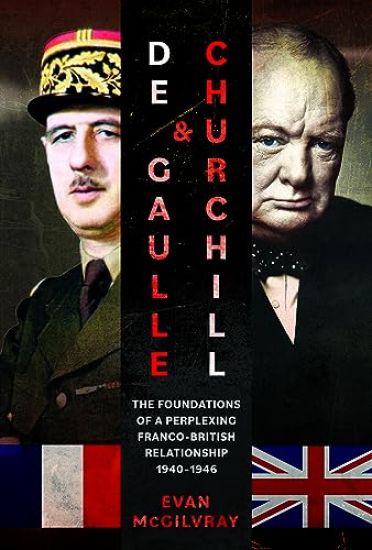
De Gaulle and Churchill examines the tense and complicated relationship between General de Gaulle as leader of the Free French on the one hand and Winston Churchill and the British Government on the other. Evan McGilvray shows that De Gaulle was a career soldier, not a politician by any means, prior to 1940 but stepped into the leadership vacuum after the fall of France to provide a vital figurehead and rallying point for the Free French movement. His experiences in WW1, where he had served with distinction and was decorated but then was captured and so missed the nadir of despair expressed in the mutiny of 1917, meant he did not share the general defeatism of his peers in 1940. De Gaulle had demonstrated between the wars that he understood modern warfare and the need for modernization and reform of the French forces. Churchill valued the Free French contribution, particularly the French colonies as bulwarks to the British Middle East and jumping-off points for a Mediterranean counteroffensive, but demonstrated his ruthless willingness to ride roughshod over French sensibilities. This was most famously demonstrated by the sinking of the French fleet to prevent it falling into German hands. The author traces their difficult relationship from the dark days of the Fall of France, to the final victory, with de Gaulle by then installed as head of the provisional government of the French Republic. This fascinating study concludes with the immediate post-war period, by which time Churchill and de Gaulle had developed a warmer, more mutually respectful relationship.
General Wladyslaw Sikorski, 1881–1943

General Wladyslaw Sikorski, 1881–1943

Evan McGilvray

PEN SWORD BOOKS LTD
2024
sidottu
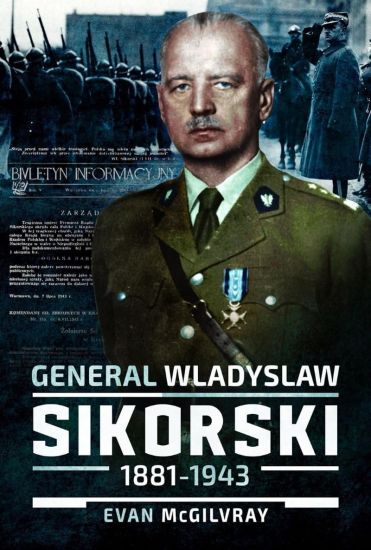
General Wladyslaw Sikorski was the Head of the wartime Polish Government and Polish Commander-in-Chief, 1939-1943\. Sikorski rose to prominence in Poland between 1910 and 1918 as part of the movement towards Polish independence, achieved in 1918\. In 1920 Sikorski was largely responsible for the defeat of the Red Army. In 1926 he fell from favour following a military coup. During this fallow period, 1926-1939, Sikorski travelled, mainly in France. He also wrote influential military-science treatises. In September 1939 Germany and the Soviet Union invaded and annexed Poland. Sikorski, his military offices refused by the Polish Government, fled to Romania. There he was intercepted by the French ambassador to Poland and taken to Paris where he established a Polish Government-in-Exile and rebuilt the Polish Army. In May 1940 France was overrun by Germany. Sikorski removed himself and his government to London. There he began to re-build the Polish army largely lost in France. Following the German invasion of the Soviet Union, Sikorski was forced by the British Government to accept the Soviets as allies. This led to a larger Polish army being formed in the Soviet Union and sent to the Middle East, commanded by General Anders who was to become a thorn in Sikorski’s side. By 1943, the two men were clearly enemies. Sikorski died in an air crash off Gibraltar. The cause has never been satisfactory established.
The Black Devils' March - a Doomed Odyssey

The Black Devils' March - a Doomed Odyssey

Evan McGilvray

Helion Company
2010
nidottu
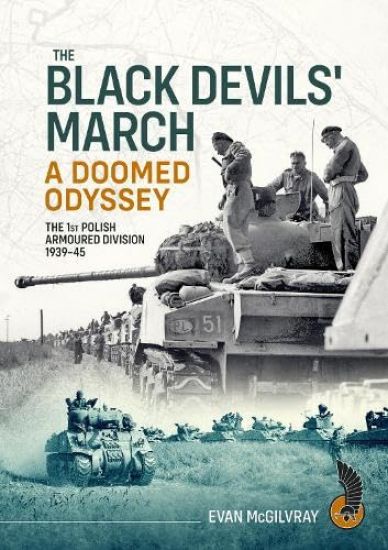
The Black Devils March is an account of how the 1st (and only) Polish Armoured Division in the West under the leadership of General Stanislaw Maczek, arose out of the ashes of defeat and while attempting to avoid the internal politics of the Polish Government in Exile, was able to return to Europe in August 1944. In Europe the Division achieved glory, honour and victory but was unable to liberate Poland owing to the politics of the post-war settlement in Europe. The account of the formation and combat service of the Division is fully researched from Polish, English and German sources, and includes training in Scotland, the unit's sharp introduction to warfare in the Normandy bocage, the Falaise Gap and Hill 262, the advance into Belgium and Holland, and final victory on German soil. The text is supported by nearly 100 photographs (many previously unpublished), maps, and detailed appendices, including a list of the Division's medal recipients. The politics of the Polish Army are examined as well as the historical legacy of the Polish soldier in exile. This helps the reader understand the frustration of the Poles as they sought to form an armoured unit - not only was it of value as part of the Polish Army fighting alongside the Allies, it was also of considerable political value to the Poles as they sought to preserve their dignity and sovereignty. The conclusion points to a rather hollow victory for the Poles by May 1945, as Germany may have been vanquished but Poland remained occupied, this time by the Soviet Union.
A Military Government in Exile

A Military Government in Exile

Evan McGilvray

Helion Company
2010
nidottu
This work examines the nature of the relationship between the British Government and the Polish Government-in-Exile, 1939–1945. The relationship was extremely difficult owing to the extremity of the time and the situations of the two governments. Before 1939 there had been little contact between Poland and Britain, however between 1939 and 1945 the two countries were joined in a common desire for the military defeat of Germany: this was virtually the only common goal that the two governments shared; Polish ambitions to see Poland restored to its pre-war frontiers were not shared with its major allies (Britain, the USA and the Soviet Union) after 1941. The question of differing objectives caused friction between the Western allies, the Soviet Union and the Polish Government-in-Exile. The Polish Government-in-Exile failed to recognise its true position in the alliance: it was very much a junior partner - just another minor European power and irritant. A key problem in the relationship between the British Government and the Polish Government-in-Exile was bound up in the lack of democracy present in the latter. Between 1926 and 1939 Poland had been ruled by a military clique and the signs were that little had changed in the mindset of many Poles, especially those military officers who arrived in exile after 1939. This situation vexed the British Government, which sought to work with democratically minded Poles, but found this pool to be limited owing to the continuing political influence of the Polish military in exile. This attitude worsened as the war progressed until eventually the Polish Government-in-Exile lost any relevance in the war against Germany.
A Military Government in Exile

A Military Government in Exile

Evan McGilvray

Helion Company
2013
sidottu
This work examines the nature of the relationship between the British Government and the Polish Government in Exile, 1939-1945. The relationship was extremely difficult owing to the extremity of the time and the situations of the two governments. Before 1939 there had been little contact between Poland and Britain. However between 1939 and 1945 the two countries were joined in a common desire for the military defeat of Germany: this was virtually the only common goal that the two governments shared; Polish ambitions to see Poland restored to its pre-war frontiers were not shared with the major allies (Britain, the USA and the Soviet Union) after 1941. The question of differing objectives caused friction between the Western allies, the Soviet Union and the Polish Government in Exile. As hosts the British Government was able to control the Polish Government-in-Exile but frequently found that the demands of the Soviet Government on the latter difficult to justify, although the British did so in order to maintain the unity of the alliance against Germany. However, the Polish Government-in-Exile failed to recognise its true position in the alliance: it was very much a junior partner– just another minor European power and irritant. Making full use of unpublished material and Polish sources, this is a detailed and lucid contribution to modern Polish and European history, including much information concerning the creation of the Polish Army following the end of the First World War, and the politics of the Army during the 1920s and 1930s, besides detailed coverage of its political role during the Second World War.
Man of Steel and Honour: General Stanislaw Maczek
This is a biography of one of the most undervalued commanders of the Second World War, General Stanislaw Maczek, a soldier overlooked by most military historians in the West both because he was Polish and above politics. Unlike most Polish commanders he rocked no boats and after his service was complete in 1947 he retreated into relative obscurity. When he died at the age of 102 he had left a single published book of his war memoirs and little else to the popular imagination. One had to be acquainted with his armoured division, the wartime 1st Polish Armoured Division in order to know anything of the man or even to have even heard of him. This book is an attempt to try to put the historical record right, at least in the English language, and place front and centre into the wartime historiography the story of an extraordinary man. Maczek's story is the story of 20th Century Poland and begins naturally enough with his birth in 1892, into a Poland that hadn't existed since 1795 when it was trisected between the three empires of Austrian, Russia and Prussia (later Germany). Maczek was born in the Austrian sector, which meant in 1914 he was conscripted into the Imperial Austrian Army, with which he served with great credit on the Italian Front, high in the Alps. It was this experience which was to serve Maczek well in his future career in the Polish Army after 1918. / Maczek should be remembered for his pioneering use of mixed armour and infantry units as well as the early use of commando-style units during the Polish border wars of 1918-1920. However his work was ignored despite its obvious success. He should also be recognised as being the saviour of the Normandy Campaign, which by August 1944 was seriously bogged down. It was feared that the German forces in Normandy might be able to flee over the River Seine and head eastwards towards Germany. A magnificent, stubborn and costly stand by the Polish 1st Armoured Division during August 1944 prevented this happening, and the Normandy Campaign was able to succeed. This is yet to be credited to the Poles in the imagination of the West. Maczek's division was later able to advance into Germany, fighting its way through the Low Countries. Maczek's command of the division and its combat service in North-West Europe 1944-45 is fully described, and represents, in particular, an important contribution to our knowledge of the Normandy Campaign. After the war, Maczek, now exiled and stateless and with his homeland seized by the Soviet Union, was stripped of his Polish citizenship by the Communists, and was left to bring up his young family on his wages as a barman. This is the story of a man who changed history, fully researched from archival and printed materials, and with a heavy reliance on original Polish language sources. The text is complemented by over 100 previously unpublished photographs, focusing on Maczek and the 1st Polish Armoured Division 1944-45.
Days of Adversity

Days of Adversity

Evan McGilvray

HELION COMPANY
2016
nidottu
This work is a re-examination of the decisions regarding the 1944 Warsaw Uprising made by the leadership of the underground Polish Army (AK), as well as the questionable attitudes of senior Polish commanders in exile in London. The questions raised are, was the uprising necessary and why was it so poorly conducted by a totally indifferent leadership? The challenge is made that the Polish leaders in Warsaw and in London were clearly unfeeling. In Warsaw the uprising was allowed to happen and was doomed from the very beginning owing to poor generalship. The Soviets can be seen rather than to have betrayed the Poles, to have behaved in the same manner as they had always behaved to the Poles and Poland, that is underhanded and with great deceit. Therefore why did the Warsaw Poles rise up when encouraged by the Soviets? The Poles should have known that it was a trick. Despite plans laid down by the Allies to support such uprisings, as had been the case in Paris during August 1944, the Red Army watched the AK be destroyed by the Germans, to save themselves the same job. Once the uprising failed, the Polish leadership went into what could only be described as ‘genteel’ captivity, compared with the fate of hundreds of thousands of their countrymen and women who were herded out of Warsaw by German armed forces and sent to concentration camps, illegal prisoner of war camps or forced into slave labour. In the West senior Polish commanders did not consider a 100% casualty rate to be unacceptable as they pushed for Allied flights to re-supply Warsaw. This callous disregard for life was part of the lack of understanding in the leadership of the reality of the Polish situation in 1944: the war was not about Poland but the complete defeat of Germany. If Polish freedom came out of this, then good, otherwise the Allies were not going to be diverted from the constant aerial bombardment of Germany, as the Allies swept eastward and westward towards Germany. This work is supplemented with Polish sources as well as interviews with five women who had been involved in the Warsaw Uprising as young women and girls in 1944. Now in their 80s these ladies kindly granted interviews with the author in Poland during 2012.
Narvik and the Allies

Narvik and the Allies

Evan McGilvray

Helion Company
2017
nidottu
This work is about the co-operation between the Allies in Norway between April and June 1940 by initially considering the military-politics of the period August 1939 until the German invasion of Norway in April 1940. Much of the work examines the role of the Independent Podhalian Rifle Brigade and its interaction and dependency on the Allies as the Polish troops found themselves under French command. Other aspects of the Norwegian Campaign are also explored including inter-service co-operation amongst the Allies, how the Western Allies were still uncertain who their enemy really was and how successful Narvik actually was and what it meant for the UK during the summer of 1940.
Red Trojan Horse

Red Trojan Horse

Evan McGilvray

Helion Company
2019
nidottu
The book is about how Colonel Zygmunt Berling, a disgruntled Colonel of the Polish inter-war army - once captured by the Red Army and imprisoned - betrayed his country whilst in captivity between 1939-1941, and after 1941 vied, in his mind with General Anders, for power in establishing a Polish Army out of the hundreds of thousands of Poles captive in the Soviet Union. After 1942 Anders took many of these Poles to the west and formed his own army, the so-called ‘Anders Army’ which fought alongside the Western Allies, notably in Italy but was doomed to remain in the West as exiles after 1946. Berling, in contrast, at the last moment deserted Anders and remained in the Soviet Union and helped to form a Polish army there. This army fought alongside the Red Army right into Berlin, but was never trusted by the Soviet government, nor was Berling. The army formed by Berling, gave a fig leaf of respectability for Soviet annexation of Poland and provided the base for the Polish Peoples’ Army.
Evan

Evan

Donald Tiffany Bliss

Lulu.com
2017
pokkari
In a highly personal account, the author, Don Bliss, tells how he coped with the sudden passing of his eldest son, Evan, at age 35. Evan was fulfilling his passion as a singer-songwriter as he pursued his day job as a health informatics specialist working on HIV/AIDS. Returning from Kenya where he was training Kenyan medical personnel, he suffered a pulmonary embolism after sixteen hours of flying. Bliss shares a tribute to his son and how, he, as a father, was enriched by Evan's life-his music, humor, independent thinking and insatiable curiosity, athletic prowess, and deep understanding and expression of love in all its dimensions. Sharing insights from family, mentors, classmates, bandmates, colleagues at work, and his fans, Bliss relates how much he has learned about the many impactful ways that Evan lived his 35 years to the fullest. He wrote and performed some 100 songs that expressed his insightful personal philosophy about life and human relationships, which deeply touched many.
Evan

Evan

Adrian Blake

Createspace Independent Publishing Platform
2017
nidottu
Mi nombre es Evan James. Soy un tipo encantador, divertido, sexy... En una palabra: seductor. Me encanta el sexo... con una o varias mujeres. Me acostaba con quien quer a sin tener que esforzarme demasiado. Ahora mi vida ha dado un giro inesperado. Ha aparecido en mi vida Ariana, una mujer que ha puesto mi mundo patas arriba y de la que no puedo separarme por m s que quiera. Pero hay un peque o problema: es la hermana peque a de Gabrielle, mi mejor amiga, y estoy seguro que no va a hacerle ninguna gracia que me acueste con su hermana...