Kirjojen hintavertailu. Mukana 11 224 866 kirjaa ja 12 kauppaa.

Kirjahaku

Etsi kirjoja tekijän nimen, kirjan nimen tai ISBN:n perusteella.

1000 tulosta hakusanalla Evrot

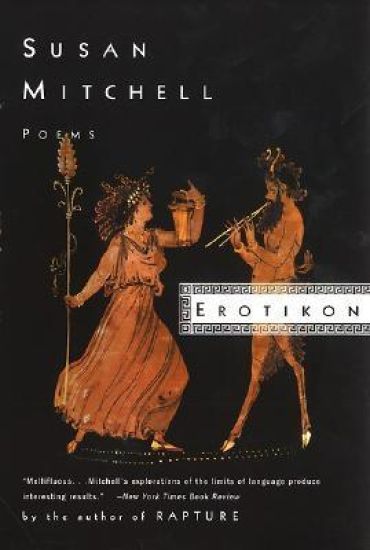
Erotikon: Poems

Erotikon: Poems

Susan Mitchell

HARPER PERENNIAL
2001
nidottu
How do we discover our deepest desires, those that at once elude and define us? In Erotikon, award-winning poet Susan Mitchell invites us to make that discovery -- and in the process, to understand our true selves. In language both staggeringly beautiful and wonderfully mischevious, Mitchell explores the primal, transformative power of our sexual appetites. Drawing us in like a lover through her sensual world, she moves from seduction to surrender to symbiosis and the ultimate communion we long for in our lives on earth.
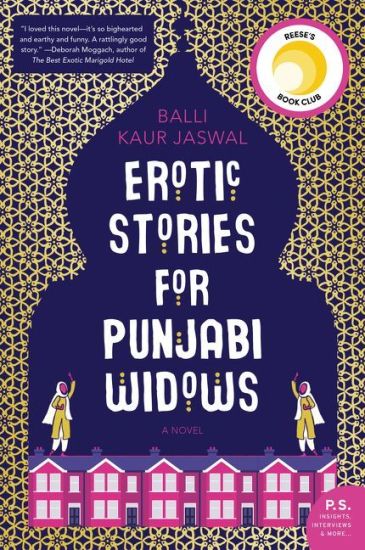
Erotic Stories for Punjabi Widows

Erotic Stories for Punjabi Widows

Balli Kaur Jaswal

William Morrow Company
2018
nidottu
Reese Witherspoon's Book Club Pick A lively, sexy, and thought-provoking East-meets-West story about community, friendship, and women's lives at all ages--a spicy and alluring mix of Together Tea and Calendar Girls.Every woman has a secret life . . .Nikki lives in cosmopolitan West London, where she tends bar at the local pub. The daughter of Indian immigrants, she's spent most of her twenty-odd years distancing herself from the traditional Sikh community of her childhood, preferring a more independent (that is, Western) life. When her father's death leaves the family financially strapped, Nikki, a law school dropout, impulsively takes a job teaching a "creative writing" course at the community center in the beating heart of London's close-knit Punjabi community.Because of a miscommunication, the proper Sikh widows who show up are expecting to learn basic English literacy, not the art of short-story writing. When one of the widows finds a book of sexy stories in English and shares it with the class, Nikki realizes that beneath their white dupattas, her students have a wealth of fantasies and memories. Eager to liberate these modest women, she teaches them how to express their untold stories, unleashing creativity of the most unexpected--and exciting--kind.As more women are drawn to the class, Nikki warns her students to keep their work secret from the Brotherhood, a group of highly conservative young men who have appointed themselves the community's "moral police." But when the widows' gossip offers shocking insights into the death of a young wife--a modern woman like Nikki--and some of the class erotica is shared among friends, it sparks a scandal that threatens them all.
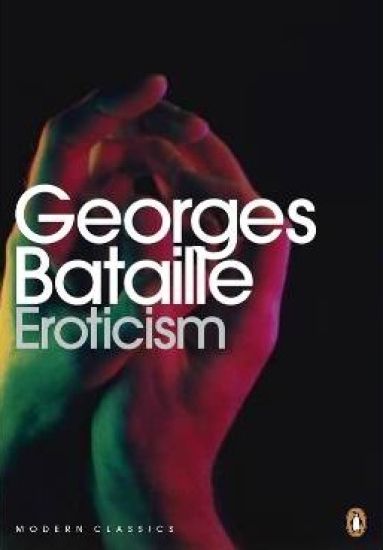
Eroticism

Eroticism

Georges Bataille

Penguin Classics
2012
pokkari
A philosopher, essayist, novelist, pornographer and fervent Catholic who came to regard the brothels of Paris as his true 'churches', Georges Bataille ranks among the boldest and most disturbing of twentieth-century thinkers. In this influential study he links the underlying sexual basis of religion to death, offering a dazzling array of insights into incest, prostitution, marriage, murder, sadism, sacrifice and violence, as well as including comments on Freud, Sade and Saint Theresa. Everywhere, Eroticism argues, sex is surrounded by taboos, which we must continually transgress in order to overcome the sense of isolation that faces us all.
Erotic Subjects

Erotic Subjects

Melissa E. Sanchez

Oxford University Press Inc
2014
nidottu
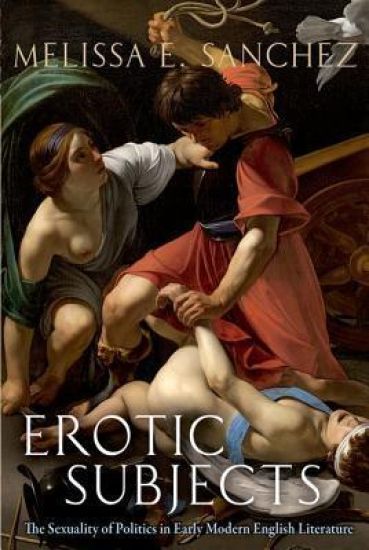
Treating sixteenth- and seventeenth-century erotic literature as part of English political history, Erotic Subjects traces some surprising implications of two early modern commonplaces: first, that love is the basis of political consent and obedience, and second, that suffering is an intrinsic part of love. Rather than dismiss such assumptions as mere conventions, Melissa Sanchez uncovers the political import of early modern literature's fascination with eroticized violence. Focusing on representations of masochism, sexual assault, and cross-gendered identification, Sanchez re-examines the work of politically active writers from Philip Sidney to John Milton. She argues that political allegiance and consent appear far less conscious and deliberate than traditional historical narratives allow when Sidney depicts abjection as a source of both moral authority and sexual arousal; when Edmund Spenser and William Shakespeare make it hard to distinguish between rape and seduction; when Mary Wroth and Margaret Cavendish depict women who adore treacherous or abusive lovers; when court masques stress the pleasures of enslavement; or when Milton insists that even Edenic marriage is hopelessly pervaded by aggression and self-loathing. Sanchez shows that this literature constitutes an alternate tradition of political theory that acknowledges the irrational and perverse components of power and thereby disrupts more conventional accounts of politics as driven by self-interest, false consciousness, or brute force. Erotic Subjects will be of interest to students and scholars of early modern literary and political history, as well as those interested in the histories of gender, sexuality, and affect more generally.
Erotic Poems

Erotic Poems

Johann Wolfgang von Goethe

Oxford University Press
2008
nidottu
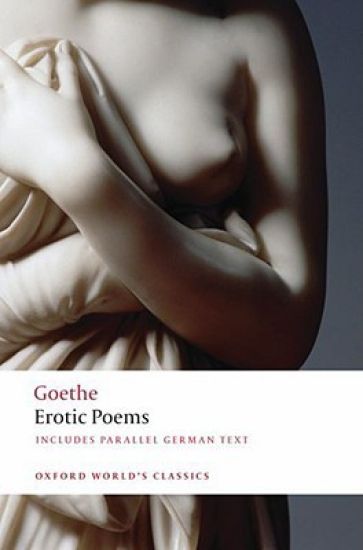
`a world without love would be no world' Elegy II This bilingual edition of Goethe's erotic poems contains the Roman Elegies (1789), The Diary (1810), and a selection from the Venetian Epigrams of 1790. Editorial censorship has long obscured the true form and content of the Elegies, which were inspired by Goethe's sexual liberation in Italy and his love for the woman he took as his unofficial wife on his return to Germany.They are here presented as Goethe boldly conceived them together with the long-surpressed narrative poem known as The Diary. Superficially the story of a failed sexual adventure by a man of 60, at another level this is a profound study of the psychology of desire and the nature of fidelity, as well as being one of the most beautiful and good-humoured poems in the German language. Completing the edition is a selection from Goethe's more light-hearted and much censored cycle of erotica, the Venetian Epigrams. David Luke's translations do full justice to Goethe's aim of liberating German poetry and restoring sexual love to its central position in human life. Hans Vaget's fine introduction provides the background to these poems, as well as showing some of the profound and little-known connections between them. Johann Wolfgang Goethe was born in 1749, the son of a well-to-do citizen of Frankfurt. In the early 1770's he was the dominating figure of the German literary revival, his tragic novel Werther bringing him international fame. In 1755 he became a minister of state and director of the court theatre and in the 1790's he and his younger contemporary Schiller were the joint architects of Weimar Classicism, the central phase of German literary culture. Faust, written at various stages of his life and in a variety of styles, became a constantly enlarged repository of his personal wisdom and his creative energies never ceased to take new forms. In 1806 he married Christiane Vulpious, having lived with her for eighteen years. He died in 1832. ABOUT THE SERIES: For over 100 years Oxford World's Classics has made available the widest range of literature from around the globe. Each affordable volume reflects Oxford's commitment to scholarship, providing the most accurate text plus a wealth of other valuable features, including expert introductions by leading authorities, helpful notes to clarify the text, up-to-date bibliographies for further study, and much more.
Erotic Subjects

Erotic Subjects

Melissa E. Sanchez

Oxford University Press Inc
2011
sidottu
Erotic Subjects demonstrates that if we treat sixteenth- and seventeenth-century erotic literature as part of English political history, both fields of study will look rather different. In this important new book, Sanchez traces some surprising implications of two early modern commonplaces: first, that love is the basis of political consent and obedience, and second, that suffering is an intrinsic part of love. Rather than dismiss such commonplaces as mere convention, Sanchez uncovers the political import of early modern literature's fascination with erotic violence. Focusing on representations of masochism, sexual assault, and cross-gendered identification, Sanchez re-examines the work of politically active writers from Philip Sidney to John Milton. She argues that political allegiance and consent appear far less conscious and deliberate than traditional historical narratives allow when Sidney depicts abjection as a source of both moral authority and sexual arousal; when Edmund Spenser and William Shakespeare make it hard to distinguish between rape and seduction; when Mary Wroth and Margaret Cavendish depict women who adore treacherous or abusive lovers; when court masques stress the pleasures of enslavement; or when Milton insists that even Edenic marriage is hopelessly pervaded by aggression and self-loathing. Sanchez shows that this literature constitutes an alternate tradition of political theory that acknowledges the irrational and perverse components of power and thereby disrupts more conventional accounts of politics as driven by self-interest, false consciousness, or brute force. Erotic Subjects will be of interest to students and scholars of early modern literary and political history, as well as those interested in the histories of gender, sexuality, and affect more generally.
Erotic City

Erotic City

Sides

Oxford University Press Inc
2012
nidottu
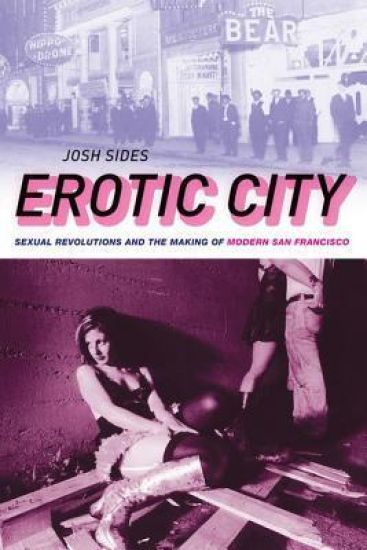
Since the 1960s, San Francisco has been America's capital of sexual libertinism and a potent symbol in its culture wars. In this highly original book, Josh Sides explains how this happened, unearthing long-forgotten stories of the city's sexual revolutionaries, as well as the legions of longtime San Franciscans who tried to protect their vision of a moral metropolis. Erotic dancers, prostitutes, birth control advocates, pornographers, free lovers, and gay libbers transformed San Francisco's political landscape and its neighborhoods in ways seldom appreciated. But as sex radicals became more visible in the public spaces of the city, many San Franciscans reacted violently. The assassinations of Mayor George Moscone and Supervisor Harvey Milk were but the most brazen acts in a city caught up in a battle over morality. Ultimately, Sides argues, one cannot understand the evolution of postwar American cities without recognizing the profound role that sex has played. More broadly, one cannot understand modern American politics without taking into account the postwar transformation of San Francisco and other cities into both real and imagined repositories of unfettered sexual desire.
Erotikon

Erotikon

University of Chicago Press
2006
nidottu
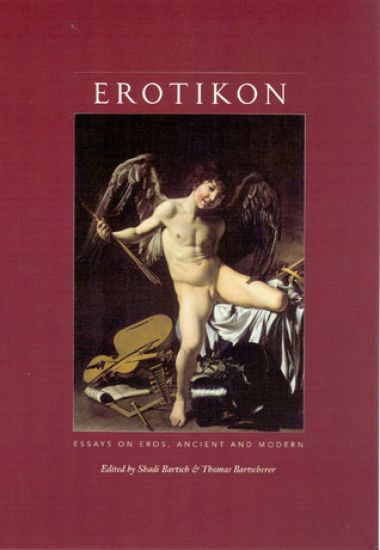
Erotikon brings together leading contemporary intellectuals from a variety of fields for an expansive debate on the full meaning of eros. Renowned scholars of philosophy, literature, classics, psychoanalysis, theology, and art history join poets and a novelist to offer fresh insights into a topic that is at once ancient and forever young. Restricted neither by historical period nor by genre, these contributions explore manifestations of eros throughout Western culture, in subjects ranging from ancient philosophy and baroque architecture to modern literature and Hollywood cinema.An idea charged with paradox, eros has always defied categorization, and yet it cannot—it will not—be ignored. Erotikon aims to raise the difficult question of what, if anything, unifies the erotic manifold. How is eros in a sculpture like eros in a poem? Does the ancient story of Cupid and Psyche still speak meaningfully to modern readers, and if so, why? Is Plato's eros the same as Freud's? Or Proust's? And what is the erotic dimension in Nietzsche's thought? While each essay takes on a specific issue, together they constitute a wide-ranging conversation in which these broader questions are at play. A compilation of the latest, best efforts to reckon with eros, Erotikon will appeal not just to scholars and educators, but also to artists and critics, to the curious and the disillusioned, to the prurient and the prudent.
Erotic Triangles

Erotic Triangles

Henry Spiller

University of Chicago Press
2010
sidottu
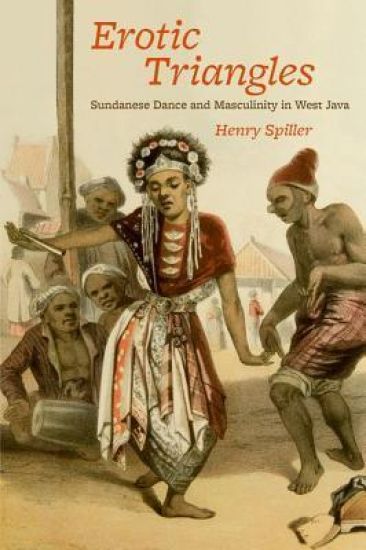
In West Java, Indonesia, all it takes is a woman's voice and a drumbeat to make a man get up and dance. Every day, men there - be they students, pedicab drivers, civil servants, or businessmen - breach ordinary standards of decorum and succumb to the rhythm at village ceremonies, weddings, political rallies, and nightclubs. The music the men dance to varies from traditional gong ensembles to the contemporary pop known as dangdut, but they consistently dance with great enthusiasm. In "Erotic Triangles", Henry Spiller draws on decades of ethnographic research to explore the reasons behind this phenomenon, arguing that Sundanese men use dance to explore and enact contradictions in their gender identities. Framing the three crucial elements of Sundanese dance - the female entertainer, the drumming, and men's sense of freedom - as a triangle, Spiller connects them to a range of other theoretical perspectives, drawing on thinkers from Eve Kosofsky Sedgwick, Levi-Strauss, and Freud to Euclid. By granting men permission to literally perform their masculinity, Spiller ultimately concludes, dance provides a crucial space for both reinforcing and resisting orthodox gender ideologies.
Erotic Triangles

Erotic Triangles

Henry Spiller

University of Chicago Press
2010
nidottu
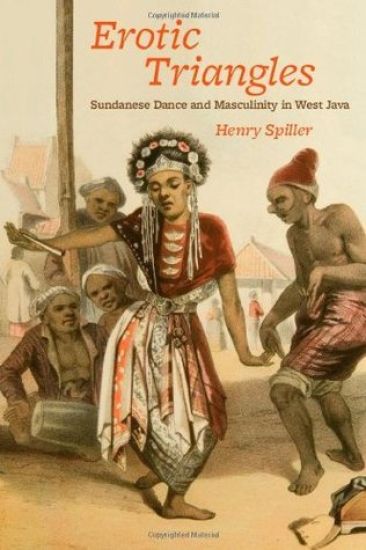
In West Java, Indonesia, all it takes is a woman's voice and a drumbeat to make a man get up and dance. Every day, men there - be they students, pedicab drivers, civil servants, or businessmen - breach ordinary standards of decorum and succumb to the rhythm at village ceremonies, weddings, political rallies, and nightclubs. The music the men dance to varies from traditional gong ensembles to the contemporary pop known as dangdut, but they consistently dance with great enthusiasm. In "Erotic Triangles", Henry Spiller draws on decades of ethnographic research to explore the reasons behind this phenomenon, arguing that Sundanese men use dance to explore and enact contradictions in their gender identities. Framing the three crucial elements of Sundanese dance - the female entertainer, the drumming, and men's sense of freedom - as a triangle, Spiller connects them to a range of other theoretical perspectives, drawing on thinkers from Eve Kosofsky Sedgwick, Levi-Strauss, and Freud to Euclid. By granting men permission to literally perform their masculinity, Spiller ultimately concludes, dance provides a crucial space for both reinforcing and resisting orthodox gender ideologies.
Erotic Attunement

Erotic Attunement

Cristina L. H. Traina

University of Chicago Press
2011
sidottu
Heightened awareness of the problem of sexual abuse has led to deep anxiety over adults touching children - in nearly any context. Though our society has moved toward increasingly strict enforcement of this taboo, studies have shown that young children need regular human contact, and the benefits of breastfeeding have been widely extolled. Exploring the complicated history of love, desire, gender, sexuality, parenthood, and inequality, "Erotic Attunement" probes the disquieting issue of how we can draw a clear line between natural affection toward children and perverse exploitation of them. Cristina L. H. Traina demonstrates that we cannot determine what is wrong about sexual abuse without first understanding what is good about appropriate sensual affection. Pondering topics such as the importance of touch in nurturing children, the psychology of abuse and victimhood, and recent ideologies of motherhood, she argues that we must expand our philosophical and theological language of physical love and make a distinction between sexual love and erotic love. Taking on theological and ethical arguments over the question of sexuality between unequals, she arrives at the provocative conclusion that it can be destructive to completely bar eroticism from these relationships.
Erotic Poems from the Sanskrit

Erotic Poems from the Sanskrit

Columbia University Press
2017
sidottu
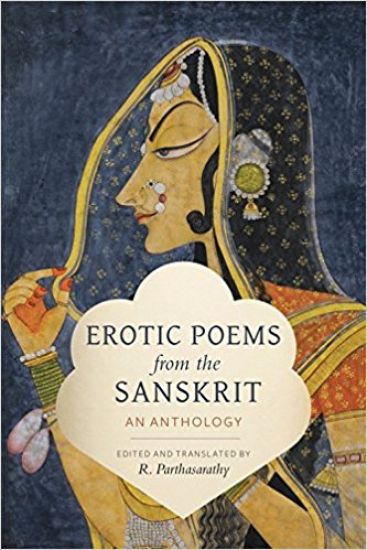
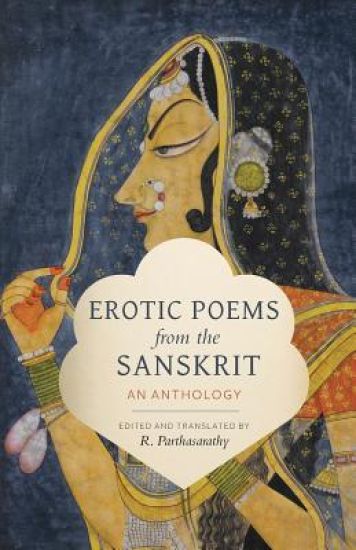
Classical Sanskrit literature boasts an exquisite canon of poetry devoted to erotic love. In Erotic Poems from the Sanskrit, noted translator and scholar R. Parthasarathy curates a selection in a new verse translation that introduces readers to Sanskrit poetry in a modern English vernacular. The volume features works by seventy-two poets, including seven women poets and thirty-five anonymous poets, primarily composed between the fourth and seventeenth centuries. It includes a detailed introduction that guides readers through Sanskrit poetic forms and explains how to read and appreciate the poems in English. Erotic Poems from the Sanskrit seeks to represent the breadth of Sanskrit poetry through the ages and to present a cohesive, thematically unified selection when read as a whole. The works in this volume depict licit and illicit love, speaking to the joys and sorrows of consummation and separation and a broader cultural celebration of the pleasures of the flesh. Often sexually explicit, they are replete with recurrent scenarios and striking tactile, visual, and olfactory images, whose resonance and use as motifs across eras are expertly explained. Parthasarathy shows that Sanskrit poets are our contemporaries despite the centuries that separate us, as they speak simply and passionately to a wide range of human experience. Erotic Poems from the Sanskrit offers English-speaking readers an enticing and tantalizing initiation into the riches and beauty of this venerable poetic tradition.
Erotic Poems from the Sanskrit

Erotic Poems from the Sanskrit

Columbia University Press
2017
pokkari
Classical Sanskrit literature boasts an exquisite canon of poetry devoted to erotic love. In Erotic Poems from the Sanskrit, noted translator and scholar R. Parthasarathy curates a selection in a new verse translation that introduces readers to Sanskrit poetry in a modern English vernacular. The volume features works by seventy-two poets, including seven women poets and thirty-five anonymous poets, primarily composed between the fourth and seventeenth centuries. It includes a detailed introduction that guides readers through Sanskrit poetic forms and explains how to read and appreciate the poems in English. Erotic Poems from the Sanskrit seeks to represent the breadth of Sanskrit poetry through the ages and to present a cohesive, thematically unified selection when read as a whole. The works in this volume depict licit and illicit love, speaking to the joys and sorrows of consummation and separation and a broader cultural celebration of the pleasures of the flesh. Often sexually explicit, they are replete with recurrent scenarios and striking tactile, visual, and olfactory images, whose resonance and use as motifs across eras are expertly explained. Parthasarathy shows that Sanskrit poets are our contemporaries despite the centuries that separate us, as they speak simply and passionately to a wide range of human experience. Erotic Poems from the Sanskrit offers English-speaking readers an enticing and tantalizing initiation into the riches and beauty of this venerable poetic tradition.
Erotic Utopia

Erotic Utopia

Matich Olga

UNIVERSITY OF WISCONSIN PRESS
2005
sidottu
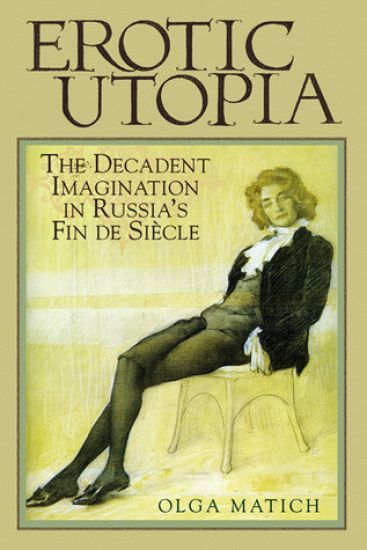
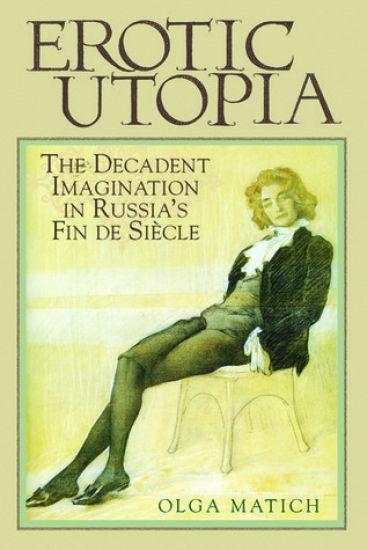
The first generation of Russian modernists experienced a profound sense of anxiety resulting from the belief that they were living in an age of decline. What made them unique was their utopian prescription for overcoming the inevitability of decline and death, by metaphysical and physical means. They intertwined their mystical erotic discourse with European degeneration theory and its obsession with the destabilization of gender. In Erotic Utopia, Olga Matich suggests that same-sex desires underlay their most radical utopian proposal of abolishing the traditional procreative family in favor of erotically induced abstinence. The author focuses on the later works of Tolstoy, Vladimir Solov'ev, Zinaida Gippius, Alexander Blok, and Vasilii Rozanov, whose writings are situated in the Russian as well as European fin de siecle.
Erotic Utopia

Erotic Utopia

Olga Matich

University of Wisconsin Press
2007
nidottu
The first generation of Russian modernists experienced a profound sense of anxiety. What made them unique was their utopian prescription for overcoming the inevitability of decline and death. They theorized their defiance of death by suggesting the immortalization of the body through the power of erotic love. Matich suggests that same-sex desire underlay their most radical proposal of abolishing the traditional procreative family in favor of erotically induced abstinence. She shows how a brilliant group of Russian writers - among them the late Tolstoy, Vladimir Solov'ev, Zinaida Gippius, Alexander Blok, and Vasilii Rozanov - addressed the pressing concerns of a culture in transition, ranging from physical and psychological health, marriage, sexuality, and gender to anti-Semitism and the meaning of history.
Erotic Nihilism in Late Imperial Russia

Erotic Nihilism in Late Imperial Russia

Otto Boele

University of Wisconsin Press
2009
nidottu
Banned shortly after its publication in 1907, the Russian novel ""Sanin"" scandalized readers with the sexual exploits of its eponymous hero. Wreaking havoc on the fictional town he visits in Mikhail Artsybashev's story, the character Sanin left an even deeper imprint on the psyche of the real-life Russian public. Soon 'Saninism' became the buzzword for the perceived faults of the nation. Seen as promoting a wave of hedonistic, decadent behavior, the novel was suppressed for decades, leaving behind only the rumor of its supposedly epidemic effect on a vulnerable generation of youth. Who were the Saninists, and what was their 'teaching' all about? Delving into police reports, newspaper clippings, and amateur plays, Otto Boele finds that Russian youth were not at all swept away by the self-indulgent lifestyle of the novel's hero. In fact, Saninism was more smoke than fire - a figment of the public imagination triggered by anxieties about the revolution of 1905 and the twilight of the Russian empire. The reception of the novel, Boele shows, reflected much deeper worries caused by economic reforms, an increase in social mobility, and changing attitudes toward sexuality. Showing how literary criticism interacts with the age-old medium of rumor, ""Erotic Nihilism in Late Imperial Russia"" offers a meticulous analysis of the scandal's coverage in the provincial press and the reactions of young people who appealed to their peers to resist the novel's nihilistic message. By examining the complex dialogue between readers and writers, children and parents, this study provides fascinating insights into Russian culture on the eve of World War I.