Kirjojen hintavertailu. Mukana 11 244 527 kirjaa ja 12 kauppaa.

Kirjahaku

Etsi kirjoja tekijän nimen, kirjan nimen tai ISBN:n perusteella.

203 tulosta hakusanalla Eyal Assaf

Rigging for Games

Rigging for Games

Eyal Assaf

Routledge
2015
sidottu
Rigging for Games: A Primer for Technical Artists Using Maya and Python is not just another step-by-step manual of loosely related tutorials. Using characters from the video game Tin, it takes you through the real-world creative and technical process of rigging characters for video games and cinematics, allowing readers a complete inside look at a single project.You’ll explore new ways to write scripts and create modular rigs using Maya and Python, and automate and speed up the rigging process in your creative pipeline. Finally, you’ll learn the most efficient ways of exporting your rigs into the popular game engine Unity. This is the practical, start-to-finish rigging primer you’ve been waiting for! Enhance your skillset by learning how to efficiently rig characters using techniques applicable to both games and cinematics Keep up with all the action with behind-the-scenes images and code scripts Refine your rigging skills with tutorials and project files available on the companion website
Rigging for Games

Rigging for Games

Eyal Assaf

Routledge
2015
nidottu
Rigging for Games: A Primer for Technical Artists Using Maya and Python is not just another step-by-step manual of loosely related tutorials. Using characters from the video game Tin, it takes you through the real-world creative and technical process of rigging characters for video games and cinematics, allowing readers a complete inside look at a single project.You’ll explore new ways to write scripts and create modular rigs using Maya and Python, and automate and speed up the rigging process in your creative pipeline. Finally, you’ll learn the most efficient ways of exporting your rigs into the popular game engine Unity. This is the practical, start-to-finish rigging primer you’ve been waiting for! Enhance your skillset by learning how to efficiently rig characters using techniques applicable to both games and cinematics Keep up with all the action with behind-the-scenes images and code scripts Refine your rigging skills with tutorials and project files available on the companion website

Hooked - 30 Minute Expert Guide: Official Summary to NIR Eyal's Hooked
Learn how to create habit-forming products people love ... in 30 minutes. The official summary of Hooked is your essential guide to understanding how to drive customer engagement and innovate with confidence and clarity. In his bestselling book Hooked, author Nir Eyal distills years of research, consulting, and practical experience and provides a how-to guide for product development-a blueprint he searched for as start-up founder but never found. An essential tool for entrepreneurs, product managers, designers, marketers, and anyone else interested in driving customer engagement, the 30 Minute Expert Guide to Nir Eyal's Hooked offers: A chapter-by-chapter synopsis that identifies the key concepts outlined in Nir Eyal's bestselling book, Hooked Actionable steps designed to help you implement your own habit-forming strategies and create better, more successful products Illustrative examples of habit-forming products including Amazon, Twitter, the Bible app, and more"
The Lost Puzzler

The Lost Puzzler

Eyal Kless

Harper Voyager
2019
nidottu
A brilliantly written, page-turning, post-dystopian novel about a society hoping to salvage the technology of a lost generation, a mysterious missing boy who can open doors no one else can, and a scribe who must piece together the past to determine humanity’s future.More than a hundred years have passed since the Great Catastrophe brought humanity to the brink of extinction. Those who survived are changed. The Wildeners have reverted to the old ways, praying to new Gods, while others place their faith in the technology that once powered their lost civilization.In the mysterious City of Towers, the center of the destroyed Tarakan empire, a lowly scribe of the Guild of Historians is charged with a dangerous assignment. He must venture into the wilds beyond the glass and steel towers to discover the fate of a child who mysteriously disappeared more than a decade before. Born of a rare breed of marked people, Rafik—known as “The Key”—was one of a special few with the power to restore this lost civilization to glory once again.In a world riven by fear and violence, where tattooed mutants, manic truckers, warring guilds and greedy mercenaries battle for survival, this one boy may have singlehandedly destroyed humanity’s only chance for salvation—unless the scribe can figure out what happened to him.
The Puzzler's War

The Puzzler's War

Eyal Kless

HARPER VOYAGER
2020
nidottu
The intriguing futuristic dystopian story begun with The Lost Puzzler continues in this expansive speculative science fiction adventure.There is nothing out of the ordinary in waking up . . . unless you're dead.Sent on a dangerous mission with little hope of succeeding, the man known as "Twinkle Eyes" has beaten the odds and found the key that could save civilization: Rafik, a teenage boy with the power to unlock the invaluable Tarakan technology that can restart their world. But the world might not be ready for what is unleashed, and now Twinkle Eyes must find a needle in a haystack in order to save himself . . . and perhaps the world.This time, though, he will not go it alone. And while his companions--from the fiery Vincha to the laconic Galinak--have their own motivations, each will be vital in solving the last grand puzzle. One that could bring prosperity and progress to the world or destroy humanity's last hope for ascension.Now, a lone assassin from another era, two old friends, a dead man, a ruthless rogue mercenary, and a vicious warlord are all hunting for the ultimate prize. But what will happen when the final secret is unlocked, and technology long since buried once again finds its way into the hands of mankind?
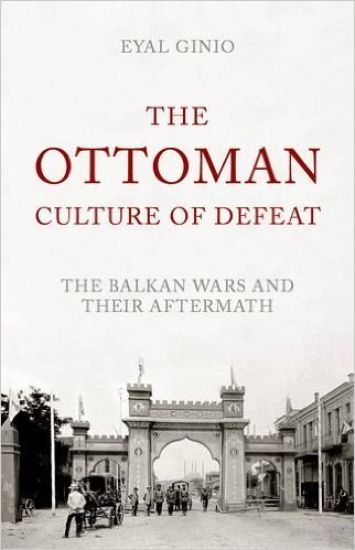
The Ottoman Culture of Defeat: The Balkan Wars and Their Aftermath
When the first Balkan War broke out in October 1912, few Ottomans anticipated that it would prove to be a watershed moment for the Empire, ending in ignominy, national catastrophe, and the loss of its remaining provinces in the Balkans. Defeat at the hands of an alliance of Balkan powers comprising Bulgaria, Greece, Serbia and Montenegro set the stage for the Balkan Crisis of 1914 and would serve as a prelude to WWI. It was also a moment of deep national trauma and led to bitter soul-searching, giving rise to a so-called 'Culture of Defeat' in which condemnation and criticism flourished in a way seemingly at odds with the reformist debate which followed the Young Turk Revolution of 1908.Eyal Ginio's clear-eyed and rigorously researched book uncovers the different visual and written products of the defeat, published in Ottoman Turkish, Arabic and Ladino, with the aim of understanding the experience of defeat -- how it was perceived, analyzed and commemorated by different sectors in Ottoman society -- to show that it is key to understanding the actions of the Ottoman political elite during the subsequent World War and the early decades of the Turkish Republic.
Behavioral Law and Economics

Behavioral Law and Economics

Eyal Zamir; Doron Teichman

Oxford University Press Inc
2018
sidottu
In the past few decades, economic analysis of law has been challenged by a growing body of experimental and empirical studies that attest to prevalent and systematic deviations from the assumptions of economic rationality. While the findings on bounded rationality and heuristics and biases were initially perceived as antithetical to standard economic and legal-economic analysis, over time they have been largely integrated into mainstream economic analysis, including economic analysis of law. Moreover, the impact of behavioral insights has long since transcended purely economic analysis of law: in recent years, the behavioral movement has become one of the most influential developments in legal scholarship in general. Behavioral Law and Economics offers a state-of-the-art overview of the field. Eyal Zamir and Doron Teichman survey the entire body of psychological research that lies at the basis of behavioral analysis of law, and critically evaluate the core methodological questions of this area of research. Following this, the book discusses the fundamental normative questions stemming from the psychological findings on bounded rationality, and explores their implications for setting the law's goals and designing the means to attain them. The book then provides a systematic and critical examination of the contributions of behavioral studies to all major fields of law including: property, contracts, consumer protection, torts, corporate, securities regulation, antitrust, administrative, constitutional, international, criminal, and evidence law, as well as to the behavior of key players in the legal arena: litigants and judicial decision-makers.
Behavioral Law and Economics

Behavioral Law and Economics

Eyal Zamir; Doron Teichman

Oxford University Press Inc
2018
nidottu
In the past few decades, economic analysis of law has been challenged by a growing body of experimental and empirical studies that attest to prevalent and systematic deviations from the assumptions of economic rationality. While the findings on bounded rationality and heuristics and biases were initially perceived as antithetical to standard economic and legal-economic analysis, over time they have been largely integrated into mainstream economic analysis, including economic analysis of law. Moreover, the impact of behavioral insights has long since transcended purely economic analysis of law: in recent years, the behavioral movement has become one of the most influential developments in legal scholarship in general. Behavioral Law and Economics offers a state-of-the-art overview of the field. Eyal Zamir and Doron Teichman survey the entire body of psychological research that lies at the basis of behavioral analysis of law, and critically evaluate the core methodological questions of this area of research. Following this, the book discusses the fundamental normative questions stemming from the psychological findings on bounded rationality, and explores their implications for setting the law's goals and designing the means to attain them. The book then provides a systematic and critical examination of the contributions of behavioral studies to all major fields of law including: property, contracts, consumer protection, torts, corporate, securities regulation, antitrust, administrative, constitutional, international, criminal, and evidence law, as well as to the behavior of key players in the legal arena: litigants and judicial decision-makers.
Law, Economics, and Morality

Law, Economics, and Morality

Eyal Zamir; Barak Medina

Oxford University Press Inc
2010
sidottu
Law, Economics, and Morality examines the possibility of combining economic methodology and deontological morality through explicit and direct incorporation of moral constraints into economic models. Economic analysis of law is a powerful analytical methodology. However, as a purely consequentialist approach, which determines the desirability of acts and rules solely by assessing the goodness of their outcomes, standard cost-benefit analysis (CBA) is normatively objectionable. Moderate deontology prioritizes such values as autonomy, basic liberties, truth-telling, and promise-keeping over the promotion of good outcomes. It holds that there are constraints on promoting the good. Such constraints may be overridden only if enough good (or bad) is at stake. While moderate deontology conforms to prevailing moral intuitions and legal doctrines, it is arguably lacking in methodological rigor and precision. Eyal Zamir and Barak Medina argue that the normative flaws of economic analysis can be rectified without relinquishing its methodological advantages and that moral constraints can be formalized so as to make their analysis more rigorous. They discuss various substantive and methodological choices involved in modeling deontological constraints. Zamir and Medina propose to determine the permissibility of any act or rule infringing a deontological constraint by means of mathematical threshold functions. Law, Economics, and Morality presents the general structure of threshold functions, analyzes their elements and addresses possible objections to this proposal. It then illustrates the implementation of constrained CBA in several legal fields, including contract law, freedom of speech, antidiscrimination law, the fight against terrorism, and legal paternalism.
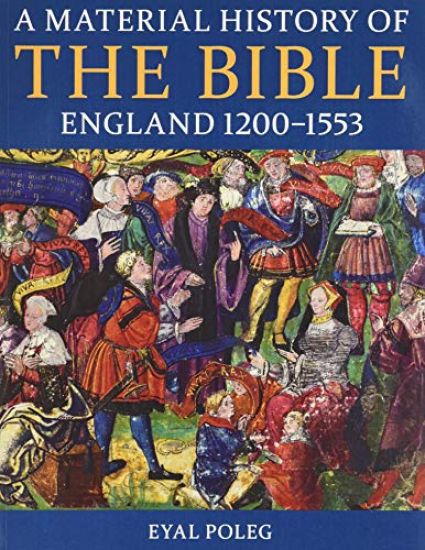
A Material History of the Bible, England 1200-1553

A Material History of the Bible, England 1200-1553

Eyal Poleg

Oxford University Press
2020
sidottu
This book is the first in-depth study of the production and use of Bibles in late medieval and early modern England. Over three and a half centuries, from the nascent universities and Latin Bibles of the thirteenth century to the death of Edward VI in 1553, it puts a new perspective on the advent of moveable type print and religious reform. Based on the analysis of hundreds of biblical manuscripts and prints it reveals how scribes, printers, readers, and patrons have reacted to religious and political turmoil. The material evidence undermines traditional narratives, revealing, for example, evidence of Church worship in English prior to the Reformation, or seeing Henry VIII's Great Bible as a useless book.
A Material History of the Bible, England 1200-1553

A Material History of the Bible, England 1200-1553

Eyal Poleg

Oxford University Press
2020
nidottu
This book is the first in-depth study of the production and use of Bibles in late medieval and early modern England. Over three and a half centuries, from the nascent universities and Latin Bibles of the thirteenth century to the death of Edward VI in 1553, it puts a new perspective on the advent of moveable type print and religious reform. Based on the analysis of hundreds of biblical manuscripts and prints it reveals how scribes, printers, readers, and patrons have reacted to religious and political turmoil. The material evidence undermines traditional narratives, revealing, for example, evidence of Church worship in English prior to the Reformation, or seeing Henry VIII's Great Bible as a useless book.
The International Law of Occupation

The International Law of Occupation

Eyal Benvenisti

Oxford University Press
2012
sidottu
The law of occupation imposes two types of obligations on an army that seizes control of enemy land during armed conflict: obligations to respect and protect the inhabitants and their rights, and an obligation to respect the sovereign rights of the ousted government. In theory, the occupant is expected to establish an effective and impartial administration, to carefully balance its own interests against those of the inhabitants and their government, and to negotiate the occupation's early termination in a peace treaty. Although these expectations have been proven to be too high for most occupants, they nevertheless serve as yardsticks that measure the level of compliance of the occupants with international law. This thoroughly revised edition of the 1993 book traces the evolution of the law of occupation from its inception during the 18th century until today. It offers an assessment of the law by focusing on state practice of the various occupants and reactions thereto, and on the governing legal texts and judicial decisions. The underlying thought that informs and structures the book suggests that this body of laws has been shaped by changing conceptions about war and sovereignty, by the growing attention to human rights and the right to self-determination, as well as by changes in the balance of power among states. Because the law of occupation indirectly protects the sovereign, occupation law can be seen as the mirror-image of the law on sovereignty. Shifting perceptions on sovereign authority are therefore bound to be reflected also in the law of occupation, and vice-versa.
The International Law of Occupation

The International Law of Occupation

Eyal Benvenisti

Oxford University Press
2013
nidottu
The law of occupation imposes two types of obligations on an army that seizes control of enemy land during armed conflict: obligations to respect and protect the inhabitants and their rights, and an obligation to respect the sovereign rights of the ousted government. In theory, the occupant is expected to establish an effective and impartial administration, to carefully balance its own interests against those of the inhabitants and their government, and to negotiate the occupation's early termination in a peace treaty. Although these expectations have been proven to be too high for most occupants, they nevertheless serve as yardsticks that measure the level of compliance of the occupants with international law. This book traces the evolution of the law of occupation from its inception during the 18th century until today. It offers an assessment of the law by focusing on state practice of the various occupants and reactions thereto, and on the governing legal texts and judicial decisions. The underlying thought that informs and structures the book suggests that this body of laws has been shaped by changing conceptions about war and sovereignty, by the growing attention to human rights and the right to self-determination, as well as by changes in the balance of power among states. Because the law of occupation indirectly protects the sovereign, occupation law can be seen as the mirror-image of the law on sovereignty. Shifting perceptions on sovereign authority are therefore bound to be reflected also in the law of occupation, and vice-versa.
Law, Psychology, and Morality

Law, Psychology, and Morality

Eyal Zamir

Oxford University Press Inc
2015
sidottu
Kahneman and Tversky's Prospect Theory posits that people do not perceive outcomes as final states of wealth or welfare, but rather as gains or losses in relation to some reference point. People are generally loss averse, meaning that the disutility generated by a loss is greater than the utility produced by a commensurate gain. Loss aversion is related to psychological phenomena such as the status quo and omission biases, the endowment effect, and escalation of commitment. Law, Psychology, and Morality: The Role of Loss Aversion systematically analyzes the complex relationships between loss aversion and the law weaving together insights from cognitive and social psychology, neuropsychology, behavioral economics, experimental legal studies, economic analysis of law, normative ethics, moral psychology, and comparative law. It discusses diverse legal issues in private and public law, national and international law, and substantive and procedural law. Eyal Zamir provides an overview of the psychological studies of loss aversion to examine its effect on human behavior in the contexts of particular interest to the law, while discussing the impact of the law on people's behavior through the framing of the choices they encounter. The book further highlights an intriguing compatibility between loss aversion and fundamental features of the law and various legal doctrines, while theorizing about the causes of this compatibility by drawing on insights from the economic analysis of law and evolutionary psychology. The book points to the correlation between loss aversion, deontological and commonsense morality, and the law, while proposing many normative implications.
The Temple in Early Christianity

The Temple in Early Christianity

Eyal Regev

Yale University Press
2019
sidottu
A comprehensive treatment of the early Christian approaches to the Temple and its role in shaping Jewish and Christian identity The first scholarly work to trace the Temple throughout the entire New Testament, this study examines Jewish and Christian attitudes toward the Temple in the first century and provides both Jews and Christians with a better understanding of their respective faiths and how they grow out of this ancient institution. The centrality of the Temple in New Testament writing reveals the authors’ negotiations with the institutional and symbolic center of Judaism as they worked to form their own religion.
Legal Dualism

Legal Dualism

Eyal Benvenisti

Routledge
2019
sidottu
This book examines the various methods by which Israeli law is being applied to the occupied territories and their inhabitants. It discusses the legal situation of the territories from the point of view of the positive law that is in effect there.First published in 1990 by Westview Press.
Legal Dualism

Legal Dualism

Eyal Benvenisti

Routledge
2020
nidottu
This book examines the various methods by which Israeli law is being applied to the occupied territories and their inhabitants. It discusses the legal situation of the territories from the point of view of the positive law that is in effect there.