Kirjojen hintavertailu. Mukana 11 244 527 kirjaa ja 12 kauppaa.

Kirjahaku

Etsi kirjoja tekijän nimen, kirjan nimen tai ISBN:n perusteella.

937 tulosta hakusanalla Ezekel Alan

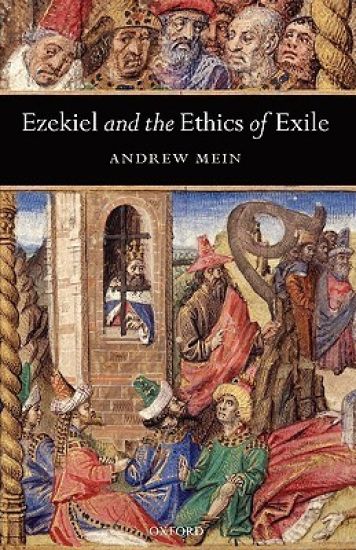
Ezekiel and the Ethics of Exile

Ezekiel and the Ethics of Exile

Andrew Mein

Oxford University Press
2001
sidottu
Whereas much recent work on the ethics of the Hebrew Bible addresses the theological task of using the Bible as a moral resource for today, this book aims to set Ezekiel's ethics firmly in the social and historical context of the Babylonian Exile. The two 'moral worlds' of Jerusalem and Babylonia provide the key. Ezekiel explains the disaster in terms familiar to his audience's past experience as members of Judah's political elite. He also provides ethical strategies for coping with the more limited possibilities of life in Babylonia, which include the ritualization of ethics, an increasing emphasis on the domestic and personal sphere of action, and a shift towards human passivity in the face of restoration. Thus the prophet's moral concerns and priorities are substantially shaped by the social experience of deportation and resettlement. They also represent a creative response to the crisis, providing significant impetus for social cohesion and the maintenance of a distinctively Jewish community.
Ezekiel and the Ethics of Exile

Ezekiel and the Ethics of Exile

Andrew Mein

Oxford University Press
2006
nidottu
Whereas much recent work on the ethics of the Hebrew Bible addresses the theological task of using the Bible as a moral resource for today, this book aims to set Ezekiel's ethics firmly in the social and historical context of the Babylonian Exile. The two 'moral worlds' of Jerusalem and Babylonia provide the key. Ezekiel explains the disaster in terms familiar to his audience's past experience as members of Judah's political elite. He also provides ethical strategies for coping with the more limited possibilities of life in Babylonia, which include the ritualization of ethics, an increasing emphasis on the domestic and personal sphere of action, and a shift towards human passivity in the face of restoration. Thus the prophet's moral concerns and priorities are substantially shaped by the social experience of deportation and resettlement. They also represent a creative response to the crisis, providing significant impetus for social cohesion and the maintenance of a distinctively Jewish community.
Ezekiel's Horse

Ezekiel's Horse

Keith Carter

University of Texas Press
2000
sidottu
Winner, Jury selection, American Institute of Graphic Arts, 2001 Communication Arts 2001 Design Annual, 2001 Featured title in Print A-Z, 2001Haunting in their mystery and beauty, Keith Carter's horses fill the frame like spirits in a dream-but without ever ceasing to be real horses. Whether he's photographing thoroughbreds preparing for the elaborate maneuvers of dressage or a farm nag grazing in a field, Carter meets horses on their terms, not his. Looking into their enigmatic eyes in these photographs, you wonder, "What are these creatures thinking?" until you realize that Keith Carter's horses never really give up their secrets.This volume collects some 75 duotone images of horses and riders, most of them never before published. Accompanying the pictures is a photographer's statement, in which Keith Carter describes the genesis of this project and muses on what it is about horses that draws him to them as photographic subjects. Distinguished art and photography critic John Wood places Carter's equine photos within the wider Western tradition of painting and photographing animals, while praising Carter's rare ability to portray animal subjects without producing kitsch. In his words, "Carter is probably photography's first truly great master of the animal photograph, and none of his other animal photographs are more powerful than his photographs of horses."
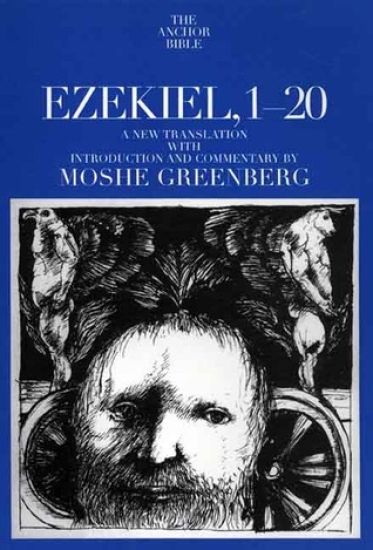
Ezekiel 1-20

Ezekiel 1-20

Moshe Greenberg

Yale University Press
2007
pokkari
In Ezekiel 1-20, the first of two volumes of commentary on the Scripture attributed to the third major Old Testament prophet, Moshe Greenberg uses accessible prose to explain Ezekiel’s ecstatic, erratic, almost incomprehensible otherworldly visions and prophecies. One of this century’s most respected biblical scholars, Greenberg translates the text, identifies the critical issues raised by the book, and offers an impressively balanced, thoroughly holistic interpretation of Ezekiel.Ezekiel 1-20 rigorously engages the biblical text with all the tools of historical critical analysis. Drawing upon the rich history of Jewish and Christian interpretation, Greenberg employs ancient and modern sources in his elucidation of this most difficult prophetic book. Only his second and final volume, Ezekiel 21-48, can complete the most authoritative commentary on Ezekiel.
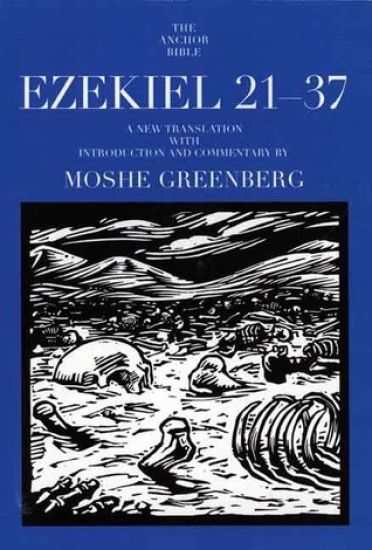
Ezekiel 21-37

Ezekiel 21-37

Moshe Greenberg

Yale University Press
2007
pokkari
Ezekiel was and is perhaps the most misunderstood and challenging Hebrew prophet. His prophecies and visions transport us to almost indescribable realms, completely uncharted territory this side of heaven. But as one of Israel’s three major prophets, the words and symbolic actions of this mouthpiece of God were directed to a people weighed down by the realities of human experience. In this long-awaited and eagerly anticipated second volume of his commentary on the Book of Ezekiel, Moshe Greenberg exhibits the characteristic care and special sensitivity of a world-renowned scholar. He translates the text into a flowing English that captures the richness and subtleties of the problematic Hebrew original. Using illustrations from a vast array of literature on Ezekiel, Greenberg brings the book’s prophecies and people alive for modern readers.
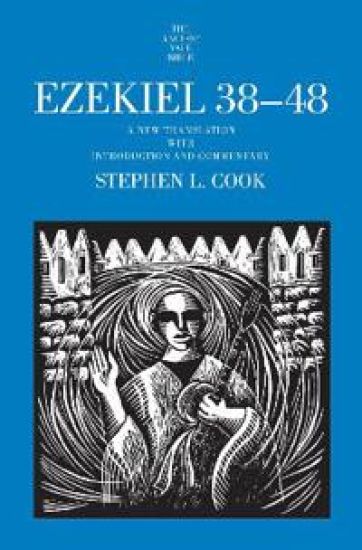
Ezekiel 38-48

Ezekiel 38-48

Stephen L. Cook

Yale University Press
2019
sidottu
A fresh interpretation of the final major sections of the Hebrew book of Ezekiel, chapters 38-48 Stephen L. Cook offers an accessible translation and interpretation of the final sections of Ezekiel. These chapters, the most challenging texts of scripture, describe the end-time assault of Gog of Magog on Israel and provide an incredible visionary tour of God’s utopian temple. Following the approach of Moshe Greenberg, the author of the preceding Anchor Yale Bible commentaries on Ezekiel, this volume grounds interpretation of the book in an intimate acquaintance with Ezekiel’s source materials, its particular patterns of composition and rhetoric, and the general learned, priestly workings of the Ezekiel school. The commentary honors Greenberg’s legacy by including insights from traditional Jewish commentators, such as Rashi, Kimhi, and Eliezer of Beaugency. In contrast to preceding commentaries, the book devotes special attention to the Zadokite idea of an indwelling, anthropomorphic “body” of God, and the enlivening effect on people and land of that indwelling.
Ezekiel

Ezekiel

John F. MacArthur

HarperChristian Resources
2024
nidottu
Ezekiel was among the thousands of Jews taken captive when the Babylonians invaded Judah in 597 bc. It was there that God called him to be a prophet, and for the next twenty-two years, he related the visions, prophecies, and signs the Lord gave him to his fellow Jews living in exile. While these prophecies often contained warnings of severe judgments if the people did not repent, they also contained incredible messages of hope—including more details about the future millennial kingdom of Christ than all other Old Testament prophecies combined.In the twelve studies within, join John MacArthur to focus on Ezekiel's visions, prophecies, parables, signs, and symbols proclaiming and dramatizing the message of God to His exiled people. By working through this study, you will learn that in your life, just like the people of Israel, God holds each individual accountable for pursuing righteousness.The MacArthur Bible Studies provide intriguing examinations of the whole of Scripture. Each guide incorporates extensive commentary, detailed observations on overriding themes, and probing questions to help you study the Word of God with guidance from John MacArthur.
Ezekiel

Ezekiel

Iain M. Duguid

Zondervan
1999
sidottu
The NIV Application Commentary helps you communicate and apply biblical text effectively in today's context.To bring the ancient messages of the Bible into today's world, each passage is treated in three sections:Original Meaning. Concise exegesis to help readers understand the original meaning of the biblical text in its historical, literary, and cultural context.Bridging Contexts. A bridge between the world of the Bible and the world of today, built by discerning what is timeless in the timely pages of the Bible.Contemporary Significance. This section identifies comparable situations to those faced in the Bible and explores relevant application of the biblical messages. The author alerts the readers of problems they may encounter when seeking to apply the passage and helps them think through the issues involved.This unique, award-winning commentary is the ideal resource for today's preachers, teachers, and serious students of the Bible, giving them the tools, ideas, and insights they need to communicate God's Word with the same powerful impact it had when it was first written.The book you receive may have a different cover design than shown on the website.
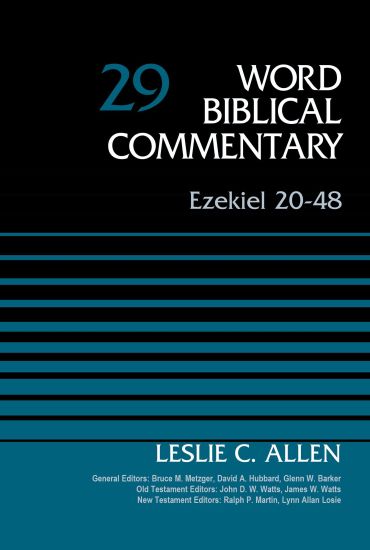
Ezekiel 20-48, Volume 29

Ezekiel 20-48, Volume 29

Leslie C. Allen

Zondervan
1975
sidottu
The Word Biblical Commentary delivers the best in biblical scholarship, from the leading scholars of our day who share a commitment to Scripture as divine revelation. This series emphasizes a thorough analysis of textual, linguistic, structural, and theological evidence. The result is judicious and balanced insight into the meanings of the text in the framework of biblical theology. These widely acclaimed commentaries serve as exceptional resources for the professional theologian and instructor, the seminary or university student, the working minister, and everyone concerned with building theological understanding from a solid base of biblical scholarship.Overview of Commentary OrganizationIntroduction—covers issues pertaining to the whole book, including context, date, authorship, composition, interpretive issues, purpose, and theology.Each section of the commentary includes:Pericope Bibliography—a helpful resource containing the most important works that pertain to each particular pericope.Translation—the author’s own translation of the biblical text, reflecting the end result of exegesis and attending to Hebrew and Greek idiomatic usage of words, phrases, and tenses, yet in reasonably good English.Notes—the author’s notes to the translation that address any textual variants, grammatical forms, syntactical constructions, basic meanings of words, and problems of translation.Form/Structure/Setting—a discussion of redaction, genre, sources, and tradition as they concern the origin of the pericope, its canonical form, and its relation to the biblical and extra-biblical contexts in order to illuminate the structure and character of the pericope. Rhetorical or compositional features important to understanding the passage are also introduced here.Comment—verse-by-verse interpretation of the text and dialogue with other interpreters, engaging with current opinion and scholarly research.Explanation—brings together all the results of the discussion in previous sections to expose the meaning and intention of the text at several levels: (1) within the context of the book itself; (2) its meaning in the OT or NT; (3) its place in the entire canon; (4) theological relevance to broader OT or NT issues.General Bibliography—occurring at the end of each volume, this extensive bibliographycontains all sources used anywhere in the commentary.
Ezekiel 1-19, Volume 28

Ezekiel 1-19, Volume 28

Leslie C. Allen

Zondervan
2015
sidottu
The Word Biblical Commentary delivers the best in biblical scholarship, from the leading scholars of our day who share a commitment to Scripture as divine revelation. This series emphasizes a thorough analysis of textual, linguistic, structural, and theological evidence. The result is judicious and balanced insight into the meanings of the text in the framework of biblical theology. These widely acclaimed commentaries serve as exceptional resources for the professional theologian and instructor, the seminary or university student, the working minister, and everyone concerned with building theological understanding from a solid base of biblical scholarship.Overview of Commentary OrganizationIntroduction—covers issues pertaining to the whole book, including context, date, authorship, composition, interpretive issues, purpose, and theology.Each section of the commentary includes:Pericope Bibliography—a helpful resource containing the most important works that pertain to each particular pericope.Translation—the author’s own translation of the biblical text, reflecting the end result of exegesis and attending to Hebrew and Greek idiomatic usage of words, phrases, and tenses, yet in reasonably good English.Notes—the author’s notes to the translation that address any textual variants, grammatical forms, syntactical constructions, basic meanings of words, and problems of translation.Form/Structure/Setting—a discussion of redaction, genre, sources, and tradition as they concern the origin of the pericope, its canonical form, and its relation to the biblical and extra-biblical contexts in order to illuminate the structure and character of the pericope. Rhetorical or compositional features important to understanding the passage are also introduced here.Comment—verse-by-verse interpretation of the text and dialogue with other interpreters, engaging with current opinion and scholarly research.Explanation—brings together all the results of the discussion in previous sections to expose the meaning and intention of the text at several levels: (1) within the context of the book itself; (2) its meaning in the OT or NT; (3) its place in the entire canon; (4) theological relevance to broader OT or NT issues.General Bibliography—occurring at the end of each volume, this extensive bibliographycontains all sources used anywhere in the commentary.

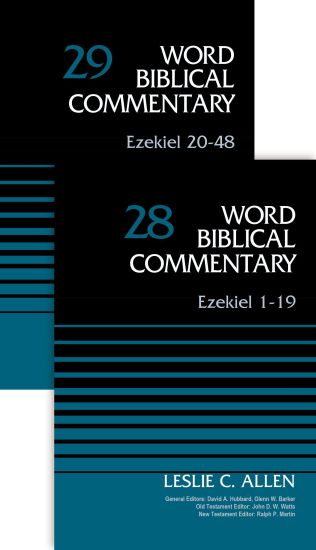
Ezekiel (2-Volume Set---28 and 29)

Ezekiel (2-Volume Set---28 and 29)

Leslie C. Allen

Zondervan Academic
2017
sidottu
The Word Biblical Commentary delivers the best in biblical scholarship, from the leading scholars of our day who share a commitment to Scripture as divine revelation. This series emphasizes a thorough analysis of textual, linguistic, structural, and theological evidence. The result is judicious and balanced insight into the meanings of the text in the framework of biblical theology. These widely acclaimed commentaries serve as exceptional resources for the professional theologian and instructor, the seminary or university student, the working minister, and everyone concerned with building theological understanding from a solid base of biblical scholarship. Overview of Commentary Organization Introduction—covers issues pertaining to the whole book, including context, date, authorship, composition, interpretive issues, purpose, and theology. Each section of the commentary includes: Pericope Bibliography—a helpful resource containing the most important works that pertain to each particular pericope. Translation—the author’s own translation of the biblical text, reflecting the end result of exegesis and attending to Hebrew and Greek idiomatic usage of words, phrases, and tenses, yet in reasonably good English. Notes—the author’s notes to the translation that address any textual variants, grammatical forms, syntactical constructions, basic meanings of words, and problems of translation. Form/Structure/Setting—a discussion of redaction, genre, sources, and tradition as they concern the origin of the pericope, its canonical form, and its relation to the biblical and extra-biblical contexts in order to illuminate the structure and character of the pericope. Rhetorical or compositional features important to understanding the passage are also introduced here. Comment—verse-by-verse interpretation of the text and dialogue with other interpreters, engaging with current opinion and scholarly research. Explanation—brings together all the results of the discussion in previous sections to expose the meaning and intention of the text at several levels: (1) within the context of the book itself; (2) its meaning in the OT or NT; (3) its place in the entire canon; (4) theological relevance to broader OT or NT issues. General Bibliography—occurring at the end of each volume, this extensive bibliographycontains all sources used anywhere in the commentary.