The story of a man beset on assassinating the President of the United States for committing deeds and atrocities he deems unworthy of the office, and the man who tries to stop him.
Logan Carter was a product of his unfortunate upbringing. Made to feel useless by a set of parents suffering from role reversal syndrome he grew up a terribly confused young man. Logan knows he is different, by virtue of how he is treated by people. That said, he sets out to prove his worthlessness by behaving in ways that confirm it. In a perverse convolution of reality Logan uses his negative feelings about himself to make life changing modifications. He turns the tables on those who've put him in his place. In essence he procures a warped sense of worthiness by ridding the world of those he views as unsuitable. His mission, it could be argued, has merit...but it is not his mission. Nobody named him God. Logan's weaknesses mirror most people's weaknesses. It is not for any one individual to determine what is right or what is wrong for another person. Logan wanted to improve the world by forcing his beliefs on others. Do we all not do the same? The answer to our conflicts lies not in our conformity but by our acceptance, despite our differences. Logan learned that lesson too late. Yes he was an extremist, but in many ways Logan is a reflection of us all. Do we all not find fault in others as a way of justifying our own behavior. Are we all not products of our upbringing? Do we all not sit in judgement of others, yet fail to see our own prejudices. When it comes to an individual's personal preferences we tend to see things as either black or white when in reality there are fifty shades of grey...
Jeremy London had just been named the newest 'AMERICAN IDOL.' The singing competition has been the springboard to untold fame and fortune for a growing number of talented contestants. The young singer's victory came with a guaranteed recording contract. In his case Head-Hunter Records, the most successful recording studio in American history. The young rocker soon becomes the idol of millions around the world. The second coming of Elvis, as it were. If Jeremy had studied his contract more closely he would have known about a clause hidden in the small print of his contract that effectively turns over artistic license of his music to the recording studio. Head-Hunter intended to make him a star and then use Jeremy London's music to spread subliminal messages to millions of his unsuspecting fans. Satanic occult type messages meant to slowly hypnotize the minds of those subjected to them. The record company was in truth a front for an ancient and very powerful group of wealthy satanist known collectively as The Illuminati. The secret society has spent the last several decades concentrating their efforts on gaining complete control of the entertainment industry. Its members are intent on creating a New World Order. They have been working towards that end since the middle ages when they were known as The Knights Templar. Jeremy London soon tires of being a ploy and revolts. When he attempts to regain control of his music it proves to be a fatal mistake. The famous singer is discovered hanging by the neck off the end of the iconic pier in Daytona Beach, Florida. The local medical examiner rules the singer's death a suicide. A finding his parents refuse to accept. It is their refusal that eventually leads a local detectives to seek the truth. The story culminates at the Rock and Roll Hall of Fame induction ceremonies in Los Angeles, California where Jeremy London is being inducted posthumously.
Cody Rose has come to the end of her life on earth. Though born with a horrible affliction she has touched countless lives with her positive attitude and Christian faith. Now she has been relegated to a hospital bed to await her coming reconciliation with Christ. There she meets Ted Grace, a psychotherapist who has been assigned her palliative care. The two form a bond that can only be described as divinely inspired. Though Cody is the one who is about to die it is her therapist who needs to be saved. The terminally ill patient uses an obscure painting on her hospital room wall to accomplish that goal. It becomes one of life's anomalies that defy explanation.
Richard and Veronica Stevens take an early retirement so they can pursue other interests. Shortly after moving to Florida Veronica begins volunteering at a local domestic abuse shelter. One day a young Mexican woman shows up at the shelter severely beaten and fearing for her life. Despite knowing it's against shelter policy Veronica can't help but get personally involved. It is a decision that ultimately costs the volunteer advocate her life. When Veronica's bludgeoned body is found inside a sleazy beach side motel room her husband is accused of murdering her. Readers are taken on a whirlwind ride through the seedy barrios of Chihuahua, Mexico to the glitz and glamour of South Beach. They visit upstate New York in the dead of winter and the gang infested inner city neighborhoods of Kansas City. The ride culminates on a luxury cruise ship in the Gulf of Mexico. Along the way Richard Stevens is exonerated, the real killer is caught, and justice is served...
This work has been selected by scholars as being culturally important and is part of the knowledge base of civilization as we know it.This work is in the public domain in the United States of America, and possibly other nations. Within the United States, you may freely copy and distribute this work, as no entity (individual or corporate) has a copyright on the body of the work.Scholars believe, and we concur, that this work is important enough to be preserved, reproduced, and made generally available to the public. To ensure a quality reading experience, this work has been proofread and republished using a format that seamlessly blends the original graphical elements with text in an easy-to-read typeface.We appreciate your support of the preservation process, and thank you for being an important part of keeping this knowledge alive and relevant.
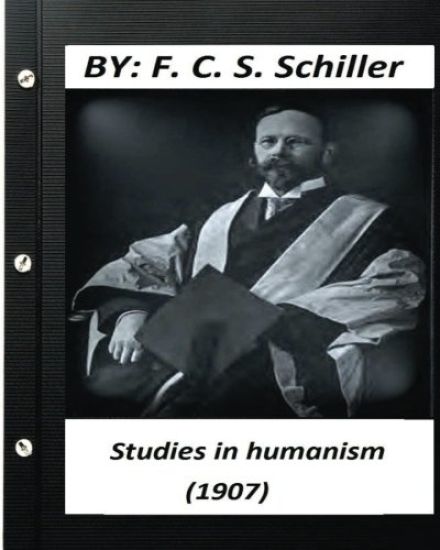
Ferdinand Canning Scott Schiller (16 August 1864 - 6 August 1937) was a German-British philosopher. Born in Altona, Holstein (at that time member of the German Confederation, but under Danish administration), Schiller studied at the University of Oxford (at Corpus Christi College) later was a professor there, after being invited back after a brief time at Cornell University. Later in his life he taught at the University of Southern California. In his lifetime he was well known as a philosopher; after his death his work was largely forgotten. Schiller's philosophy was very similar to and often aligned with the pragmatism of William James, although Schiller referred to it as "humanism". He argued vigorously against both logical positivism and associated philosophers (for example, Bertrand Russell) as well as absolute idealism (such as F.H. Bradley).
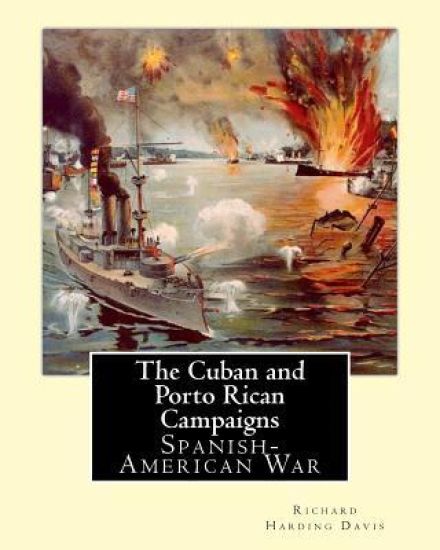
Richard Harding Davis (April 18, 1864 - April 11, 1916) was an American journalist and writer of fiction and drama, known foremost as the first American war correspondent to cover the Spanish-American War, the Second Boer War, and the First World War.His writing greatly assisted the political career of Theodore Roosevelt and he also played a major role in the evolution of the American magazine. His influence extended to the world of fashion and he is credited with making the clean-shaven look popular among men at the turn of the 20th century. Davis was born on April 18, 1864 in Philadelphia, Pennsylvania.His mother Rebecca Harding Davis was a prominent writer in her day. His father, Lemuel Clarke Davis, was himself a journalist and edited the Philadelphia Public Ledger. As a young man, Davis attended the Episcopal Academy. In 1882, after an unhappy year at Swarthmore College, Davis transferred to Lehigh University, where his uncle, H. Wilson Harding, was a professor.While at Lehigh, Davis published his first book, The Adventures of My Freshman (1884), a collection of short stories. Many of the stories had originally appeared in the student magazine the Lehigh Burr. In 1885, Davis transferred to Johns Hopkins University. After college, his father helped him gain his first position as a journalist at the Philadelphia Record but he was soon dismissed. After another brief position at the Philadelphia Press, Davis accepted a better-paying position at the New York Evening Sun where he gained attention for his flamboyant style and his writing on controversial subjects such as abortion, suicide and execution.He first attracted attention in May to June 1889, by reporting on the devastation of Johnstown, Pennsylvania, following the infamous flood and added to his reputation by reporting on other noteworthy events such as the first electrocution of a criminal (the execution of William Kemmler in 1890)...... Frederick Coffay Yohn (February 8, 1875 - June 6, 1933), often recognized only by his initials, F. C. Yohn, was an artist and magazine illustrator.Yohn's work appeared in publications including Scribner's Magazine, Harper's Magazine, and Collier's Weekly. Books he illustrated included Jack London's A Daughter of the Snows, Frances Hodgson Burnett's The Dawn of a To-morrow and Henry Cabot Lodge's Story of the American Revolution. He studied at the Indianapolis Art School during his first student year and then studied at the Art Students League of New York under Henry Siddons Mowbray (1858-1928). Mowbray studied at the Atelier of L on Bonnat in Paris. Yohn often specialized in historical military themes, especially of the American Revolution, as well as the First World War. He designed the 2 cent US Postal Service stamp in 1929 to commemorate the 150th Anniversary of George Rogers Clark's Victory over the British at Sackville. He is best known for his painting of George Washington at Valley Forge.
Sir Francis Cowley Burnand (29 November 1836 - 21 April 1917), usually known as F. C. Burnand, was an English comic writer and prolific playwright, best known today as the librettist of Arthur Sullivan's opera Cox and Box. The son of a prosperous family, he was educated at Eton and Cambridge, and was expected to follow a conventional career in the law or in the church, but he concluded that his vocation was the theatre. From his schooldays he had written comic plays, and from 1860 until the end of the 19th century, he produced a series of more than 200 Victorian burlesques, farces, pantomimes and other stage works. His early successes included the burlesques Ixion, or the Man at the Wheel (1863) and The Latest Edition of Black-Eyed Susan; or, the Little Bill that Was Taken Up (1866). Also in 1866, he adapted the popular farce Box and Cox as a comic opera, Cox and Box, with music by Sullivan. The piece became a popular favourite and was later frequently used by the D'Oyly Carte Opera Company as a curtain raiser; it remains regularly performed today. By the 1870s, Burnand was generating a prodigious output of plays as well as comic pieces and illustrations for the humour magazine Punch. Among his 55-stage works during the decade was another frequently revived hit, Betsy (1879). For Punch, among other things, he wrote the popular column "Happy Thoughts", in which the narrator recorded the difficulties and distractions of everyday life. Also admired were his burlesques of other writers' works. Burnand was a contributor to Punch for 45 years and its editor from 1880 until 1906 and is credited with adding much to the popularity and prosperity of the magazine. His editorship of the original publication of The Diary of a Nobody by the brothers George and Weedon Grossmith was a high point of his tenure in 1888-89. Many of his articles were collected and published in book form. His stage successes in the 1890s included his English-language versions of two Edmond Audran operettas, titled La Cigale and Miss Decima (both in 1891). His last works included collaborations on pantomimes of Cinderella (1905) and Aladdin (1909). Known generally for his genial wit and good humor, Burnand was nevertheless intensely envious of his contemporary W. S. Gilbert but was unable to emulate his rival's success as a comic opera librettist. In other forms of theatre Burnand was outstandingly successful, with his works receiving London runs of up to 550 performances and extensive tours in the British provinces and the US. He published several humorous books and memoirs and was knighted in 1902 for his work on Punch.
Ernest William Hornung (7 June 1866 - 22 March 1921) was an English author and poet known for writing the A. J. Raffles series of stories about a gentleman thief in late 19th-century London. Hornung was educated at Uppingham School; as a result of poor health he left the school in December 1883 to travel to Sydney, where he stayed for two years. He drew on his Australian experiences as a background when he began writing, initially short stories and later novels. In 1898 he wrote "In the Chains of Crime", which introduced Raffles and his sidekick, Bunny Manders; the characters were based partly on his friends Oscar Wilde and his lover, Lord Alfred Douglas, and also on the characters of Sherlock Holmes and Dr. Watson, created by his brother-in-law, Arthur Conan Doyle. The series of Raffles short stories were collected for sale in book form in 1899, and two further books of Raffles short stories followed, as well as a poorly received novel. Aside from his Raffles stories, Hornung was a prodigious writer of fiction, publishing numerous books from 1890, with A Bride from the Bush to his 1914 novel The Crime Doctor. The First World War brought an end to Hornung's fictional output. His son, Oscar, was killed at the Second Battle of Ypres in July 1915. Hornung joined the YMCA, initially in England, then in France, where he helped run a canteen and library. He published two collections of poetry during the war, and then, afterwards, one further volume of verse and an account of his time spent in France, Notes of a Camp-Follower on the Western Front. Hornung's fragile constitution was further weakened by the stress of his war work. To aid his recuperation, he and his wife visited the south of France in 1921. He fell ill from influenza on the journey, and died on 22 March 1921, aged 54. Although much of Hornung's work has fallen into obscurity, his Raffles stories continued to be popular, and have formed numerous film and television adaptations. Hornung's stories dealt with a wider range of themes than crime: he examined scientific and medical developments, guilt, class and the unequal role played by women in society. Two threads that run through a sizeable proportion of his books are Australia and cricket; the latter was also a lifelong passion. Frederick Coffay Yohn (February 8, 1875 - June 6, 1933), often recognized only by his initials, F. C. Yohn, was an artist and magazine illustrator.
Ernest William Hornung (7 June 1866 - 22 March 1921) was an English author and poet known for writing the A. J. Raffles series of stories about a gentleman thief in late 19th-century London. Hornung was educated at Uppingham School; as a result of poor health he left the school in December 1883 to travel to Sydney, where he stayed for two years. He drew on his Australian experiences as a background when he began writing, initially short stories and later novels. In 1898 he wrote "In the Chains of Crime", which introduced Raffles and his sidekick, Bunny Manders; the characters were based partly on his friends Oscar Wilde and his lover, Lord Alfred Douglas, and also on the characters of Sherlock Holmes and Dr. Watson, created by his brother-in-law, Arthur Conan Doyle. The series of Raffles short stories were collected for sale in book form in 1899, and two further books of Raffles short stories followed, as well as a poorly received novel. Aside from his Raffles stories, Hornung was a prodigious writer of fiction, publishing numerous books from 1890, with A Bride from the Bush to his 1914 novel The Crime Doctor. The First World War brought an end to Hornung's fictional output. His son, Oscar, was killed at the Second Battle of Ypres in July 1915. Hornung joined the YMCA, initially in England, then in France, where he helped run a canteen and library. He published two collections of poetry during the war, and then, afterwards, one further volume of verse and an account of his time spent in France, Notes of a Camp-Follower on the Western Front. Hornung's fragile constitution was further weakened by the stress of his war work. To aid his recuperation, he and his wife visited the south of France in 1921. He fell ill from influenza on the journey, and died on 22 March 1921, aged 54. Although much of Hornung's work has fallen into obscurity, his Raffles stories continued to be popular, and have formed numerous film and television adaptations. Hornung's stories dealt with a wider range of themes than crime: he examined scientific and medical developments, guilt, class and the unequal role played by women in society. Two threads that run through a sizeable proportion of his books are Australia and cricket; the latter was also a lifelong passion..... Frederick Coffay Yohn (February 8, 1875 - June 6, 1933), often recognized only by his initials, F. C. Yohn, was an artist and magazine illustrator.
Frederick Coffay Yohn (February 8, 1875 - June 6, 1933), often recognized only by his initials, F. C. Yohn, was an artist and magazine illustrator.Yohn's work appeared in publications including Scribner's Magazine, Harper's Magazine, and Collier's Weekly. Books he illustrated included Jack London's A Daughter of the Snows, Frances Hodgson Burnett's The Dawn of a To-morrow and Henry Cabot Lodge's Story of the American Revolution. He studied at the Indianapolis Art School during his first student year and then studied at the Art Students League of New York under Henry Siddons Mowbray (1858-1928). Mowbray studied at the Atelier of L on Bonnat in Paris. Yohn often specialized in historical military themes, especially of the American Revolution, as well as the First World War. He designed the 2 cent US Postal Service stamp in 1929 to commemorate the 150th Anniversary of George Rogers Clark's Victory over the British at Sackville. He is best known for his painting of George Washington at Valley Forge............. George Washington Cable (October 12, 1844 - January 31, 1925) was an American novelist notable for the realism of his portrayals of Creole life in his native New Orleans, Louisiana. He has been called "the most important southern artist working in the late 19th century, as well as the first modern southern writer." In his treatment of racism, mixed-race families and miscegenation, his fiction has been thought to anticipate that of William Faulkner. He also wrote articles critical of contemporary society. Due to hostility against him after two 1885 essays encouraging racial equality and opposing Jim Crow, Cable moved with his family to Northampton, Massachusetts. He lived there for the next thirty years, then moved to Florida. Biography: Cable was born in 1844 in New Orleans, Louisiana, the son of George W. Cable, Sr., and Rebecca Boardman Cable. They were wealthy slaveholders who were members of the Presbyterian Church and New Orleans society, whose families had moved there after the Louisiana Purchase. First educated in private schools, the younger Cable had to get work after his father died young. The elder Cable had lost investments, and the family struggled financially. Cable later learned French on his own. He served in the Confederate Army during the American Civil War, in which he took part in support of the Southern cause. His experiences changed his ideas about Southern and Louisiana society, and he began writing during a two-year bout with malaria. In 1870 Cable went into journalism, writing for the New Orleans Picayune. He worked for them from 1865 to 1879, by which time he had become an established writer. In 1869, George Cable married Louisa Stewart Bartlett, with whom he had several children. He was invited to submit stories in Scribner's Monthly, where his story "Sieur George", published in 1873, was a critical and popular success. He published six more stories of Creole life with Scribner's in the following three years. The stories were collected and published in a book in 1879 as Old Creole Days. While romantic in plot, the stories revealed the multi-cultural and multi-racial nature of antebellum New Orleans society, with ties among French, Spanish, African, Native American and Caribbean Creoles. He also addressed conflicts that arose following the Louisiana Purchase, when traditional New Orleans Creoles of color had to confront Anglo-Americans - who ultimately asserted their concept of a biracial society, rather than acknowledging the multiracial class of free people of color.In 1880 Cable published his first novel, The Grandissimes: A Story of Creole Life, portraying multiracial members and different classes of society in the early 1800s shortly after the Louisiana Purchase. It had first been serialized in Scribner's. The plot follows the adventures and romances of several members of the Grandissime family, a French Creole family with mixed-race members............
Frederick Coffay Yohn (February 8, 1875 - June 6, 1933), often recognized only by his initials, F. C. Yohn, was an artist and magazine illustrator. George Washington Cable (October 12, 1844 - January 31, 1925) was an American novelist notable for the realism of his portrayals of Creole life in his native New Orleans, Louisiana. He has been called "the most important southern artist working in the late 19th century, as well as the first modern southern writer." In his treatment of racism, mixed-race families and miscegenation, his fiction has been thought to anticipate that of William Faulkner. He also wrote articles critical of contemporary society. Due to hostility against him after two 1885 essays encouraging racial equality and opposing Jim Crow, Cable moved with his family to Northampton, Massachusetts. He lived there for the next thirty years, then moved to Florida. Biography: Cable was born in 1844 in New Orleans, Louisiana, the son of George W. Cable, Sr., and Rebecca Boardman Cable. They were wealthy slaveholders who were members of the Presbyterian Church and New Orleans society, whose families had moved there after the Louisiana Purchase. First educated in private schools, the younger Cable had to get work after his father died young. The elder Cable had lost investments, and the family struggled financially. Cable later learned French on his own. He served in the Confederate Army during the American Civil War, in which he took part in support of the Southern cause. His experiences changed his ideas about Southern and Louisiana society, and he began writing during a two-year bout with malaria. In 1870 Cable went into journalism, writing for the New Orleans Picayune. He worked for them from 1865 to 1879, by which time he had become an established writer. In 1869, George Cable married Louisa Stewart Bartlett, with whom he had several children. He was invited to submit stories in Scribner's Monthly, where his story "Sieur George", published in 1873, was a critical and popular success. He published six more stories of Creole life with Scribner's in the following three years. The stories were collected and published in a book in 1879 as Old Creole Days. While romantic in plot, the stories revealed the multi-cultural and multi-racial nature of antebellum New Orleans society, with ties among French, Spanish, African, Native American and Caribbean Creoles. He also addressed conflicts that arose following the Louisiana Purchase, when traditional New Orleans Creoles of color had to confront Anglo-Americans - who ultimately asserted their concept of a biracial society, rather than acknowledging the multiracial class of free people of color.In 1880 Cable published his first novel, The Grandissimes: A Story of Creole Life, portraying multiracial members and different classes of society in the early 1800s shortly after the Louisiana Purchase. It had first been serialized in Scribner's. The plot follows the adventures and romances of several members of the Grandissime family, a French Creole family with mixed-race members. He used this historical romance as a way to explore society and its racial injustice, as he addressed European Creoles, the mixed-race class, pla age, slavery, and lynchings. Also in 1880, the United States Census Bureau commissioned Cable to write a "historical sketch" of pre-Civil War New Orleans for a special section of the 10th United States Census' "Social statistics of cities." He submitted a well-researched 313-page history. It was greatly reduced for publication in 1884. His novella Madame Delphine (1881), expanded from a short story, featured the issue of miscegenation, in which a woman of partially African descent tries to arrange the marriage of her daughter, who has more European ancestry, to one of the French Creole elite. In 1884 he published a work, Dr. Sevier, on prison reform.
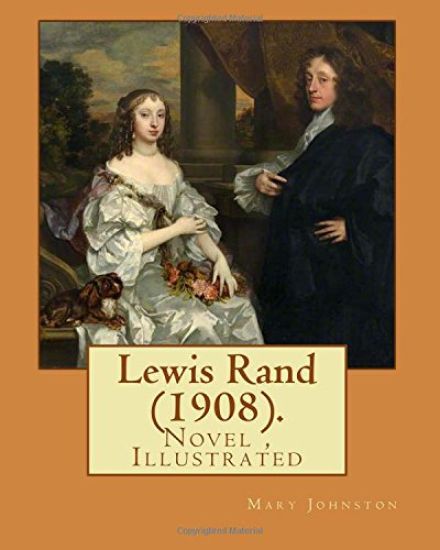
Mary Johnston (November 21, 1870 - May 9, 1936) was an American novelist and women's rights advocate from Virginia. She was one of America's best selling authors during her writing career and had three silent films adapted from her novels. Early life: Mary Johnston was born in the small town of Buchanan, Virginia, the eldest child of John William Johnston, an American Civil War veteran, and Elizabeth Dixon Alexander Johnston. Due to frequent illness, she was educated at home by family and tutors. She grew up with a love of books and was financially independent enough to devote herself to writing. Career as novelist Johnston wrote historical books and novels that often combined romance with history. Her first book, Prisoners of Hope (1898), dealt with colonial times in Virginia as did her second novel, To Have and to Hold (1900), and later, Sir Mortimer (1904). The Goddess of Reason (1907) uses the theme of the French Revolution, and in Lewis Rand (1908) the author portrayed political life at the dawn of the 19th century. To Have and to Hold was serialized in The Atlantic Monthly in 1899 and published in book form 1900, by Houghton Mifflin. The book proved enormously popular and was the bestselling novel in the United States in 1900. Johnston's next work, titled Audrey, was the fifth bestselling book in the U.S. in 1902, and Sir Mortimer, serialized in Harper's Monthly magazine from November 1903 through April 1904, was published in 1904. Her best-selling 1911 novel on the American Civil War, The Long Roll, brought Johnston into open conflict with Stonewall Jackson's widow, Mary Anna Jackson. Beyond her native America, Johnston's novels were also very popular in Canada and in England. During her long career Johnston wrote, in addition to 23 novels, numerous short stories, two long narrative poems, and one play. She used her fame to advocate for women's rights and strongly supported the women's suffrage movement. Her book titled Hagar (1913), considered to be one of the first feminist novels as well as somewhat autobiographical, captures the early days of women's rights. Johnston's deep focus on female suffrage in the United States is documented by her letters and correspondence with women working for the right to vote. But Hagar created a controversy among men and tradition-minded women, who were upset by the book's progressive ideas. Many refused to purchase it and subsequent Johnston novels. During her life, Johnston was close friends with Gone with the Wind author Margaret Mitchell, who once commented: "I hesitate to write about the South after having read Mary Johnston. Johnston died in 1936, at the age of 65, at her home in Warm Springs, Virginia. She was interred in Hollywood Cemetery in Richmond. Three Hills, her house at Warm Springs, was added to the National Register of Historic Places in 2013. Her Richmond home on Linden Row was listed in 1971......................Frederick Coffay Yohn (February 8, 1875 - June 6, 1933), often recognized only by his initials, F. C. Yohn, was an artist and magazine illustrator
F. C., ancien major, en retraite. La Tenue des pieces matricules pendant la guerre, d'apres les prescriptions reglementaires et les ordres ministerielsDate de l'edition originale: 1916Ce livre est la reproduction fidele d une uvre publiee avant 1920 et fait partie d une collection de livres reimprimes a la demande editee par Hachette Livre, dans le cadre d un partenariat avec la Bibliotheque nationale de France, offrant l opportunite d acceder a des ouvrages anciens et souvent rares issus des fonds patrimoniaux de la BnF.Les uvres faisant partie de cette collection ont ete numerisees par la BnF et sont presentes sur Gallica, sa bibliotheque numerique.En entreprenant de redonner vie a ces ouvrages au travers d une collection de livres reimprimes a la demande, nous leur donnons la possibilite de rencontrer un public elargi et participons a la transmission de connaissances et de savoirs parfois difficilement accessibles.Nous avons cherche a concilier la reproduction fidele d un livre ancien a partir de sa version numerisee avec le souci d un confort de lecture optimal. Nous esperons que les ouvrages de cette nouvelle collection vous apporteront entiere satisfaction.Pour plus d informations, rendez-vous sur www.hachettebnf.fr
F. C. Laukhards Leben und Schicksale - Dritter Teil ist ein unver nderter, hochwertiger Nachdruck der Originalausgabe aus dem Jahr 1796. Hansebooks ist Herausgeber von Literatur zu unterschiedlichen Themengebieten wie Forschung und Wissenschaft, Reisen und Expeditionen, Kochen und Ern hrung, Medizin und weiteren Genres. Der Schwerpunkt des Verlages liegt auf dem Erhalt historischer Literatur. Viele Werke historischer Schriftsteller und Wissenschaftler sind heute nur noch als Antiquit ten erh ltlich. Hansebooks verlegt diese B cher neu und tr gt damit zum Erhalt selten gewordener Literatur und historischem Wissen auch f r die Zukunft bei.