
Kirjahaku
Etsi kirjoja tekijän nimen, kirjan nimen tai ISBN:n perusteella.
487 tulosta hakusanalla Fabienne Massiani-Lebahar


"What more glorious claim to fame could there be than Milliner to the Queen? ", asks Stéphane Bern in his preface to this exclusive book marking the 30th anniversary of MAISON FABIENNE DELVIGNE. The book traces the exceptional career of Fabienne Delvigne, the Belgian entrepreneur, hat designer and craftswoman who creates highend luxury products. Across Europe, Fabienne Delvigne's designs sublimate the beauty of women. Her unique talent was recognised in 2001, when she gained the trust of the Belgian royal family, who awarded her the coveted title of Warrant Holder of the Court of Belgium. In this book, Fabienne casts a refined and joyful gaze on the world of fashion, and introduces us into her world, a world made up encounters, hard work, inspiring walks, and the joy of practising her craft every day. An original and exhilarating volume that not only looks back on the milliner's career, but also reveals a woman of character who defends an artistic heritage while being of her time. Since 2008, alongside her Haute Couture collections, she has designed, for each season, a Studio Collection composed of stylish, prêt-à-porter hats. The body of the text? The words that helped her fashion her creative universe. The spirit moving that body? Passion, her passions. Anecdotes, recollections, previously unseen projects, a behind-the-scenes view of the creator's artistry, a look back on her collaborations with such leading companies as Guerlain and BMW, and, of course, hats to go mad for! This book has been released to mark the 30th anniversary of Maison Fabienne Delvigne, with forewords provided by Stéphane Bern and Diane von Furstenberg. Readers will discover the passion that drives this Belgian entrepreneur, a perfectionist to the very tips of her scissors. A Warrant Holder of several European Courts, Fabienne also designs hats for all the élégantes who enter her Brussels boudoir workshop. Leafing through the book, readers will not fail to appreciate her unique and fascinating journey.

Fabienne Lasserre: Entre chien et loup
Inventory Press LLC
2026
nidottu
Titled after the French expression for twilight, Lasserre's first monograph is a fitting expression of her ambiguous colorblocked compositions blending painting with sculpture Brooklyn-based artist Fabienne Lasserre (born 1973) describes her practice as "a stubborn action on materials"—creating freestanding objects made of clay, hand-dyed fabric, paper and metal that hover between painting and sculpture. For Lasserre, abstraction is a means to privilege lived and felt experience, implying powerful and fertile political metaphors. Entre chien et loup (a French expression for twilight), speaks to the way Lasserre's work defies easy categorization. This catalog-cum-artist's book includes contributions by curators Camila Marambio and Dean Daderko, art historian Nell Andrews and artist Kristine Woods (all presented in both English and French) providing intimate and lyrical weaving of viewpoints on materials, the senses, resistance and queer and feminist perspectives.

Ce livre n'est pas sans rappeler les livres de Serge Monast (L'int grale), de Yann Moncomble (L'irr sistible expansion du mondialisme) et Jacques Bordiot (Une main cach e dirige). Mais celui auquel il para t le plus proche est celui de Epiphanius, Ma onnerie et sectes secr tes, le c t cach de l'histoire .Apr s avoir trac un historique, terreau sur lequel a pu s' tablir la Soci t Fabienne - la City de Londres et la vogue du socialisme et du communisme - l'auteur s'attache d montrer comment cette soci t s'infiltre partout dans le monde et dans toutes les couches de la soci t , par l'interm diaire de leurs promoteurs et de son cole formater l'esprit de ses l ves, la London School Economics, dans le but de diffuser leurs id es de domination du monde. De quoi s'agit-il ? Comme les Illumin s de Bavi re de Weishaupt, la Soci t Fabienne vise renverser les acquis de l'ancien monde. Seulement elle ne le fait pas comme les Bolch viques (dont elle est proche id ologiquement comme l'a d montr Pierre Elliott Trudeau), dans la r volution et la violence, non, elle le fait progressivement, graduellement, patiemment. L'auteur affirme que: le plan est tr s sot rique et rus , et difficile comprendre pour la majorit des gens. C'est un plan qui vise abolir les nations (le Canada se vante d' tre le premier tat post-national qui se d finit par son multiculturalisme et non plus par son histoire), la propri t comme l'impose le communisme. Ce plan vise faire du monde un grand village o toutes les races et les religions sont m lang es, les particularit s des peuples an anties, les individualit s ni es, ou tout est format , uniformis , trac , comme dans Le meilleur des mondes de Aldous Huxley. Les Fabiens sont non seulement des immigrationnistes forcen s, mais galement des eug nistes convaincus. L'humanit doit tre r duite co te que co te, vaille que vaille, afin que leur plan reste viable. Pour eux tout est bon pour casser l'ancien monde. La promotion des drogues et d'une contre-culture satanique telle que celle des Beatles et des Rollings Stones vise a garer la jeunesse. Rendre faux, idiot, b te, inculte, docile, perm able tout et n'importe quoi, loigner de l'essentiel, couper l' tre humain de son humanit , voil le programme que les adeptes de la Soci t Fabienne r serve l'humanit enti re et qui est sur le point de r ussir, malheureusement. L'auteur encha ne avec pr cision sur les technologies qui permettent d'asservir l'humanit en un chapitre terrifiant qui aborde les probl mes de l'intelligence artificielle, de la puce RFID et de la 5G, v ritable soupe d'ondes qui entoure la plan te Terre, aucun tre vivant n'y chappant

A personalised storybook for girls called FABIENNE. The story is based on the letters of the child's own name. All books are different from one another. The girl wakes up but can't remember her name. Magic Mouse knows how to solve the problem. They go on a wonderful adventure in the Magic Bus Translated and adapted by the author from the top-selling Finnish language children's namebook series "Tytt /Poika, joka unohti nimens ". The beautiful hand-drawn pictures will delight both the young and the young-at-heart Looking for a namebook "What's my name?" but couldn't find a book for the name you are looking for? Please don't hesitate to contact me with your name request -Tiina Walsh Author fb.me/whatsmynamestorybooks for more details about the storybooks

Weltgeschichte: Ereignisse, Kulturen, Lebensweisen: Ein Comic-Lehrbuch von Michael Mittag & Fabienne Egli
Michael Mittag; Fabienne Egli
BoD - Books on Demand
2026
nidottu
Dieser Comic f hrt humorvoll durch die Weltgeschichte. Er gibt einen berblick ber die wichtigsten Ereignisse auf allen Kontinenten sowie die weltumspannenden Entwicklungen der Neuzeit. Zus tzlich gibt er einen Einblick in die Errungenschaften der Kulturgeschichte und zeigt anhand der Sozialgeschichte auf, wie das Leben f r verschiedene Menschen ganz konkret ausgesehen hat. Damit schafft der Comic eine Verbindung zwischen dem geschichtlichen Alltagswissen und der wissenschaftlichen Herangehensweise und legt so eine fundierte Grundlage zum Verst ndnis von Zeiten und Kulturen.

A Systems Approach to Managing the Complexities of Process Industries
Fabienne-Fariba Salimi; Frederic Salimi
Elsevier Science Publishing Co Inc
2017
nidottu
A Systems Approach to Managing the Complexities of Process Industries discusses the principles of system engineering, system thinking, complexity thinking and how these apply to the process industry, including benefits and implementation in process safety management systems. The book focuses on the ways system engineering skills, PLM, and IIoT can radically improve effectiveness of implementation of the process safety management system. Covering lifecycle, megaproject system engineering, and project management issues, this book reviews available tools and software and presents the practical web-based approach of Analysis & Dynamic Evaluation of Project Processes (ADEPP) for system engineering of the process manufacturing development and operation phases. Key solutions proposed include adding complexity management steps in the risk assessment framework of ISO 31000 and utilization of Installation Lifecycle Management. This study of this end-to-end process will help users improve operational excellence and navigate the complexities of managing a chemical or processing plant.
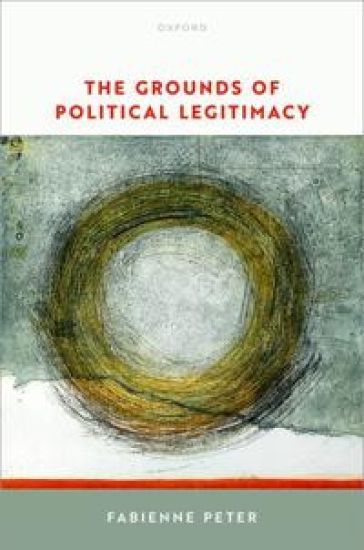
Political decisions have the potential to greatly impact our lives. Think of decisions in relation to abortion or climate change, for example. This makes political legitimacy an important normative concern. But what makes political decisions legitimate? Are they legitimate in virtue of having support from the citizens? Democratic conceptions of political legitimacy answer in the affirmative. Such conceptions rightly highlight that legitimate political decision-making must be sensitive to disagreements among the citizens. But what if democratic decisions fail to track what there is most reason to do? What if a democratically elected government fails to take measures necessary to protect its population from threats related to climate change? Peter argues that the legitimacy of political decisions doesn't just depend on respect for the citizens' will; and defends a novel hybrid conception of political legitimacy, called the Epistemic Accountability conception. According to this conception, political legitimacy also depends on how political decision-making responds to evidence for what there is most reason to do. The Grounds of Political Legitimacy starts with an overview of the main ways in which philosophers have thought about political legitimacy, and identifies the epistemic accountability conception as an overlooked alternative. It then develops the epistemic accountability conception of political legitimacy and discusses its implications for legitimate political decision-making. Considering the norms that should govern political debate, it examines the role of experts in politics, and probes the responsibilities of democratically elected political leaders and as well as of citizens.

Creation, Migration, and Conquest: Imaginary Geography and Sense of Space in Old English Literature explores the Anglo-Saxons' spatial imaginaire; tracing its political, literary, and intellectual backgrounds and analysing how this imaginaire shapes perceptions and representations of geographical space. The book elaborates new interpretative paradigms, drawing on the work of continental scholars and literary critics, and on complementing interdisciplinary scholarship of medieval imaginary spaces and their representations. It gathers evidence from both Old English verse and historico-geographical documents, and focuses on the juncture between traditional scientific learning and the symbolic values attributed to space and orientation. Combining close reading with an original theoretical model, Creation, Migration, and Conquest offers innovative interpretations of celebrated texts and highlights the links between place, identity, and collective identity.

A beautifully illustrated look at the works of Anni Albers with a focus on the architectural dimensions of her work Anni Albers (1899–1994) has long been revered as a trailblazing weaver, textile designer, and visual artist; she also was an insightful and eloquent writer, and her books On Designing and On Weaving are canonical writings in design history. Anni Albers: Constructing Textiles explores the ideas of materiality, construction, and architecture across her body of work, establishing her legacy as a thinker, theoretician, and innovator. The book’s essays include essential writings by Albers herself on the making and meaning of textiles, as well as new pieces by Glenn Adamson on her relationship to architecture, Karis Medina on the material and technique of her weavings, Amy Jean Porter on her writing, and Jeffrey Saletnik on East Asian influences in Albers’s work and thinking. Among the book’s hundreds of beautifully reproduced images are works held in private collections that have never before been published. An essential volume in the literature about modernism, this book reinforces Albers’s position as a leading figure in twentieth-century art. Exhibition Schedule: Zentrum Paul Klee, Bern Switzerland (November 7, 2025–February 22, 2026)

A New Approach to HAZOP of Complex Chemical Processes
Fabienne-Fariba Salimi; Ali Akbar Safavi; Leonhard Urbas; Frederic Salimi
Elsevier - Health Sciences Division
2023
nidottu
A New Approach to HAZOP of Complex Chemical Processes provides practical methods to identify and categorize chemical process complexities systematically. The book follows a holistic assessment of risks and required safeguards which enables readers to define the boundaries of HAZOP 4.0 accurately. The book is written by authors who have decades of experience in advanced process monitoring and artificial intelligence to support HAZOP teams with a holistic dynamic simulation and multivariable monitoring of the complex systems, and to assess historical failure and accident data and information using artificial intelligence techniques in a user-friendly way.

Protecting the Religious Freedom of New Minorities in International Law
Fabienne Bretscher
Routledge
2019
sidottu
This book examines the interpretation and application of the right to freedom of religion and belief of new minorities formed by recent migration by the European Court of Human Rights (ECtHR) and the United Nations Human Rights Committee (HRC). New minorities are increasingly confronted with restrictions of their religious practices and have addressed their rights claims both to the ECtHR and the HRC through their individual complaint procedures, which resulted in several contradicting decisions. Based on a quantitative and qualitative empirical analysis of the relevant case law, focusing in particular on the reasoning adopted by the two bodies, this book finds that the HRC in its practice offers a significantly higher level of protection to new minorities than the ECtHR. Such divergence may be explained by various institutional and conceptual differences, of which the concept of the margin of appreciation is the most influential. It is contended that the extensive use of the concept of the margin of appreciation by the ECtHR in the case law regarding new minorities’ right to freedom of religion and belief, and the absence of such concept in the HRC’s case law, could be explained by different understandings of the role of an international human rights body in conflicts between the majority and minorities. This book argues that such divergence could be mitigated with various tools, such as the inclusion of cross-references to the case law of other relevant bodies as well as to instruments specifically established for the protection of minorities. The book will be of interest to academics, researchers and practitioners in the area of international human rights law, international public law in general and law and religion.

Examining the place of nature in Victorian women's poetry, Fabienne Moine explores the work of canonical and long-neglected women poets to show the myriad connections between women and nature during the period. At the same time, she challenges essentialist discourses that assume innate affinities between women and the natural world. Rather, Moine shows, Victorian women poets mobilised these alliances to defend common interests and express their engagement with social issues. While well-known poets such as Elizabeth Barrett Browning and Christina Rossetti are well-represented in Moine's study, she pays particular attention to lesser known writers such as Mary Howitt or Eliza Cook who were popular during their lifetimes or Edith Nesbit, whose verse has received scant critical attention so far. She also brings to the fore the poetry of many non-professional poets. Looking to their immediate cultural environments for inspiration, these women reconstructed the natural world in poems that raise questions about the validity and the scope of representations of nature, ultimately questioning or undermining social practices that mould and often fossilise cultural identities.

Exoplanet, extrasolar planet, exoEarth, exojupiter: neologisms still absent from many dictionaries. These terms are, however, current among astronomers, and are heard in their answers to a question already two millennia old: are there planets like ours elsewhere in the Universe? Greek atomists such as Epicurus were convinced of the existence of an infinite number of solar systems like our own, but it was only in 1995 that a real answer began to emerge. An extrasolar planet had been detected... a planet orbiting another star... a star like the Sun. So, the solar system was not unique! By mid- 2006 more than 200 giant exoplanets had been discovered. At this rate of discovery it seems that Earth-like planets may be found within a decade. The discovery of exoplanets held some surprises, in that they exhibited very different characteristics from what might have been expected. Although most of them are gas giants of masses comparable to Jupiter's mass, as a result of the rather insensitive nature of current detection methods, why are they from ten to fifty times closer to their stars than is Jupiter? How were these 'hot Jupiters' formed? Another surprise about exoplanets is that many of them have very elliptical orbits, while the planets of the solar system have much more circular orbits.

This book offers a systematic treatment of the requirements of democratic legitimacy. It argues that democratic procedures are essential for political legitimacy because of the need to respect value pluralism and because of the learning process that democratic decision-making enables. It proposes a framework for distinguishing among the different ways in which the requirements of democratic legitimacy have been interpreted. Peter then uses this framework to identify and defend what appears as the most plausible conception of democratic legitimacy. According to this conception, democratic legitimacy requires that the decision-making process satisfies certain conditions of political and epistemic fairness.
This book offers a systematic treatment of the requirements of democratic legitimacy. It argues that democratic procedures are essential for political legitimacy because of the need to respect value pluralism and because of the learning process that democratic decision-making enables. It proposes a framework for distinguishing among the different ways in which the requirements of democratic legitimacy have been interpreted. Peter then uses this framework to identify and defend what appears as the most plausible conception of democratic legitimacy. According to this conception, democratic legitimacy requires that the decision-making process satisfies certain conditions of political and epistemic fairness.

Based on a series of case studies of globally distributed media and their reception in different parts of the world, Imagining the Global reflects on what contemporary global culture can teach us about transnational cultural dynamics in the 21st century. A focused multisited cultural analysis that reflects on the symbiotic relationship between the local, the national, and the global, it also explores how individuals’ consumption of global media shapes their imagination of both faraway places and their own local lives. Chosen for their continuing influence, historical relationships, and different geopolitical positions, the case sites of France, Japan, and the United States provide opportunities to move beyond common dichotomies between East and West, or United States and “the rest.” From a theoretical point of view, Imagining the Global endeavors to answer the question of how one locale can help us understand another locale. Drawing from a wealth of primary sources—several years of fieldwork; extensive participant observation; more than 80 formal interviews with some 160 media consumers (and occasionally producers) in France, Japan, and the United States; and analyses of media in different languages—author Fabienne Darling-Wolf considers how global culture intersects with other significant identity factors, including gender, race, class, and geography. Imagining the Global investigates who gets to participate in and who gets excluded from global media representation, as well as how and why the distinction matters.

Based on a series of case studies of globally distributed media and their reception in different parts of the world, Imagining the Global reflects on what contemporary global culture can teach us about transnational cultural dynamics in the 21st century. A focused multisited cultural analysis that reflects on the symbiotic relationship between the local, the national, and the global, it also explores how individuals’ consumption of global media shapes their imagination of both faraway places and their own local lives. Chosen for their continuing influence, historical relationships, and different geopolitical positions, the case sites of France, Japan, and the United States provide opportunities to move beyond common dichotomies between East and West, or United States and “the rest.” From a theoretical point of view, Imagining the Global endeavors to answer the question of how one locale can help us understand another locale. Drawing from a wealth of primary sources—several years of fieldwork; extensive participant observation; more than 80 formal interviews with some 160 media consumers (and occasionally producers) in France, Japan, and the United States; and analyses of media in different languages—author Fabienne Darling-Wolf considers how global culture intersects with other significant identity factors, including gender, race, class, and geography. Imagining the Global investigates who gets to participate in and who gets excluded from global media representation, as well as how and why the distinction matters.