Kirjojen hintavertailu. Mukana 11 244 527 kirjaa ja 12 kauppaa.

Kirjahaku

Etsi kirjoja tekijän nimen, kirjan nimen tai ISBN:n perusteella.

977 tulosta hakusanalla Fabrizio Benedetti

Placebo Effects

Placebo Effects

Fabrizio Benedetti

Oxford University Press
2020
nidottu
Two of the most widely used terms in medicine are 'placebo' and placebo effect, even though it is not always clear what exactly they mean. Recent progress in biomedical research has allowed a better clarification of the placebo effect. We now know that this is an active psychobiological phenomenon which takes place in the patient's brain and that is capable of influencing both the course of a disease and the response to a therapy. Placebo Effects (3e) is a significantly updated and expanded new edition of a highly successful and critically acclaimed textbook on placebos. It is the first book to emphasize that there are many placebo effects and reviews them critically in different medical conditions, such as neurological and psychiatric disorders, cardiovascular and respiratory diseases, immune and hormonal responses, as well as oncology, surgery, sports medicine and acupuncture. In addition, it looks at the psychosocial context, which is considered crucial to the placebo effect. For example what the doctor says to the patient, as well as their attitude, can greatly influence the placebo effect. Exhaustive in its coverage, and written by a world authority in the field, this is the definitive reference textbook on the placebo effect - one that is essential for researchers and clinicians across a wide range of medical specialities.
The Patient's Brain

The Patient's Brain

Fabrizio Benedetti

Oxford University Press
2010
nidottu
There is a vast literature on what has often been called the doctor-patient relationship, patient-provider interaction, therapist-patient encounter, and such like. However, it is thanks to recent advances within neuroscience, that we now find ourselves in a much better position to be able to describe and discuss the biological mechanisms that underlie the doctor-patient relationship. For example, we now know that different physiological and biochemical mechanisms take part in complex functions, like trust, hope, empathy and compassion, which are all key elements in the therapist-patient encounter. With this neuroscientific knowledge in their hands, health professionals will soon be able to directly see how their words, attitudes, and behaviours activate and inactivate molecules, cortical areas, and sensory systems in the brains of their patients. This revolutionary new book describes and explains how this new scientific knowledge can be put to great practical use. It shows how, from a neuroscientific perspective, the doctor-patient relationship can be subdivided into at least four steps: feeling sick, seeking relief, meeting the therapist, and receiving therapy. The main advantage to approaching the doctor-patient relationship from a neuroscientific perspective is that physicians, psychologists and health professionals can better understand what kind of changes they can induce in their patients' brains, further boosting the professional's empathic and compassionate behaviour. Written by the author of the critically acclaimed 'Placebo Effects', this book will lead to a better awareness of the potential power that the doctor's behaviour may have on the patient's behaviour and capacity for recovery from illness, as well as to better medical practice and social/communication skills. It will be required reading for physicians, psychotherapists, and neuroscientists.
Placebo Effects

Placebo Effects

Fabrizio Benedetti

Oxford University Press
2014
nidottu
One of the most widespread words in medicine is placebo and placebo effect, although it is not always clear what it means exactly. Recent progress in biomedical research has allowed a better clarification of the placebo effect. We know that this is an active psychobiological phenomenon which takes place in the patient's brain and that is capable of influencing both the course of a disease and the response to a therapy. Since publication of the first edition of this book in 2008, there has been an explosion of placebo research, and this new edition brings the topic fully up to date. Throughout, the book emphasizes that there are many placebo effects and critically reviews them in different medical conditions, such as neurological and psychiatric disorders, cardiovascular and respiratory diseases, immune and hormonal responses, as well as oncology, surgery, sports medicine and acupuncture. The psychosocial context around the patient is crucial to the placebo effect, for example the doctor's words and attitudes, and throughout this is considered. Exhaustive in its coverage, and written by a world authority in the field, this is the definitive reference text to the placebo effect - one that is essential for researchers and clinicians across a wide range of medical specialities.

Fabrizio Ruffo

Fabrizio Ruffo

Joseph Alexander Helfert

Hansebooks
2017
pokkari
Fabrizio Ruffo - Revolution und Gegen-Revolution von Neapel, November 1798 bis August 1799 ist ein unver nderter, hochwertiger Nachdruck der Originalausgabe aus dem Jahr 1882. Hansebooks ist Herausgeber von Literatur zu unterschiedlichen Themengebieten wie Forschung und Wissenschaft, Reisen und Expeditionen, Kochen und Ern hrung, Medizin und weiteren Genres. Der Schwerpunkt des Verlages liegt auf dem Erhalt historischer Literatur. Viele Werke historischer Schriftsteller und Wissenschaftler sind heute nur noch als Antiquit ten erh ltlich. Hansebooks verlegt diese B cher neu und tr gt damit zum Erhalt selten gewordener Literatur und historischem Wissen auch f r die Zukunft bei.
Fabrizio Giannini

Fabrizio Giannini

Gauthier Huber

Capelli
2003
nidottu
Fabrizio Giannini travels on the surface of his computer and television screens, immersing himself in a flow of homogamous and antagonistic, frivolous or serious, engaged in a furious battle. Making use now of first one, then a different image that attracts or interests him because of the importance of its power of synthesis of grouping. His work becomes an area of negotiation between private sensibility and the surrounding culture. Giannini reproduces for example, in partly modified form, the best known logos of the biggest brand names (Global, 2002-2003), placing the observer immediately in front of images that he recognises. In a series of more intimate works, which he has been working on for a number of years, he creates on paper images from sitcoms, from films and from television programmes, carrying them into a new context -- the walls of an art centre or of a gallery -- in the form of small, airy compositions. Their specific plot reveals their origin. These images, deprived of the movement the originally made them part of a message, now appear deprived of any sense of territoriality. Text in English, French and Italian.
Leo Fabrizio: Dreamworld
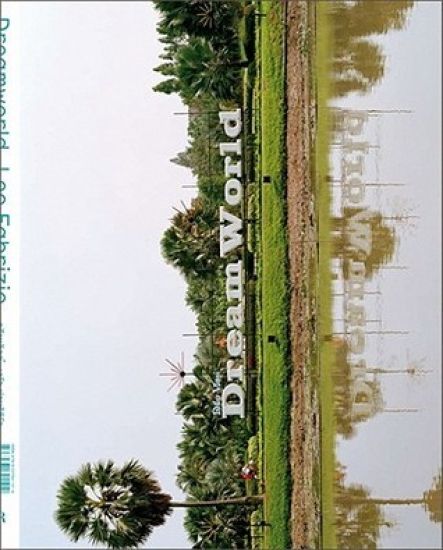
Through such memorable images as a wooden shanty dominated by massive real estate billboards overhead, Swiss photographer Leo Fabrizio (born 1976) articulates the dilemma of contemporary Thailand as "native old" meets "global new." Using suburban Bangkok as his case study, Fabrizio observes the social and spatial consequences of rapidly transforming cities post-globalization.
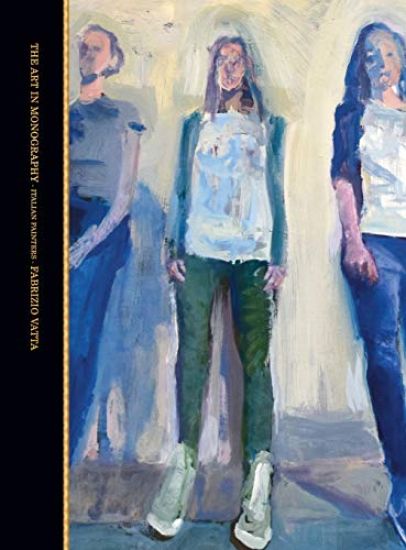
The Art in Monography: Italian Painters - Fabrizio Vatta
The encyclopaedic series "The Art in Monography" - Italian painters volume 1 is dedicated to Fabrizio Vatta.PREFACETogether with the Editor of Black Wolf Edition & Publishing Ltd. we have created the encyclopaedic series "The Art in Monography" dedicated initially only to painting. The editor, believing firmly in the validity of this unprecedented editorial project, has improved and expanded it to the other fine arts, dividing The Art in Monography in sections (Italian Painters, Sculptors, Drawers, Illustrators, Photographers, Mosaicists) and inserting historic-technical volumes for every field realizing a more prestigious monograph work. Both in Italy and in Europe, publishers usually follow the practice to favour only the artists of certain galleries who decide according to the market profits. Therefore, the aim is to promulgate and make known contemporary artists still not entirely consecrated in Italy and in Europe.This valuable series wants first of all to emphasize the creativity of 40 Italian artists who express themselves with various pictorial expressions with differ- ent styles and trends. What most has pushed us to propose with enthusiasm this idea to the publisher was the awareness of the urgent need to give a new face to the contemporary painting, looking for artists of undoubted quality more or less known in the national territory. Moreover, aware that the ostra- cism of the official critic often relegates new talents preferring choices closer to the demands of the market, we, with even greater conviction, wanted to give space and visibility to artists who have not yet entered the elitist enclo- sure of the national and international contemporary art market. We believe that this series is the flower to the eyelet to give value to the good painting that is still unknown, that has not found the applause of the large public of the art. Here we present the various styles and the multiple creative expressions with themes and propositions completely respectable, with the works of artists of certain and undoubted talent.The criteria of selection of the artists took place in complete freedom, limiting their number to present only a restrained group. Knowing that others would have deserved the same consideration, this series does not intend to make any census of the most significant artistic presences on the national territory. It is clear that the amount of them examined here is small, and cannot determine a decisive premise and much less...an axiom in a single direction. We wanted to focus on artists of undisputed technical capacity, reiterating the word of mouth and concentrating on the knowledge acquired in the years. It should be specified, in conclusion, that no gallery has been consulted, neither by us nor by the publisher, because we keep respectfully...the distance when we get into the choices of valuable artists.Alfonso and Nicola Vaccari
Ledi e le sue magicose avventure a Berlin: ... è un dono di Zia Grazia e Zio Fabrizio

Ledi e le sue magicose avventure a Berlin: ... è un dono di Zia Grazia e Zio Fabrizio

Fabbroscrivano; Fabrizio Manili

Createspace Independent Publishing Platform
2013
nidottu
...entrammo nella BOTTEGA DEL FABBROSCRIVANO (www.fabbroscrivano.it). Ci venne incontro un omone con un grembiule colorato tutto imbrattato di pezzi di apostrofi e accenti scheggiati. Ci chiese se eravamo l per ordinare dei racconti per qualcuno e gli rivelammo che erano per te, Leda (anche se quasi tutti ti chiamano Ledi). Che hai gli occhi blu, i capelli castani e che il tuo colore preferito il rosa. Vivi a Berlin e sei nata il giorno 16 febbraio 2011. Il tuo pupazzo preferito si chiama Lala. Hai un gatto che si chiama Carlotta. Il FABBROSCRIVANO sorrise, prese una manciata di lettere da un cassetto, degli accenti e alcuni punti interrogativi. Lavor per ore, martellando parole, limando frasi e saldando lettere minuscole e maiuscole. Quando fin ci consegn questo libro raccomandandosi di consegnartelo, poich era stato scritto appositamente per te e i tuoi magici sogni; protagonista insieme a Sarah, Alessandro e Lahja di quattro magnifiche avventure: Campanelli, Babbo Natale e la renna innamorata, Nina e L'arca degli animali...
Glimmers of Light Guizzi Di Luce: Tom Billsborough Fabrizio Frosini

Glimmers of Light Guizzi Di Luce: Tom Billsborough Fabrizio Frosini

Tom Billsborough; Fabrizio Frosini

Independently Published
2018
nidottu
I was delighted when Fabrizio Frosini suggested this joint project of translating each other's poems. Italian is less familiar to me than French but it is such a musical language that I, who tend to the lyrical, was immediately attracted by the prospects. I think it would be an excellent idea for other poets of different Nationalities and cultures to take part in similar exercises. I'm sure they would find it as rewarding as I have in this bilingual Poetry project with Fabrizio. T. Billsborough] I believe that what matters most, reading a book of poetry, is to let the verses open doors and windows on our inner world, allowing it to resonate, amplifying it -whatever the historical period in which those verses were composed. F. Frosini]
The Soprano of Sunlight Luce di Soprano: Tom Billsborough Fabrizio Frosini
Tom Billsborough is a gifted writer who has the natural and acquired ability to write and translate using multiple forms. His mastery of literature, poetry, language, and humor is evident in all of his writing. (Pamela Sinicrope)*Tom Billsborough's poems will touch your heart. His poems are deeply philosophical and touches on variety of subjects.A most kind and humble heart is what I shall describe Tom Billsborough. Some of his poems have captivated me for their beauty and eternal values. (Bharati Nayak)*I am at a loss to describe Tom Billsborough. He is an erudite writer and his poetry is layered with meanings and each stroke of his pen reveals some deep, poignant truths about life. His philosophical bent of mind, deep knowledge and vast reading have gone into the making of this poet, who is kind at heart and a gentleman in the true sense of the term. (Valsa George)*I was delighted when Fabrizio Frosini suggested this joint project, and I must confess that his Italian translations did more than justice to many of my originals (T.B.)
Sonata per violino e basso continuo RV 829 - Edizione critica di | Critical edition by Javier Lupiáñez Ruiz e Fabrizio Ammetto
In a miscellaneous manuscript in the Este Music Collection belonging to the Österreichische Nationalbibliothek in Vienna, a new sonata for violin and basso continuo by Antonio Vivaldi has recently been identified. Although it has until now been attributed by default to the Bolognese Giuseppe Aldrovandini, by virtue of a heading written (but subsequently rubbed out) by the copyist of the manuscript on one of the pages of the violin part, this sonata has been recognized as an authentic composition by the Red Priest. This work – which can be placed chronologically no later than the middle of the 1710s – represents the most clear-cut example in Vivaldi's music of a “Sonate auf Concertenart”: more specifically, a kind of solo sonata for violin that the Red Priest could perform in order to show off his prowess on that instrument, as signalled by the presence of many passages featuring double stopping or the use of the ultra-high register.