

Kirjahaku
Etsi kirjoja tekijän nimen, kirjan nimen tai ISBN:n perusteella.
1000 tulosta hakusanalla Fang Nan

Nan-fang Ts'ao-mu Chuang
The Chinese University Press
1979
nidottu

Earth is home to all humans, animals, and plants. But she has not been treated well over time. She is full of polluted waters, dusty skies, frightful weather, and overcut forests. We need to help Here comes... Spikey the Hedgehog Transforming himself into a super-duper Earth Hero, he and his animal friends embark on their many adventures to help save our future.Join them in their fight to help Mother Earth recover and pledge yourself to their cause

La nanorobotique ouvre des possibilit s insoup onn es la m decine. D velopp es l' chelle microscopique, ces technologies de haute pr cision promettent d'intervenir en profondeur dans la biologie humaine - de mani re cibl e, s re et efficace. Ce livre offre un aper u complet des applications et technologies actuelles de la nanorobotique, du traitement du cancer au ralentissement du processus de vieillissement.Dans le domaine de l'oncologie en particulier, la nanorobotique r v le des perspectives r volutionnaires: Des robots minuscules qui s'attaquent de mani re cibl e aux cellules tumorales, livrent des m dicaments directement aux endroits concern s et minimisent ainsi les effets secondaires. Dans la recherche sur le vieillissement galement, l'espoir de retarder la d g n rescence des cellules gr ce des interventions nanotechnologiques et de traiter pr ventivement les maladies li es l' ge est de plus en plus grand.Cet ouvrage pr sente au lecteur l' tat actuel de la recherche, met en lumi re les perspectives les plus passionnantes et discute des d fis thiques et pratiques qui accompagnent le d veloppement et l'impl mentation de ces technologies. Un aper u fascinant d'un avenir dans lequel la nanorobotique red finit les fronti res de la m decine.
Die Nanorobotik er ffnet der Medizin ungeahnte M glichkeiten. Auf mikroskopischer Ebene entwickelt, versprechen diese hochpr zisen Technologien, tief in die menschliche Biologie einzugreifen - gezielt, sicher und effizient. Dieses Buch bietet einen umfassenden berblick ber die aktuellen Anwendungen und Technologien der Nanorobotik, von der Krebstherapie bis hin zur Verlangsamung des Alterungsprozesses. Insbesondere im Bereich der Onkologie zeigt die Nanorobotik bahnbrechende Perspektiven auf: Winzige Roboter, die gezielt Tumorzellen angreifen, Medikamente direkt an die betroffenen Stellen liefern und so Nebenwirkungen minimieren. Auch in der Altersforschung wird die Hoffnung immer gr er, den Verfall der Zellen durch nanotechnologische Eingriffe zu verz gern und altersbedingte Krankheiten pr ventiv zu behandeln. Dieses Werk f hrt den Leser in den aktuellen Stand der Forschung ein, beleuchtet die spannendsten Perspektiven und diskutiert die ethischen und praktischen Herausforderungen, die mit der Entwicklung und Implementierung dieser Technologien einhergehen. Ein faszinierender Ausblick auf eine Zukunft, in der die Nanorobotik die Grenzen der Medizin neu definiert.

La nanorob tica abre posibilidades inimaginables para la medicina. Desarrolladas a nivel microsc pico, estas tecnolog as de alta precisi n prometen intervenir profundamente en la biolog a humana, de forma selectiva, segura y eficaz. Este libro ofrece una panor mica completa de las aplicaciones y tecnolog as actuales de la nanorob tica, desde la terapia del c ncer hasta la ralentizaci n del proceso de envejecimiento.En el campo de la oncolog a en particular, la nanorob tica abre perspectivas revolucionarias: Robots diminutos que atacan espec ficamente las c lulas tumorales, administran f rmacos directamente en las zonas afectadas y minimizan as los efectos secundarios. En el campo de la investigaci n sobre el envejecimiento tambi n crece la esperanza de que las intervenciones nanotecnol gicas puedan retrasar el deterioro de las c lulas y tratar preventivamente las enfermedades relacionadas con la edad.Este libro introduce al lector en el estado actual de la investigaci n, destaca las perspectivas m s apasionantes y analiza los retos ticos y pr cticos asociados al desarrollo y la aplicaci n de estas tecnolog as. Una mirada fascinante a un futuro en el que la nanorob tica est redefiniendo los l mites de la medicina.
La nanorobotica apre possibilit inimmaginabili per la medicina. Sviluppate a livello microscopico, queste tecnologie di alta precisione promettono di intervenire profondamente nella biologia umana, in modo mirato, sicuro ed efficiente. Questo libro fornisce una panoramica completa delle attuali applicazioni e tecnologie della nanorobotica, dalla terapia del cancro al rallentamento del processo di invecchiamento.In particolare, nel campo dell'oncologia, la nanorobotica apre prospettive rivoluzionarie: Minuscoli robot che attaccano in modo mirato le cellule tumorali, distribuiscono i farmaci direttamente nelle aree interessate e riducono cos al minimo gli effetti collaterali. Anche nel campo della ricerca sull'invecchiamento cresce la speranza che gli interventi nanotecnologici possano ritardare il deterioramento delle cellule e trattare preventivamente le malattie legate all'et .Questo libro introduce il lettore allo stato attuale della ricerca, evidenzia le prospettive pi interessanti e discute le sfide etiche e pratiche associate allo sviluppo e all'implementazione di queste tecnologie. Uno sguardo affascinante su un futuro in cui la nanorobotica sta ridefinendo i confini della medicina.
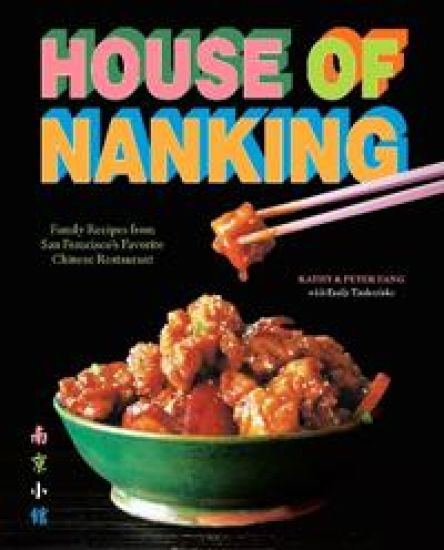
From a beloved San Francisco culinary landmark, a showstopper cookbook that honors a family legacy and celebrates ingredient-driven, multi-regional Chinese cooking in AmericaSince it opened in 1988, House of Nanking has been a popular spot for countless tourists, honeymooners, celebrities, and everyday San Franciscans who have lined up—for decades—for their legendary Shanghai and Chinese American dishes. This will be the first time their recipes have appeared in print and adapted for the home kitchen. But it’ll be the stories behind them, which few have heard—of Peter Fang’s ingenuity and his early adventures in the kitchen, how he imported and adapted his favorite Shanghai dishes for America, and Kathy’s experience growing up with parents who bet it all on the restaurant, under the tutelage of all these rich Chinese culinary traditions—that will capture the heart. The 100-plus recipes in this book include all the greatest hits from three generations of Fang family cooking from Canton to Shanghai, and readers will learn how to pan-fry, steam, cook in a wok, shop for ingredients, and prep vegetables the Chinese way. With accessible recipes that are adaptable to any type of home kitchen, anyone will be able to make these dishes, wherever they are.
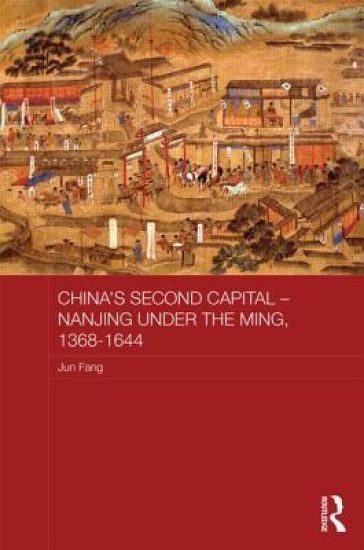
This book is a study of the dual capital system of Ming dynasty China (1368-1644), with a focus on the administrative functions of the auxiliary Southern Capital, Nanjing. It argues that the immense geographical expanse of the Chinese empire and the poor communication infrastructure of pre-modern times necessitated the establishment of an additional capital administration for effective control of the Ming realm. The existence of the Southern Capital, which has been dismissed by scholars as redundant and insignificant, was, the author argues, justified by its ability to assist the primary Northern Capital better control the southern part of the imperial land. The practice of maintaining auxiliary capitals, where the bureaucratic structures of the primary capital were replicated in varying degrees, was a unique and valuable approach to effecting bureaucratic control over vast territory in pre-modern conditions. Nanjing translates into English as "Southern Capital" and Beijing as "Northern Capital".
Energy Harvesting Properties of Electrospun Nanofibers (Second Edition)
Jian Fang; Tong Lin
INSTITUTE OF PHYSICS PUBLISHING
2025
nidottu
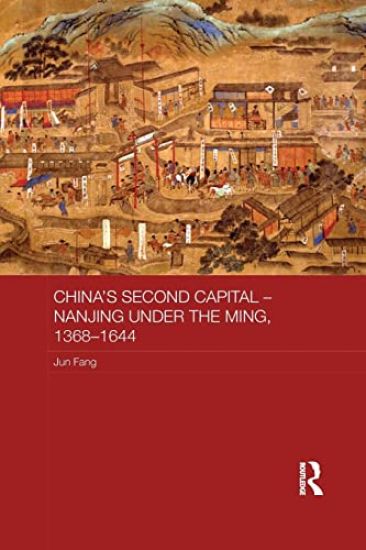
This book is a study of the dual capital system of Ming dynasty China (1368-1644), with a focus on the administrative functions of the auxiliary Southern Capital, Nanjing. It argues that the immense geographical expanse of the Chinese empire and the poor communication infrastructure of pre-modern times necessitated the establishment of an additional capital administration for effective control of the Ming realm. The existence of the Southern Capital, which has been dismissed by scholars as redundant and insignificant, was, the author argues, justified by its ability to assist the primary Northern Capital better control the southern part of the imperial land. The practice of maintaining auxiliary capitals, where the bureaucratic structures of the primary capital were replicated in varying degrees, was a unique and valuable approach to effecting bureaucratic control over vast territory in pre-modern conditions. Nanjing translates into English as "Southern Capital" and Beijing as "Northern Capital".

Rapid Production of Micro- and Nano-particles Using Supercritical Water
Zhen Fang
Springer-Verlag Berlin and Heidelberg GmbH Co. K
2010
sidottu
Thisbookistalkingabouthowtousesupercriticalwater(SCW)torapidlyproduce micro- and nano-particles of metal oxides, inorganic salts, metals and organics. Itcoversbasicprinciples,experimentalmethodologiesandreactors,particlep- duction,characterizationsandapplicationsaswellastherecentadvancement. Fine particlescanbeproducedbybothchemicalandphysicalprecipitationofproducts from SCW. They can be used as catalysts, materials in ceramics and electronic devices andcompositematerials. Particlesareeasilyproduced continuouslyina owreactorinshortreactiontimes(0. 4s?2min)butcanalsobesynthesizedin batchreactorsforlongreactiontimes(e. g. ,12h). Theycanbeeasilystudiedin-situ microscopically(optical/IR/Raman/SR-XRD)inanopticalmicro-reactor,diamond anvilcell. Thesize,sizedistribution,crystalgrowth&structure,andmorphologyof particlescanbecontrolledbychangingtheconcentrationsofstatingmaterials,pH, pressures,temperatures,heating&coolingrates,organicmodi cations,reducingor oxidizingatmospheres, owratesandreactiontimes. Thisisthe rstbooktosystematicallyintroduceusingSCWforproductionof neparticles. Itisanidealreferencebookforengineers,researchersandgraduate studentsinmaterialscienceandengineering. vii Acknowledgments I would like to thank Drs. T. Ogi & T. Minowa (Biomass Technology Research Center,NationalInstituteofAdvancedIndustrialScienceandTechnology,Japan), and Profs. K. Arai, H. Inomata, R. L. Smith Jr. and T. Adschiri (Chemical Engineering,TohokuUniversity,Japan),whoinitiallyintroducedthehydrothermal andsupercritical uidsareastomewhenIworkedinJapanfrom1996to1999. Thanks are also due to Profs. J. A. Kozinski, R. I. L. Guthrie (Materials Engineering,McGillUniversity,Canada)andI. S. Butler(Chemistry,McGill)for theirguidanceinmyworkonhydrothermalprocessduringmyworkinCanadafrom 1999to2007. Profs. W. Bassett (Geological Sciences, Cornell University) and D. Baker (Earth&PlanetarySciences,McGill)forinstructionsregardingDAC,Dr. I-Ming Chou(U. S. GeologicalSurvey)forusefuldiscussionsofthepressurecalculation procedure. Drs. M. Watanabe and T. Sato (Research Center of Supercritical Fluid Technology, Tohoku University, Japan) for discussions about the experimental set-upofthebatchand owreactors. Drs. S. Xu,H. Assaaoudi,R. HashaikehandA. Sobhy,whoworkedwithmeat McGillinCanada. ix Contents 1 Introduction...1 1. 1 Background ...1 1. 2 RapidExpansionofSupercriticalSolution(RESS)Process ...4 1. 3 SupercriticalAntisolvent(SAS)Process ...4 1. 4 OtherPhysicalProcesses ...5 1. 5 SupercriticalWaterProcess ...5 References...8 2 Supercritical Water Process...11 2. 1 Introduction ...11 2. 2 BatchReactor ...15 2. 3 FlowReactor...18 2. 4 DiamondAnvilCell(DAC)...20 References...25 3 Metal Oxides Synthesis...29 3. 1 Introduction ...29 3. 2 Boehmite(AlOOH) ...30 3. 3 Ferrites...31 3. 4 Phosphor(YAG) ...32 3. 5 LiCoO /LiMn O ...33 2 2 4 3. 6 Ce Zr O (x =0?1)...33 1?x x 2 3. 7 PotassiumHexatitanate,PotassiumNiobateandTitania ...35 3. 8 ZincOxide...38 3. 9 Nickel,Nickel/CobaltOxide...

Rapid Production of Micro- and Nano-particles Using Supercritical Water
Zhen Fang
Springer-Verlag Berlin and Heidelberg GmbH Co. K
2012
nidottu
Thisbookistalkingabouthowtousesupercriticalwater(SCW)torapidlyproduce micro- and nano-particles of metal oxides, inorganic salts, metals and organics. Itcoversbasicprinciples,experimentalmethodologiesandreactors,particlep- duction,characterizationsandapplicationsaswellastherecentadvancement. Fine particlescanbeproducedbybothchemicalandphysicalprecipitationofproducts from SCW. They can be used as catalysts, materials in ceramics and electronic devices andcompositematerials. Particlesareeasilyproduced continuouslyina owreactorinshortreactiontimes(0. 4s?2min)butcanalsobesynthesizedin batchreactorsforlongreactiontimes(e. g. ,12h). Theycanbeeasilystudiedin-situ microscopically(optical/IR/Raman/SR-XRD)inanopticalmicro-reactor,diamond anvilcell. Thesize,sizedistribution,crystalgrowth&structure,andmorphologyof particlescanbecontrolledbychangingtheconcentrationsofstatingmaterials,pH, pressures,temperatures,heating&coolingrates,organicmodi cations,reducingor oxidizingatmospheres, owratesandreactiontimes. Thisisthe rstbooktosystematicallyintroduceusingSCWforproductionof neparticles. Itisanidealreferencebookforengineers,researchersandgraduate studentsinmaterialscienceandengineering. vii Acknowledgments I would like to thank Drs. T. Ogi & T. Minowa (Biomass Technology Research Center,NationalInstituteofAdvancedIndustrialScienceandTechnology,Japan), and Profs. K. Arai, H. Inomata, R. L. Smith Jr. and T. Adschiri (Chemical Engineering,TohokuUniversity,Japan),whoinitiallyintroducedthehydrothermal andsupercritical uidsareastomewhenIworkedinJapanfrom1996to1999. Thanks are also due to Profs. J. A. Kozinski, R. I. L. Guthrie (Materials Engineering,McGillUniversity,Canada)andI. S. Butler(Chemistry,McGill)for theirguidanceinmyworkonhydrothermalprocessduringmyworkinCanadafrom 1999to2007. Profs. W. Bassett (Geological Sciences, Cornell University) and D. Baker (Earth&PlanetarySciences,McGill)forinstructionsregardingDAC,Dr. I-Ming Chou(U. S. GeologicalSurvey)forusefuldiscussionsofthepressurecalculation procedure. Drs. M. Watanabe and T. Sato (Research Center of Supercritical Fluid Technology, Tohoku University, Japan) for discussions about the experimental set-upofthebatchand owreactors. Drs. S. Xu,H. Assaaoudi,R. HashaikehandA. Sobhy,whoworkedwithmeat McGillinCanada. ix Contents 1 Introduction...1 1. 1 Background ...1 1. 2 RapidExpansionofSupercriticalSolution(RESS)Process ...4 1. 3 SupercriticalAntisolvent(SAS)Process ...4 1. 4 OtherPhysicalProcesses ...5 1. 5 SupercriticalWaterProcess ...5 References...8 2 Supercritical Water Process...11 2. 1 Introduction ...11 2. 2 BatchReactor ...15 2. 3 FlowReactor...18 2. 4 DiamondAnvilCell(DAC)...20 References...25 3 Metal Oxides Synthesis...29 3. 1 Introduction ...29 3. 2 Boehmite(AlOOH) ...30 3. 3 Ferrites...31 3. 4 Phosphor(YAG) ...32 3. 5 LiCoO /LiMn O ...33 2 2 4 3. 6 Ce Zr O (x =0?1)...33 1?x x 2 3. 7 PotassiumHexatitanate,PotassiumNiobateandTitania ...35 3. 8 ZincOxide...38 3. 9 Nickel,Nickel/CobaltOxide...
Directed Assembly of Polymer Blends Using Nanopatterned Templates
Fang Liang
LAP Lambert Academic Publishing
2015
pokkari
Electrospun Nanofibre Yarns and Composites
Yaqiong Zhou; Jian Fang; Tong Lin
LAP Lambert Academic Publishing
2011
pokkari
Ukierunkowane laczenie mieszanek polimerowych przy uzyciu nanowzorcowanych szablonów
Liang Fang
Wydawnictwo Nasza Wiedza
2025
pokkari

Gezielte Anordnung von Polymermischungen unter Verwendung nanostrukturierter Vorlagen
Liang Fang
Verlag Unser Wissen
2025
pokkari

Assemblaggio diretto di miscele polimeriche utilizzando modelli nanopatternati
Liang Fang
Edizioni Sapienza
2025
pokkari
Montagem direcionada de misturas de polímeros utilizando modelos nanopadronizados
Liang Fang
Edicoes Nosso Conhecimento
2025
pokkari