Kirjojen hintavertailu. Mukana 11 244 527 kirjaa ja 12 kauppaa.

Kirjahaku

Etsi kirjoja tekijän nimen, kirjan nimen tai ISBN:n perusteella.

390 tulosta hakusanalla Fawaz A. Gerges

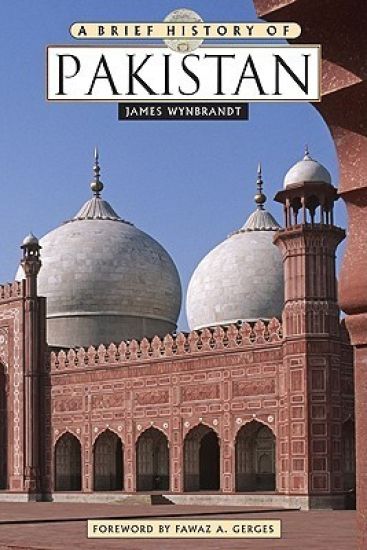
A Brief History of Pakistan

A Brief History of Pakistan

James Wynbrandt; Fawaz A. Gerges

Facts On File Inc
2009
nidottu
This book presents the major events, people, and traditions that have shaped Pakistan.""A Brief History of Pakistan"" presents a concise yet thorough account of this land whose past as a birthplace of civilization is as important to world history as is its pivotal place in contemporary geopolitics. Coverage includes the dramatic events, notable people, and special customs and traditions that have shaped this country. By illuminating the nation's past, this book gives readers a detailed perspective of Pakistan today and enables them to intelligently consider how it might change in the future.Coverage includes: The land and its people; The Indus Valley Civilization; The Vedic Age in Pakistan; The Mogul Period; British rule; The struggle for independence; Partition; Civilian and military rule; Islamization of Pakistan; Pakistan under Pervez Musharraf; Relations with the United States, India, and Afghanistan; Pakistan's nuclear weapons program; and, Secular/Islamic tensions.
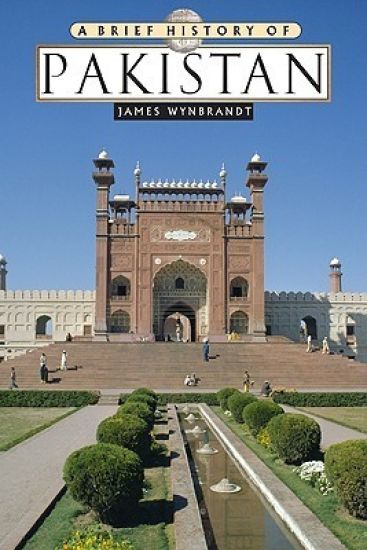
A Brief History of Pakistan

A Brief History of Pakistan

James Wynbrandt; Fawaz A. Gerges

Facts On File Inc
2009
sidottu
In the course of a few years, Pakistan has assumed strategic importance on the world stage, acting as both a linchpin in the global war on terrorism and a "swing" state in the ideological conflict between democracy and dictatorship, and between Islamic and secular rule. How did this poor country come to occupy such a position in little more than half a century of existence? What are the historical precedents for its present course? And what can we learn from its past that can help us evaluate the prospects for its future? This book presents a concise yet thorough account of this land whose past as a birthplace of civilization is as important to world history as is its pivotal place in contemporary geopolitics. Coverage includes the dramatic events, notable people, and special customs and traditions that have shaped this country. By illuminating the nation’s past, this book gives students a detailed perspective of Pakistan today and enables them to intelligently consider how it might change in the future.
Journey of the Jihadist: Inside Muslim Militancy
Draws on the author's extensive research into the minds and motivations of Kamal al-Said Habib, a founder of the jihadist movement, in an account that documents the terrorist's life as well as the experiences of numerous Islamic fundamentalists to offer insight into crucial events from the past thirty years. Reprint.
The Rise and Fall of Al-Qaeda

The Rise and Fall of Al-Qaeda

Fawaz A. Gerges

Oxford University Press Inc
2014
nidottu
In this concise and fascinating book, Fawaz A. Gerges argues that Al-Qaeda has degenerated into a fractured, marginal body kept alive largely by the self-serving anti-terrorist bureaucracy it helped to spawn. In The Rise and Fall of Al-Qaeda, Gerges, a public intellectual known widely for his expertise on radical ideologies, including jihadism, argues that the Western powers have become mired in a "terrorism narrative, " stemming from the mistaken belief that America is in danger of a devastating attack by a crippled al-Qaeda. To explain why al-Qaeda is no longer a threat, he provides a briskly written history of the organization, showing its emergence from the disintegrating local jihadist movements of the mid-1990s-not just the Afghan resistance of the 1980s, as many believe-in "a desperate effort to rescue a sinking ship by altering its course. " During this period, Gerges interviewed many jihadis, gaining a first-hand view of the movement that bin Laden tried to reshape by internationalizing it. Gerges reveals that transnational jihad has attracted but a small minority within the Arab world and possesses no viable social and popular base. Furthermore, he shows that the attacks of September 11, 2001, were a major miscalculation--no "river " of fighters flooded from Arab countries to defend al-Qaeda in Afghanistan, as bin Laden expected. The democratic revolutions that swept the Middle East in early 2011 show that al-Qaeda today is a non-entity which exercises no influence over Arabs' political life. Gerges shows that there is a link between the new phenomenon of homegrown extremism in Western societies and the war on terror, particularly in Afghanistan-Pakistan, and that homegrown terror exposes the structural weakness, not strength, of bin Laden's al-Qaeda. Gerges concludes that the movement has splintered into feuding factions, neutralizing itself more effectively than any Predator drone. Forceful, incisive, and written with extensive inside knowledge, this book will alter the debate on global terrorism.
What Really Went Wrong

What Really Went Wrong

Fawaz A. Gerges

YALE UNIVERSITY PRESS
2024
sidottu
An ambitious revisionist history of the modern Middle East What Really Went Wrong offers a fresh and incisive assessment of American foreign policy’s impact on the history and politics of the modern Middle East. Looking at flashpoints in Iranian, Egyptian, Syrian, and Lebanese history, Fawaz A. Gerges shows how postwar U.S. leaders made a devil’s pact with potentates, autocrats, and strongmen around the world. Washington sought to tame assertive nationalists and to protect repressive Middle Eastern regimes in return for compliance with American hegemonic designs and uninterrupted flows of cheap oil. The book takes a counterfactual approach, asking readers to consider how the political trajectories of these countries and, by extension, the entire region may have differed had U.S. foreign policy privileged the nationalist aspirations of patriotic and independent Middle Eastern leaders and people. Gerges argues that rather than focusing on rolling back communism, extracting oil, and pursuing interventionist and imperial policies in Iran, Egypt, and beyond, postwar U.S. leaders should have allowed the Middle East greater autonomy in charting its own political and economic development. In so doing, the contemporary Middle East may have had better prospects for stability, prosperity, peace, and democracy.
The Far Enemy

The Far Enemy

Fawaz A. Gerges

Cambridge University Press
2009
sidottu
Fawaz Gerges' book on al Qaeda and the jihadist movement has become a classic in the field since it was published in 2005. In the intervening years, with the advance of the 'War on Terror' and the invasion of Iraq, much has changed and, just as Gerges showed, al Qaeda's fortunes have taken a significant downturn. Revisiting The Far Enemy in this edition, Gerges demonstrates that not only have the jihadists split ranks, but that voices from within the ultra-religious right, those that previously supported al Qaeda, are condemning its tactics as violent, unethical, and out of accord with the true meaning of jihad. In fact, millions of Muslims worldwide have rejected al-Qaeda's ideology and strategies and blame Osama bin Laden and his cohorts for the havoc the organisation has wreaked on their communities. Al-Qaeda is now in the wilderness suffering massive erosion of authority and legitimacy in Muslim eyes and facing a fierce revolt from within. As Gerges warns, the next US administration would do well to use political and socio-economic strategies rather than military means to ensure that it stays there.
America and Political Islam

America and Political Islam

Fawaz A. Gerges

Cambridge University Press
1999
sidottu
This book chronicles the policy debates on Islamism in the United States over the course of time, providing a comprehensive account of the origins of policy followed by a balanced critique and recommendations for change. It then delves deeper into the US political scene to analyze the historical, political, cultural, and security issues that might help explain America’s preoccupation with Islam and Muslims. Furthermore, the author sheds much light on the multiplicity of regional and international factors, such as the political decay of the Middle Eastern state and the end of the Cold War, that shape the thinking of US officials about the contemporary Islamist phenomenon. In addition to examining the domestic, regional, and international context of US Islam policy, the book applies and tests the pronouncements of US officials in four representative case studies - Iran, Algeria, Egypt and Turkey. Finally, Gerges addresses the clash of civilizations debate and assesses the relative weight of culture and values in US officials’ words and deeds on Islamism.
America and Political Islam

America and Political Islam

Fawaz A. Gerges

Cambridge University Press
1999
pokkari
This book chronicles the policy debates on Islamism in the United States over the course of time, providing a comprehensive account of the origins of policy followed by a balanced critique and recommendations for change. It then delves deeper into the US political scene to analyze the historical, political, cultural, and security issues that might help explain America’s preoccupation with Islam and Muslims. Furthermore, the author sheds much light on the multiplicity of regional and international factors, such as the political decay of the Middle Eastern state and the end of the Cold War, that shape the thinking of US officials about the contemporary Islamist phenomenon. In addition to examining the domestic, regional, and international context of US Islam policy, the book applies and tests the pronouncements of US officials in four representative case studies - Iran, Algeria, Egypt and Turkey. Finally, Gerges addresses the clash of civilizations debate and assesses the relative weight of culture and values in US officials’ words and deeds on Islamism.
The Far Enemy

The Far Enemy

Fawaz A. Gerges

Cambridge University Press
2009
pokkari
Fawaz Gerges' book on al Qaeda and the jihadist movement has become a classic in the field since it was published in 2005. In the intervening years, with the advance of the 'War on Terror' and the invasion of Iraq, much has changed and, just as Gerges showed, al Qaeda's fortunes have taken a significant downturn. Revisiting The Far Enemy in this edition, Gerges demonstrates that not only have the jihadists split ranks, but that voices from within the ultra-religious right, those that previously supported al Qaeda, are condemning its tactics as violent, unethical, and out of accord with the true meaning of jihad. In fact, millions of Muslims worldwide have rejected al-Qaeda's ideology and strategies and blame Osama bin Laden and his cohorts for the havoc the organisation has wreaked on their communities. Al-Qaeda is now in the wilderness suffering massive erosion of authority and legitimacy in Muslim eyes and facing a fierce revolt from within. As Gerges warns, the next US administration would do well to use political and socio-economic strategies rather than military means to ensure that it stays there.
Making the Arab World

Making the Arab World

Fawaz A. Gerges

PRINCETON UNIVERSITY PRESS
2018
sidottu
How the conflict between political Islamists and secular nationalists has shaped the history of the modern Middle East In 2013, just two years after the popular overthrow of Hosni Mubarak, the Egyptian military ousted the country's first democratically elected president--Mohamed Morsi of the Muslim Brotherhood--and subsequently led a brutal repression of the Islamist group. These bloody events echoed an older political rift in Egypt and the Middle East: the splitting of nationalists and Islamists during the rule of Egyptian president and Arab nationalist leader Gamal Abdel Nasser. In Making the Arab World, Fawaz Gerges, one of the world's leading authorities on the Middle East, tells how the clash between pan-Arab nationalism and pan-Islamism has shaped the history of the region from the 1920s to the present. Gerges tells this story through an unprecedented dual biography of Nasser and another of the twentieth-century Arab world's most influential figures--Sayyid Qutb, a leading member of the Muslim Brotherhood and the father of many branches of radical political Islam. Their deeply intertwined lives embody and dramatize the divide between Arabism and Islamism. Yet, as Gerges shows, beyond the ideological and existential rhetoric, this is a struggle over the state, its role, and its power. Based on a decade of research, including in-depth interviews with many leading figures in the story, Making the Arab World is essential reading for anyone who wants to understand the roots of the turmoil engulfing the Middle East, from civil wars to the rise of Al-Qaeda and ISIS.
ISIS

ISIS

Fawaz A. Gerges

Princeton University Press
2016
sidottu
The Islamic State has stunned the world with its savagery, destructiveness, and military and recruiting successes. What explains the rise of ISIS, and what does it portend for the future of the Middle East? In this book, one of the world's leading authorities on political Islam and jihadism sheds new light on these questions. Moving beyond journalistic accounts, Fawaz Gerges provides a clear and compelling explanation of the deeper conditions that fuel ISIS. This unique history shows how decades of dictatorship, poverty, and rising sectarianism in the Middle East, exacerbated by foreign intervention, led to the rise and growth of ISIS--and why addressing those problems is the only way to ensure its end. An authoritative introduction to arguably the most important conflict in the world today, this is an essential book for anyone seeking a deeper understanding of the social turmoil and political violence ravaging the Arab-Islamic world.
ISIS

ISIS

Fawaz A. Gerges

Princeton University Press
2017
pokkari
The Islamic State has stunned the world with its savagery, destructiveness, and military and recruiting successes. What explains the rise of ISIS and what does it portend for the future of the Middle East? In this book, one of the world's leading authorities on political Islam and jihadism sheds new light on these questions as he provides a unique history of the rise and growth of ISIS. Moving beyond journalistic accounts, Fawaz Gerges provides a clear and compelling account of the deeper conditions that fuel ISIS. The book describes how ISIS emerged in the chaos of Iraq following the 2003 U.S. invasion, how the group was strengthened by the suppression of the Arab Spring and by the war in Syria, and how ISIS seized leadership of the jihadist movement from Al Qaeda. Part of a militant Sunni revival, ISIS claims its goals are to resurrect a caliphate and rid "Islamic lands" of all Shia and other minorities. In contrast to Al Qaeda, ISIS initially focused on the "near enemy"--Shia, the Iraqi and Syrian regimes, and secular, pro-Western states in the Middle East. But in a tactical shift ISIS has now taken responsibility for spectacular attacks in Europe and other places beyond the Middle East, making it clear that the group is increasingly interested in targeting the "far enemy" as well. Ultimately, the book shows how decades of dictatorship, poverty, and rising sectarianism in the Middle East, exacerbated by foreign intervention, led to the rise of ISIS--and why addressing those problems is the only way to ensure its end. An authoritative introduction to arguably the most important conflict in the world today, this is an essential book for anyone seeking a deeper understanding of the social turmoil and political violence ravaging the Arab-Islamic world.
The Great Betrayal

The Great Betrayal

Fawaz A. Gerges

PRINCETON UNIVERSITY PRESS
2025
sidottu
How the Middle East can achieve political change and social progressThe Middle East is in upheaval: a widening chasm between state and society, the failure of governing elites to address citizens’ genuine grievances, massive economic mismanagement—all made worse by repeated interventions by Western powers. Why has political change been so difficult to achieve? In The Great Betrayal, Fawaz Gerges argues that the convergence of political authoritarianism, meddling by the West, and the effects of prolonged regional conflicts have produced political paralysis and economic stagnation. The agency of everyday people has been thwarted by an authoritarian status quo that is maintained by a powerful partnership of external and internal forces.Gerges traces more than a century of consequential events in the region, from the end of the Ottoman Empire and the European carve-up of the Middle East to the Iranian Revolution and the Arab Spring uprisings. He shows how the people of the Middle East have been systematically denied self-determination, political representation, and effective government. Gerges finds that the region, with its diversity, variability, and volatility, defies abstract grand theories; previous accounts that have attributed the Middle East’s problems to any one cause such as modernism, ignore the complexity and specificity of the issues. What can we learn from the Middle East’s vexed history? Gerges is optimistic, declaring that the region’s future will be determined not by dictators and their superpower patrons but by a growing population of Arab and Muslim youth who demand to be treated as citizens and not as subjects.
Making the Arab World

Making the Arab World

Fawaz A. Gerges

Princeton University Press
2019
pokkari
How the conflict between political Islamists and secular-leaning nationalists has shaped the modern Middle EastIn Making the Arab World, Fawaz Gerges, one of the world's leading authorities on the Middle East, describes how the clash between pan-Arab nationalism and pan-Islamism has shaped the history of the region from the 1920s to the present. He tells this story through an unprecedented dual biography of Egyptian president and Arab nationalist leader Gamal Abdel Nasser (1918–1970) and another of the twentieth-century Arab world's most influential figures—Sayyid Qutb (1906–1966), a leading member of the Muslim Brotherhood and the father of many branches of radical political Islam. Based on a decade of research, including in-depth interviews with many leading figures in the story, Making the Arab World is essential reading for anyone who wants to understand the roots of the turmoil engulfing the Middle East, from civil wars to Al-Qaeda and ISIS.
ISIS

ISIS

Fawaz A. Gerges

Princeton University Press
2021
pokkari
An authoritative introduction to ISIS—now expanded and revised to bring events up to the presentThe Islamic State stunned the world with its savagery, destructiveness, and military and recruiting successes. However, its most striking and distinctive characteristic was its capacity to build governing institutions and a theologically grounded national identity. What explains the rise of ISIS and the caliphate, and what does it portend for the future of the Middle East? In this book, one of the world’s leading authorities on political Islam and jihadism sheds new light on these questions. Moving beyond journalistic accounts, Fawaz Gerges provides a clear and compelling explanation of the deeper conditions that fuel ISIS. This new edition brings the story of ISIS to the present, covering key events—from the military defeat of its territorial state to the death of its leader al-Baghdadi—and analyzing how the ongoing Syrian, Iraqi, and Saudi-Iranian conflict could lead to ISIS’s revival.
Obama and the Middle East

Obama and the Middle East

Fawaz A. Gerges

Palgrave Macmillan
2013
nidottu
Published to widespread media acclaim, Fawaz Gerges's work takes on the past, present, and future of the United States' relationship with the Middle East. Gerges, one of the world's top Middle East scholars, examines the US-Middle East relationship Obama has inherited, analyzes the administration's responses to the challenges it has faced, and highlights what must change in order to improve US outcomes in the region. Evaluating the president's engagement with the Arab Spring, his decision to order the death of Osama bin Laden, his intervention in Libya, and his relations with Iran, Gerges reaches a sobering conclusion: the United States is near the end of its moment in the Middle East. The cynically realist policy it has employed since World War II - and that the Obama administration has continued - is at the root of current bitterness and mistrust, and it is time to remake American foreign policy.
Contentious Politics in the Middle East

Contentious Politics in the Middle East

Fawaz A. (EDT) Gerges

Palgrave Macmillan
2015
pokkari
While the Arab people took center stage in the Arab Spring protests, academic studies have focused more on structural factors to understand the limitations of these popular uprisings. This book analyzes the role and complexities of popular agency in the Arab Spring through the framework of contentious politics and social movement theory.