Kirjojen hintavertailu. Mukana 11 244 527 kirjaa ja 12 kauppaa.

Kirjahaku

Etsi kirjoja tekijän nimen, kirjan nimen tai ISBN:n perusteella.

1000 tulosta hakusanalla Federico García Lorca

Federico García Lorca

Federico García Lorca

Maria M. Delgado

Routledge
2008
sidottu
Immortalized in death by The Clash, Pablo Neruda, Salvador Dalí, Dmitri Shostakovich and Lindsay Kemp, Federico García Lorca's spectre haunts both contemporary Spain and the cultural landscape beyond. This study offers a fresh examination of one of the Spanish language’s most resonant voices; exploring how the very factors which led to his emergence as a cultural icon also shaped his dramatic output.The works themselves are also awarded the space that they deserve, combining performance histories with incisive textual analysis to restate Lorca’s presence as a playwright of extraordinary vision, in works such as:Blood WeddingThe PublicThe House of Bernarda AlbaYerma.Federico García Lorca is an invaluable new resource for those seeking to understand this complex and multifaceted figure: artist, playwright, director, poet, martyr and in the eyes of many, Spain’s ‘national dramatist’.
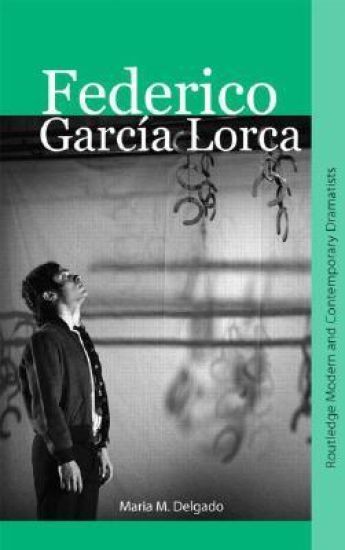
Federico García Lorca

Federico García Lorca

Maria M. Delgado

Routledge
2008
nidottu
Immortalized in death by The Clash, Pablo Neruda, Salvador Dalí, Dmitri Shostakovich and Lindsay Kemp, Federico García Lorca's spectre haunts both contemporary Spain and the cultural landscape beyond. This study offers a fresh examination of one of the Spanish language’s most resonant voices; exploring how the very factors which led to his emergence as a cultural icon also shaped his dramatic output.The works themselves are also awarded the space that they deserve, combining performance histories with incisive textual analysis to restate Lorca’s presence as a playwright of extraordinary vision, in works such as:Blood WeddingThe PublicThe House of Bernarda AlbaYerma.Federico García Lorca is an invaluable new resource for those seeking to understand this complex and multifaceted figure: artist, playwright, director, poet, martyr and in the eyes of many, Spain’s ‘national dramatist’.
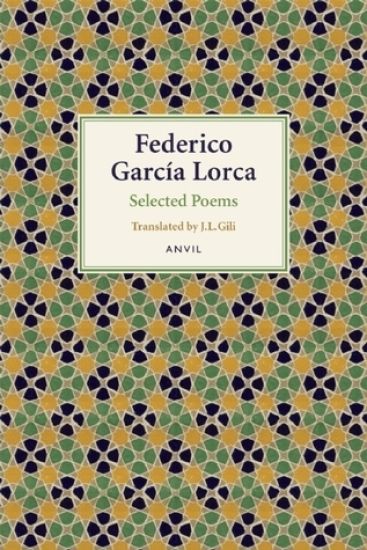
Federico Garcia Lorca

Federico Garcia Lorca

Federico Garcia Lorca

Anvil Press Poetry
2010
nidottu
J.L. Gili's selection of Lorca's poems in Spanish, with his own unassuming prose versions as guides to the originals, first appeared in 1960. With its excellent introduction and selection it remains a perfect introductory guide to the great poet. The book is ideal for newcomers to Lorca who know, or are prepared to grapple with, a little Spanish. It influenced a generation of readers and poets, including Ted Hughes who first encountered Lorca through this book.
Federico García Lorca

Federico García Lorca

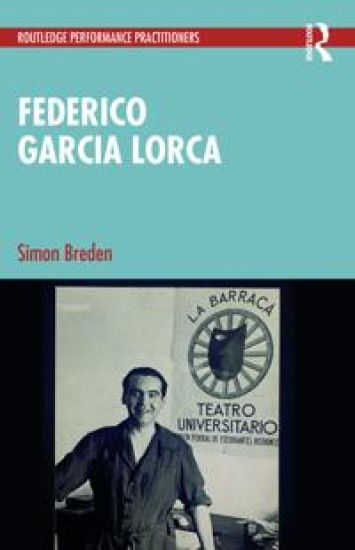
Simon Breden

TAYLOR FRANCIS LTD
2024
nidottu
Lauded as one of the most important poets and playwrights of the twentieth century, Federico García Lorca was also an accomplished theatre director with a clear process and philosophy of how drama should be staged. Directing both his own work and that of others, Lorca was also closely involved in the rehearsals for productions of many of his plays, and from his own writings and those of his collaborators, a determined agenda to stimulate audiences and renovate theatre can be seen.This is the first book in English to fully consider Lorca as a director and his rehearsal methodology. The book combines:- A biographical account of Lorca’s work as a director and rehearsal leader, revealing his techniques and methods of approach texts;- An exploration of his key writings on and around theatre, drawing on his talks, play introductions, and some of the dramatic works themselves;- The first translation into English of his fragment Dragón;- A detailed discussion of Lorca’s key productions, Lope de Vega’s Fuente Ovejuna (1933) for La Barraca, and his own Yerma (1934).- Specific focus on the practical applications that we can draw from Lorca’s methods, both from what survives of his own work and from the accounts of his close collaborators.As a first step towards critical understanding, and as an initial exploration before going on to further, primary research, Routledge Performance Practitioners offer unbeatable value for today’s student.
Federico García Lorca

Federico García Lorca

Simon Breden

TAYLOR FRANCIS LTD
2024
sidottu
Lauded as one of the most important poets and playwrights of the twentieth century, Federico García Lorca was also an accomplished theatre director with a clear process and philosophy of how drama should be staged. Directing both his own work and that of others, Lorca was also closely involved in the rehearsals for productions of many of his plays, and from his own writings and those of his collaborators, a determined agenda to stimulate audiences and renovate theatre can be seen.This is the first book in English to fully consider Lorca as a director and his rehearsal methodology. The book combines:- A biographical account of Lorca’s work as a director and rehearsal leader, revealing his techniques and methods of approach texts;- An exploration of his key writings on and around theatre, drawing on his talks, play introductions, and some of the dramatic works themselves;- The first translation into English of his fragment Dragón;- A detailed discussion of Lorca’s key productions, Lope de Vega’s Fuente Ovejuna (1933) for La Barraca, and his own Yerma (1934).- Specific focus on the practical applications that we can draw from Lorca’s methods, both from what survives of his own work and from the accounts of his close collaborators.As a first step towards critical understanding, and as an initial exploration before going on to further, primary research, Routledge Performance Practitioners offer unbeatable value for today’s student.
Gypsy Ballads: A New Translation of the Romancero Gitano by Federico Garcia Lorca

Gypsy Ballads: A New Translation of the Romancero Gitano by Federico Garcia Lorca

Federico Garcia Lorca

Createspace Independent Publishing Platform
2017
nidottu
Prepare to be mesmerized by the genius of Federico Garc a Lorca as he paints for us with poetry an almost surreal tableau of humanity and inhumanity.Lorca described his poetic study of human nature as an intricate retablo of southern Spain. On the surface it depicts the daily struggles of a marginalized people, but beneath the surface there is so much more. In these eighteen poems Lorca illustrates for us with words and lyrical incantations the daily interactions of the oppressors and the oppressed.Here we have on display the seven deadly sins (and three last things ) that Hieronymus Bosch explored hundreds of years earlier with oil paint. You will witness the: lust (Luxuria) of The Cheatin' Wife and her gypsy lover; and thedark sorrow (Tristitia) of the loveless Soledad Montoya, the abandoned girl of the Dreamwalking Ballad, and the conflicted Gypsy Nun. You will be assaulted by thegreed (Avaritia) of the Sons of Benamej as they murder a flamboyant gypsy for his shoes and jewelry, and thewrath (Ira) of knife-wielding rival gangs as they skirmish and kill each other for nothing butpride (Superbia).Lorca then saves his best for the Spanish Civil Guard, symbol of ignorance, brute power, and police oppression as he rails against theirsloth (Acedia), gluttony (Gula), andvanity (Vanagloria...)while they terrorize the peasants of the Andalusian countryside with their guns and raze whole villages in their fury.Lorca knew what might come--he was a marked man--but he did not flinch or pull his punches. Saints and sinners swirl 'round and 'round and 'round midst wind and water under an omnipresent gypsy moon in these songs of seduction and sobriety.What does it all mean? The poet doesn't say, but rather leaves it to us to ponder and find application in our own lives.
Sonnets of Dark Love by Federico Garcia Lorca

Sonnets of Dark Love by Federico Garcia Lorca

Federico Garcia Lorca

Createspace Independent Publishing Platform
2018
pokkari
Sonnets of Dark Love by Federico Garcia Lorca (1898-1936) have been translated into English by Mar Escribano. These poems were written in 1935, but were not published until after his death by the ABC Spanish newspaper on the 17th of March 1984, (clandestine editions were released before this date). This bilingual edition includes vintage images to get a better understanding of the romantic love he had for Ramirez de Lucas, together with explanations and comments for each sonnet. Lorca did not go to Mexico on exile (despite warnings that he may be killed) because Ramirez de Lucas' family refused him permission to travel with Lorca abroad. Ramirez de Lucas was under 21, and in Spain, at the time, you could not legally travel without parental permission.
Federico García Lorca

Federico García Lorca

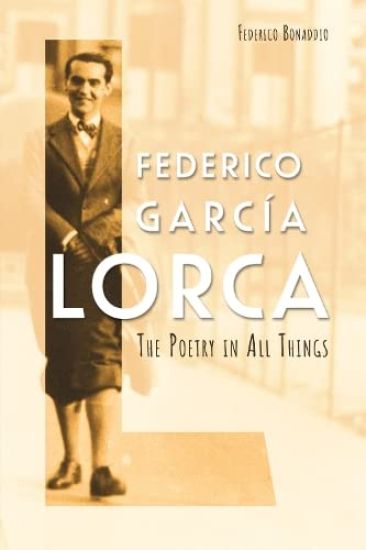
Federico Bonaddio

BOYDELL BREWER LTD
2022
sidottu
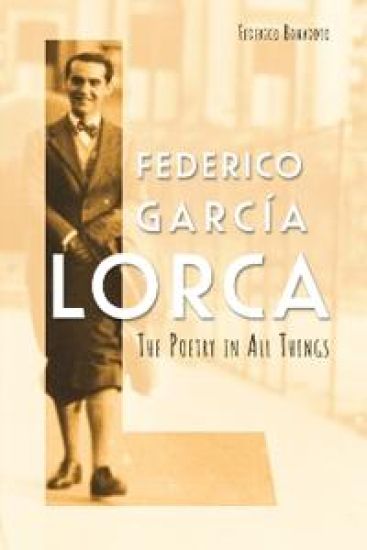
Feted by his contemporaries, Federico García Lorca's status has only grown since his death in 1936. This book shows just why his fame has endured, through an exploration of his most popular works. Feted by his contemporaries, Federico García Lorca's status has only grown since his death in 1936: poet, playwright, political martyr, gay icon, champion of women, defender of the oppressed. This book guides readers through the key themes and concerns in Lorca's work. It demonstrates how Lorca applied his poetic sensibilities and lyrical craft to what were, in essence, tangible, real-life issues: the plight of Andalusia's Romani people, the idea of modernity and the condition of women in Spain. What becomes evident is that, even though he was writing at a time when many writers and artists were less inclined to deal directly with the things of the world, Lorca maintained a profound interest in the human subject and in the world around him. It is this interest, the book argues, in tandem with his poetic vision and craft, that ensured his most popular works' enduring, universal appeal.
Federico García Lorca

Federico García Lorca

Federico Bonaddio

BOYDELL BREWER LTD
2025
pokkari
Feted by his contemporaries, Federico García Lorca's status has only grown since his death in 1936. This book shows just why his fame has endured, through an exploration of his most popular works. Feted by his contemporaries, Federico García Lorca's status has only grown since his death in 1936: poet, playwright, political martyr, gay icon, champion of women, defender of the oppressed. This book guides readers through the key themes and concerns in Lorca's work. It demonstrates how Lorca applied his poetic sensibilities and lyrical craft to what were, in essence, tangible, real-life issues: the plight of Andalusia's Romani people, the idea of modernity and the condition of women in Spain. What becomes evident is that, even though he was writing at a time when many writers and artists were less inclined to deal directly with the things of the world, Lorca maintained a profound interest in the human subject and in the world around him. It is this interest, the book argues, in tandem with his poetic vision and craft, that ensured his most popular works' enduring, universal appeal.
Federico García Lorca el de Poeta en Nueva York

Federico García Lorca el de Poeta en Nueva York

Ramon Fernandez Palmeral

Lulu.com
2020
nidottu
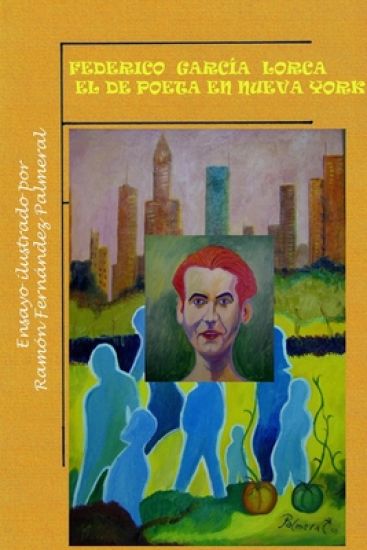
Federico Garcia Lorca tras un desencuentro amoroso homoxesual viajo por un ano a Nueva York y Cuba entre 1929 a 1930. El resultado fue esta obra maestra titulada "Poeta en Nueva York", postuma de 1940, de poesia surrealista, automatica y un sentdio avanzadp ultraista, entendida como arte expresivo de vanguardia, que ha sido comentado por Ramon Fernandez Palmeral un estudioso de los poetas de la Generacion del 27 y del 36. Tambien autor de "Federico Garcia Lorca y el Flamenco", publicado en Amazon 2016. Biografias sobre Miguel Hernandez, Carlos Fenoll, ensayos sobre la obra de Manuel Molina, Vicente Ramos, Rainer Maria Rilke, y Juan Gil Albert. Contiene "Federico Garcia Lorca el de Poeta en Nueva York" con 19 ilustraciones originales de estilo surrealista de Palmeral,"alter ego" del autor de ensayo que contiene un prologo y un amplio comentario, fotografias y que suman 214 paginas.
Federico Garcia Lorca: A Life

Federico Garcia Lorca: A Life

Ian Gibson

Faber Faber
1990
pokkari
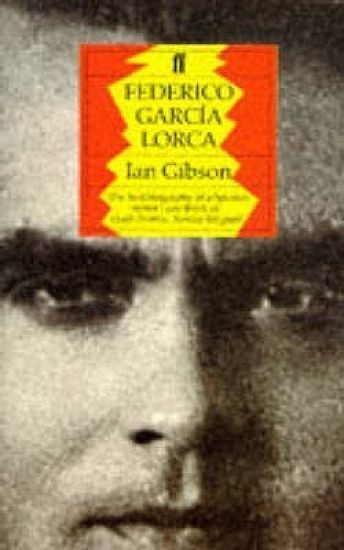
Known primarily as a poet and dramatist, Spanish writer Federico Garcia Lorca published four books before his early death in the Spanish Civil War. This biography gives an account of his family, his homosexuality and his mysterious death, as well as tracing his literary development.
Federico Garcia Lorca and the Culture of Male Homosexuality
Spain in the twentieth century gave birth to an array of astounding artistic and literary talent, including the passionately iconoclastic writer Federico Garcia Lorca. But his works were ill received in the homophobic atmosphere of institutionalized Spanish criticism. Because of this atmosphere, even today's critics have effectively marginalized and disavowed intimations of homo-affectivity and homoeroticism in the great Spanish works. This book first appeared in Spain in 1991 as counter-discourse against those prevailing ideological structures. Before its appearance, no significant work had focused on the position of Spanish culture towards homosexuality or on how homosexuality could affect the works of canonical writers. Engaging with homosexuality as an imperative source of meaning in artistic work, this volume rigorously studies the works of Federico Garcia Lorca and several of his marginalized homosexual contemporaries, including Emilio Prados, Luis Cernuda, Juan Gil-Albert, and Salvador Dali. The study relies on the textual evidence presented by these authors to define the homosexual culture as one plagued by the realities of rejection, fear of the law, self-doubts, the lack of an authorized language with which to convey emotions, the awareness of disgust around the individual, the need to accept marginality to find sexual or emotional satisfaction, and the knowledge of one's own social divergence, all of which have an enormous influence on any artist's work. With this new and updated translation, this work offers English-speaking readers the opportunity to focus on formal aspects of literary expressions of homosexuality.
Federico García Lorca y el Flamenco

Federico García Lorca y el Flamenco

Ramon Fernandez Palmeral

Lulu.com
2017
nidottu
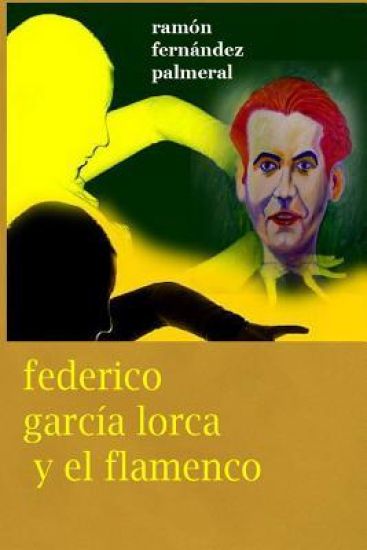
Federico Garcia Lorca es el gran descubridor del flamenco moderno. El flamenco es un yacimiento arqueologico vivo. La raices del flamenco se pierden en la historia, no hay constancia de su creacion inicial, porque es una fusion de culturas musicales andaluzas, sin embargo, cada vez toma mas fuerza que naciera en Andalucia Oriental: Jerez de la Frontera, Cadiz y Triana en Sevilla se extiende por Andalucia Oriental (Malaga, Jaen y Almeria) y llega a La Union (Murcia) a traves de la mineria, cante de las minas, pero no sube para al Levante, se queda en Murcia, aunque en los anos 30 el Salon Espana de Alicante, luego Cinema Capitol, desfilaron cantaores de la llamada opera flamenca como Manuel Vallejo o "El Nino Marchena " o "La Nina de la Puebla". Pero no arraiga quizas por la falta de cantaores autoctonos. Lamentablemente hoy en dia al flamenco se le asocia con la etnia rom (gitanos calo hispanicos) tiene una imagen social negativa. Garcia Lorca no era gitano y no le gustaba que se lo dijeran.
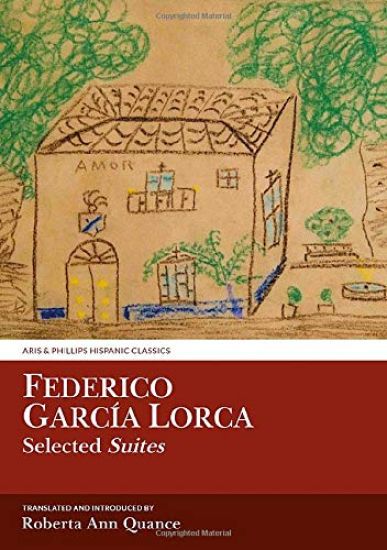
Federico García Lorca, Selected Suites

Federico García Lorca, Selected Suites

Roberta Ann Quance

Liverpool University Press
2018
sidottu
This volume offers a fresh translation of a generous selection of Lorca’s suites, a body of work that Federico García Lorca left largely unpublished upon his death in 1936. Composed between 1920 to 1923, these poems are closest in spirit and technique to Lorca’s Songs (1927) and his Poem of the Deep Song (1931). In 1926 the poet suggested they could be released together to form a ‘boxed set’, yet this plan, like other earlier efforts, fell through. Lorca’s suites reveal a poet who is interested in creating a modern style founded on popular oral lyric and fragmented narrative. But they also show a poet who explores his heart and his sexual orientation, and who may have hesitated too long about publication. Lorca achieved the fullest expression of a personal yearning in his long poem In the Garden of the Lunar Grapefruits. Out of an impossible contradiction between self-discovery and wariness of disclosure rises the blue world of the ideal—a timeless world that all readers of Lorca will want to take into account, inasmuch as it forms a counterpoint to the rest of his work.
Federico García Lorca, Selected Suites

Federico García Lorca, Selected Suites

Roberta Ann Quance

Liverpool University Press
2018
nidottu
This volume offers a fresh translation of a generous selection of Lorca’s suites, a body of work that Federico García Lorca left largely unpublished upon his death in 1936. Composed between 1920 to 1923, these poems are closest in spirit and technique to Lorca’s Songs (1927) and his Poem of the Deep Song (1931). In 1926 the poet suggested they could be released together to form a ‘boxed set’, yet this plan, like other earlier efforts, fell through. Lorca’s suites reveal a poet who is interested in creating a modern style founded on popular oral lyric and fragmented narrative. But they also show a poet who explores his heart and his sexual orientation, and who may have hesitated too long about publication. Lorca achieved the fullest expression of a personal yearning in his long poem In the Garden of the Lunar Grapefruits. Out of an impossible contradiction between self-discovery and wariness of disclosure rises the blue world of the ideal—a timeless world that all readers of Lorca will want to take into account, inasmuch as it forms a counterpoint to the rest of his work.
Federico García Lorca: The Poetics of Self-Consciousness
A study of Lorca's poetic trajectory. This volume is one of few surveys in English of the whole of Lorca's poetry and the first to concentrate entirely on self-consciousness, a subject which it sees as central to our understanding of the work of a poet writing in themost self-conscious of literary periods: the Modernist era. Focusing on poems which have the poet, art and creativity as their subject, or which draw attention at a formal level to issues of practice or style, it shows how these poems speak for or against contemporary aesthetic doctrine, thereby revealing the extent of the poet's allegiance to it and the positions he takes up in the process of making his own mark in the literary field. In so doing itcharts the development of a poet whose self-conscious engagement with his art offers an explanation as to why his work, in the space of little more than a decade and a half, should have been so singular and diverse. FEDERICO BONADDIO lectures in Modern Spanish Studies at King's College London.