
Kirjahaku
Etsi kirjoja tekijän nimen, kirjan nimen tai ISBN:n perusteella.
1000 tulosta hakusanalla Federico Schiller

Guillermo Tell (Wilhelm Tell en alem n) es un drama en cinco actos y en verso, perteneciente a la poca cl sica de la literatura alemana y escrito por el intelectual alem n Federico Schiller. Este drama est basado en una leyenda que encarn los ideales de lucha por la libertad e independencia de Suiza primero, y m s tarde los de amor paterno y la lucha por la justicia. El drama de Schiller sirvi de inspiraci n a numerosos autores posteriores. Rossini utiliz la obra de teatro de Schiller, para componer la pera que lleva el mismo nombre en 1829, que se estren en Par s. La obertura de dicha opera es mundialmente conocida y popular.
Storia Della Guerra De'Trent'Anni V1 (1841)
Federigo Schiller
KESSINGER PUBLISHING, LLC
2009
pokkari
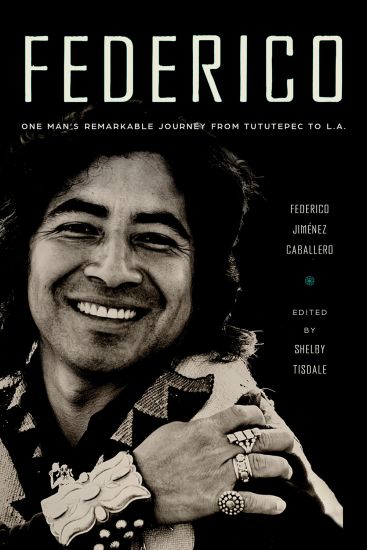
From the day he was born, Federico JimÉnez Caballero was predicted to be a successful man. So, how exactly did a young boy from Tututepec, Oaxaca, become a famous Indigenous jewelry artist and philanthropist in Los Angeles? Federico tells the remarkable story of willpower, curiosity, hard work, and passion coming together to change one man's life forever.As a child growing up in a small rural town in southern Mexico, Federico JimÉnez Caballero faced challenges that most of us cannot imagine, let alone overcome. From a young age, Federico worked tirelessly to contribute to his large family, yet his restless spirit often got him into trouble. Finding himself in the middle of a village-wide catastrophe, he was exiled to a boarding school in Oaxaca City where he was forced to become independent, resilient, and razor-sharp in order to stay afloat. Through his incredible people skills, bravery, and a few nudges from his bold mother, Federico found himself excelling in his studies and climbing the ranks in Oaxaca City. He always held a deep love and respect for his Mixtec Indigenous roots and began to collect Indigenous jewelry and textiles. Through a series of well-timed connections, Federico met his wife Ellen, and, shortly afterward, he came to the United States as a researcher at the University of California, Los Angeles, in the late 1960s.Carrying his passion for Indigenous jewelry with him from Oaxaca, Federico owned a series of shops in Los Angeles and sold jewelry at flea markets to well-known Hollywood stars. Over the years, he cultivated relationships and became a philanthropist as well as the owner of a museum in Oaxaca City. This book is the inspiring first-person account of eighty years in the life of a man who moved from humble beginnings to the bright lights of Hollywood, following his passion and creating long-lasting relationships as he climbed the ladder of success.
Renzo, Gianni, Federico, and Simone CiprianoBrothers who are well known in the town of Kellington. Each brother was thriving on his own, working at what he does best. It is their mother's wish for her sons to find love and happiness like she had with their father, since they have been well known, not only for their work ethics but also for their sexual conquests.Watch as the Cipriano brothers try and find love in probably some of the most unlikely of places. Along the way you'll meet some of the women who take their hearts as well as their minds on a whirlwind ride like no other. Federico Cipriano has everything going for him....he has charm and flair as well as being the owner of his own landscaping business. Plus the fact that his good looks has gotten him with many women in town. But there seem to be one who is playing hard to get and she's the one he desires the most out of all.....Michelle Bordeaux. Michelle Bordeaux came with her parents to open up Le Jardin Des Cygnes in Kellington, on the knowledge that she would return back to Arizona after a year, so she could get back with the man she loves. But there has been something, well actually someone who has been nothing more than a thorn in her side since the first time he laid eyes on her....Federico Cipriano.He wants her as a conquest.....but soon he realizes that he wants more.She wants nothing to do with him.....but why does she find herself unable to get him off her mind?What happens when these two absolutely different people go head to head with one another?Plenty of laughs as well as tons of sparks.
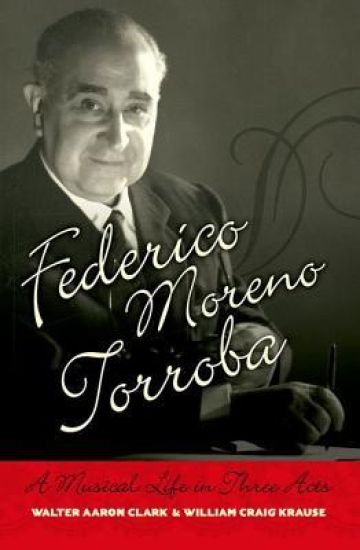
Federico Moreno Torroba
Clark Walter Aaron; William Craig Krause
Oxford University Press Inc
2016
nidottu
The last of the Spanish Romantics, composer, conductor, and impresario Federico Moreno Torroba (1891-1982) left his mark on virtually every aspect of Spanish musical culture during a career which spanned six decades, and saw tremendous political and cultural upheavals. After Falla, he was the most important and influential musician: in addition to his creative activities, he was President of the General Society of Authors and Editors and director of the Academy of Fine Arts and Teatro Zarzuela. His enduring contributions as a composer include copious amounts of guitar music composed for Andres Segovia and several highly successful zarzuelas which remain in the repertoire today. Written by two leading experts in the field, Federico Moreno Torroba: A Musical Life in Three Acts explores not only his life and work, but also the relationship of his music to the cultural milieu in which he moved. It sheds particular light on the relationship of Torroba's music and the cultural politics of Francisco Franco's dictatorship (1939-75). Torroba came of age in a cultural renaissance that sought to reassert Spain's position as a unique cultural entity, and authors Walter A. Clark and William Krause demonstrate how his work can be understood as a personal, musical response to these aspirations. Clark and Krause argue that Torroba's decision to remain in Spain even during the years of Franco's dictatorship was based primarily not on political ideology but rather on an unwillingness to leave his native soil. Rather than abandon Spain to participate in the dynamic musical life abroad, he continued to compose music that reflected his conservative view of his national and personal heritage. The authors contend that this pursuit did not necessitate allegiance to a particular regime, but rather to the non-political exaltation of Spain's so-called 'eternal tradition', or the culture and spirit that had endured throughout Spain's turbulent history. Following Franco's death in 1975, there was ambivalence towards figures like Torroba who had made their peace with the dictatorship and paid a heavy price in terms of their reputation among expatriates. Moreover, his very conservative musical style made him a target for the post-war avant-garde, which disdained his highly tonal and melodic españolismo. With the demise of high modernism, however, the time has come for this new, more distanced assessment of Torroba's contributions. Richly illustrated with figures and music examples, and with a helpful discography for reference, this biography brings a fresh perspective on this influential composer to Latin American and Iberian music scholars, performers, and lovers of Spanish music alike.

Federico Moreno Torroba
Clark Walter Aaron; William Craig Krause
Oxford University Press Inc
2013
sidottu
The last of the Spanish Romantics, composer, conductor, and impresario Federico Moreno Torroba (1891-1982) left his mark on virtually every aspect of Spanish musical culture during a career which spanned six decades, and saw tremendous political and cultural upheavals. After Falla, he was the most important and influential musician: in addition to his creative activities, he was President of the General Society of Authors and Editors and director of the Academy of Fine Arts and Teatro Zarzuela. His enduring contributions as a composer include copious amounts of guitar music composed for Andres Segovia and several highly successful zarzuelas which remain in the repertoire today. Written by two leading experts in the field, Federico Moreno Torroba: A Musical Life in Three Acts explores not only his life and work, but also the relationship of his music to the cultural milieu in which he moved. It sheds particular light on the relationship of Torroba's music and the cultural politics of Francisco Franco's dictatorship (1939-75). Torroba came of age in a cultural renaissance that sought to reassert Spain's position as a unique cultural entity, and authors Walter A. Clark and William Krause demonstrate how his work can be understood as a personal, musical response to these aspirations. Clark and Krause argue that Torroba's decision to remain in Spain even during the years of Franco's dictatorship was based primarily not on political ideology but rather on an unwillingness to leave his native soil. Rather than abandon Spain to participate in the dynamic musical life abroad, he continued to compose music that reflected his conservative view of his national and personal heritage. The authors contend that this pursuit did not necessitate allegiance to a particular regime, but rather to the non-political exaltation of Spain's so-called 'eternal tradition', or the culture and spirit that had endured throughout Spain's turbulent history. Following Franco's death in 1975, there was ambivalence towards figures like Torroba who had made their peace with the dictatorship and paid a heavy price in terms of their reputation among expatriates. Moreover, his very conservative musical style made him a target for the post-war avant-garde, which disdained his highly tonal and melodic españolismo. With the demise of high modernism, however, the time has come for this new, more distanced assessment of Torroba's contributions. Richly illustrated with figures and music examples, and with a helpful discography for reference, this biography brings a fresh perspective on this influential composer to Latin American and Iberian music scholars, performers, and lovers of Spanish music alike.
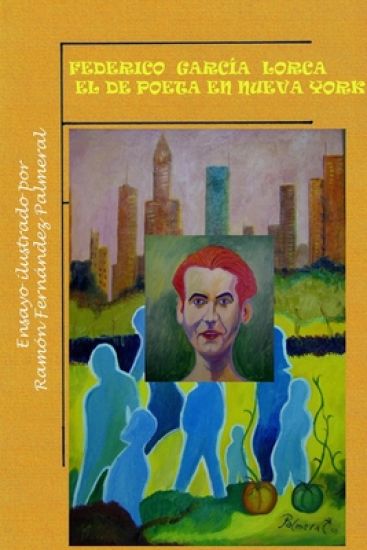
Federico Garcia Lorca tras un desencuentro amoroso homoxesual viajo por un ano a Nueva York y Cuba entre 1929 a 1930. El resultado fue esta obra maestra titulada "Poeta en Nueva York", postuma de 1940, de poesia surrealista, automatica y un sentdio avanzadp ultraista, entendida como arte expresivo de vanguardia, que ha sido comentado por Ramon Fernandez Palmeral un estudioso de los poetas de la Generacion del 27 y del 36. Tambien autor de "Federico Garcia Lorca y el Flamenco", publicado en Amazon 2016. Biografias sobre Miguel Hernandez, Carlos Fenoll, ensayos sobre la obra de Manuel Molina, Vicente Ramos, Rainer Maria Rilke, y Juan Gil Albert. Contiene "Federico Garcia Lorca el de Poeta en Nueva York" con 19 ilustraciones originales de estilo surrealista de Palmeral,"alter ego" del autor de ensayo que contiene un prologo y un amplio comentario, fotografias y que suman 214 paginas.
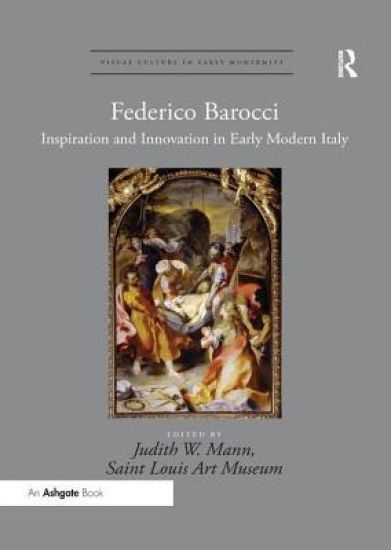
Federico Barocci
Routledge
2019
nidottu
Reviewers of a recent exhibition termed Federico Barocci (ca. 1533–1612), 'the greatest artist you’ve never heard of'. One of the first original iconographers of the Counter Reformation, Barocci was a remarkably inventive religious painter and draftsman, and the first Italian artist to incorporate extensive color into his drawings. The purpose of this volume is to offer new insights into Barocci’s work and to accord this artist, the dates of whose career fall between the traditional Renaissance and Baroque periods, the critical attention he deserves. Employing a range of methodologies, the essays include new ideas on Barocci’s masterpiece, the Entombment of Christ; fresh thinking about his use of color in his drawings and innovative design methods; insights into his approach to the nude; revelations on a key early patron; a consideration of the reasons behind some of his most original iconography; an analysis of his unusual approach to the marketing of his pictures; an exploration of some little-known aspects of his early production, such as his reliance on Italian majolica and contemporary sculpture in developing his compositions; and an examination of a key Barocci document, the post mortem inventory of his studio. A translated transcription of the inventory is included as an appendix.
Immortalized in death by The Clash, Pablo Neruda, Salvador Dalí, Dmitri Shostakovich and Lindsay Kemp, Federico García Lorca's spectre haunts both contemporary Spain and the cultural landscape beyond. This study offers a fresh examination of one of the Spanish language’s most resonant voices; exploring how the very factors which led to his emergence as a cultural icon also shaped his dramatic output.The works themselves are also awarded the space that they deserve, combining performance histories with incisive textual analysis to restate Lorca’s presence as a playwright of extraordinary vision, in works such as:Blood WeddingThe PublicThe House of Bernarda AlbaYerma.Federico García Lorca is an invaluable new resource for those seeking to understand this complex and multifaceted figure: artist, playwright, director, poet, martyr and in the eyes of many, Spain’s ‘national dramatist’.
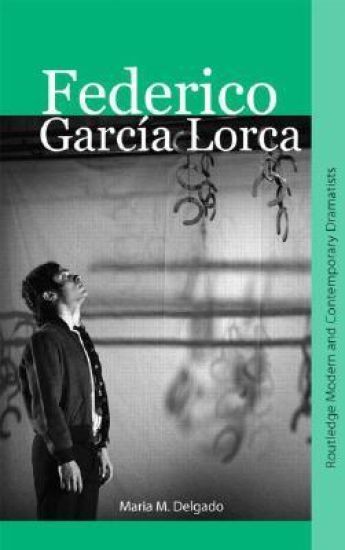
Immortalized in death by The Clash, Pablo Neruda, Salvador Dalí, Dmitri Shostakovich and Lindsay Kemp, Federico García Lorca's spectre haunts both contemporary Spain and the cultural landscape beyond. This study offers a fresh examination of one of the Spanish language’s most resonant voices; exploring how the very factors which led to his emergence as a cultural icon also shaped his dramatic output.The works themselves are also awarded the space that they deserve, combining performance histories with incisive textual analysis to restate Lorca’s presence as a playwright of extraordinary vision, in works such as:Blood WeddingThe PublicThe House of Bernarda AlbaYerma.Federico García Lorca is an invaluable new resource for those seeking to understand this complex and multifaceted figure: artist, playwright, director, poet, martyr and in the eyes of many, Spain’s ‘national dramatist’.
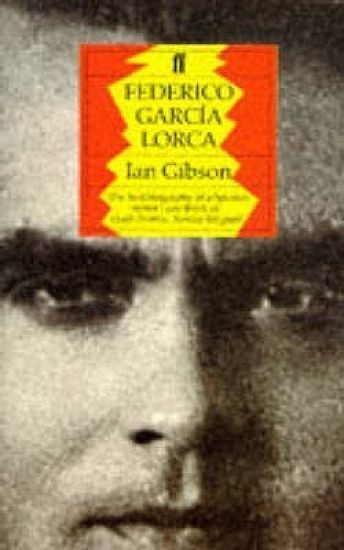
Known primarily as a poet and dramatist, Spanish writer Federico Garcia Lorca published four books before his early death in the Spanish Civil War. This biography gives an account of his family, his homosexuality and his mysterious death, as well as tracing his literary development.

Federico Garcia Lorca and the Culture of Male Homosexuality
Ángel Sahuquillo
McFarland Co Inc
2007
pokkari
Spain in the twentieth century gave birth to an array of astounding artistic and literary talent, including the passionately iconoclastic writer Federico Garcia Lorca. But his works were ill received in the homophobic atmosphere of institutionalized Spanish criticism. Because of this atmosphere, even today's critics have effectively marginalized and disavowed intimations of homo-affectivity and homoeroticism in the great Spanish works. This book first appeared in Spain in 1991 as counter-discourse against those prevailing ideological structures. Before its appearance, no significant work had focused on the position of Spanish culture towards homosexuality or on how homosexuality could affect the works of canonical writers. Engaging with homosexuality as an imperative source of meaning in artistic work, this volume rigorously studies the works of Federico Garcia Lorca and several of his marginalized homosexual contemporaries, including Emilio Prados, Luis Cernuda, Juan Gil-Albert, and Salvador Dali. The study relies on the textual evidence presented by these authors to define the homosexual culture as one plagued by the realities of rejection, fear of the law, self-doubts, the lack of an authorized language with which to convey emotions, the awareness of disgust around the individual, the need to accept marginality to find sexual or emotional satisfaction, and the knowledge of one's own social divergence, all of which have an enormous influence on any artist's work. With this new and updated translation, this work offers English-speaking readers the opportunity to focus on formal aspects of literary expressions of homosexuality.
Federico Fellini
University of Toronto Press
2002
sidottu
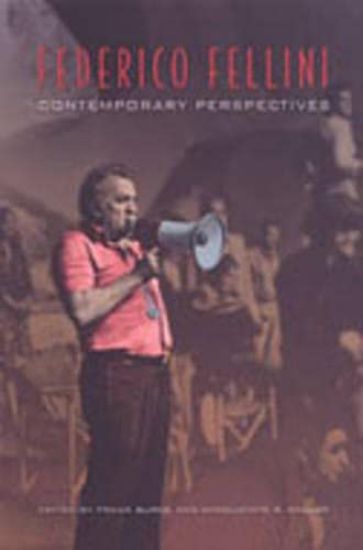
Federico Fellini remains the best known of the postwar Italian directors. This collection of essays brings Fellini criticism up to date, employing a range of recent critical filters, including semiotic, psychoanalytical, feminist and deconstructionist. Accordingly, a number of important themes arise - the reception of fascism, the crisis of the subject, the question of agency, homo-eroticism, feminism, and constructions of gender. Since the early 1970s, a slide in critical and theoretical attention to Fellini's work has corresponded with an assumption that his films are self-indulgent and lacking in political value. This volume moves the discussion towards a politics of signification, contending that Fellini's evolving self-reflexivity is not mere solipsism but rather a critique of both aesthetics and signification. The essays presented here are almost all new - the two exceptions being important signifiers in Fellini studies. The first, Frank Burke's "Federico Fellini: Reality/Representation/Signification" laid the foundation in the late 1980s for considering Fellini's work in the light of postmodernism. The second, Marguerite Waller's "Whose Dolce Vita is this Anyway?: The Language of Fellini's Cinema" (1990), provides a contemporary re-reading of Fellini's most successful film. This lively and ambitious collection brings a new critical language to bear on Fellini's films, offering fresh insights into their underlying issues and meaning. In bringing Fellini criticism up to date, it will have a significant impact on film studies, reclaiming this important director for a contemporary audience.
Federico Fellini
University of Toronto Press
2002
pokkari
Federico Fellini remains the best known of the postwar Italian directors. This collection of essays brings Fellini criticism up to date, employing a range of recent critical filters, including semiotic, psychoanalytical, feminist and deconstructionist. Accordingly, a number of important themes arise - the reception of fascism, the crisis of the subject, the question of agency, homo-eroticism, feminism, and constructions of gender. Since the early 1970s, a slide in critical and theoretical attention to Fellini's work has corresponded with an assumption that his films are self-indulgent and lacking in political value. This volume moves the discussion towards a politics of signification, contending that Fellini's evolving self-reflexivity is not mere solipsism but rather a critique of both aesthetics and signification. The essays presented here are almost all new - the two exceptions being important signifiers in Fellini studies. The first, Frank Burke's "Federico Fellini: Reality/Representation/Signification" laid the foundation in the late 1980s for considering Fellini's work in the light of postmodernism. The second, Marguerite Waller's "Whose Dolce Vita is this Anyway?: The Language of Fellini's Cinema" (1990), provides a contemporary re-reading of Fellini's most successful film. This lively and ambitious collection brings a new critical language to bear on Fellini's films, offering fresh insights into their underlying issues and meaning. In bringing Fellini criticism up to date, it will have a significant impact on film studies, reclaiming this important director for a contemporary audience.
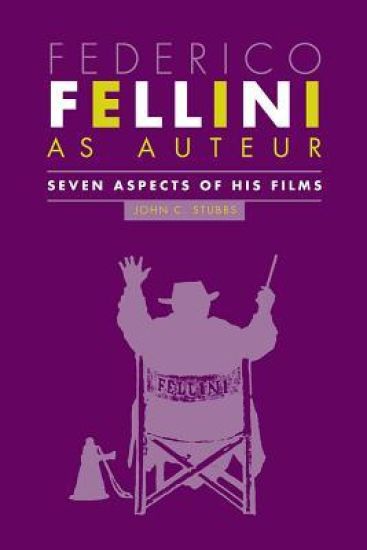
Federico Fellini as Auteur: Seven Aspects of His Films offers a comprehensive auteurist study of the renowned Italian director. Film scholar John C. Stubbs dispenses with a traditional filmcareer review of the man, focusing instead on the key elements of the filmmaker’s style, the influence of Carl Jung and dreams, the autobiographical depiction of childhood and adolescence, the portrait of the artist, the filmmaker’s working relationship with his wife, Fellini’s comic strategies, and his adaptation of works by others. Each of the aspects is fully contextualized. This examination of the critical elements in Fellini films offers a better understanding of the artistry that is uniquely Fellini.