
Kirjahaku
Etsi kirjoja tekijän nimen, kirjan nimen tai ISBN:n perusteella.
1000 tulosta hakusanalla Fernando Fulgosio
Una Mata de Helecho En La Costa de M
Fernando Fulgosio
Createspace Independent Publishing Platform
2014
nidottu
Una mata de Helecho en la costa de M laga. FERNANDO FULGOSIO Espa a 1831 - 1873

After a year in county jail, a new life on the outside awaits Nineteen-year-old Amari Davis is a rebellious transgender teen from Georgia with a desperate desire for a fresh start-but being packed off to Brazil to work with her father, a military vet now in the Peace Corps, isn't exactly what she has in mind. Amari struggles to adjust to the new culture and fit in with the locals until she meets Gabriel, a handsome and endearing young man who works with her father. The two are drawn to each other, and as their friendship deepens, Amari's newfound romance tests her resolution to live authentically. If she tells Gabriel the truth about herself, will it push him away forever? From award-winning author Chanel Hardy, 'Fernando' is a modern, unconventional love story set in the 90's that explores what it means to live as your authentic self, giving love a chance when all seems lost, and to be young and resilient in the face of adversity.

Fernando Pessoa (1888-1935) is the quintessential philosophical outsider. Affiliated to no institution, and associated with no traditional school, in his prose fiction and poetry, Pessoa invented a new philosophy of the human subject, arguing that imagination is key to human flourishing and human self-enrichment. Each of us, he claimed, can use our powers of imagination to “pluralise ourselves;” that is to say, to live, simultaneously and in sequence, as a plurality of distinct subjects. Calling these artefact minds “heteronyms”, Pessoan synthetic selves are new ways poetically to experience the world. In this study of the philosophical thought of Pessoa, philosopher Jonardon Ganeri highlights connections between Pessoa with earlier philosophical poets, from Keats to Shakespeare and from Coleridge to Whitman. Ganeri emphasises Pessoa's originality in his theory of the human subject as a radical departure from the history of Christian or Islamic thought, highlighting affinities with ideas from works of philosophical fiction in classical India through an examination of Pessoa's own engagement with Indian poetry and philosophy. Ganeri convincingly argues for the need to consider Pessoa's writings as a philosopher, both on their own terms and as in deep conversation with the tradition of Indian thought.

Fernando de Rojas and the Renaissance Vision
Castells Ricardo
Pennsylvania State University Press
2000
sidottu
The late medieval masterpiece Celestina has long been the focus of controversy, over both its authorship and the apparent contradictions and inconsistencies within its plot. Scholars trace the publication of Celestina to 1499, when Fernando de Rojas supposedly discovered the first act and completed the remainder of the drama within a two-week period. The plot centers on the ill-fated love of Calisto and Melibea and the fascinating character of the old bawd, Celestina. Scholars disagree about how to interpret the meeting of the two lovers in the first scene, when they share an unusual conversation that is incongruous with their comportment in the remainder of the work. Ricardo Castells seeks to resolve this and other seeming contradictions by tracing the oneiric, phantasmal, and melancholic traditions of the Renaissance and their effect on the composition of Celestina. Castells explores the European cultural and literary tradition—works of both fiction and nonfiction that would have been available to Rojas—to discover theoretical approaches to the physiology of lovesickness and its accompanying dreams and visions. He employs the themes of love, medicine, and dreams in these works to explain the seemingly illogical progression of the play’s action and the ultimately detrimental effects of melancholy, lovesickness, and sensual contamination on the protagonist, Calisto. In so doing, Castells places Celestina within its appropriate cultural and historical context, enriching our perception not only of the text itself but also of the traditions that helped to produce it.

Fernando de Rojas and the Renaissance Vision
Ricardo Castells
Pennsylvania State University Press
2001
pokkari
The late medieval masterpiece Celestina has long been the focus of controversy, over both its authorship and the apparent contradictions and inconsistencies within its plot. Scholars trace the publication of Celestina to 1499, when Fernando de Rojas supposedly discovered the first act and completed the remainder of the drama within a two-week period. The plot centers on the ill-fated love of Calisto and Melibea and the fascinating character of the old bawd, Celestina. Scholars disagree about how to interpret the meeting of the two lovers in the first scene, when they share an unusual conversation that is incongruous with their comportment in the remainder of the work. Ricardo Castells seeks to resolve this and other seeming contradictions by tracing the oneiric, phantasmal, and melancholic traditions of the Renaissance and their effect on the composition of Celestina. Castells explores the European cultural and literary tradition—works of both fiction and nonfiction that would have been available to Rojas—to discover theoretical approaches to the physiology of lovesickness and its accompanying dreams and visions. He employs the themes of love, medicine, and dreams in these works to explain the seemingly illogical progression of the play’s action and the ultimately detrimental effects of melancholy, lovesickness, and sensual contamination on the protagonist, Calisto. In so doing, Castells places Celestina within its appropriate cultural and historical context, enriching our perception not only of the text itself but also of the traditions that helped to produce it.

This book brings together a collection of paintings depicting male nudes, by artist Fernando Carpaneda. "My sculptures and paintings are experimental works on material and feelings. I think I can explore new possibilities sculpting the human body and new forms. I worked for 15 years with assemblages before starting sculpting and through the assemblages I became a sculptor. It was a kind of a natural process. Most of my sculptures are portraits of friends, ex-lovers, porn stars and random guys. I transform my sculptures into a kind of reliquary, where you can identify several references to the models; Phrases, poetry, human hair. I followed this path because I wanted to create works that have a consequential meaning to me and a strong connection with my models, and so, my past experiences are always present. I wish my works can reach an audience that appreciates art regardless of being gay or straight. I like to do works that do not fit into the circuit of contemporary art. I like to go against the standard imposed by art institutions. I try to escape the contemporary visual aesthetics and I prefer follow lines of works that escape this contemporary aesthetic. My goal with my art is also to show other sides within the GLBTQ culture and society in general. By that, to open the minds of the audience to other possibilities within gay and punk art. My works speak of freedom, of being what you are, without fear of assuming your ideas and ideals.

Fernando Carpaneda "New Portraits" is a series of paintings and drawings depicting the beauty and the sensuality of men and women. The work seeks to provoke debates and questions about equality, in the sense of valuing the human being. Carpaneda takes inspiration from the urban element, and uses the language of the street along with his own experiences. Beggars, pop stars, punks and outcasts of all kinds are the object of his attention and look. In June 2012, some of his works were exhibited on 23 foot LED screens as part of "Art Takes Times Square" and were seen by over 1 million people. Carpaneda was also named as a Juror's Choice for Visual Art at the 2016 Seattle Erotic Art Festival.


Fernando Cortes and the Conquest of Mexico 1485-1547
Francis Augustus Macnutt
Kessinger Pub
2007
sidottu
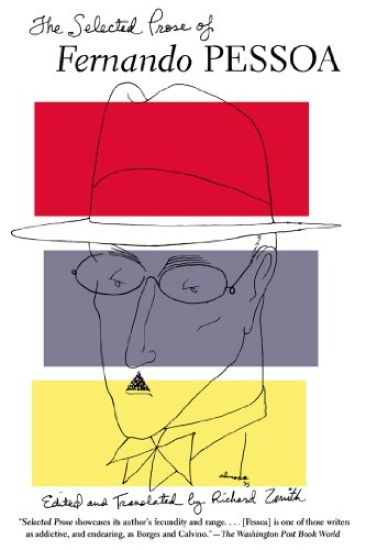
The Washington Post Book World has written that Fernando Pessoa was "Portugal's greatest writer of the twentieth century though] some critics would even leave off that last qualifying phrase" and "one of the most appealing European modernists, equal in command and range to his contemporaries Rilke and Mandelstam." The Selected Prose of Fernando Pessoa, a Los Angeles Times Best Book of 2001, spans playful philosophical inquiry, Platonic dialogue, and bitter intellectual scrapping between Pessoa and his many literary alter egos ("heteronyms"). The heteronyms launch movements and write manifestos, and one of them attempts to break up Pessoa's only known romantic relationship. Also included is a generous selection from Pessoa's masterpiece, The Book of Disquiet, freshly translated by Richard Zenith from newly discovered materials. The Selected Prose of Fernando Pessoa is an important record of a crucial part of the literary canon.
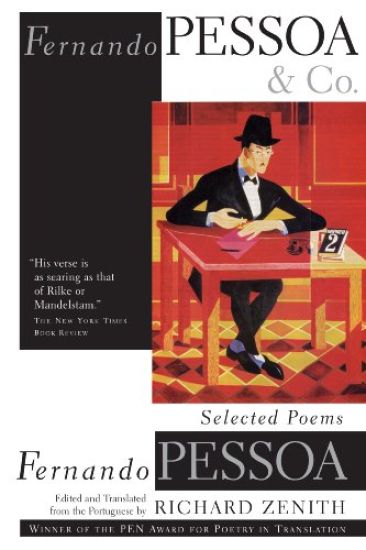
"One of the great originals of modern European poetry and Portugal's premier modernist."--Washington Post"Pessoa has had many English-language interpreters but none better than Richard Zenith."--New York Review of BooksFernando Pessoa--a poet who lived most of his life in Lisbon, Portugal, and who died in obscurity there-- is now recognized as one of the greatest writers of the twentieth century. In a newly updated and expanded edition of his celebrated 1998 Fernando Pessoa & Co., which Booklist hailed as "a beautiful one-volume course in the soul of the twentieth century," translator and biographer Richard Zenith brings together Pessoa's most memorable poetic works. Present here is poetry by Pessoa's famous trio of alter egos--Alberto Caeiro, Ricardo Reis, and lvaro de Campos--as well as a varied selection of poems signed by Pessoa's own name. From spare minimalism to revolutionary exuberance, Fernando Pessoa & Co. showcases the seminal poet's timeless and innovative work in all of its extraordinary depth and poetic passion."Like Beckett, Pessoa is extremely funny. . . . His work is loaded with delights."--Guardian"Pessoa would be Shakespeare if all that we had of Shakespeare were the soliloquies of Hamlet, Falstaff, Othello and Lear and the sonnets. His legacy is a set of explorations, in poetic form, of what it means to inhabit a human consciousness."--Los Angeles Times Book Review

Written records of Alonso’s work are scarce, yet Toba Singer’s quest to spotlight his seminal role in the development of the modern ballet canon yields key material: pre-blockade tapes from Lincoln Center, Spanish-language sources from the Museum of Dance in Havana, and interviews with the ballet master himself alongside a broad range of friends, relatives, and collaborators from throughout his long career, including his ex-wife, Alicia, a famous ballerina in her own right.

Fernando Gallego and the Retablo of Ciudad Rodrigo
R. M. Quinn
University of Arizona Press
1961
sidottu

Fernando de Alva Ixtlilxochitl and His Legacy
University of Arizona Press
2016
sidottu
Don Fernando de Alva Ixtlilxochitl is one of the most controversial and provocative Mexican chroniclers from the colonial period. A descendant of the famous pre-Hispanic poet-king Nezahualcoyotl as well as Hernán Cortés's ally Cortés Ixtlilxochitl, he penned chronicles that rewrote pre-Hispanic and colonial history. Traditionally known as a Europeanized historian of Tetzcoco, he wrote prolifically, producing documents covering various aspects of pre- and post-conquest history, religion, and literature. His seventeenth-century writings had a lasting effect on the understanding of Mexican culture and history from the colonial period to the present. But because Alva Ixtlilxochitl frequently used Tetzcocan oral traditions and pictorial codices of his ancestors' heroic achievements, scholars have long said that his writings exhibit a Texcocan bias that distorts representations and understandings of Prehispanic Mexican history and culture. Fernando de Alva Ixtlilxochitl and His Legacy is a collection of essays providing deeper perspective on the life, work, and legacy of Alva Ixtlilxochitl. The contributors revise and broaden previous understandings of Alva Ixtlilxochitl's racial and cultural identity, including his method of transcribing pictorial texts, his treatment of gender, and his influence on Mexican nationalism. Chapter authors coming from the fields of anthropology, history, linguistics, and literature offer valuable new perspectives on the complexities of Alva Ixtlilxochitl's life and his contributions to the history and scholarship of Mexico.
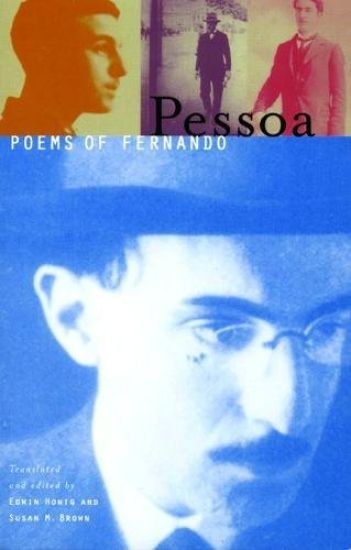
"At last, at last, at last, Pessoa again! More Pessoa! One of the very great poets of the twentieth century, again and more! And one of the fascinating figures of all literature, with his manifold identities, his amazing audacities, his brilliance and his shyness. I think I have under control the reluctance I feel in having to share Pessoa with the public he should have had all along in America: until now, only the poets, so far as I can tell, have even heard of him, and delighted and exulted in him. He is, in some ways, the poet of modernism, the only one willing to fracture himself into the parcels of action, anguish, and nostalgia which are the grounds of our actual situation." --C. K. Williams "Pessoa is one of the great originals (a fact rendered more striking by his writing as several distinct personalities) of the European poetry of the first part of this century, and has been one of the last poets of comparable stature, in the European languages, to become known in English. Edwin Honig's translations of Spanish and Portuguese poetry have been known to anyone who cares about either, since his work on Lorca in the forties, and his Selected Poems of Pessoa (1971) was a welcome step toward a long-awaited larger colection." -- W. S. Merwin "Fernando Pessoa is the least known of the masters of the twentieth-century poetry. From his heteronymic passion he produced, if that is the word, two of our greatest poets, Alberto Caeiro and Alvaro de Campos, and a third, Ricardo Reis, who isn't bad. Pessoa is the exemplary poet of the self as other, of the poem as testament to unreality, proclamation of nothingness, occasion for expectancy. In Edwin Honig's and Susan Brown's superb translations, Pessoa and his "others" live with miraculous style and vitality." --Mark Strand Fernando Pessoa is Portugal's most important contemporary poet. He wrote under several identities, which he called heteronyms: Albet Caeiro, Alvaro de Campos, Ricardo Reis, and Bernardo Soares. He wrote fine poetry under his own name as well, and each of his "voices" is completely different in subject, temperament, and style. This volume brings back into print the comprehensive collection of his work published by Ecco Press in 1986.
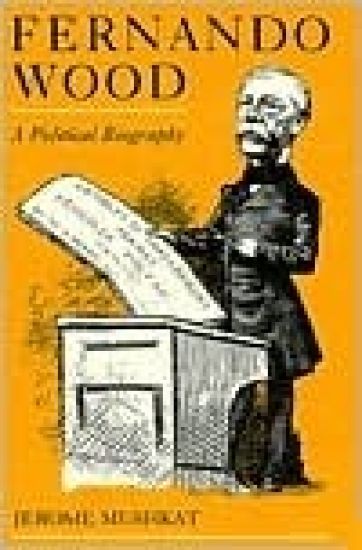
Fernando Wood was one of the most controversial figures of nineteenth-century America. His fellow New Yorkers either respected or despised him, depending whether they considered his policies beneficial or harmful to their interests. The character revealed herein possessed some admirable qualities; high intelligence, sharp analytic skills, great capacity for hard work, and a clear talent to set his ex3ecutive agenda. But equally evident are Wood's less admirable qualities; ruthless business practices, shoddy personal ethics, corrupt politics, dictatorial tendencies. What emerges is the story of a very complex person: a successful businessman, consummate politician, resourceful three-time may of New York City, and nine-term congressman, beneath which lurked mean and self-destructive tendencies. Take as a whole, Wood's colorful career was a unique microcosm of American history both during and after his lifetime. His business achievements mirrored popular beliefs in upward mobility. And Wood's mayoralty held a promise of revitalizing municipal government, giving it a social conscience, and setting new standards for the future. Despite his shortcomings, Fernando Wood played a major but unappreciated role in the urban and political history of time.

Spanish literary critics and poets of the stature of Juan Ram n Jim nez, Gerardo Diego, Rafael Alberti and Pedro Salinas, have noted repeatedly the importance of Fernando Villal n's work, and the originality and significance of his poetry. The present book is the first in-depth study of Villal n's literary production. It examines how the extraordinary popularity Villal n enjoyed as a person has to a great extent overshadowed his work, and separates, finally, the myth relative to Villal n's personality and life-style from historical reality.