Catherine Le Nevez; Isabel Albiston; Kate Armstrong; Alexis Averbuck; Oliver Berry; Cristian Bonetto; Jean-Bernard Carillet; Gregor Clark; Fionn Davenport; Marc Di Duca; Belinda Dixon; Mark Elliott; Duncan Garwood; Anthony Ham; Paula Hardy; Korina Miller; Kerry Walker; Nicola Williams; Neil Wilson
Lonely Planet’s Western Europe is our most comprehensive guide that extensively covers all the region has to offer, with recommendations for both popular and lesser-known experiences. Catch a Westend show in London, explore Rome’s ancient sites, and take a slow boat along the Rhine; all with your trusted travel companion. Inside Lonely Planet’s Western Europe Travel Guide: What’s NEW in this edition? Up-to-date information - all businesses were rechecked before publication to ensure they are still open after 2020’s COVID-19 outbreak NEW top experiences feature - a visually inspiring collection of Western Europe’s best experiences and where to have them Highlights and itineraries help you tailor your trip to your personal needs and interests Eating & drinking in Western Europe - we reveal the dishes and drinks you have to tryColour maps and images throughout Insider tips to save time and money and get around like a local, avoiding crowds and trouble spots Honest reviews for all budgets - eating, sleeping, sightseeing, going out, shopping, hidden gems that most guidebooks miss Cultural insights give you a richer, more rewarding travel experience - history, people, music, landscapes, wildlife, politics Over 90 maps Covers Austria, Belgium & Luxembourg, Britain, France, Germany, Greece, Ireland, Italy, The Netherlands, Portugal, Spain, Switzerland The Perfect Choice: Lonely Planet’s Western Europe, our most comprehensive guide to Western Europe, is perfect for both exploring top sights and taking roads less travelled. About Lonely Planet: Lonely Planet is a leading travel media company, providing both inspiring and trustworthy information for every kind of traveller since 1973. Over the past four decades, we've printed over 145 million guidebooks and phrasebooks for 120 languages, and grown a dedicated, passionate global community of travellers. You'll also find our content online, and in mobile apps, videos, 14 languages, armchair and lifestyle books, ebooks, and more, enabling you to explore every day. 'Lonely Planet guides are, quite simply, like no other.' – New York Times 'Lonely Planet. It's on everyone's bookshelves; it's in every traveller's hands. It's on mobile phones. It's on the Internet. It's everywhere, and it's telling entire generations of people how to travel the world.' – Fairfax Media (Australia)
Learning and self-development is a continuous process for social workers, and practitioners must keep abreast of new knowledge, guidance and legislation in order to keep growing professionally. In this innovative text, an expert group of authors from a range of academia and practice settings highlights the importance of traditional approaches to learning, such as reflective practice and motivation, and introduces more contemporary methods such as coaching, service user participation and developing digital competence. Strongly practical in its approach, the book enables the reader to engage with the content in bite-size pieces, encouraging them to learn in whatever way works best for them. Features include: - Over 40 reflective tools, exercises and templates that can be used by learners and educators independently or in groups, in the classroom or the workplace - A wealth of case material to illustrate key points - An inspiring collection of first-hand narratives from social workers learning and developing in the field. This is an invaluable resource for educators and a must-read sourcebook for learners – be they students, newly qualified social workers or practitioners wishing to attend to their own professional development.
Solutions for every dining and entertaining need are delightfully packed into this practical cookbook to equip the home cook for success. Whether it’s packing a breakfast for a fishing expedition, a long Italian lunch, or Thai dinner for eight, there’s something to encourage even the most nervous entertainer. Inspired by the authors' popular cooking demonstrations, this guide shares the wisdom they have gained from contributing to thousands of dinner parties.
This book looks back to the period 1860 to 1950 in order to grasp how alternative visions of amity and co-existence were forged between people of faith, both within and resistant to imperial contact zones. It argues that networks of faith and friendship played a vital role in forging new vocabularies of cosmopolitanism that presaged the post-imperial world of the 1950s. In focussing on the diverse cosmopolitanisms articulated within liberal transnational networks of faith it is not intended to reduce or ignore the centrality of racisms, and especially hegemonic whiteness, in underpinning the spaces and subjectivities that these networks formed within and through. Rather, the book explores how new forms of cosmopolitanism could be articulated despite the awkward complicities and liminalities inhabited by individuals and characteristic of cosmopolitan thought zones.
This book looks back to the period 1860 to 1950 in order to grasp how alternative visions of amity and co-existence were forged between people of faith, both within and resistant to imperial contact zones. It argues that networks of faith and friendship played a vital role in forging new vocabularies of cosmopolitanism that presaged the post-imperial world of the 1950s. In focussing on the diverse cosmopolitanisms articulated within liberal transnational networks of faith it is not intended to reduce or ignore the centrality of racisms, and especially hegemonic whiteness, in underpinning the spaces and subjectivities that these networks formed within and through. Rather, the book explores how new forms of cosmopolitanism could be articulated despite the awkward complicities and liminalities inhabited by individuals and characteristic of cosmopolitan thought zones.
In this humorous, heartbreaking--and hopeful--novel, a young girl struggles to come to terms with her parents' divorce. Funny, poignant, and above all, honest, Fiona's journal entries reveal a roller coaster of emotions as she tries to cope in a world that's been turned upside down. This story is sure to strike a chord with anyone--young or old--who has experienced the comfort and turmoil of family life.
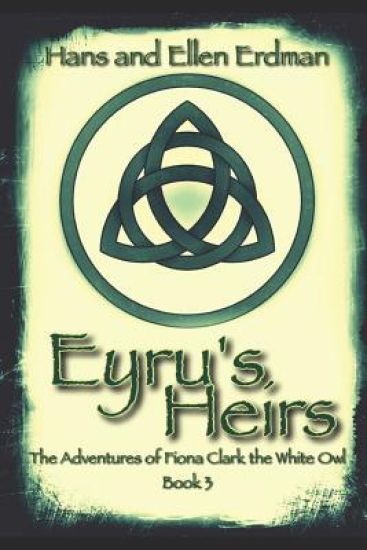
Guardian, Mother, Shapeshifter, QueenFiona Bridget Yaleria-Clark is the youngest daughter of Connor Clark and his Elven wife, Iolena. Born 150 years in the future, and hidden deep in the Irish past to save her life, she was reunited with her family in "Truthbearer's Daughters." Fiona is impetuous, brash and beautiful, the mirror image of her mother. She is also blessed with the strongest Deep Magic in a very magical family. Her unshakable faith in the Holy Trinity and her family are the rocks on which this half-elf stands.High Guardian and mother to her adopted daughter, High Princess Lona, Fiona is supported by her fianc Berian, her best friend and fellow shapeshifter, Alastronia, and the eagle Zedekiah. When they discover an abandoned castle on the northern reaches of the Aerielands, Fiona starts to seek answers which result in her abduction by her family's nemesis, the Dark Druid, and her return to fifth century Ireland where she was raised by Mother Bridget of Kildare.But Ireland is as much Fiona's home as the Aerielands. If she can make it back to Kildare Abbey, she will gain the power that was promised to her in prophecy, to defeat the Dark Druid and the Dark Lord, Declan Dhark. With her new friends, Fillian the leprechaun and the Wolf King, Cormac Mac Art, she will race against time and history, and come face-to-face with herself, while her family searches to rescue her and bring her home.And then there's the wedding to plan for..."White Owl: The Adventures of Fiona Clark" is the first installment of this new series of The Gewellyn Chronicles. An exploit filled with real-life and legendary characters from the history of Ireland, new friends in the Aerielands, and the family that will take the Truth to the Nine Worlds, together.
"An Bhanrion" ends: "As the dragon's flames took her, the High Queen of the Aerielands and Eyru's Land, Fiona Bridget Yaleria-Brice turned her face to heaven and prayed."Abilynn's mother, Berian's wife, Alistronia's dearest friend, Menta Kai's sister, and the youngest daughter of the Truthbearer and the Green-Eyed Elf Queen, Connor and Iolena Clark. The one who was to unify Eyru's Lands. The White Owl. What will become of her legacy?She turned her face to heaven and prayed... And in prayer, hope is born.And help from an astonishing source."Eyru's Heirs" is the third exciting story in the Adventures of Fiona Clark, from the award-winning fantasy series, The Gewellyn Chronicles.www.GewellynChronicles.com
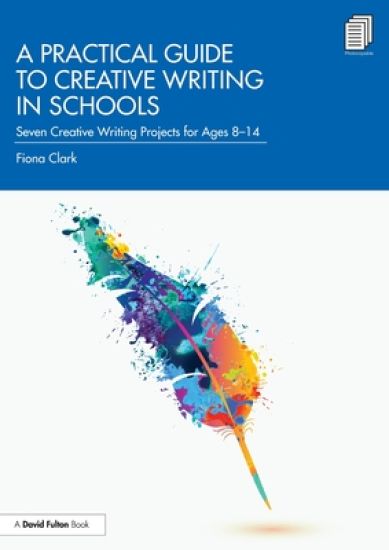
This book contains seven tried-and-tested creative writing projects for pupils aged 8–14. Each project is delivered through a series of workshops and enables pupils to explore a literary genre or writing style, discuss themes and topics and receive constructive feedback about their writing. The projects cover topics such as identity, cultural heritage, tolerance, empathy, morality, dreams and much more. Teachers wanting to run creative writing projects will find this book easy to follow, practical and timesaving. Each project allows students to:• explore a certain literary genre or writing style in detail • be creative and have fun while learning• think about, talk about and discuss themes and topics• receive constructive feedback about their writing• pursue their own ideas• see themselves as ‘real’ writers with a ‘real’ audience• understand that writing can be enjoyable, artistic and relaxing• experience creativity to improve their wellbeing.These ready-made projects are invaluable for teachers who are looking for new and successful creative writing projects for a range of students. They will enable teachers to immediately start making a difference to their students’ confidence and writing skills, allowing them to be as creative and imaginative as possible and use creativity as a springboard for their own writing.
This book contains seven tried-and-tested creative writing projects for pupils aged 8–14. Each project is delivered through a series of workshops and enables pupils to explore a literary genre or writing style, discuss themes and topics and receive constructive feedback about their writing. The projects cover topics such as identity, cultural heritage, tolerance, empathy, morality, dreams and much more. Teachers wanting to run creative writing projects will find this book easy to follow, practical and timesaving. Each project allows students to:• explore a certain literary genre or writing style in detail • be creative and have fun while learning• think about, talk about and discuss themes and topics• receive constructive feedback about their writing• pursue their own ideas• see themselves as ‘real’ writers with a ‘real’ audience• understand that writing can be enjoyable, artistic and relaxing• experience creativity to improve their wellbeing.These ready-made projects are invaluable for teachers who are looking for new and successful creative writing projects for a range of students. They will enable teachers to immediately start making a difference to their students’ confidence and writing skills, allowing them to be as creative and imaginative as possible and use creativity as a springboard for their own writing.
First, we were told we all needed to have HRT to remain interesting for our husbands. Then, we were told it was going to give us cancer and put us in an early grave. Next, we were told HRT was safe and we had to take it, or we'd all end up with crippling brain fog, quitting our jobs and descending into dementia as the economy collapsed around us.On the other side of the fence are those who argue that menopause is natural, it doesn't need treating, and a cold-water swim could fix everything. No wonder we're more confused than ever. Why has this happened? What does the evidence say? Menowars explains why menopause is such a political hot potato, taking into account the history of gender bias in health and health research, the void and how it's filled, and what the evidence actually says. It answers questions like:- will HRT prevent dementia?- what you can do help your brain?- will HRT prevent heart disease?- what you can do to help your heart? ...and much more. Menowars explains the silent changes you can't see, and which need to be sorted, and why. Importantly, it not only shows why we're arguing, it outlines where the science is heading so we can live longer, better, healthier lives in perimenopause and throughout the decades we spend in post-menopause.
First, we were told we all needed to have HRT to remain interesting for our husbands. Then, we were told it was going to give us cancer and put us in an early grave. Next, we were told HRT was safe and we had to take it, or we'd all end up with crippling brain fog, quitting our jobs and descending into dementia as the economy collapsed around us.On the other side of the fence are those who argue that menopause is natural, it doesn't need treating, and a cold-water swim could fix everything. No wonder we're more confused than ever. Why has this happened? What does the evidence say? Menowars explains why menopause is such a political hot potato, taking into account the history of gender bias in health and health research, the void and how it's filled, and what the evidence actually says. It answers questions like:- will HRT prevent dementia?- what you can do help your brain?- will HRT prevent heart disease?- what you can do to help your heart? ...and much more. Menowars explains the silent changes you can't see, and which need to be sorted, and why. Importantly, it not only shows why we're arguing, it outlines where the science is heading so we can live longer, better, healthier lives in perimenopause and throughout the decades we spend in post-menopause.
"This is a gem of a book, crammed with everyday wisdom, insight and laughter.It is honest, authentic and bursting with bloody good advice.It's the book we should all be issued with when we are first described as 'grown up'."Dr Richard GerverSpeaker/Author Easing the seriousness of life's issues, and injected at times with a little humourand even some of the author's own personal stories, Fiona Clark takes a look at a range of everyday issues and problems, that we as grown-ups have no choice but to deal with, and considers ways we can get through, not just relatively unscathed, but with a fair sized dollop of happiness.What will you get from this book?Honesty and openness.Plus straightforward, but invaluable answers and solutions, to help you banish a range of things can be responsible for weighing you down.The result: make life quite a lot better.
A book for nurses, doctors and all who provide end of life care, this essential volume guides readers through the ethical complexities of such care, including current policy initiatives, and encourages debate and discussion on their controversial aspects. Divided into tow parts, it introduces Divided into two parts, it introduces and explains clinical decision-making processes about which there is broad consensus, in line with guidance documents issued by WHO, BMA, GMC, and similar bodies. The changing political and social context where 'patient choice' has become a central idea, and the broadened scope of patients' best interests, have added to the complexity of decision-making in end of life care. The authors discuss issues widely encountered by GPs, nurses, and hospital clinicians. These include patient choice, consent, life-prolonging treatment, and symptom relief including sedation. Part tow explores the more controversial current end of life care initiatives, such as advance care planning, preferred place of care and death, euthanasia and assisted suicide, extended ideas of 'best interests', and the view that there are therapeutic duties to the relatives of patients. Throughout their discussion the authors draw attention to loose ends and contradictions in some of the proposals. Examining the current policy of consumerist choice, they reject its place in the health service, proposing a realistic, fair, humane and widely adoptable system of end of life care. As knowledge of ethical theories is required in training courses, and the vocabulary of ethical theory is widespread in current discussions, a substantial appendix on ethical theories and terms is available online. Written by the same authors as The Philosophy of Palliative Care: Critique and reconstruction, which won the Medical Journalists' Association Specalist Book Award 2007, this new new book for non-specialists is essential reading for all health care professionals involved in providing end of life care.
Although there is excellent work being done on ethics/normative theory and international relations and on gender/feminist theory and international relations, very little is available that seeks, explicitly, to integrate the two fields. Moreover, while feminist ethics, which explore the theory of care and noncontractual values such as trust and resp
Any general practitioner, pediatrician, or emergency physician will appreciate the easy-to-read, accessible information available in this book which will assist the health care practitioner in managing the acute care of abused patients. It is not intended to be an exhaustive study of each topic, but a quick reference and practical guide for those in the clinical arena who see such patients. Covering a wide range of the abuse that a health care practitioner may see from domestic violence and child abuse to trafficking and torture, topics which are not commonly included in textbooks, it also discusses the cultural influences on managing and investigating abuse. Each chapter has goals and objectives to maximize educational reading on the topic, photographs and tables to assist the clinician, legal aspects of the emergency situation, and quick reference pages to assist the practitioner dealing with an abused patient in an emergency.