

Kirjahaku
Etsi kirjoja tekijän nimen, kirjan nimen tai ISBN:n perusteella.
57 tulosta hakusanalla Firoozeh Milbradt


Iranian-Americans in the Memoirs of Firoozeh Dumas
Saman Hashemipour
Lap Lambert Academic Publishing
2017
nidottu
Iranischstämmige Amerikaner in den Memoiren von Firoozeh Dumas
Saman Hashemipour
Verlag Unser Wissen
2023
nidottu

Los irano-americanos en las memorias de Firoozeh Dumas
Saman Hashemipour
Ediciones Nuestro Conocimiento
2023
nidottu

Les Irano-Américains dans les mémoires de Firoozeh Dumas
Saman Hashemipour
Editions Notre Savoir
2023
nidottu
Gli iraniani-americani nelle memorie di Firoozeh Dumas
Saman Hashemipour
Edizioni Sapienza
2023
nidottu

Iraniano-americanos nas Memórias de Firoozeh Dumas
Saman Hashemipour
Edições Nosso Conhecimento
2023
nidottu
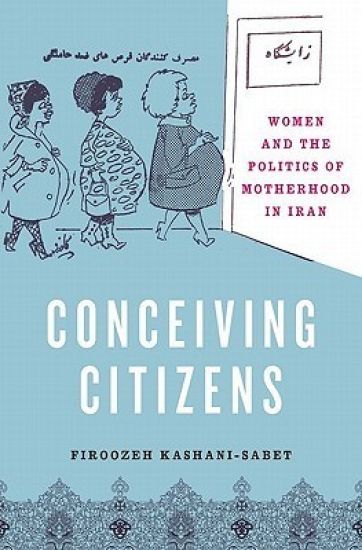
The role of women in Iran has commonly been viewed solely through the lens of religion, symbolized by veiled females subordinated by society. In this work, Firoozeh Kashani-Sabet, an Iranian-American historian, aims to explain how the role of women has been central to national political debates in Iran. Spanning the 19th and 20th centuries, the book examines issues impacting women's lives under successive regimes, including hygiene campaigns that cast mothers as custodians of a healthy civilization; debates over female education, employment, and political rights; conflicts between religion and secularism; the politics of dress; and government policies on contraception and population control. Among the topics she will examine are the development of a women's movement in Iran, perhaps most publicly expressed by Nobel Prize winner Shirin Ebadi. The narrative comes up to the present, looking at reproductive rights, the spread of AIDS, and fashion since the Iranian Revolution.
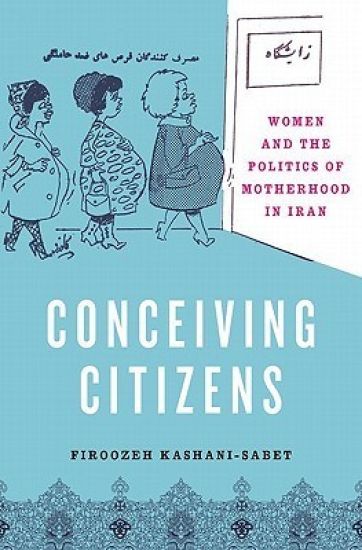
The role of women in Iran has commonly been viewed solely through the lens of religion, symbolized by veiled females subordinated by society. In this work, Firoozeh Kashani-Sabet, an Iranian-American historian, aims to explain how the role of women has been central to national political debates in Iran. Spanning the 19th and 20th centuries, the book examines issues impacting women's lives under successive regimes, including hygiene campaigns that cast mothers as custodians of a healthy civilization; debates over female education, employment, and political rights; conflicts between religion and secularism; the politics of dress; and government policies on contraception and population control. Among the topics she will examine are the development of a women's movement in Iran, perhaps most publicly expressed by Nobel Prize winner Shirin Ebadi. The narrative comes up to the present, looking at reproductive rights, the spread of AIDS, and fashion since the Iranian Revolution.

Frontier Fictions: Shaping the Iranian Nation, 1804-1946
Firoozeh Kashani-Sabet
PRINCETON UNIVERSITY PRESS
2000
sidottu
In Frontier Fictions, Firoozeh Kashani-Sabet looks at the efforts of Iranians to defend, if not expand, their borders in the nineteenth and early twentieth centuries, and explores how their conceptions of national geography influenced cultural and political change. The frontier fictions, or the ways in which the Iranians viewed their often fluctuating borders and the conflicts surrounding them, played a dominant role in defining the nation. On these borderlands, new ideas of citizenship and nationality were unleashed, refining older ideas of ethnicity. Kashani-Sabet maintains that land-based conceptions of countries existed before the advent of the modern nation-state. Her focus on geography enables her to explore and document fully a wide range of aspects of modern citizenship in Iran, including love of homeland, the hegemony of the Persian language, and widespread interest in archaeology, travel, and map-making. While many historians have focused on the concept of the imagined community in their explanations of the rise of nationalism, Kashani-Sabet is able to complement this perspective with a very tangible explanation of what connects people to a specific place. Her approach is intended to enrich our understanding not only of Iranian nationalism, but also of nationalism everywhere.
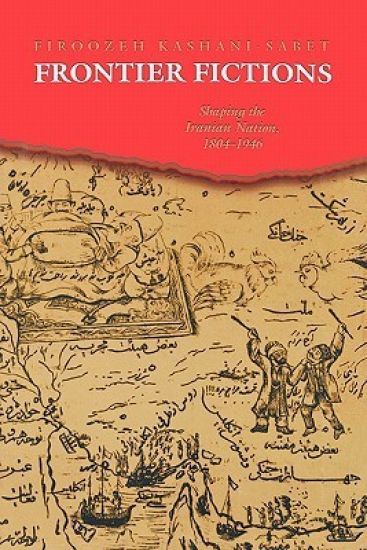
In Frontier Fictions, Firoozeh Kashani-Sabet looks at the efforts of Iranians to defend, if not expand, their borders in the nineteenth and early twentieth centuries, and explores how their conceptions of national geography influenced cultural and political change. The "frontier fictions," or the ways in which the Iranians viewed their often fluctuating borders and the conflicts surrounding them, played a dominant role in defining the nation. On these borderlands, new ideas of citizenship and nationality were unleashed, refining older ideas of ethnicity. Kashani-Sabet maintains that land-based conceptions of countries existed before the advent of the modern nation-state. Her focus on geography enables her to explore and document fully a wide range of aspects of modern citizenship in Iran, including love of homeland, the hegemony of the Persian language, and widespread interest in archaeology, travel, and map-making. While many historians have focused on the concept of the "imagined community" in their explanations of the rise of nationalism, Kashani-Sabet is able to complement this perspective with a very tangible explanation of what connects people to a specific place. Her approach is intended to enrich our understanding not only of Iranian nationalism, but also of nationalism everywhere.

Funny in Farsi: A Memoir of Growing Up Iranian in America
Firoozeh Dumas
Random House Trade
2004
nidottu
An autobiography of growing up as an Iranian-American describes the author's family's 1971 move from Iran to Southern California, the members of her diverse family, and their struggle with culture shock.

Set during the Iranian Revolution of 1979 and the ensuing Iran-Iraq War of 1980â€""1988, the novel Martyrdom Street chronicles the lives of three Iranian women, Fatemeh, Nasrin, and Yasaman. These ordinary women tell their intimate stories of love, loss, betrayal, and hope in intertwining narratives that unfurl simultaneously in America and Iran. Kashani-Sabet’s characters endure both the familiar struggles of family relationships and searing political upheavals. A mother and daughter come to terms with the burdens of separation imposed by politics and exile. A young woman grapples with the haunting memories of an assassination. The poignant confessions of these skillfully wrought characters give voice to the travails of two generations of Iranians and Iranian Americans.

It is easy to forget, given the oppositional dynamic between Iran and the United States of the last 50 years, that these two countries once shared productive partnership. Tracing US-Iran relations over two turbulent centuries, Firoozeh Kashani-Sabet considers when and how this relationship went awry. With careful attention to social and cultural as well as diplomatic developments, Kashani-Sabet shows that the rift did not originate in flashpoints of crisis, like the 1953 coup or the 1979 Islamic Revolution, but was instead long in the making. Drawing from a wealth of English and Persian-language sources, many of which were previously unavailable or unacknowledged, this book considers the relationship from the vantage point of Iranian society and the experiences of an evolving Iran that strived to accommodate American and great power politics. Following these two nations through wars, decolonization, and revolution, Kashani-Sabet presents an invaluable history of a diplomatic rivalry that informs geopolitics to this day.

It is easy to forget, given the oppositional dynamic between Iran and the United States of the last 50 years, that these two countries once shared productive partnership. Tracing US-Iran relations over two turbulent centuries, Firoozeh Kashani-Sabet considers when and how this relationship went awry. With careful attention to social and cultural as well as diplomatic developments, Kashani-Sabet shows that the rift did not originate in flashpoints of crisis, like the 1953 coup or the 1979 Islamic Revolution, but was instead long in the making. Drawing from a wealth of English and Persian-language sources, many of which were previously unavailable or unacknowledged, this book considers the relationship from the vantage point of Iranian society and the experiences of an evolving Iran that strived to accommodate American and great power politics. Following these two nations through wars, decolonization, and revolution, Kashani-Sabet presents an invaluable history of a diplomatic rivalry that informs geopolitics to this day.

Zomorod (Cindy) Yousefzadeh is the new kid on the block...for the fourth time.California's Newport Beach is her family's latest perch, and she's determined to shuck her brainy loner persona and start afresh with a new Brady Bunch name--Cindy.It's the late 1970s, and fitting in becomes more difficult as Iran makes U.S. headlines with protests, revolution, and finally the taking of American hostages. Even puka shell necklaces, pool parties, and flying fish can't distract Cindy from the anti-Iran sentiments that creep way too close to home.A poignant yet lighthearted middle grade debut from the author of the bestselling Funny in Farsi.California Library Association's John and Patricia Beatty Award WinnerFlorida Sunshine State Young Readers Award (Grades 6-8)New York Historical Society's New Americans Book Prize WinnerMiddle East Book Award for Youth Literature, Honorable MentionBooklist 50 Best Middle Grade Novels of the 21st Century
Iran and the International Law of the Seas and Rivers
Firoozeh Ekrami; Bahman Aghai Diba
Createspace Independent Publishing Platform
2011
nidottu

The Proceeds from this book goes to the Canadian Cancer Society in memory of the Late Dr. Mahshid ArdeshiriBased on a true story... Afarin is a strong Iranian woman who never gives up and isn't afraid of failure. After her husband dies, Afarin fights sexism to become a lawyer in Tehran. When her daughter becomes pregnant after emigrating to Canada with her abusive husband, outspoken Afarin travels to be with her only to be shut out when she clashes with her son-in-law. She returns to Iran only to be called back again when her daughter and her husband separate. Alone and penniless, she goes to a shelter where she becomes a translator for women who can't speak English, giving them a voice.Determined to achieve her goal to practice law, once more, Afarin returns to school to become a strong, independent, self-assured advocate for women's empowerment with the message for women to go beyond their boundaries and strengthen their rights. After hitting boundaries, experiencing failure, and surviving war and abuse, Afarin's story is one of love, loss, joy, and sorrow, with the solitary message of empowerment for women to fight for their rights, think positively, and persevere.