- 100 pages of thick white paper. - Quad ruled (4 squares per inch) - Double-sided - Perfect for architects, artists, and any drawing activities - Perfect size: 8.5 inches x 11 inches.
A traveler's journey through Florence offers a historic portrait that gives insight into the city's influence on modern Western culture and its civil legacy from the Middle Ages, and covers the Arno, Duomo, Ponte Vecchio, Santa Croce, and other landmarks
This work has been selected by scholars as being culturally important and is part of the knowledge base of civilization as we know it.This work is in the public domain in the United States of America, and possibly other nations. Within the United States, you may freely copy and distribute this work, as no entity (individual or corporate) has a copyright on the body of the work.Scholars believe, and we concur, that this work is important enough to be preserved, reproduced, and made generally available to the public. To ensure a quality reading experience, this work has been proofread and republished using a format that seamlessly blends the original graphical elements with text in an easy-to-read typeface.We appreciate your support of the preservation process, and thank you for being an important part of keeping this knowledge alive and relevant.
Langston Hughes; Zora Neale Hurston; W.E.B. Du Bois; Jean Toomer; Paul Laurence Dunbar; Alice Dunbar Nelson; Charles W. Chesnutt; Claude McKay; Florence Lewis Bentley; Frances E.W. Harper
African-American Classics presents great stories and poems from America"s earliest Black writers, illustrated by contemporary African-American artists. Featured are "Two Americans" by Florence Lewis Bentley, "The Goophered Grapevine" by Charles W. Chesnutt, "Becky" by Jean Toomer, two short plays by Zora Neale Hurston, and six more tales of humor and tragedy. Also featured are eleven poems, including Langston Hughes" "Danse Africaine" and "The Negro", plus Paul Laurence Dunbar"s "Sympathy" ("I know why the caged bird sings...")
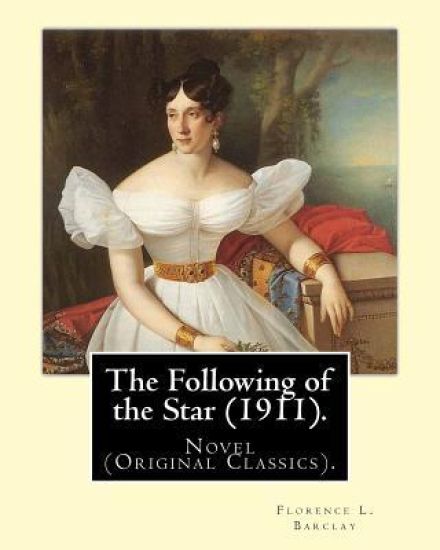
Florence Louisa Barclay She was born Florence Louisa Charlesworth in Limpsfield, Surrey, England, the daughter of the local Anglican rector. One of three girls, she was a sister to Maud Ballington Booth, the Salvation Army leader and co-founder of the Volunteers of America. When Florence was seven years old, the family moved to Limehouse in the London Borough of Tower Hamlets. In 1881, Florence Charlesworth married the Rev. Charles W. Barclay and honeymooned in the Holy Land, where, in Shechem, they reportedly discovered Jacob's Well, the place where, according to the Gospel of St John, Jesus met the woman of Samaria (2 December 1862 - 10 March 1921) was an English romance novelist and short story writer.
Florence Louisa Barclay (2 December 1862 - 10 March 1921) was an English romance novelist and short story writer.She was born Florence Louisa Charlesworth in Limpsfield, Surrey, England, the daughter of the local Anglican rector. One of three girls, she was a sister to Maud Ballington Booth, the Salvation Army leader and co-founder of the Volunteers of America. When Florence was seven years old, the family moved to Limehouse in the London Borough of Tower Hamlets.In 1881, Florence Charlesworth married the Rev. Charles W. Barclay and honeymooned in the Holy Land, where, in Shechem, they reportedly discovered Jacob's Well, the place where, according to the Gospel of St John, Jesus met the woman of Samaria (John 4-5). Florence Barclay and her husband settled in Hertford Heath, in Hertfordshire, where she fulfilled the duties of a rector's wife.
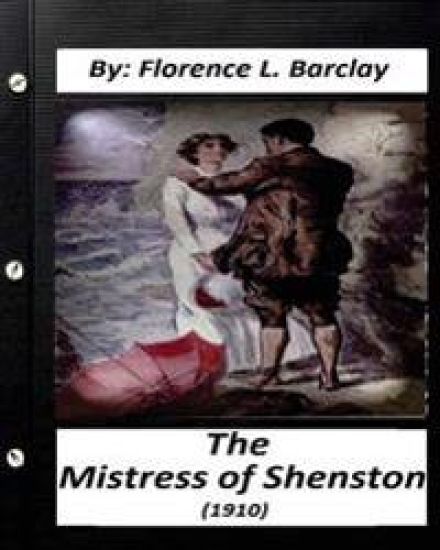
Florence Louisa Barclay (2 December 1862 - 10 March 1921) was an English romance novelist and short story writer. She was born Florence Louisa Charlesworth in Limpsfield, Surrey, England, the daughter of the local Anglican rector. One of three girls, she was a sister to Maud Ballington Booth, the Salvation Army leader and co-founder of the Volunteers of America. When Florence was seven years old, the family moved to Limehouse in the London Borough of Tower Hamlets. In 1881, Florence Charlesworth married the Rev. Charles W. Barclay and honeymooned in the Holy Land, where, in Shechem, they reportedly discovered Jacob's Well, the place where, according to the Gospel of St John, Jesus met the woman of Samaria (John 4-5). Florence Barclay and her husband settled in Hertford Heath, in Hertfordshire, where she fulfilled the duties of a rector's wife. She became the mother of eight children. In her early forties health problems left her bedridden for a time and she passed the hours by writing what became her first romance novel titled The Wheels of Time. Her next novel, The Rosary, a story of undying love, was published in 1909 and its success eventually resulted in its being translated into eight languages and made into five motion pictures, also in several languages. According to the New York Times, the novel was the No.1 bestselling novel of 1910 in the United States. The enduring popularity of the book was such that more than twenty-five years later, Sunday Circle magazine serialized the story and in 1926 the prominent French playwright Alexandre Bisson adapted the book as a three-act play for the Parisian stage. Florence Barclay wrote eleven books in all, including a work of non-fiction. Her novel The Mistress of Shenstone (1910) was made into a silent film of the same title in 1921. Her short story Under the Mulberry Tree appeared in the special issue called "The Spring Romance Number" of the Ladies Home Journal of 11 May 1911. Florence Barclay died in 1921 at the age of fifty-eight. The Life of Florence Barclay: a study in personality was published anonymously that year by G. P. Putnam's Sons "by one of Her Daughters." Frederick Henry Townsend (1868-1920)illustrated the second edition of Charlotte Bront 's 1847 novel Jane Eyre. He illustrated A Child's History of England and Gryll Grange, and Nathaniel Hawthorne's House of the Seven Gables in 1902. Also an edition (1907) of Kipling's The Brushwood Boy and the 1913 edition of Arthur Conan Doyle's The Sign of Four. Townsend also contributed cartoons to Punch. Margaret Neilson Armstrong (1867-1944) was a 20th-century American designer, illustrator, and author. She is best known for her book covers in the Art Nouveau style but also wrote and illustrated the first comprehensive guide to wildflowers of the American west. She also wrote mystery novels and biographies.