Kirjojen hintavertailu. Mukana 12 419 278 kirjaa ja 12 kauppaa.

Kirjahaku

Etsi kirjoja tekijän nimen, kirjan nimen tai ISBN:n perusteella.

620 tulosta hakusanalla Fogel Robert William

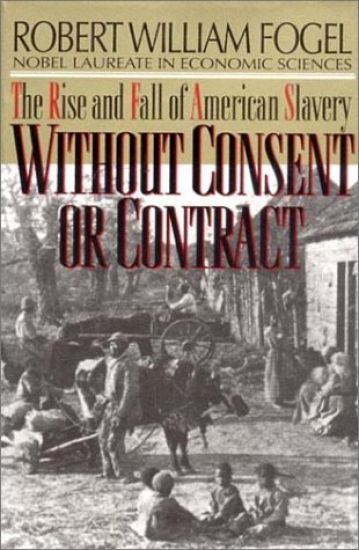
Without Consent or Contract

Without Consent or Contract

Fogel Robert William

WW Norton Co
1995
nidottu
Over the past quarter-century, Robert William Fogel has blazed new trails in scholarship on the lives of the slaves in the American South. Now he presents the dramatic rise and fall of the "peculiar institution," as the abolitionist movement rose into a powerful political force that pulled down a seemingly impregnable system.
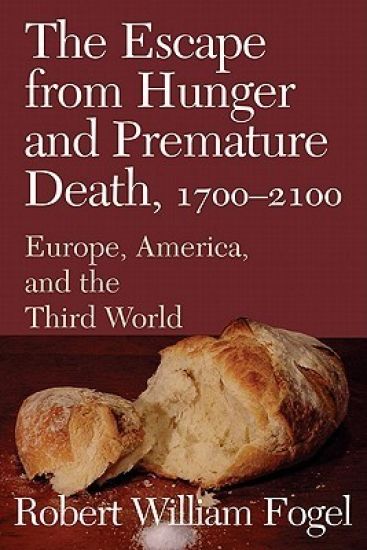
The Escape from Hunger and Premature Death, 1700–2100

The Escape from Hunger and Premature Death, 1700–2100

Fogel Robert William

Cambridge University Press
2004
pokkari
Nobel laureate Robert Fogel’s compelling new study examines health, nutrition and technology over the last three centuries and beyond. Throughout most of human history, chronic malnutrition has been the norm. During the past three centuries, however, a synergy between improvements in productive technology and in human physiology has enabled humans to more than double their average longevity and to increase their average body size by over 50 per cent. Larger, healthier humans have contributed to the acceleration of economic growth and technological change, resulting in reduced economic inequality, declining hours of work and a corresponding increase in leisure time. Increased longevity has also brought increased demand for health care. Professor Fogel argues that health care should be viewed as the growth industry of the twenty-first century and systems of financing it should be reformed. His book will be essential reading for all those interested in economics, demography, history and health care policy.
Political Arithmetic

Political Arithmetic

Robert William Fogel; Enid M. Fogel; Mark Guglielmo; Nathaniel Grotte

University of Chicago Press
2013
sidottu
We take for granted today that the assessments, measurements, and forecasts of economists are crucial to the decision-making of governments and businesses alike. But less than a century ago that wasn't the case - economists simply didn't have the necessary information or statistical tools to understand the ever more complicated modern economy. With "Political Arithmetic", Nobel Prize - winning economist Robert William Fogel and his collaborators tell the story of economist Simon Kuznets, the founding of the National Bureau of Economic Research, and the creation of the concept of GNP, which for the first time enabled us to measure the performance of entire economies. The book weaves together the many strands of political and economic thought and historical pressures that together created the demand for more detailed economic thinking - Progressive-era hopes for activist government, the production demands of World War I, Herbert Hoover's interest in business cycles as President Harding's commerce secretary, and the catastrophic economic failures of the Great Depression - and shows how, through trial and error, measurements, and analysis, economists such as Kuznets rose to the occasion and in the process built a discipline whose knowledge could be put to practical use in everyday decision-making. The product of a lifetime of studying the workings of economies and skillfully employing the tools of economics, "Political Arithmetic" is simultaneously a history of a key period of economic thought and a testament to the power of applied ideas.
The Fourth Great Awakening and the Future of Egalitarianism

The Fourth Great Awakening and the Future of Egalitarianism

Robert William Fogel

University of Chicago Press
2000
sidottu
Surveying the growing conservatism and religious revivalism of today's United States, Nobel Prize-winning economist Robert W. Fogel sees America in the midst of its "Fourth Great Awakening". In his long-awaited and most ambitious book since "Time on the Cross", Fogel looks to the nation's past to discover the strong link between technologically induced cycles of religiousness - or "awakenings" - in American history and attitudes towards poverty, education and social equality. The United States' "Fourth Great Awakening" is propelled by the tendency of technological advances to outpace ethical norms. The First Great Awakening, which began in 1730, laid the ideological foundation for the American Revolution. The second, starting in 1800, introduced many daring reforms, including the abolition of slavery. The Third Great Awakening, from 1890 to 1930, emphasized social injustice and launched the welfare state. America's new awakening, which began in the late 1950s, promotes a zealous new movement focused on spiritual rather than material reforms. Liberals, argues Fogel, have misunderstood the appeal of the religious right. The intractable forms of inequality today are not in the distribution of food, clothing and shelter, as they were a century ago, but in the distribution of immaterial or "spiritual" assets, which economists call "knowledge capital". Fogel's optimistic study describes 15 of these assets, vital to both economic success and the good life, and presents a new programme of egalitarian reforms based on shared values of liberals and conservatives and on the distribution of these assets. "The Fourth Great Awakening and the Future of Egalitarianism" is a major new work of intellectual history and offers nothing less than a blueprint for our future.
The Fourth Great Awakening and the Future of Egalitarianism

The Fourth Great Awakening and the Future of Egalitarianism

Robert William Fogel

University of Chicago Press
2002
nidottu
In this broad-thinking and profound piece of history, Robert William Fogel synthesizes an amazing range of data into a bold and intriguing view of America's past and future - one in which the periodic Great Awakenings of religion bring about waves of social reform, the material lives of even the poorest Americans improve steadily, and the nation now stands poised for a renewed burst of egalitarian progress.
The Escape from Hunger and Premature Death, 1700–2100

The Escape from Hunger and Premature Death, 1700–2100

Robert William Fogel

Cambridge University Press
2004
sidottu
Nobel laureate Robert Fogel’s compelling new study examines health, nutrition and technology over the last three centuries and beyond. Throughout most of human history, chronic malnutrition has been the norm. During the past three centuries, however, a synergy between improvements in productive technology and in human physiology has enabled humans to more than double their average longevity and to increase their average body size by over 50 per cent. Larger, healthier humans have contributed to the acceleration of economic growth and technological change, resulting in reduced economic inequality, declining hours of work and a corresponding increase in leisure time. Increased longevity has also brought increased demand for health care. Professor Fogel argues that health care should be viewed as the growth industry of the twenty-first century and systems of financing it should be reformed. His book will be essential reading for all those interested in economics, demography, history and health care policy.
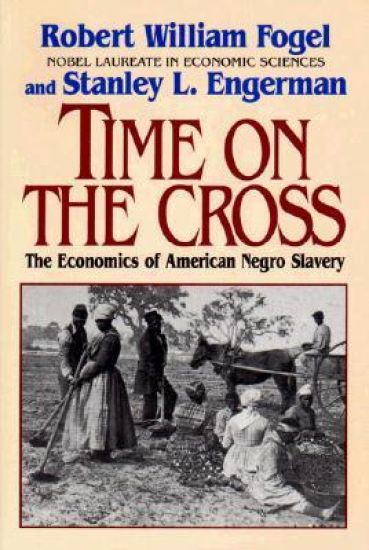
Time on the Cross

Time on the Cross

Robert William Fogel; Stanley L. Engerman

University Press of America
1986
nidottu
This book, originally published in 1974 by Little, Brown and Company, is a sweeping reexamination of the economic foundations of American Negro slavery. Based upon a vast research effort, this volume constitutes an entirely new portrayal of slavery's past. It challenges traditional assumptions about the material condition and management of slaves, their work habits, domestic welfare, and the economy of the antebellum South in general.
The Union Pacific Railroad: A Case in Premature Enterprise

The Union Pacific Railroad: A Case in Premature Enterprise

Robert William Fogel

Literary Licensing, LLC
2012
sidottu
""The Union Pacific Railroad: A Case in Premature Enterprise"" by Robert William Fogel is a historical account of the Union Pacific Railroad, one of the most significant transportation projects in American history. The book explores the origins of the railroad, its construction, and the challenges it faced in its early years.Fogel argues that the Union Pacific was a case of premature enterprise, meaning that it was built before the market demand for transportation was sufficient to support it. He examines the factors that led to the decision to build the railroad, including the political and economic climate of the time, and the technological innovations that made it possible.The book also delves into the social and economic impact of the Union Pacific on the American West, including the displacement of Native American communities and the growth of towns and cities along the railroad's route.Overall, ""The Union Pacific Railroad: A Case in Premature Enterprise"" provides a comprehensive and detailed account of one of America's most important transportation projects, offering insights into the complex factors that shaped its development and impact on American history.Johns Hopkins University Studies In Historical And Political Science, V78, No. 2.This scarce antiquarian book is a facsimile reprint of the old original and may contain some imperfections such as library marks and notations. Because we believe this work is culturally important, we have made it available as part of our commitment for protecting, preserving, and promoting the world's literature in affordable, high quality, modern editions, that are true to their original work.
The Dimensions of Quantitative Research in History

The Dimensions of Quantitative Research in History

William O. Aydelotte; Robert William Fogel; Allan G. Bogue

Princeton University Press
2015
pokkari
Nine papers consider problems in American, French, and British history that range from economic history to political behavior and social structure. Originally published in 1972. The Princeton Legacy Library uses the latest print-on-demand technology to again make available previously out-of-print books from the distinguished backlist of Princeton University Press. These editions preserve the original texts of these important books while presenting them in durable paperback and hardcover editions. The goal of the Princeton Legacy Library is to vastly increase access to the rich scholarly heritage found in the thousands of books published by Princeton University Press since its founding in 1905.
The Dimensions of Quantitative Research in History

The Dimensions of Quantitative Research in History

William O. Aydelotte; Robert William Fogel; Allan G. Bogue

Princeton University Press
2016
sidottu
Nine papers consider problems in American, French, and British history that range from economic history to political behavior and social structure. Originally published in 1972. The Princeton Legacy Library uses the latest print-on-demand technology to again make available previously out-of-print books from the distinguished backlist of Princeton University Press. These editions preserve the original texts of these important books while presenting them in durable paperback and hardcover editions. The goal of the Princeton Legacy Library is to vastly increase access to the rich scholarly heritage found in the thousands of books published by Princeton University Press since its founding in 1905.
Explaining Long-Term Trends in Health and Longevity

Explaining Long-Term Trends in Health and Longevity

Fogel Robert W.

Cambridge University Press
2012
sidottu
Explaining Long-Term Trends in Health and Longevity is a collection of essays by Nobel laureate Robert W. Fogel on the theory and measurement of ageing and health-related variables. Dr Fogel analyzes historic data on height, health, nutrition and life expectation to provide a clearer understanding of the past, illustrate the costs and benefits of using such measures and note the difficulties of drawing conclusions from data intended for different purposes. Dr Fogel explains how the basic findings of the anthropometric approach to historical analysis have helped reinterpret the nature of economic growth. Rising life expectancies and lower disease rates in countries experiencing economic growth highlight the importance of improving nutrition and agricultural productivity.
The Changing Body

The Changing Body

Floud Roderick; Fogel Robert W.; Harris Bernard; Hong Sok Chul

Cambridge University Press
2011
pokkari
Humans have become much taller and heavier, and experience healthier and longer lives than ever before in human history. However it is only recently that historians, economists, human biologists and demographers have linked the changing size, shape and capability of the human body to economic and demographic change. This fascinating and groundbreaking book presents an accessible introduction to the field of anthropometric history, surveying the causes and consequences of changes in health and mortality, diet and the disease environment in Europe and the United States since 1700. It examines how we define and measure health and nutrition as well as key issues such as whether increased longevity contributes to greater productivity or, instead, imposes burdens on society through the higher costs of healthcare and pensions. The result is a major contribution to economic and social history with important implications for today's developing world and the health trends of the future.
Which Road to the Past?

Which Road to the Past?

Robert Fogel; Geoffrey Elton

Yale University Press
1984
pokkari
Two distinguished historians, one an advocate of the new scientific or “cliometric” history and the other a traditional historian, debate the validity of their respective methods of studying the past. While they differ sharply on many issues, in the end they agree that history is a vigorous, evolving discipline able to absorb the best of both scientific and humanistic thought.“Fogel asserts persuasively that cliometrics is best characterized by the explicit use of social science theory, and only secondly by its use of quantification…. Elton elegantly defends the traditional virtues of catholicity of method, skepticism toward sources, and informed scholarship. The two scholars’ evident respect for each other enriches the debates as well as humanizes it.” –David Keymer, Library Journal“Both scholars are leading representatives of their modi operandi, and both have laid down path-breaking, interpretations of their subjects of study, leaving controversy and new methodology in their wake. It is therefore an event unto itself that two such professors of history should pause for a moment to meet at the fork in the road and debate the roads to the past.” –Mark R. Horowitz, History Today“Anyone interested in historiography will find [this book] useful.” –Vincent A. Lapomarda, America
Gunnar Myrdal, Friedrich A. von Hayek, Robert W. Fogel, Douglass C. North and Amartya K. Sen
This groundbreaking title brings together a critical selection of key papers by the Nobel Memorial Laureates in Economics that have helped shape the development and present state of economics. The editors have organised this comprehensive series by theme and focuses on those Laureates working in the same broad area of study. The careful selection of papers is set in context by an insightful introduction to the Laureates' careers and main published works. This landmark title will be an essential reference for scholars throughout the world.
Explaining Long-Term Trends in Health and Longevity

Explaining Long-Term Trends in Health and Longevity

Robert W. Fogel

Cambridge University Press
2012
pokkari
Explaining Long-Term Trends in Health and Longevity is a collection of essays by Nobel laureate Robert W. Fogel on the theory and measurement of ageing and health-related variables. Dr Fogel analyzes historic data on height, health, nutrition and life expectation to provide a clearer understanding of the past, illustrate the costs and benefits of using such measures and note the difficulties of drawing conclusions from data intended for different purposes. Dr Fogel explains how the basic findings of the anthropometric approach to historical analysis have helped reinterpret the nature of economic growth. Rising life expectancies and lower disease rates in countries experiencing economic growth highlight the importance of improving nutrition and agricultural productivity.
The Changing Body

The Changing Body

Roderick Floud; Robert W. Fogel; Bernard Harris; Sok Chul Hong

Cambridge University Press
2011
sidottu
Humans have become much taller and heavier, and experience healthier and longer lives than ever before in human history. However it is only recently that historians, economists, human biologists and demographers have linked the changing size, shape and capability of the human body to economic and demographic change. This fascinating and groundbreaking book presents an accessible introduction to the field of anthropometric history, surveying the causes and consequences of changes in health and mortality, diet and the disease environment in Europe and the United States since 1700. It examines how we define and measure health and nutrition as well as key issues such as whether increased longevity contributes to greater productivity or, instead, imposes burdens on society through the higher costs of healthcare and pensions. The result is a major contribution to economic and social history with important implications for today's developing world and the health trends of the future.
Thieves of Fortress Badabaskor

Thieves of Fortress Badabaskor

Bob Bledsaw; Marc Summerlott; Mike Petrowsky; Craig Fogel; Bill Owen; Tony Floren; Robert Conley

Goodman Games
2024
nidottu
Reprinting the classic adventure from Judges Guild An adventure in the wilderness stronghold of a band of brigands that includes the background and statistics of an evil local deity, plus history, maps, and keyed room descriptions of a five-level dungeon carved out of the side of a mountain. The first three levels are fairly easy and suitable for breaking in new and inexperienced players; but the lower two are far tougher, and include a cavern that has a series of four dragon dens, indicative of the difficulty of the lower levels.