Kirjojen hintavertailu. Mukana 11 244 527 kirjaa ja 12 kauppaa.

Kirjahaku

Etsi kirjoja tekijän nimen, kirjan nimen tai ISBN:n perusteella.

1000 tulosta hakusanalla Forrest Capie; Michael Collins

Monetary Regimes in Transition

Monetary Regimes in Transition

Michael D. Bordo; Forrest Capie

Cambridge University Press
2006
pokkari
This important contribution to comparative economic history examines different countries' experiences with different monetary regimes, laying particular emphasis on how the regimes fared when placed under stress such as wars or other changes in the economic environment. Covering the experience of ten countries over the period 1700–1990, the contributors employ the latest techniques of economic analysis in their studies. Several papers are concerned with the transformation from bimetallism to gold monometallism in the nineteenth century and the determinants of monetary regimes transformation in the core countries of Britain, France and the United States. Others focus on the successful and unsuccessful gold standard experiences of Canada, Australia, and Spain, while yet others examine the experience of wartime and postwar stabilizations surrounding the two World Wars and the Napoleonic War.
Monetary Regimes in Transition

Monetary Regimes in Transition

Michael D. Bordo; Forrest Capie

Cambridge University Press
1993
sidottu
This important contribution to comparative economic history examines different countries’ experiences with different monetary regimes, laying particular emphasis on how the regimes fared when placed under stress such as wars or other changes in the economic environment. Covering the experience of ten countries over the period 1700–1990, the contributors employ the latest techniques of economic analysis in their studies. Several papers are concerned with the transformation from bimetallism to gold monometallism in the nineteenth century and the determinants of monetary regimes transformation in the core countries of Britain, France and the United States. Others focus on the successful and unsuccessful gold standard experiences of Canada, Australia, and Spain, while yet others examine the experience of wartime and postwar stabilizations surrounding the two World Wars and the Napoleonic War.
Capital Controls

Capital Controls

Forrest Capie

Institute of Economic Affairs
2002
nidottu
Free capital movements played an important part in the economic integration and globalisation of the nineteenth century. By the end of the century capital flows were on a remarkable scale. The modern use of capital controls dates back to the 1930s. Professor Capie analyses historical experience with capital controls, in Britain and elsewhere, and reviews the theory. He concludes that such controls are damaging and that there is no case for reviving them, as some economists have suggested and as anti-globalisers would wish. Capital mobility improves the worldwide allocation of resources, channelling resources to their most productive uses. Controls on capital movements result in dead weight losses and bureaucratic costs. They are difficult to remove and they damage the credibility of the government's commitment to a market economy.
Monetary Economics in the 1990s

Monetary Economics in the 1990s

Forrest Capie

Palgrave Macmillan
1996
sidottu
This volume is the second collection of the series of lectures, held annually at City University, London, in honour of Henry Thornton, the renowned 19th Century monetary economist. As with Monetary Economics in the 1980s (0-333-46220-3), the essays by extremely eminent contributors are wide-ranging in both subject and approach but all develop topics considered by Henry Thornton over a century ago and link historical perspectives to contemporary debates about financial institutions and monetary economics.
Depression & Protectionism

Depression & Protectionism

Forrest Capie

Routledge
2003
sidottu
Depression and Protectionism considers the case of the oldest advocate of free trade and its greatest exponent, Britain, and examines the developments that led to the reversal of that policy in the 1930s. It also discusses the consequences of the protectionst policy for the domestic economy. * Discusses the most important debate in international economics * Using an explicit economic framework, the book examines the economic origins of the industrial tariff in Britain.
Depression & Protectionism

Depression & Protectionism

Forrest Capie

Routledge
2010
nidottu
Depression and Protectionism considers the case of the oldest advocate of free trade and its greatest exponent, Britain, and examines the developments that led to the reversal of that policy in the 1930s. It also discusses the consequences of the protectionst policy for the domestic economy. * Discusses the most important debate in international economics * Using an explicit economic framework, the book examines the economic origins of the industrial tariff in Britain.
A Monetary History of the United Kingdom, 1870-1982
First published in 1985. This book is the first of two volumes and is the culmination of a major research programme on the monetary history of the United Kingdom. This volume contains monetary series ranging from detailed balance sheet material to monetary aggregates such as M3 and are in monthly, quarterly and annual form. The data are drawn mostly from primary sources in the early part of the period and from more accessible published sources for more recent years. Critiques of existing series are given and assessments of the value of different sources are provided. The user should be able to build his/her own series from the basic constituents given here. This source and assessment of data should be an essential reference to economic historians and applied economists with an interest in the British economy over the last one hundred years. But it will also be of interest and use to the students of money and banking and to monetary economists of other countries.
The Bank of England

The Bank of England

Forrest Capie

Cambridge University Press
2010
sidottu
This history of the Bank of England takes its story from the 1950s to the end of the 1970s. This period probably saw the peak of the Bank's influence and prestige, as it dominated the financial landscape. One of the Bank's central functions was to manage the exchange rate. It was also responsible for administering all the controls that made up monetary policy. In the first part of the period, the Bank did all this with a remarkable degree of freedom. But economic policy was a failure, and sluggish output, banking instability and rampant inflation characterised the 1970s. The pegged exchange rate was discontinued, and the Bank's freedom of movement was severely constrained, as new approaches to policy were devised and implemented. The Bank lost much of its freedom of movement but also took on more formal supervision.
The Bank of England

The Bank of England

Forrest Capie

Cambridge University Press
2012
pokkari
This history of the Bank of England takes its story from the 1950s to the end of the 1970s. This period probably saw the peak of the Bank's influence and prestige, as it dominated the financial landscape. One of the Bank's central functions was to manage the exchange rate. It was also responsible for administering all the controls that made up monetary policy. In the first part of the period, the Bank did all this with a remarkable degree of freedom. But economic policy was a failure, and sluggish output, banking instability and rampant inflation characterised the 1970s. The pegged exchange rate was discontinued, and the Bank's freedom of movement was severely constrained, as new approaches to policy were devised and implemented. The Bank lost much of its freedom of movement but also took on more formal supervision.
Monetary Economics in the 1990s

Monetary Economics in the 1990s

Forrest Capie

Palgrave Macmillan
1996
nidottu
This volume is the second collection of the series of lectures, held annually at City University, London, in honour of Henry Thornton, the renowned 19th Century monetary economist. As with Monetary Economics in the 1980s (0-333-46220-3), the essays by extremely eminent contributors are wide-ranging in both subject and approach but all develop topics considered by Henry Thornton over a century ago and link historical perspectives to contemporary debates about financial institutions and monetary economics.
Money over Two Centuries

Money over Two Centuries

Forrest Capie; Geoffrey Wood

Oxford University Press
2012
sidottu
This collection of essays by the eminent financial and monetary historians Forrest Capie and Geoffrey Wood examines and offers explanations of the parts played by money and the banking system in the British economy over the last two centuries. Structured in three chronological parts, it covers: the period of the classical gold standard from 1870 until the First World War, and the associated key issues of the time; the troublesome interwar years, when there was a breakdown in the international economy, the Second World War and immediate post-War years; and the international dimensions of the post-War period up to the present day. It deals with financial crises, periods of stability, and Britain in the international system, and covers topics such as debt management, money and the exchange rate, interest rates and velocity, as well as central bank independence, monetary unions, price controls and the role of the IMF. Combining empirical research and economic theory, this timely publication is essential reading for all scholars of financial, monetary, and economic history.
A Monetary History of the United Kingdom

A Monetary History of the United Kingdom

Forrest Capie; Alan Webber

Routledge
2005
sidottu
This book is the culmination of a major research programme on the monetary history of the United Kingdom.This volume contains monetary series ranging from detailed balance sheet material to monetary aggregates such as M3 and are in monthly, quarterly and annual form. The data are drawn mostly from primary sources in the early part of the period and from more accessible published sources for more recent years. Critiques of existing series are given and assessments of the value of different sources are provided. The user should be able to build his/her own series from the basic constituents given here.This sources and assessment of data should be an essential reference to economic historians and applied economists with an interest and use to the students of money and banking and to monetary economists of other countries. This classic book was first published in 1985.
A Monetary History of the United Kingdom

A Monetary History of the United Kingdom

Forrest Capie; Alan Webber

Routledge
2010
nidottu
This book is the culmination of a major research programme on the monetary history of the United Kingdom.This volume contains monetary series ranging from detailed balance sheet material to monetary aggregates such as M3 and are in monthly, quarterly and annual form. The data are drawn mostly from primary sources in the early part of the period and from more accessible published sources for more recent years. Critiques of existing series are given and assessments of the value of different sources are provided. The user should be able to build his/her own series from the basic constituents given here.This sources and assessment of data should be an essential reference to economic historians and applied economists with an interest and use to the students of money and banking and to monetary economists of other countries. This classic book was first published in 1985.
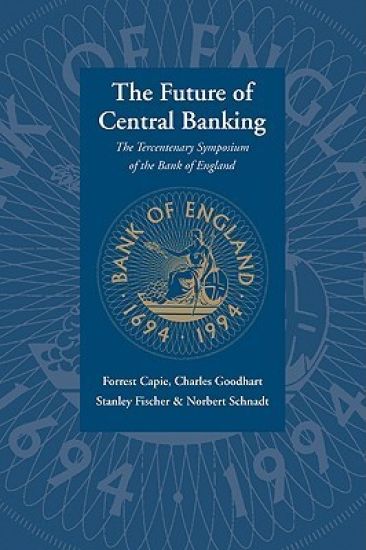
The Future of Central Banking

The Future of Central Banking

Forrest Capie; Stanley Fischer; Charles Goodhart; Norbert Schnadt

Cambridge University Press
2008
pokkari
This volume contains two major papers prepared for the Bank of England's Tercentenary Symposium in June 1994. The first, by Forrest Capie, Charles Goodhart and Norbert Schnadt, provides an authoritative account of the evolution of central banking. It traces the development of both the monetary and financial stability concerns of central banks, and includes individual sections on the evolution and constitutional positions of 31 central banks from around the world. The second paper, by Stanley Fischer, explores the major policy dilemmas now facing central bankers: the extent to which there is a short-term trade-off between inflation and growth; the choice of inflation targets; and the choice of operating procedures. Important contributions by leading central bankers from around the world, and the related Per Jacobsen lecture by Alexander Lamfalussy, are also included in the volume.
The Future of Central Banking

The Future of Central Banking

Forrest Capie; Stanley Fischer; Charles Goodhart; Norbert Schnadt

Cambridge University Press
1995
sidottu
This volume contains two major papers prepared for the Bank of England’s Tercentenary Symposium in June 1994. The first, by Forrest Capie, Charles Goodhart and Norbert Schnadt, provides an authoritative account of the evolution of central banking. It traces the development of both the monetary and financial stability concerns of central banks, and includes individual sections on the evolution and constitutional positions of 31 central banks from around the world. The second paper, by Stanley Fischer, explores the major policy dilemmas now facing central bankers: the extent to which there is a short-term trade-off between inflation and growth; the choice of inflation targets; and the choice of operating procedures. Important contributions by leading central bankers from around the world, and the related Per Jacobsen lecture by Alexander Lamfalussy, are also included in the volume.