Les bretons: considerations sur leur passe et leur situation presente... / F. Cadic, ...Date de l'edition originale: 1902Sujet de l'ouvrage: Bretagne (France)Ce livre est la reproduction fidele d'une oeuvre publiee avant 1920 et fait partie d'une collection de livres reimprimes a la demande editee par Hachette Livre, dans le cadre d'un partenariat avec la Bibliotheque nationale de France, offrant l'opportunite d'acceder a des ouvrages anciens et souvent rares issus des fonds patrimoniaux de la BnF.Les oeuvres faisant partie de cette collection ont ete numerisees par la BnF et sont presentes sur Gallica, sa bibliotheque numerique.En entreprenant de redonner vie a ces ouvrages au travers d'une collection de livres reimprimes a la demande, nous leur donnons la possibilite de rencontrer un public elargi et participons a la transmission de connaissances et de savoirs parfois difficilement accessibles.Nous avons cherche a concilier la reproduction fidele d'un livre ancien a partir de sa version numerisee avec le souci d'un confort de lecture optimal. Nous esperons que les ouvrages de cette nouvelle collection vous apporteront entiere satisfaction.Pour plus d'informations, rendez-vous sur www.hachettebnf.fr
Cet ouvrage original revisite les idees recues sur le francais cadien et se pose comme une analyse complete de la realite contemporaine de cette communaute linguistique. A ce jour, aucune oeuvre consacree au francais cadien n'a etudie cette langue de facon aussi systematique et a une aussi large echelle. Le francais cadien est compare a son cousin canadien, le francais acadien des provinces du Nouveau-Brunswick et de la Nouvelle-Ecosse, qui beneficie d'un soutien institutionnel inexistant en Louisiane, placant ainsi ces deux varietes dans un continuum suggere par leurs appellations. Pour la premiere fois, cette etude retrace les variables phonetiques etudiees depuis le latin jusqu'au francais contemporain en France, au Canada et en Louisiane. La methodologie sociolinguistique, qui a ete rigoureusement suivie, consiste en une etude empirique de type quantitatif, basee sur un echantillon de locutrices dont plus de 20,000 occurrences ont ete codifiees, analysees, puis verifiees par une etude acoustique. Cette analyse s'interesse au parler des femmes cadiennes afin de mieux comprendre leur role dans cette communaute ou la renaissance culturelle de la fin des annees soixante a plutot mis en valeur le role des hommes, accusant meme parfois les femmes d'avoir abandonne le francais, en arretant de le transmettre a leurs enfants. Les resultats obtenus montrent pourtant qu'elles s'averent etre, a l'inverse, de farouches gardiennes du parler traditionnel grace entre partie a leur exceptionnelle habilite a l'accommodation stylistique face a diverses situations de communication. Tous les lecteurs pourront ainsi decouvrir et mieux comprendre les mecanismes linguistiques et sociaux qui ont permis a cette variete de francais unique de parvenir intacte jusqu'a nous.
1255, un cavalier quitte le ch teau Cathare de Qu ribus quelques heures avant sa reddition devant les troupes de l'inquisition. De nos jours, une jeune historienne cherche d couvrir l'origine d'une pierre noire offerte sa m re dans les ann es cinquante. Elle croise le chemin d'un inspecteur de police enqu tant sur un meurtre. Ils vont se trouver confront s une organisation secr te " Les Chevaliers d'Anubis" qui prot ge un secret mill naire dont la divulgation risque de mettre en p ril les fondements de la Chr tient . Si vous aimez les romans qui s'appuient sur des myst re historiques non r solus, vous appr cierez la lecture de cet ouvrage qui vous plongera, son pilogue, dans une profonde incertitude.
ric Le Goff, et sa coll gue Aline Lemercier, tous deux agents de la D.G.S.E, sont saisis d'une enqu te sur le meurtre de deux jeunes ressortissantes gyptiennes, dans un h tel de luxe parisien.C'est le d but de la plus trange aventure que vont vivre nos deux h ros. D s le d but de leurs recherches, ils sont la cible d'une organisation qui veut les liminer.Croyant tenir une piste, Ils vont se rendre compte qu'il s'agit d'un leurre, et qu'ils sont manipul s. Quelle est l'origine de la fortune subite d'une des victimes ? Pourquoi l'av nement du grand Mahdi risque de bouleverser l' quilibre du Monde Arabe ? Quelles raisons poussent les services secrets gyptiens, Isra liens, pr ter main forte Aline et ric ? Pourquoi les corps carbonis s d'une peuplade en voie de disparition, les Kaiwo , sont d couverts dans une maison abandonn e, la fronti re du Paraguay.De Prague, au d sert du Sina , des gorges d'Alkaba au village de San-Ignaco, en Argentine, voil toutes les questions que devront r soudre Aline Lemercier, et ric Le Goff. Un roman la pointe de l'actualit troubl e que nous vivons.
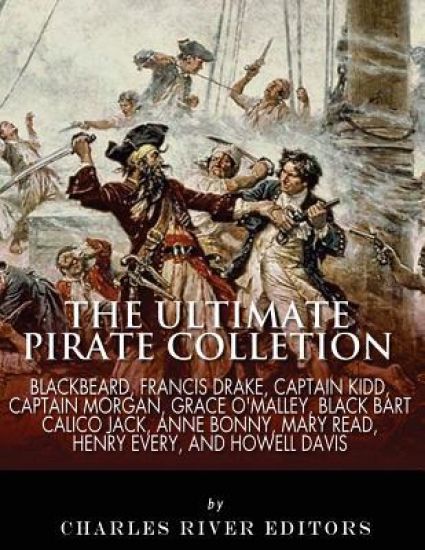
*Examines the lives, legends and legacies of 11 of history's most famous pirates. *Explains how the myths and legends of pirates like Blackbeard created the instantly recognizable pirate stereotypes today. *Includes pictures depicting the pirates and important people, places, and events in their lives. *Includes contemporary accounts of the pirates written by Captain Charles Johnson *Includes Bibliographies The people who have lived outside the boundaries of normal societies and refused to play by the rules have long fascinated the world, and nowhere is this more evident than the continuing interest in the pirates of centuries past. As the subjects of books, movies, and even theme park rides, people continue to let their imaginations go when it comes to pirates, with buried treasure, parrots, and walking the plank all ingrained in pop culture's perception of them. While there is no question that the myths and legends surrounding history's most famous pirates are colorful, in some instances their actual lives made for even better stories. Before the Golden Age of Piracy, men and women like Sir Francis Drake and Grace O'Malley straddled the line between pirate and privateer, with Drake being knighted for fighting the Spanish and O'Malley representing many things to the Irish, including queen, legend, pirate, and folk hero. While Captain Morgan's ruthless piracy has actually been forgotten due to his association with the spiced rum company using his name, Captain William Kidd insisted he wasn't a pirate at all, and his entire reputation is based on the most notorious trial in the history of piracy. The Golden Age of Piracy generally refers to the era when history's most famous pirates roamed the seas of the West Indies from 1670-1720, and it is no coincidence that the beginning of it was marked by the rise of Henry Every. In his day Every was the "King of Pirates", and in addition to popularizing the famous skull and crossbones logo that would become the most famous pirate flag, Every conducted what is considered the most profitable pirate raid in history, leading to what is considered the first worldwide manhunt in history when the English put a large bounty on his head. It would be an understatement to say that pop culture's perception of piracy and pirates has been primarily influenced by Captain Edward Teach, known to the world as Blackbeard. Blackbeard is remembered today based more on myths than reality. People continue to let their imaginations go when it comes to Blackbeard, picturing a pirate who captured more booty than any other pirate, hid buried treasure, and lit his hair on fire before battle. People have long claimed that his ghost still haunts the Atlantic Ocean, and his contemporaries were so scared of him that they claimed to have seen his headless body swim around his pirate boat three times. Fittingly, some of history's most famous pirates sailed together. Black Bart Roberts is considered the most successful pirate in history, managing to capture about 500 ships before meeting his fate, but he learned the tricks of the trade from Howell Davis, whose cunning and courage led to some of the most spectacular acts of piracy in history. Then there are history's two most famous female pirates, Anne Bonny and Mary Read, who actually sailed together on Calico Jack's pirate ship. Together the three became history's most famous pirate crew and had one of the most colorful years of the Golden Age of Piracy before being captured. The Ultimate Pirate Collection looks at all of these notorious pirates, examining their careers and analyzing their legacies. Along with pictures, contemporary accounts, bibliographies, and a Table of Contents, you will learn about history's most famous pirates like never before.
*Examines the lives, legends and legacies of 11 of history's most famous pirates. *Explains how the myths and legends of pirates like Blackbeard created the instantly recognizable pirate stereotypes today. *Includes pictures depicting the pirates and important people, places, and events in their lives. *Includes contemporary accounts of the pirates written by Captain Charles Johnson *Includes Bibliographies The people who have lived outside the boundaries of normal societies and refused to play by the rules have long fascinated the world, and nowhere is this more evident than the continuing interest in the pirates of centuries past. As the subjects of books, movies, and even theme park rides, people continue to let their imaginations go when it comes to pirates, with buried treasure, parrots, and walking the plank all ingrained in pop culture's perception of them. While there is no question that the myths and legends surrounding history's most famous pirates are colorful, in some instances their actual lives made for even better stories. Before the Golden Age of Piracy, men and women like Sir Francis Drake and Grace O'Malley straddled the line between pirate and privateer, with Drake being knighted for fighting the Spanish and O'Malley representing many things to the Irish, including queen, legend, pirate, and folk hero. While Captain Morgan's ruthless piracy has actually been forgotten due to his association with the spiced rum company using his name, Captain William Kidd insisted he wasn't a pirate at all, and his entire reputation is based on the most notorious trial in the history of piracy. The Golden Age of Piracy generally refers to the era when history's most famous pirates roamed the seas of the West Indies from 1670-1720, and it is no coincidence that the beginning of it was marked by the rise of Henry Every. In his day Every was the "King of Pirates", and in addition to popularizing the famous skull and crossbones logo that would become the most famous pirate flag, Every conducted what is considered the most profitable pirate raid in history, leading to what is considered the first worldwide manhunt in history when the English put a large bounty on his head. It would be an understatement to say that pop culture's perception of piracy and pirates has been primarily influenced by Captain Edward Teach, known to the world as Blackbeard. Blackbeard is remembered today based more on myths than reality. People continue to let their imaginations go when it comes to Blackbeard, picturing a pirate who captured more booty than any other pirate, hid buried treasure, and lit his hair on fire before battle. People have long claimed that his ghost still haunts the Atlantic Ocean, and his contemporaries were so scared of him that they claimed to have seen his headless body swim around his pirate boat three times. Fittingly, some of history's most famous pirates sailed together. Black Bart Roberts is considered the most successful pirate in history, managing to capture about 500 ships before meeting his fate, but he learned the tricks of the trade from Howell Davis, whose cunning and courage led to some of the most spectacular acts of piracy in history. Then there are history's two most famous female pirates, Anne Bonny and Mary Read, who actually sailed together on Calico Jack's pirate ship. Together the three became history's most famous pirate crew and had one of the most colorful years of the Golden Age of Piracy before being captured. The Ultimate Pirate Collection looks at all of these notorious pirates, examining their careers and analyzing their legacies. Along with pictures, contemporary accounts, bibliographies, and a Table of Contents, you will learn about history's most famous pirates like never before.
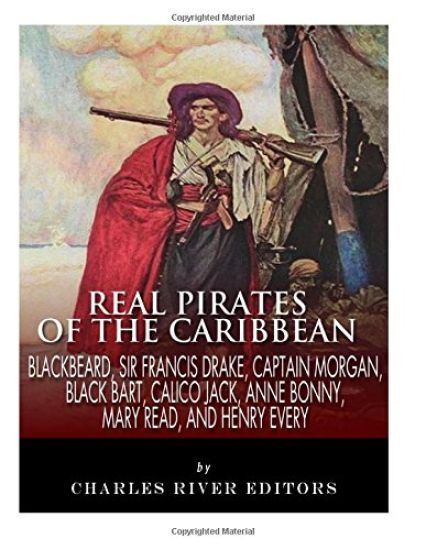
*Examines the lives, legends and legacies of the Caribbean's most famous and successful pirates. *Explains how the myths and legends of pirates like Blackbeard created the instantly recognizable pirate stereotypes today. *Includes pictures depicting the pirates and important people, places, and events in their lives. *Includes contemporary accounts of the pirates written by Captain Charles Johnson. *Includes Bibliographies Over the past decade, few movie franchises have been as successful as Pirates of the Caribbean, starring Johnny Depp as the stereotypical pirate Jack Sparrow, a flamboyant, colorful and cunning pirate of questionable morality. The popularity of the movies and the character Jack Sparrow demonstrate how the people who have lived outside the boundaries of normal societies and refused to play by the rules have long fascinated the world. Nowhere is this more evident than the continuing interest in the pirates of centuries past. As the subjects of books, movies, and even theme park rides, people continue to let their imaginations go when it comes to pirates, with buried treasure, parrots, and walking the plank all ingrained in pop culture's perception of them. While there is no question that the myths and legends surrounding history's most famous pirates are colorful, in some instances their actual lives made for even better stories. Before the Golden Age of Piracy, men like Sir Francis Drake straddled the line between pirate and privateer, and Drake was knighted for fighting the Spanish. While Captain Morgan's ruthless piracy has actually been overlooked due to his association with the spiced rum company using his name, he was a remarkably successful pirate, and one of history's best documented pirates. The Golden Age of Piracy generally refers to the era when history's most famous pirates roamed the seas of the West Indies from 1670-1720, and it is no coincidence that the beginning of it was marked by the rise of Henry Every. In his day Every was the "King of Pirates", and in addition to popularizing the famous skull and crossbones logo that would become the most famous pirate flag, Every conducted what is considered the most profitable pirate raid in history, leading to what is considered the first worldwide manhunt in history when the English put a large bounty on his head. It would be an understatement to say that pop culture's perception of piracy and pirates has been primarily influenced by Captain Edward Teach, known to the world as Blackbeard. Blackbeard is remembered today based more on myths than reality. People continue to let their imaginations go when it comes to Blackbeard, picturing a pirate who captured more booty than any other pirate, hid buried treasure, and lit his hair on fire before battle. People have long claimed that his ghost still haunts the Atlantic Ocean, and his contemporaries were so scared of him that they claimed to have seen his headless body swim around his pirate boat three times. Fittingly, some of history's most famous pirates sailed together. Black Bart Roberts is considered the most successful pirate in history, managing to capture about 500 ships before meeting his fate, but he learned the tricks of the trade from Howell Davis, whose cunning and courage led to some of the most spectacular acts of piracy in history. Then there are history's two most famous female pirates, Anne Bonny and Mary Read, who actually sailed together on Calico Jack's pirate ship. Together the three became history's most famous pirate crew and had one of the most colorful years of the Golden Age of Piracy before being captured. Real Pirates of the Caribbean looks at all of these notorious pirates, examining their careers and analyzing their legacies. Along with pictures, contemporary accounts, bibliographies, and a Table of Contents, you will learn about these famous pirates like never before.
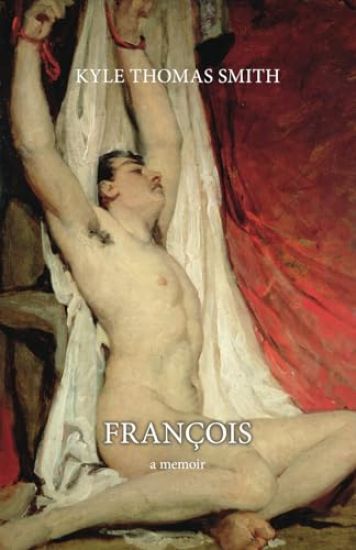
Nearing fifty, author Kyle Thomas Smith looks back on the days when he was a struggling young writer and hapless office temp. At the end of yet another workday when all he wanted was to go back to his little apartment, turn into a cockroach, and expire in a puddle of Raid, Kyle instead went out on the town and met a highly accomplished, globetrotting filmmaker named Fran ois. A romance ensued, but Fran ois flew out the next morning, leaving Kyle with nothing but a napkin on which he'd written his address in Paris.Kyle wondered if this napkin could hold the key to his future, and what would his life be worth if he were to lose the napkin?In this slice-of-life memoir, Kyle Thomas Smith meditates on how tightly we cling to our prospects when the real gold is buried deep inside the life we already have.
Journal de Francois, bourgeois de Paris: 23 decembre 1588-30 avril 1589 / par Eugene SaulnierDate de l'edition originale: 1913Sujet de l'ouvrage: Paris (France) -- Histoire"Collection: Bibliotheque d'histoire de Paris; 4"Ce livre est la reproduction fidele d'une oeuvre publiee avant 1920 et fait partie d'une collection de livres reimprimes a la demande editee par Hachette Livre, dans le cadre d'un partenariat avec la Bibliotheque nationale de France, offrant l'opportunite d'acceder a des ouvrages anciens et souvent rares issus des fonds patrimoniaux de la BnF.Les oeuvres faisant partie de cette collection ont ete numerisees par la BnF et sont presentes sur Gallica, sa bibliotheque numerique.En entreprenant de redonner vie a ces ouvrages au travers d'une collection de livres reimprimes a la demande, nous leur donnons la possibilite de rencontrer un public elargi et participons a la transmission de connaissances et de savoirs parfois difficilement accessibles.Nous avons cherche a concilier la reproduction fidele d'un livre ancien a partir de sa version numerisee avec le souci d'un confort de lecture optimal. Nous esperons que les ouvrages de cette nouvelle collection vous apporteront entiere satisfaction.Pour plus d'informations, rendez-vous sur www.hachettebnf.fr
François Rabelais and the Renaissance Physiology of Invention: Ingenious Animation explores the medical poetics of inventive, embodied thinking or ingenuity instantiated in Rabelais' Gargantua and, mostly,in his Quart livre. It unsettles established dichotomies in Rabelaisian scholarship between Rabelais's 'lowly' laughter and his 'high', erudite message and reassesses the Rabelaisian grotesque by highlighting its debts to grotesque ornament, this marginal yet omnipresent Renaissance visual art. Bodily functions are a trademark of Rabelais's poetics. Scholarship has read them as signs of carnivalesque inversion, in line with the Bakhtinian grotesque, or of satirical degradation: in both instances, the 'lowly' is opposed to the 'high', the belly to the head. Yet for a physician like Rabelais, the 'head' or the brain as the site of cognition is not opposed to what is below it: the chest as the site of breathing, the belly and its nether regions as sites of nutrition and generation. In Renaissance medicine, these are integrated physiological systems whose products fuel each other's operations, including cognition. Read through this lens and alongside his diagnosis of the healthy or diseased culture of his time (rotting scholasticism, the humanist digestion of the classical heritage, or the schismatic convulsions shaking Christianity) Rabelais's fictions testify to his reflexive investigation into how culture results from physiological processes fuelling the inventive ability of the human animal, made manifest in pedagogical, artistic, mechanical, and spiritual 'inventions'. They display the life (rather than the truth) of culture stemming from human ingenia, that is, wits conditioned by biological natures. While these might be idiosyncratic, their animation is fuelled and shaped by the food one eats, the air one breathes, the places one inhabits, the company one keeps. In this respect Rabelaisian fiction is grotesque in a period sense. With its emphasis on hybrid forms capturing the metamorphic powers of animation, grotesque ornament reflexively commented on the embodied inventive processes underpinning Renaissance mimesis. Rabelais's fictions display a similar logic: they foreground the inventive powers of ingenious animation and articulate reflexive, often ironic alternatives to the humanist views they alter: a thoroughly embodied anthropology, a naturalist genealogy of cultural production and transmission, a phantastical account of artistic invention as uncanny liveliness.
In just over a decade, François Ozon has earned an international reputation as a successful and provocative filmmaker. A student of Eric Rohmer and Jean Douchet at the prestigious Fémis, Ozon made a number of critically acclaimed shorts in the 1990s and released his first feature film Sitcom in 1998. Two additional shorts and eleven feature films have followed, including international successes 8 femmes and Swimming Pool and more recent releases such as Angel, Ricky, and Le refuge. Ozon's originality lies in his filmmaking style, which draws on familiar cinematic traditions (the crime thriller, the musical, the psychological drama, the comedy, the period piece) but simultaneously mixes these recognizable genres and renders them unfamiliar. Despite tremendous diversity in cinematic choices, Ozon's oeuvre is surprisingly consistent in its desire to blur the traditional frontiers between the masculine and the feminine, gay and straight, reality and fantasy, auteur and commercial cinema. Thibaut Schilt provides an overview of François Ozon's career to date, highlighting the director's unrestrained, voracious cinephilia, his recurrent collaborations with women screenwriters and actresses, and the trademarks of his cinema including music, dance, and the clothes that accompany these now typically Ozonian episodes. Schilt contextualizes Ozon's filmmaking within the larger fields of French filmmaking and international queer cinema, and he discusses several major themes running through Ozon's work, including obsessions with inadequate fathers, various types of mourning, and a recurring taste for "the foreign." The volume also includes an insightful interview with the director.
In just over a decade, François Ozon has earned an international reputation as a successful and provocative filmmaker. A student of Eric Rohmer and Jean Douchet at the prestigious Fémis, Ozon made a number of critically acclaimed shorts in the 1990s and released his first feature film Sitcom in 1998. Two additional shorts and eleven feature films have followed, including international successes 8 femmes and Swimming Pool and more recent releases such as Angel, Ricky, and Le refuge. Ozon's originality lies in his filmmaking style, which draws on familiar cinematic traditions (the crime thriller, the musical, the psychological drama, the comedy, the period piece) but simultaneously mixes these recognizable genres and renders them unfamiliar. Despite tremendous diversity in cinematic choices, Ozon's oeuvre is surprisingly consistent in its desire to blur the traditional frontiers between the masculine and the feminine, gay and straight, reality and fantasy, auteur and commercial cinema. Thibaut Schilt provides an overview of François Ozon's career to date, highlighting the director's unrestrained, voracious cinephilia, his recurrent collaborations with women screenwriters and actresses, and the trademarks of his cinema including music, dance, and the clothes that accompany these now typically Ozonian episodes. Schilt contextualizes Ozon's filmmaking within the larger fields of French filmmaking and international queer cinema, and he discusses several major themes running through Ozon's work, including obsessions with inadequate fathers, various types of mourning, and a recurring taste for "the foreign." The volume also includes an insightful interview with the director.