Kirjahaku
Etsi kirjoja tekijän nimen, kirjan nimen tai ISBN:n perusteella.
1000 tulosta hakusanalla Frances Lydia Bingham
Rosa and Flora. a Romance.
Lydia Francis Francis
British Library, Historical Print Editions
2011
pokkari
Title: Rosa and Flora. A romance.Publisher: British Library, Historical Print EditionsThe British Library is the national library of the United Kingdom. It is one of the world's largest research libraries holding over 150 million items in all known languages and formats: books, journals, newspapers, sound recordings, patents, maps, stamps, prints and much more. Its collections include around 14 million books, along with substantial additional collections of manuscripts and historical items dating back as far as 300 BC.The FICTION & PROSE LITERATURE collection includes books from the British Library digitised by Microsoft. The collection provides readers with a perspective of the world from some of the 18th and 19th century's most talented writers. Written for a range of audiences, these works are a treasure for any curious reader looking to see the world through the eyes of ages past. Beyond the main body of works the collection also includes song-books, comedy, and works of satire. ++++The below data was compiled from various identification fields in the bibliographic record of this title. This data is provided as an additional tool in helping to insure edition identification: ++++ British Library Francis, Lydia Francis.; 1867. 2 vol.; 8 . 12621.bbb.8.
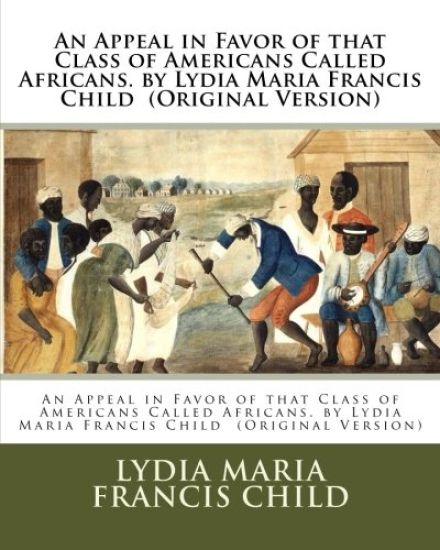
An Appeal in Favor of that Class of Americans Called Africans. by Lydia Maria Francis Child (Original Version)
Lydia Maria Francis Child
Createspace Independent Publishing Platform
2016
nidottu
Lydia Maria Francis Child (born Lydia Maria Francis) (February 11, 1802 - October 20, 1880), was an American abolitionist, women's rights activist, Native American rights activist, novelist, journalist, and opponent of American expansionism. Her journals, both fiction and domestic manuals, reached wide audiences from the 1820s through the 1850s. At times she shocked her audience as she tried to take on issues of both male dominance and white supremacy in some of her stories. Despite these challenges, Child may be most remembered for her poem "Over the River and Through the Wood." Her grandparents' house, which she wrote about visiting, was restored by Tufts University in 1976 and stands near the Mystic River on South Street, in Medford, Massachusetts.She was born Lydia Maria Francis in Medford, Massachusetts, on February 11, 1802, to Susannah (n e Rand) and Convers Francis. Her older brother, Convers Francis, was educated at Harvard College and Seminary, and became a Unitarian minister. Child received her education at a local dame school and later at a women's seminary. Upon the death of her mother, she went to live with her older sister in Maine, where she studied to be a teacher. During this time, her brother Convers, by then a Unitarian minister, saw to his younger sister's education in literary masters such as Homer and Milton. Francis chanced to read an article in the North American Review discussing the field offered to the novelist by early New England history. Although she had never thought of becoming an author, she immediately wrote the first chapter of her novel Hobomok. Encouraged by her brother's commendation, she finished it in six weeks and had it published. From this time until her death, she wrote continually. Francis taught for one year in a seminary in Medford, and in 1824 started a private school in Watertown, Massachusetts. In 1826, she founded the Juvenile Miscellany, the first monthly periodical for children published in the United States, and supervised its publication for eight years. In 1828, she married David Lee Child and moved to Boston.
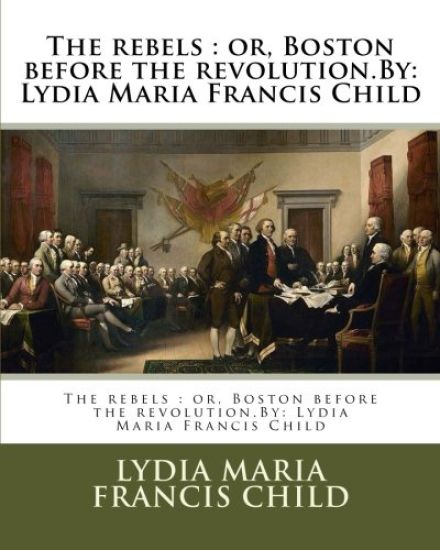
The rebels: or, Boston before the revolution.By: Lydia Maria Francis Child
Lydia Maria Francis Child
Createspace Independent Publishing Platform
2016
nidottu
Lydia Maria Francis Child (born Lydia Maria Francis) (February 11, 1802 - October 20, 1880), was an American abolitionist, women's rights activist, Native American rights activist, novelist, journalist, and opponent of American expansionism. Her journals, both fiction and domestic manuals, reached wide audiences from the 1820s through the 1850s. At times she shocked her audience as she tried to take on issues of both male dominance and white supremacy in some of her stories. Despite these challenges, Child may be most remembered for her poem "Over the River and Through the Wood." Her grandparents' house, which she wrote about visiting, was restored by Tufts University in 1976 and stands near the Mystic River on South Street, in Medford, Massachusetts.She was born Lydia Maria Francis in Medford, Massachusetts, on February 11, 1802, to Susannah (n e Rand) and Convers Francis. Her older brother, Convers Francis, was educated at Harvard College and Seminary, and became a Unitarian minister. Child received her education at a local dame school and later at a women's seminary. Upon the death of her mother, she went to live with her older sister in Maine, where she studied to be a teacher. During this time, her brother Convers, by then a Unitarian minister, saw to his younger sister's education in literary masters such as Homer and Milton. Francis chanced to read an article in the North American Review discussing the field offered to the novelist by early New England history. Although she had never thought of becoming an author, she immediately wrote the first chapter of her novel Hobomok. Encouraged by her brother's commendation, she finished it in six weeks and had it published. From this time until her death, she wrote continually. Francis taught for one year in a seminary in Medford, and in 1824 started a private school in Watertown, Massachusetts. In 1826, she founded the Juvenile Miscellany, the first monthly periodical for children published in the United States, and supervised its publication for eight years. In 1828, she married David Lee Child and moved to Boston.

Lydia Maria Francis Child (ES 4-vol. set)
Editon Synapse
2011
sidottu
This is the third part of the series to collect conduct books, and educational guides for children during Victorian America. This facsimile reprint collection provides ten books for children by Lydia Maria Child (1802–80), a novelist and journalist. While famous for her activities as an American abolitionist and a campaigner for women’s rights, she also had a keen interest in childhood and various issues surrounding children and early education. She started writings books for children in her early twenties. She even edited and published a periodical for children, Juvenile Miscellany, along with many children’s books which she wrote or compiled. The collection illuminates this rather ignored aspect of Lydia Maria Child’s achievement, as well as providing a source which offers an interesting new perspective on child studies of nineteenthth-century America.
Letters of Lydia Maria Child, With A Biographical introduction by John G. Whittier and An Appendix by Wendell Phillips.
Lydia Maria Francis Child
University of Michigan Library
2006
pokkari
Letters of Lydia Maria Child
Lydia Maria Francis Child; Wendell Phillips; John G Whittier
Hansebooks
2019
pokkari
Appeal In Favor Of That Class Of Americans Called Africans (1836)
Lydia Maria Francis Child
KESSINGER PUBLISHING CO
2007
pokkari
An Appeal In Favor Of That Class Of Americans Called Africans (1836)
Lydia Maria Francis Child
KESSINGER PUBLISHING, LLC
2008
sidottu
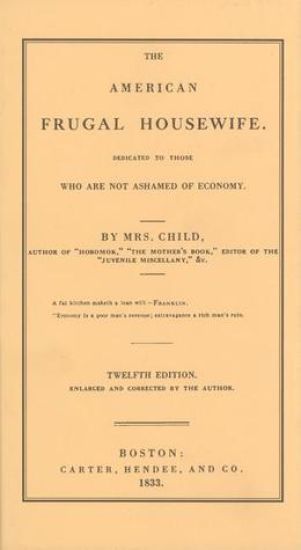
Includes interesting recipes, remedies, advice on parenting, and tips for housekeepers. From 1832-1845, this popular book went through thirty-two editions.
Memoirs Of Madame De Stael And Of Madame Roland (1847)
Lydia Maria Francis Child
KESSINGER PUBLISHING CO
2009
pokkari