

Kirjahaku
Etsi kirjoja tekijän nimen, kirjan nimen tai ISBN:n perusteella.
1000 tulosta hakusanalla Frances M Fuller

The life of St. Frances of Rome. By: LADY Georgiana Fullerton. with / J. M. Capes /
Georgiana Fullerton
Createspace Independent Publishing Platform
2017
nidottu
Lady Georgiana Fullerton (23 September 1812 - 19 January 1885) was an English novelist.Georgiana Charlotte Leveson-Gower was the daughter of Granville Leveson-Gower, 1st Earl Granville and his wife Lady Harriet Cavendish, and a sister of Granville George Leveson-Gower, 2nd Earl Granville, a prominent statesman. In 1833 she married in Paris an attach of the embassy, Alexander George Fullerton, who came from Ireland.
The life of St. Frances of Rome By: Lady Georgiana Fullerton: Introduction By: J. M. Capes (Capes, J. M. (John Moore), 1813-1889))
J. M. Capes; Lady Georgiana Fullerton
Createspace Independent Publishing Platform
2018
nidottu
Lady Georgiana Fullerton (23 September 1812 - 19 January 1885) was an English novelist. Life: Georgiana Charlotte Leveson-Gower was the daughter of Granville Leveson-Gower, 1st Earl Granville and his wife Lady Harriet Cavendish, and a sister of Granville George Leveson-Gower, 2nd Earl Granville, a prominent statesman. In 1833 she married in Paris an attach of the embassy, Alexander George Fullerton, who came from Ireland. She converted to Roman Catholicism in 1846 and wrote The Life of St. Frances of Rome, and Others. She wrote several novels, some of which were very successful. They include Ellen Middleton (1844), Grantley Manor (1847), Lady Bird (1852), Life of St.Francis of Rome (1855), The Countess of Bonneval (1858), Rose Leblanc (1861), Laurentia, a Tale of Japan (1861), Too Strange Not to Be True (1864), Constance Sherwood (1865), A Stormy Life (1867), Helpers of the Holy Soul (1868), Mrs. Gerald's Niece (1869), Life of Louisa de Carvajal (1873), A Will and a Way (1881), and Life of Elizabeth Lady Falkland (1883). She also published two volumes of verse. She founded Saint Walburga's School, in Bournemouth, which survives, albeit on a new site, and a Blue Plaque to commemorate her Catholic activities can be found on the Sacred Heart church in Bournemouth. In a margin note in his copy of Ellen Middleton, Edgar Allan Poe wrote: A remarkable work, and one which I find much difficulty in admitting to be the composition of a woman. Not that many good and glorious things have not been the composition of women - but, because, here, the severe precision of style, the thoroughness, and the luminousness, are points never observable, in even the most admirable of their writings......... J. M. Capes Author Born: 1813 Died: 1889
The Life of St. Frances of Rome, and Others
Georgiana Fullerton; J M (John Moore) Capes
Anson Street Press
2025
pokkari
The Life of St. Frances of Rome, and Others
Georgiana Fullerton; J M (John Moore) Capes
Anson Street Press
2025
sidottu
Ion channels are membrane proteins that act as gated pathways for the movement of ions across cell membranes. They play essential roles in the physiology of all cells. In recent years, an ever-increasing number of human and animal diseases have been found to result from defects in ion channel function. Most of these diseases arise from mutations in the genes encoding ion channel proteins, and they are now referred to as the channelopathies. Ion Channels and Disease provides an informative and up-to-date account of our present understanding of ion channels and the molecular basis of ion channel diseases. It includes a basic introduction to the relevant aspects of molecular biology and biophysics and a brief description of the principal methods used to study channelopathies. For each channel, the relationship between its molecular structure and its functional properties is discussed and ways in which genetic mutations produce the disease phenotype are considered. This book is intended for research workers and clinicians, as well as graduates and advanced undergraduates. The text is clear and lively and assumes little knowledge, yet it takes the reader to frontiers of what is currently known about this most exciting and medically important area of physiology.
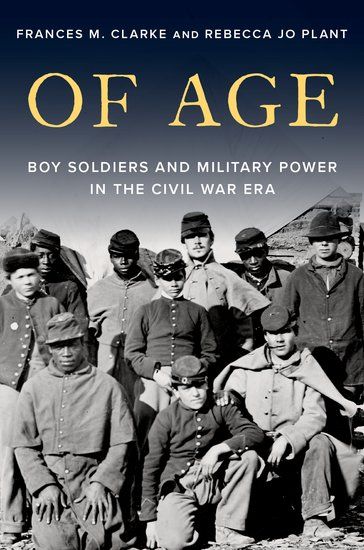
An innovative study of underage soldiers and their previously unrecognized impact on Civil War era America. The smooth faces of boy soldiers stand out in Civil War photography, their spindly physiques contrasting with the uniformed adults they stood alongside. Yet until now, scholars have largely overlooked the masses of underaged youths who served as musicians, carried wounded from the field, ran messages, took up arms, and died in both the Union and Confederate armies. Of Age is the first comprehensive study of how Americans responded to the unauthorized enlistment of minors in this conflict and the implications that followed. Frances M. Clarke and Rebecca Jo Plant offer military, legal, medical, social, political, and cultural perspectives as well as demographic analysis of this important aspect of the war. They find that underage enlistees comprised roughly ten percent of the Union army and likely a similar proportion of Confederate forces-but these enlistees' importance extended beyond sheer numbers. Clarke and Plant introduce common but largely unknown wartime scenarios. Boys who absconded without consent set off protracted struggles between households and the military, as parents used various arguments to recover their sons. State judges and the US federal government battled over whether to discharge boys discovered to be under age. African American youths discovered that both Union and Confederate officers ignored their evident age when using them as conscripts or military laborers. Meanwhile, nineteenth-century Americans expressed little concern over what exposure to violence might do to young minds, readily accepting their presence in battle. In fact, underage soldiers became prevalent symbols of the US war effort, shaping popular memory for decades to come. An original and sweeping work, Of Age convincingly demonstrates why underage enlistment is such an important lens for understanding the history of children and youth and the transformative effects of the US Civil War.
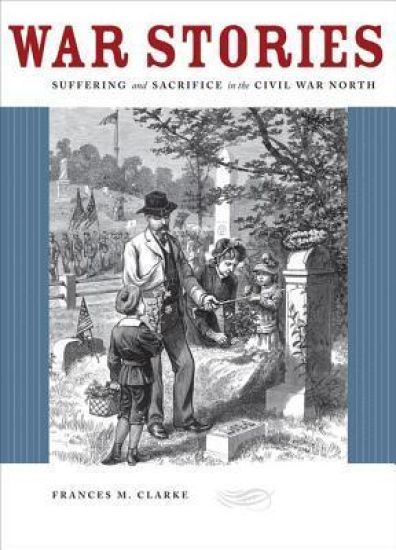
The American Civil War is often seen as the first modern war, not least because of its immense suffering. Yet unlike later conflicts, it did not produce an outpouring of disillusionment or cynicism, as most people continued to portray the war in highly sentimental and patriotic terms. While scholars typically dismiss this everyday writing as simplistic or naive, Frances M. Clarke argues that we need to reconsider the letters, diaries, songs, and journalism penned by Union soldiers and their caregivers to fully understand the war's impact and meaning. In "War Stories", Clarke revisits the most common stories that average Northerners told in hopes of redeeming their suffering and loss - stories that enabled people to make sense of their hardship, and to express their beliefs about religion, community, and personal character. From tales of Union soldiers who died heroically to stories of tireless volunteers who exemplified the Republic's virtues, "War Stories" sheds new light on this transitional moment in the history of war, emotional culture, and American civic life.

In lucid and non-technical prose, Young demonstrates how and why the two most familiar Christian creeds - the Apostles' Creed and the Nicene Creed - came into being. She describes how creeds originated in instruction before baptism and have their roots in the New Testament itself. She then shows how the rise of Gnosticism and a tendancy towards fragmentation in the church made a clear statement of faith necessary, as well as outlining the various controversies which led to particular words and phrases being included in the creeds as we now have them. She then describes the construction of the great Christian doctrines of the Trinity and incarnation.
Created as a companion guide to a Patristics textbook, From Nicaea to Chalcedon surveys a variety of writings to have occurred during one of the most significant periods in the formation of the Church, from 265-466. It does not aim to cover the subject as a textbook would, but aims to delve deeper into some of the characters who were involved with the Church or the Councils during this period. Beginning with Eusebius of Caesarea and the first council of the Church at Nicaea, and ending with Theodoret of Cyrrhus, who is thought to have changed his view of Christology after the watershed Council of Chalcedon, this unique text surveys some of the most influential characters to have shaped Church history and the formation of doctrine. Surveying a mixture of significant literary figures, laymen, bishops and heretics this book presents biographical, literary-critical and theological information about each. They are chosen either because they are important to the history of doctrine, or because new material about them has thrown light upon their work, or because they will broaden the reader's understanding of the culture and history of the period or of live issues in the church at the time. Structured in five parts, each part deals with a period of time and a sequence of characters, so the book is easily followed in chronological order. Added to this, is the double bibliography, which in this edition is fully updated. Bibliography A details those texts in English of the original texts of antiquity, whilst Bibliography B provides details of publications in English, French and German which have appeared since 1960-2004 on or about the characters discussed in the body of the text.
Biblical Exegesis and the Formation of Christian Culture
Frances M. Young
Cambridge University Press
2007
pokkari
This book challenges standard accounts of early Christian exegesis of the Bible. Professor Young sets the interpretation of the Bible in the context of the Graeco-Roman world - the dissemination of books and learning, the way texts were received and read, the function of literature in shaping not only a culture but a moral universe. For the earliest Christians, the adoption of the Jewish scriptures constituted a supersessionary claim in relation to Hellenism as well as Judaism. Yet the debt owed to the practice of exegesis in the grammatical and rhetorical schools is of overriding significance. Methods were philological and deductive, and the usual analysis according to 'literal', 'typological' and 'allegorical' is inadequate to describe questions of reference and issues of religious language. The biblical texts shaped a 'totalizing discourse' which by the fifth century was giving identity, morality and meaning to a new Christian culture.

Biblical Exegesis and the Formation of Christian Culture
Frances M. Young
Cambridge University Press
1997
sidottu
This book challenges standard accounts of early Christian exegesis of the Bible. Professor Young sets the interpretation of the Bible in the context of the Graeco-Roman world - the dissemination of books and learning, the way texts were received and read, the function of literature in shaping not only a culture but a moral universe. For the earliest Christians, the adoption of the Jewish scriptures constituted a supersessionary claim in relation to Hellenism as well as Judaism. Yet the debt owed to the practice of exegesis in the grammatical and rhetorical schools is of overriding significance. Methods were philological and deductive, and the usual analysis according to 'literal', 'typological' and 'allegorical' is inadequate to describe questions of reference and issues of religious language. The biblical texts shaped a 'totalizing discourse' which by the fifth century was giving identity, morality and meaning to a new Christian culture.



Beyond a Gluten-Free Dream is a story of a young girl's journey where she overcomes a difficult diagnosis through perseverance, resilience, and optimism.Livie Bloom, a very imaginative, active, and positive young girl with a big heart has been given the life-changing diagnosis of celiac disease. Although she knows that she can begin healing, she contemplates how this will change her world. She and her forever friend, Titang go on a magical adventure to several countries where they learn about different cultures and the various ethnic foods that are naturally gluten-free. After her multicultural journey around the world, she discovers that despite the need to be on a strict gluten-free diet, her dietary options were limitless. She finds new and positive ways to cope with her condition along the way.


Based firmly on practical experience to provide students with a realistic outlook, this title reflects the growing body of research in the field, stressing its significance in today's practice. It emphasises the importance of the cultural and social context in which death and bereavement take place.