Kirjahaku
Etsi kirjoja tekijän nimen, kirjan nimen tai ISBN:n perusteella.
1000 tulosta hakusanalla Francisca Ingram Ouvry
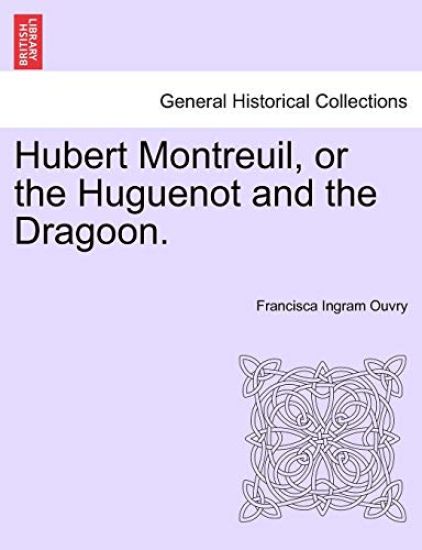
Hubert Montreuil, or the Huguenot and the Dragoon.
Francisca Ingram Ouvry
British Library, Historical Print Editions
2011
pokkari
Title: Hubert Montreuil, or the Huguenot and the Dragoon.Publisher: British Library, Historical Print EditionsThe British Library is the national library of the United Kingdom. It is one of the world's largest research libraries holding over 150 million items in all known languages and formats: books, journals, newspapers, sound recordings, patents, maps, stamps, prints and much more. Its collections include around 14 million books, along with substantial additional collections of manuscripts and historical items dating back as far as 300 BC.The GENERAL HISTORICAL collection includes books from the British Library digitised by Microsoft. This varied collection includes material that gives readers a 19th century view of the world. Topics include health, education, economics, agriculture, environment, technology, culture, politics, labour and industry, mining, penal policy, and social order. ++++The below data was compiled from various identification fields in the bibliographic record of this title. This data is provided as an additional tool in helping to insure edition identification: ++++ British Library Ouvry, Francisca Ingram; 1873. 8 . 12638.f.18.
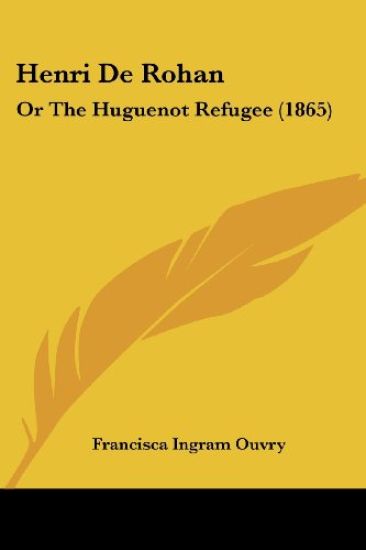
Henri De Rohan: Or The Huguenot Refugee (1865)
Francisca Ingram Ouvry
KESSINGER PUBLISHING, LLC
2008
nidottu

This is a true story written by France when he was seven. Wrigley came to Francis through Soft PawsRescue, whose focus is on connecting homeless, stray, and abused pets with their perfect forever home. Wrigley is a great dog, and doesn't seem to notice that other dogs have one more leg than he does.
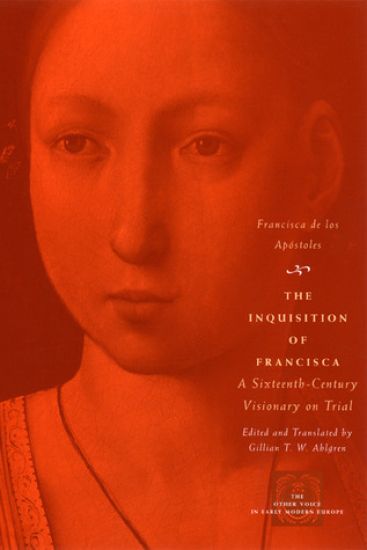
Inspired by a series of visions, Francisca de los Apostoles (1539-after 1578) and her sister Isabella attempted in 1573 to organize a beaterio, a lay community of pious women devoted to the religious life, to offer prayers and penance for the reparation of human sins, especially those of corrupt clerics. But their efforts to minister to the poor of Toledo and to call for general ecclesiastical reform were met with resistance, first from local religious officials and, later, from the Spanish Inquisition. By early 1575, the Inquisitional tribunal in Toledo had received several statements denouncing Francisca from some of the very women she had tried to help, as well as from some of her financial and religious sponsors. Francisca was eventually arrested, imprisoned by the Inquisition, and investigated for religious fraud. This book contains what little is known about Francisca - the several letters she wrote as well as the transcript of her trial - and offers modern readers a perspective on the unique role and status of religious women in sixteenth-century Spain. Chronicling the drama of Francisca's interrogation and her spirited but ultimately unsuccessful defense, The Inquisition of Francisca - transcribed from more than three hundred folios and published for the first time in any language - will be a valuable resource for both specialists and students of the history and religion of Spain in the sixteenth century.
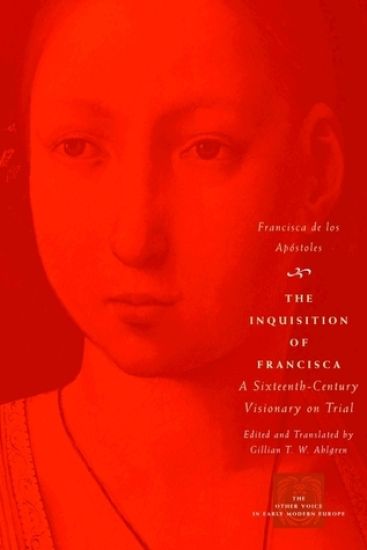
Inspired by a series of visions, Francisca de los Apostoles (1539-after 1578) and her sister Isabella attempted in 1573 to organize a beaterio, a lay community of pious women devoted to the religious life, to offer prayers and penance for the reparation of human sins, especially those of corrupt clerics. But their efforts to minister to the poor of Toledo and to call for general ecclesiastical reform were met with resistance, first from local religious officials and, later, from the Spanish Inquisition. By early 1575, the Inquisitional tribunal in Toledo had received several statements denouncing Francisca from some of the very women she had tried to help, as well as from some of her financial and religious sponsors. Francisca was eventually arrested, imprisoned by the Inquisition, and investigated for religious fraud. This book contains what little is known about Francisca - the several letters she wrote as well as the transcript of her trial - and offers modern readers a perspective on the unique role and status of religious women in sixteenth-century Spain. Chronicling the drama of Francisca's interrogation and her spirited but ultimately unsuccessful defense, The Inquisition of Francisca - transcribed from more than three hundred folios and published for the first time in any language - will be a valuable resource for both specialists and students of the history and religion of Spain in the sixteenth century.
Francisca De Rimini, Episodio Dramatico (1897)
Vicente Colorado
KESSINGER PUBLISHING, LLC
2010
pokkari
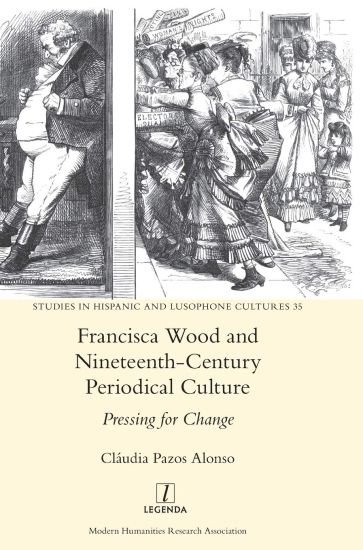
This monograph offers the first full-length account of the political intervention of the nineteenth-century journalist, novelist and translator Francisca de Assis Martins Wood (1802-1900). Her unusual profile included several decades spent in England, which shaped her perception of Portugal. Why then was her intriguing life-story not examined earlier? And why did mid-nineteenth century female authorship remain neglected for so long in Portuguese cultural memory? After revisiting such matters with fresh eyes, the focus turns to the pioneer weekly periodical that Wood headed for two years, A Voz Feminina, later rebranded O Progresso.Crucially, during an age when the transnational circulation of ideas became amplified through the press, the cosmopolitan Wood cultivated strategic connections with early suffragists across Europe. In a string of remarkable editorials, she tackled Church hegemony and pushed for women's rights. Her daring anticlerical thinking in the late 1860s, which anticipated an agenda more readily associated to this day with the work of E a de Queir s, stands out for the sheer modernity of its gender analysis. One hundred and fifty years on, this study uncovers the backlash against Wood's progressive views, led by another Lisbon-based periodical, Bem P blico The Public Good], and reclaims this salient public intellectual as a worthy precursor of Portuguese first-wave feminism.Cl udia Pazos Alonso is Professor of Portuguese and Gender Studies at the University of Oxford and a Fellow of Wadham College.
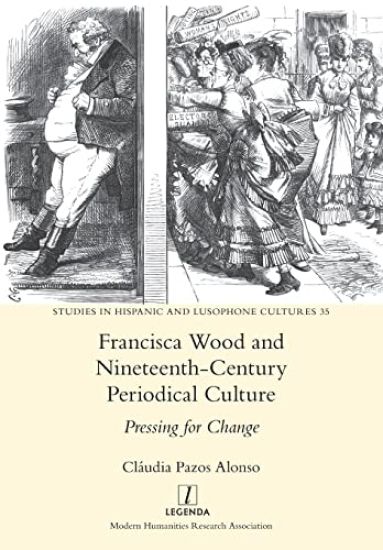
This monograph offers the first full-length account of the political intervention of the nineteenth-century journalist, novelist and translator Francisca de Assis Martins Wood (1802-1900). Her unusual profile included several decades spent in England, which shaped her perception of Portugal. Why then was her intriguing life-story not examined earlier? And why did mid-nineteenth century female authorship remain neglected for so long in Portuguese cultural memory? After revisiting such matters with fresh eyes, the focus turns to the pioneer weekly periodical that Wood headed for two years, A Voz Feminina, later rebranded O Progresso.Crucially, during an age when the transnational circulation of ideas became amplified through the press, the cosmopolitan Wood cultivated strategic connections with early suffragists across Europe. In a string of remarkable editorials, she tackled Church hegemony and pushed for women's rights. Her daring anticlerical thinking in the late 1860s, which anticipated an agenda more readily associated to this day with the work of E a de Queir s, stands out for the sheer modernity of its gender analysis. One hundred and fifty years on, this study uncovers the backlash against Wood's progressive views, led by another Lisbon-based periodical, Bem P blico The Public Good], and reclaims this salient public intellectual as a worthy precursor of Portuguese first-wave feminism.Cl udia Pazos Alonso is Professor of Portuguese and Gender Studies at the University of Oxford and a Fellow of Wadham College.
O estudo intitulado "Francisca Clotilde e Em lia de Freitas: vozes femininas na imprensa cearense do s culo XIX", descreve a participa o dessas escritoras nos jornais que circulavam em Fortaleza no final daquele s culo, dentre eles: Pedro II, Gazeta do Norte, O Libertador e o Cearense. Francisca Clotilde Barbosa de Lima e Em lia de Freitas foram professoras e poetisas e deixaram nas p ginas desses jornais, as suas idealiza es em formas de versos. Defendiam o fim da escravid o e a participa o da mulher nos movimentos intelectuais do s culo XIX e assim participaram de movimentos culturais e sociais, em prol dessas bandeiras.
The study entitled "Francisca Clotilde and Em lia de Freitas: female voices in the 19th century press of Cear ", describes the participation of these writers in the newspapers that circulated in Fortaleza at the end of that century, among them: Pedro II, Gazeta do Norte, O Libertador and Cearense. Francisca Clotilde Barbosa de Lima and Em lia de Freitas were teachers and poets and left in the pages of these newspapers their idealizations in verse forms. They defended the end of slavery and the participation of women in the intellectual movements of the 19th century and thus participated in cultural and social movements, in favor of these flags.
Die Studie mit dem Titel "Francisca Clotilde und Em lia de Freitas: Frauenstimmen in der Presse von Cear im 19. Jahrhundert" beschreibt die Beteiligung dieser Schriftstellerinnen und Schriftsteller an den Zeitungen, die Ende des Jahrhunderts in Fortaleza zirkulierten, darunter Pedro II, Gazeta do Norte, O Libertador und Cearense. Francisca Clotilde Barbosa de Lima und Em lia de Freitas waren Lehrer und Dichter und hinterlie en auf den Seiten dieser Zeitungen ihre Idealisierungen in Versform. Sie verteidigten das Ende der Sklaverei und die Beteiligung von Frauen an den intellektuellen Bewegungen des 19. Jahrhunderts und beteiligten sich so an kulturellen und sozialen Bewegungen, zugunsten dieser Flaggen.
L' tude intitul e "Francisca Clotilde et Em lia de Freitas: voix f minines dans la presse du XIXe si cle au Cear ", d crit la participation de ces crivains aux journaux qui circulaient Fortaleza la fin de ce si cle, entre autres: Pedro II, Gazeta do Norte, O Libertador et Cearense. Francisca Clotilde Barbosa de Lima et Em lia de Freitas taient des professeurs et des po tes et ont laiss dans les pages de ces journaux leurs id ologies sous forme de vers. Ils ont d fendu la fin de l'esclavage et la participation des femmes aux mouvements intellectuels du XIXe si cle et ont ainsi particip aux mouvements culturels et sociaux, en faveur de ces drapeaux.
Lo studio intitolato "Francisca Clotilde e Em lia de Freitas: voci femminili nella stampa del XIX secolo del Cear ", descrive la partecipazione di questi scrittori ai giornali che circolavano a Fortaleza alla fine di quel secolo, tra cui quelli di Fortaleza: Pedro II, Gazeta do Norte, O Libertador e Cearense. Francisca Clotilde Barbosa de Lima e Em lia de Freitas sono state insegnanti e poeti e hanno lasciato nelle pagine di questi giornali le loro idealizzazioni in versi. Difendevano la fine della schiavit e la partecipazione delle donne ai movimenti intellettuali del XIX secolo e quindi partecipavano ai movimenti culturali e sociali, a favore di queste bandiere.

Studium zatytulowane "Francisca Clotilde i Em lia de Freitas: glosy żeńskie w XIX-wiecznej prasie Cear " opisuje udzial tych pisarzy w gazetach, kt re krążyly w Fortalezie pod koniec tego wieku, między innymi: Pedro II, Gazeta do Norte, O Libertador i Cearense. Francisca Clotilde Barbosa de Lima i Em lia de Freitas byly nauczycielami i poetami i pozostawily na lamach tych gazet swoje idealizacje w formie wierszy. Bronily one końca niewolnictwa i udzialu kobiet w ruchach intelektualnych XIX wieku, a tym samym uczestniczyly w ruchach kulturalnych i spolecznych, na rzecz tych flag.