Kirjojen hintavertailu. Mukana 12 390 323 kirjaa ja 12 kauppaa.

Kirjahaku

Etsi kirjoja tekijän nimen, kirjan nimen tai ISBN:n perusteella.

1000 tulosta hakusanalla Francisco De Quevedo

Selected Poetry of Francisco de Quevedo

Selected Poetry of Francisco de Quevedo

Francisco de Quevedo

University of Chicago Press
2009
sidottu
Francisco de Quevedo (1580-1645), one of the greatest poets of the Spanish Golden Age, was the master of the baroque style known as 'conceptismo', a complex form of expression fueled by elaborate conceits and constant wordplay as well as ethical and philosophical concerns. Although scattered translations of his works have appeared in English, there is currently no comprehensive collection available that samples each of the genres in which Quevedo excelled - metaphysical and moral poetry, grave elegies and moving epitaphs, amorous sonnets and melancholic psalms, playful romances and profane burlesques. In this book, Christopher Johnson gathers together a generous selection of forty-six poems - in a bilingual Spanish-English format on facing pages - that highlights the range of Quevedo's technical expertise and themes. Johnson's ingenious solutions to rendering the difficult seventeenth-century Spanish into poetic English will be invaluable to students and scholars of European history, literature, and translation, as well as poetry lovers wishing to reacquaint themselves with an old master.

The Works of Don Francisco de Quevedo. Translated From the Spanish. In Three Volumes. ... of 3; Volume 1
The 18th century was a wealth of knowledge, exploration and rapidly growing technology and expanding record-keeping made possible by advances in the printing press. In its determination to preserve the century of revolution, Gale initiated a revolution of its own: digitization of epic proportions to preserve these invaluable works in the largest archive of its kind. Now for the first time these high-quality digital copies of original 18th century manuscripts are available in print, making them highly accessible to libraries, undergraduate students, and independent scholars.Western literary study flows out of eighteenth-century works by Alexander Pope, Daniel Defoe, Henry Fielding, Frances Burney, Denis Diderot, Johann Gottfried Herder, Johann Wolfgang von Goethe, and others. Experience the birth of the modern novel, or compare the development of language using dictionaries and grammar discourses. ++++The below data was compiled from various identification fields in the bibliographic record of this title. This data is provided as an additional tool in helping to insure edition identification: ++++British LibraryT088964Edinburgh: printed for Mundell & Son; J. Mundell, Glasgow; and J. Wright, London, 1798. 3v., plates; 12
The Visions of Dom Francisco de Quevedo Villegas, ... Made English by Sir Roger L'Estrange, Kt. The Eleventh Edition, Corrected
The 18th century was a wealth of knowledge, exploration and rapidly growing technology and expanding record-keeping made possible by advances in the printing press. In its determination to preserve the century of revolution, Gale initiated a revolution of its own: digitization of epic proportions to preserve these invaluable works in the largest archive of its kind. Now for the first time these high-quality digital copies of original 18th century manuscripts are available in print, making them highly accessible to libraries, undergraduate students, and independent scholars.Western literary study flows out of eighteenth-century works by Alexander Pope, Daniel Defoe, Henry Fielding, Frances Burney, Denis Diderot, Johann Gottfried Herder, Johann Wolfgang von Goethe, and others. Experience the birth of the modern novel, or compare the development of language using dictionaries and grammar discourses. ++++The below data was compiled from various identification fields in the bibliographic record of this title. This data is provided as an additional tool in helping to insure edition identification: ++++British LibraryT088971With two final advertisement leaves.London: printed by W.B. for Richard Sare, 1715. 140, 4]p.; 12
The Controversy About Resistance and Non-Resistance, Discuss'd In Moral and Political Reflections On Marcus Brutus, Who Slew Julius Cæsar In The Senate House, For Assuming The Sovereignty of Rome. By Don Francisco de Quevedo Villegas
The 18th century was a wealth of knowledge, exploration and rapidly growing technology and expanding record-keeping made possible by advances in the printing press. In its determination to preserve the century of revolution, Gale initiated a revolution of its own: digitization of epic proportions to preserve these invaluable works in the largest archive of its kind. Now for the first time these high-quality digital copies of original 18th century manuscripts are available in print, making them highly accessible to libraries, undergraduate students, and independent scholars.Delve into what it was like to live during the eighteenth century by reading the first-hand accounts of everyday people, including city dwellers and farmers, businessmen and bankers, artisans and merchants, artists and their patrons, politicians and their constituents. Original texts make the American, French, and Industrial revolutions vividly contemporary.++++The below data was compiled from various identification fields in the bibliographic record of this title. This data is provided as an additional tool in helping to insure edition identification: ++++British LibraryT034049London: printed for J. Baker, 1710. 95, 1]p.; 8
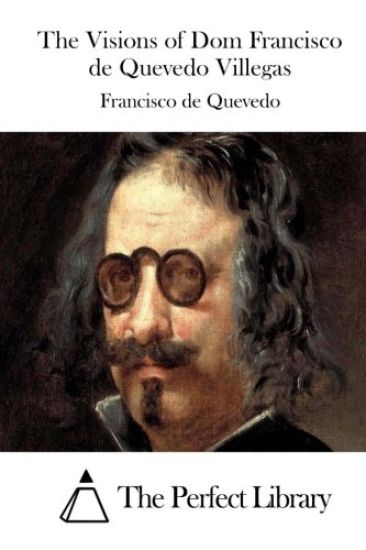
The Visions of Dom Francisco de Quevedo Villegas

The Visions of Dom Francisco de Quevedo Villegas

Francisco de Quevedo

Createspace Independent Publishing Platform
2017
nidottu
"One story lower is the abode of contented cuckolds; a nasty poisonous place, and strewed all over with the horns of rams and bulls, etc. Now these are so well read in woman, and know their destiny so well beforehand, that they never so much as trouble their heads for the matter. Ye come next to the admirers of old women; and these are wretches of so depraved an appetite, that if they were not kept tied up, and in chains, they'd horse the very devils themselves, and put Barabbas to his trumps, to defend his buttocks: for the truth is, whatever you may think of a devil, he passes with them for a very Adonis or Narcissus. "So much for your curiosity; a word now for your instruction.
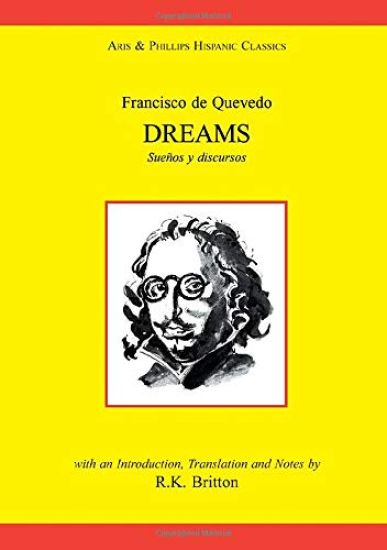
Francisco de Quevedo: Dreams and Discourses
The Suenos is one of the most controversial, witty and fantastic works of early 17th century Spanish literature. The five Dreams minutely analyse stupidity, ignorance and evil, as these could be found in contemporary society. The work's serious moral intention, often masked by the author's pointed anger, scabrous wit, wide learning, love of verbal gymnastics and surreal flights of imaginative fantasy, has for 350 years presented a challenge to the translator and the student of Hispanic culture outside the Spanish speaking world. This first full English translation of the Suenos since 1688 is accompanied by the Spanish text, and Dr Britton's own introduction and notes help the modern reader to understand the numerous historical and literary references, to elucidate the various linguistic devices and to sketch in the intellectual, moral and religious background of the text. Spanish text with facing-page translation, introduction and notes.
Francisco de Quevedo: Dreams and Discourses
The Suenos is one of the most controversial, witty and fantastic works of early 17th century Spanish literature. The five Dreams minutely analyse stupidity, ignorance and evil, as these could be found in contemporary society. The work's serious moral intention, often masked by the author's pointed anger, scabrous wit, wide learning, love of verbal gymnastics and surreal flights of imaginative fantasy, has for 350 years presented a challenge to the translator and the student of Hispanic culture outside the Spanish speaking world. This first full English translation of the Suenos since 1688 is accompanied by the Spanish text, and Dr Britton's own introduction and notes help the modern reader to understand the numerous historical and literary references, to elucidate the various linguistic devices and to sketch in the intellectual, moral and religious background of the text. Spanish text with facing-page translation, introduction and notes.