
Kirjahaku
Etsi kirjoja tekijän nimen, kirjan nimen tai ISBN:n perusteella.
1000 tulosta hakusanalla Frank Berkeley Smith










Step back in time to a charming French village in Normandy in F. Berkeley Smith's "A Village of Vagabonds." This delightful work of historical fiction transports you to the early 20th century, where the lives of artists and vagabonds intertwine in unexpected and humorous ways. Smith's evocative prose paints a vivid picture of rural France, capturing the spirit and character of its people. Explore the quaint streets and picturesque landscapes of a village brimming with colorful personalities and unforgettable stories. A testament to the enduring appeal of simple living and human connection, this book offers a timeless escape filled with warmth and wit. Rediscover the joys of a slower pace of life and the beauty found in unexpected places in this classic tale of community, camaraderie, and the artist's soul.This work has been selected by scholars as being culturally important, and is part of the knowledge base of civilization as we know it.This work is in the public domain in the United States of America, and possibly other nations. Within the United States, you may freely copy and distribute this work, as no entity (individual or corporate) has a copyright on the body of the work.Scholars believe, and we concur, that this work is important enough to be preserved, reproduced, and made generally available to the public. We appreciate your support of the preservation process, and thank you for being an important part of keeping this knowledge alive and relevant.

Step back in time to a charming French village in Normandy in F. Berkeley Smith's "A Village of Vagabonds." This delightful work of historical fiction transports you to the early 20th century, where the lives of artists and vagabonds intertwine in unexpected and humorous ways. Smith's evocative prose paints a vivid picture of rural France, capturing the spirit and character of its people. Explore the quaint streets and picturesque landscapes of a village brimming with colorful personalities and unforgettable stories. A testament to the enduring appeal of simple living and human connection, this book offers a timeless escape filled with warmth and wit. Rediscover the joys of a slower pace of life and the beauty found in unexpected places in this classic tale of community, camaraderie, and the artist's soul.This work has been selected by scholars as being culturally important, and is part of the knowledge base of civilization as we know it.This work is in the public domain in the United States of America, and possibly other nations. Within the United States, you may freely copy and distribute this work, as no entity (individual or corporate) has a copyright on the body of the work.Scholars believe, and we concur, that this work is important enough to be preserved, reproduced, and made generally available to the public. We appreciate your support of the preservation process, and thank you for being an important part of keeping this knowledge alive and relevant.

Under The Berkeley Oaks
Frank Norris; James Hopper; Ida H. Ballard
KESSINGER PUBLISHING, LLC
2009
pokkari

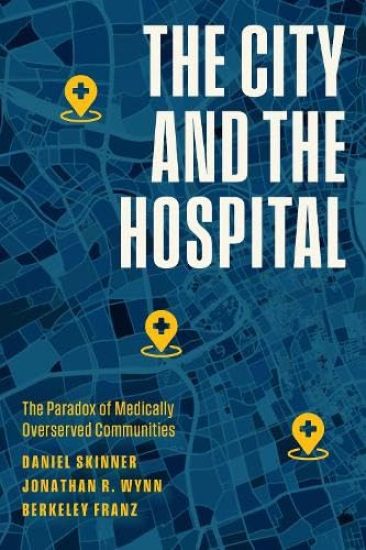
The City and the Hospital
Daniel Skinner; Jonathan R. Wynn; Berkeley Franz
THE UNIVERSITY OF CHICAGO PRESS
2023
sidottu
A surprising look at how hospitals affect and are affected by their surrounding communities. An enduring paradox of urban public health is that many communities around hospitals are economically distressed and, counterintuitively, medically underserved. In The City and the Hospital two sociologists, Jonathan R. Wynn and Berkeley Franz, and a political scientist, Daniel Skinner, track the multiple causes of this problem and offer policy solutions. Focusing on three urban hospitals—Connecticut’s Hartford Hospital, the flagship of the Hartford Healthcare system; the Cleveland Clinic, which coordinates with other providers for routine care while its main campus provides specialty care; and the University of Colorado Hospital, a rare example of an urban institution that relocated to a new community—the authors analyze the complicated relationship between a hospital and its neighborhoods. On the one hand, hospitals anchor the communities that surround them, often staying in a neighborhood for decades. Hospitals also craft strategies to engage with the surrounding community, many of those focused on buying locally and hiring staff from their surrounding area. On the other hand, hospitals will often only provide care to the neighboring community through emergency departments, reserving advanced medical care and long-term treatment for those who can pay a premium for it. In addition, the authors show, hospitals frequently buy neighborhood real estate and advocate for development programs that drive gentrification and displacement. To understand how urban healthcare institutions work with their communities, the authors address power, history, race, and urbanity as much as the workings of the medical industry. These varied initiatives and effects mean that understanding urban hospitals requires seeing them in a new light—not only as medical centers but as complicated urban forces.
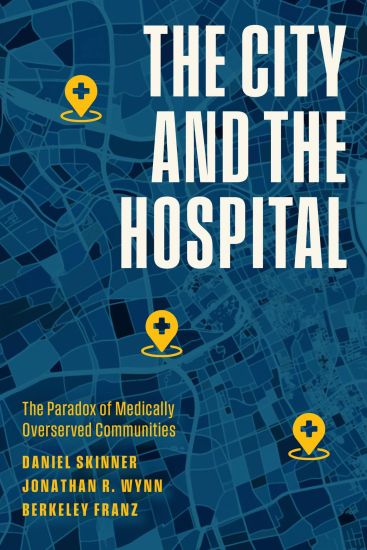
The City and the Hospital
Daniel Skinner; Jonathan R. Wynn; Berkeley Franz
THE UNIVERSITY OF CHICAGO PRESS
2023
nidottu
A surprising look at how hospitals affect and are affected by their surrounding communities. An enduring paradox of urban public health is that many communities around hospitals are economically distressed and, counterintuitively, medically underserved. In The City and the Hospital two sociologists, Jonathan R. Wynn and Berkeley Franz, and a political scientist, Daniel Skinner, track the multiple causes of this problem and offer policy solutions. Focusing on three urban hospitals—Connecticut’s Hartford Hospital, the flagship of the Hartford Healthcare system; the Cleveland Clinic, which coordinates with other providers for routine care while its main campus provides specialty care; and the University of Colorado Hospital, a rare example of an urban institution that relocated to a new community—the authors analyze the complicated relationship between a hospital and its neighborhoods. On the one hand, hospitals anchor the communities that surround them, often staying in a neighborhood for decades. Hospitals also craft strategies to engage with the surrounding community, many of those focused on buying locally and hiring staff from their surrounding area. On the other hand, hospitals will often only provide care to the neighboring community through emergency departments, reserving advanced medical care and long-term treatment for those who can pay a premium for it. In addition, the authors show, hospitals frequently buy neighborhood real estate and advocate for development programs that drive gentrification and displacement. To understand how urban healthcare institutions work with their communities, the authors address power, history, race, and urbanity as much as the workings of the medical industry. These varied initiatives and effects mean that understanding urban hospitals requires seeing them in a new light—not only as medical centers but as complicated urban forces.
Narrative Medicine and Community-Based Health Care and Planning
John W Murphy; Berkeley A. Franz; Jung Min Choi; Karen A. Callaghan
Springer International Publishing AG
2017
sidottu
This progressive resource brings the innovative power of narrative medicine to the forefront of community public health care. Chapters describe community involvement across a continuum of control, from health consultants describing problems and suggesting solutions to health committees designing programs and evaluating results. Narrative strategies to this end, including authentic dialogue and community mapping, are examined in the context of public health and fleshed out with examples of different levels of participation by community members. From the respectful collaboration modeled here, the principles of community public health care can potentially expand beyond the immediate community into other social domains on a greater scale. Included in the coverage:· Narratives, local knowledge, and world entry.· Community and narratives.· What is dialogue?· Storylines, causes, and locus of interventions.· Community mapping tells a story.· The politics of storytelling.Narrative Medicine and Community-Based Health Care and Planning gives health psychologists, sociologists, social workers, and public health administrators realistic practical insights for tapping into the unique resources communities and clients have to offer. This is the next step in the evolution of public health, toward large-scale improvements in care delivery, access to and relevance of services, and patient and community outcomes.
Narrative Medicine and Community-Based Health Care and Planning
John W Murphy; Berkeley A. Franz; Jung Min Choi; Karen A. Callaghan
Springer International Publishing AG
2018
nidottu
This progressive resource brings the innovative power of narrative medicine to the forefront of community public health care. Chapters describe community involvement across a continuum of control, from health consultants describing problems and suggesting solutions to health committees designing programs and evaluating results. Narrative strategies to this end, including authentic dialogue and community mapping, are examined in the context of public health and fleshed out with examples of different levels of participation by community members. From the respectful collaboration modeled here, the principles of community public health care can potentially expand beyond the immediate community into other social domains on a greater scale. Included in the coverage:· Narratives, local knowledge, and world entry.· Community and narratives.· What is dialogue?· Storylines, causes, and locus of interventions.· Community mapping tells a story.· The politics of storytelling.Narrative Medicine and Community-Based Health Care and Planning gives health psychologists, sociologists, social workers, and public health administrators realistic practical insights for tapping into the unique resources communities and clients have to offer. This is the next step in the evolution of public health, toward large-scale improvements in care delivery, access to and relevance of services, and patient and community outcomes.