Kirjojen hintavertailu. Mukana 11 342 296 kirjaa ja 12 kauppaa.

Kirjahaku

Etsi kirjoja tekijän nimen, kirjan nimen tai ISBN:n perusteella.

1000 tulosta hakusanalla Frank Lloyd Wright

Frank Lloyd Wright

Frank Lloyd Wright

Meryle Secrest

University of Chicago Press
1998
nidottu
This biography focuses on Wright's family history, personal adventures and colourful friends and family. The author had unprecedented access to an archive of over 100,000 of Wright's letters, photographs, drawings and books, and she also interviewed surviving devotees, students and relatives.
Frank Lloyd Wright

Frank Lloyd Wright

Donald Langmead

Praeger Publishers Inc
2003
sidottu
Frank Lloyd Wright is one of the 20th century's best-known architects. Over 40 years after his death, historical and critical comment and debate are increasing and controversy continues to surround him. This volume is a chronologically arranged, annotated bibliography of English- and foreign-language sources including over 3,500 primary entries, with thousands more connected references, presented alphabetically by decades and genres.The book documents not only the literature on Wright from 1886 to the present, but also his own extensive writings. It covers source books, monographs, anthologies, exhibition catalogues, book and exhibition reviews, periodical articles, and obituaries. All references are indexed by personal names, buildings, and projects. There is also a photo-essay comprised entirely of images published here for the first time, and a comprehensive chronology of the architect's life and career, which spanned 70 years and produced about 450 buildings and almost 550 unrealized architectural projects. The book will be of great value to scholars, students, and practitioners.
Frank Lloyd Wright

Frank Lloyd Wright

Robert C. Twombly

John Wiley Sons Inc
1987
nidottu
A complete biography based on a wide range of previously untapped primary sources, covering Wright's private life, architecture, and role in American society, culture, and politics. Views Wright's buildings as biographical as well as social statements, analyzing his work by type, category, and individual structure. Examines Wright's struggle to develop a new artistic statement, his dramatic personal life, and his political and economic ideas, including those on cities, energy conservation, cooperative home building, and environmental preservation. Includes over 150 illustrations (photographs, floor plans, and drawings—many never before published), extensive footnotes, and the most exhaustive bibliography of Wright's published work available.
Drawings and Plans of Frank Lloyd Wright: The Early Period (1893-1909)
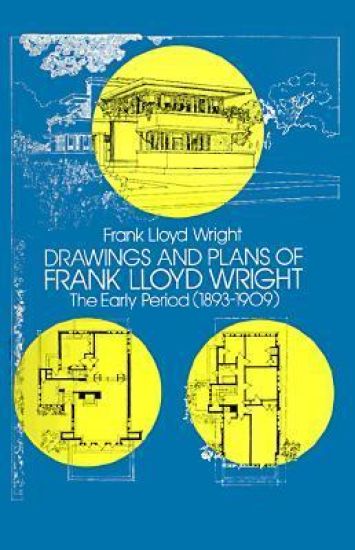
"I would much rather build than write about building, but when I am not building, I will write about building -- or the significance of those buildings I have already built." -- Frank Lloyd WrightFrank Lloyd Wright built a body of works and drawings to illustrate and explain his work: collections of designs with commentary that temperamentally parallel that work: irascible, radical, powerful and dense, astonishing and simple in its clarity. One of his earliest published works illustrates the parallel, preserving thought and design at a prophetic moment, shortly before Wright's genius and fame captured two continents and many converts. The Wasmuth portfolio of drawings (named after the original German publisher) is reproduced here from an extremely rare first edition (1910).Wright's polemical preface indicates the importance he attached to the drawings and their publication: ". . . the work illustrated in this volume, with the exception of the work of Louis Sullivan, is the first consistent protest in bricks and mortar against this pitiful waste academic, inorganic styles]. It is a serious attempt to formulate some industrial and aesthetic ideals that in a quiet, rational way will help to make a lovely thing of an American's home environment. . . ." "Home environment" for Wright was the Midwestern plain; these these drawings, perhaps his earliest experiments in organic design, partake of the Illinois, Indiana, Michigan and Wisconsin prairie with their emphasis on the horizontal ("the line of domesticity") and the environmental motif: "A beautiful elm standing near gave the suggestion for the mass of the building," Wright says of the Winslow house in River Forest, Illinois, a dwelling he cites as the first embodiment of many of his ideas. Elegant full-page architectural drawings and plans show Wright's atelier in Oak Park, Illinois, many homes, cottages, banks, a burial chapel, Unity Church temple, a concrete house designed for Ladies' Home Journal and numerous studies for buildings, treated as problems in design, that were never built.The republication of this rare work gives access again to what has been called "the single most important collection of work published by Frank Lloyd Wright." Students of American architectural genius will find here the seeds of Wright's greatness.
Frank Lloyd Wright

Frank Lloyd Wright

University of California Press
1999
sidottu
Ask Americans to think of a famous architect and the person they are most likely to name is Frank Lloyd Wright. Wright's work, his reputation, and his long and colorful career have made him an icon of modern American architecture. But despite his status as America's most celebrated architect, his influence throughout an active practice spanning the years 1896 to 1959 is so wide and complex that it has been difficult to grasp fully. The essays in this book look not at the United States, the context usually associated with Wright, but at countries around the globe. Anthony Alofsin has assembled a superb collection of scholars to examine Wright's importance from Japan to Great Britain, France to Chile, Mexico to Russia, and the Middle East. Interwoven in the essays are stories of champions and critics, rivals and acolytes, books and exhibitions, attitudes toward America and individualism, and the many ways Wright's ideas were brought to the world. Together the essays represent a first look at Wright's impact abroad, some from the perspective of natives of the countries discussed and others from that of informed outsiders. Of special note is Bruno Zevi's firsthand account of traveling with Wright in Italy. Zevi was instrumental in bringing Wright's ideas to Italy and in helping launch the movement for organic architecture. Of unusual interest in light of today's events in Iraq is Mina Marefat's essay on Wright's elaborate designs for a cultural center for the city of Baghdad. The Baghdad projects, which were never realized after the assassination of King Faisal II, were Wright's principal focus in his last decade. In searching out the little known rather than reexamining the well-established aspects of Frank Lloyd Wright's work, this collection is a rewarding exploration of his vision and influence.
The Essential Frank Lloyd Wright

The Essential Frank Lloyd Wright

Frank Lloyd Wright

Princeton University Press
2010
pokkari
He was the most iconoclastic of architects, and at the height of his career his output of writings about architecture was as prolific and visionary as his architecture itself. Frank Lloyd Wright pioneered a bold new kind of architecture, one in which the spirit of modern man truly "lived in his buildings." The Essential Frank Lloyd Wright is a one-volume compendium of Wright's most critically important--and personally revealing--writings on every conceivable aspect of his craft. Wright was perhaps the most influential and inspired architect of the twentieth century, and this is the only book that gathers all of his most significant essays, lectures, and articles on architecture. Bruce Pfeiffer includes each piece in its entirety to present the architect's writings as he originally intended them. Beginning early in Wright's career with "The Art and Craft of the Machine" in 1901, the book follows major themes through The Disappearing City, The Natural House, and many other writings, and ends with A Testament in 1957, published two years before his death. This volume is beautifully illustrated with original drawings and photographs, and is complemented by Pfeiffer's general introduction, which provides history and context. The Essential Frank Lloyd Wright is a must-have resource for architects and scholars and a delight for general readers.
Frank Lloyd Wright

Frank Lloyd Wright

Kathryn Smith

Abbeville Press Inc.,U.S.
1998
sidottu
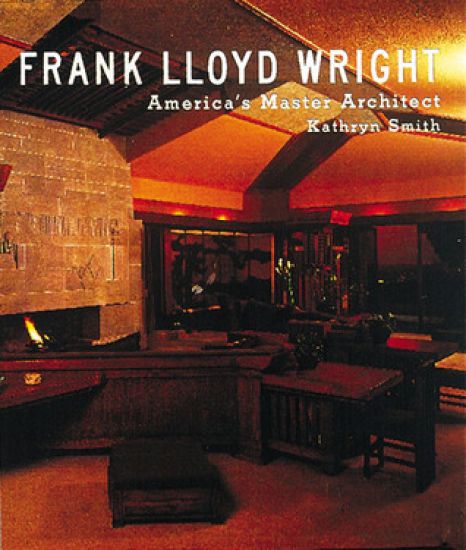
This diminutive survey features all aspects of Wright's art, from lowslung Prairie houses to the dramatic, seminal Fallingwater, to larger projects such as his two homes, Taliesin and Taliesin West, culminating in that icon of modernism, New York's Guggenheim Museum. This satisfying volume is complete with drawings and rarely seen works from Wright's own Asian art collection.
Frank Lloyd Wright

Frank Lloyd Wright

Kathryn Smith

Abbeville Press Inc.,U.S.
1998
sidottu
Frank Lloyd Wright (1867-1959) is unquestionably America's most celebrated architect. Even today, almost forty years after his death, he continues to tower over the architectural landscape. In fact, his career was so long and his accomplishments so varied it can be difficult still to grasp the full range of Wright's achievement. In this refreshing new study, Wright scholar Kathryn Smith does just that, exploring the grace and beauty found in all facets of Wright's work: from office desks and chairs to his first residential commissions, from magazine cover designs to major public buildings. The concise text and brilliant color photographs chart Wright's entire career, beginning with his apprenticeship to Adler and Sullivan before the turn of the century. Readers witness the Prairie period, Wright's years in Japan and California, his major designs of the late 1920s and 1930s, his Usonian houses, and the monumental late works of his last decades. Smith shows examples of Wright's drawings, furniture, and decorative arts, too, supplementing our understanding of Wright's aesthetic. The book concludes with a glimpse at the architect's seldom-seen collection of Asian art, which once comprised tens of thousands of pieces - a source of much inspiration and edification for the architect and his students, and a key to understanding Wright's views on art and nature. Here is a broad portrait of the master builder who sought the title "greatest architect of all time." Although it may never be possible to fully assess Wright's legacy, Kathryn Smith's authoritative book is a fitting testament to his lasting genius.
Frank Lloyd Wright

Frank Lloyd Wright

University of Virginia Press
2014
sidottu
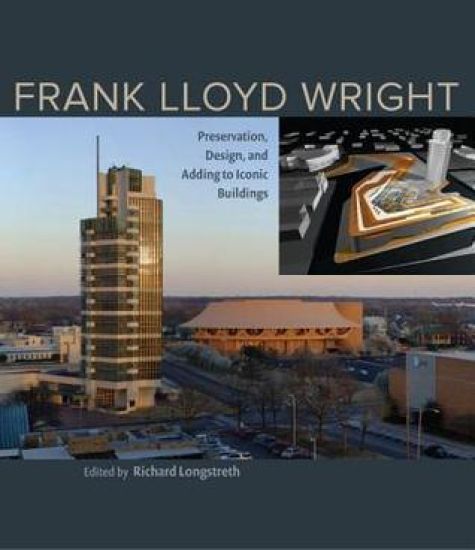
The buildings of Frank Lloyd Wright are not immune to the social and environmental forces that affect all architecture. Because of the popular recognition and historical significance of his work, however, the stakes are unusually high when his buildings are modified in any way. Any additions or changes must meet the highest standards; how exactly this can be achieved is the debate that fuels this compelling new book. The essays collected here are authored by many of the top professionals in the fields of architecture and preservation. Some of the contributors worked directly on the buildings discussed and provide invaluable firsthand accounts of these projects. This is the most thorough discussion of modifying Wright’s works published to date and a fascinating commentary on preserving our architectural legacy.Contributors:Richard Longstreth on additions to historic buildings, de Teel Patterson Tiller on design in historic districts, Sidney K. Robinson on Taliesin, Anne Biebel and Mary Keiran Murphy on the Hillside School, Mark Hertzberg on the S. C. Johnson Administration Building, Dale Allen Gyure on Florida Southern College, Neil Levine on the Guggenheim Museum, Scott W. Perkins on the Price Tower, Tom Kubala on the First Unitarian Meeting House, Eric Jackson-Forsberg on the Darwin Martin House, Lynda S. Waggoner on Fallingwater, Patrick J. Mahoney on Graycliff, Thomas Templeton Taylor on the Westcott House.
Frank Lloyd Wright

Frank Lloyd Wright

Kathryn Smith

Rizzoli International Publications
2009
sidottu
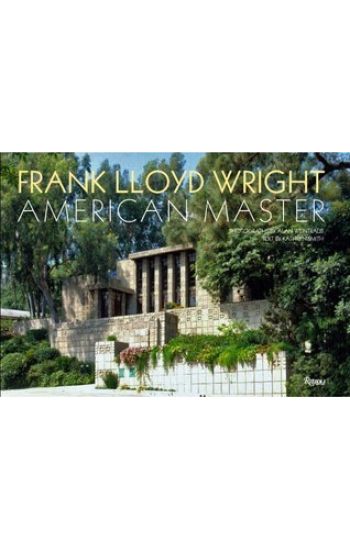
Frank Lloyd Wright presents a stunning overview of the work of this towering American genius, encompassing the entirety of Wright’s long and extraordinarily prolific career. From his earliest work, such as the Home and Studio in Oak Park, IL, of 1889, to the wonderfully evocative textile block houses of Los Angeles of the mid-1920s, to such seminal masterpieces as Fallingwater, of 1935, in the Pennsylvania wilderness, and the Solomon R. Guggenheim Museum, of 1956, in New York, the book offers an extraordinarily abundant trove of architectural riches. Featuring more than a hundred discrete works, from the well known to the obscure, expertly discussed in the text of highly respected Wright scholar Kathryn Smith, Frank Lloyd Wright weaves a gorgeous tapestry that will engage the mind and delight the eye.
Frank Lloyd Wright

Frank Lloyd Wright

Jonathan Adams

UNIVERSITY OF WALES PRESS
2022
sidottu
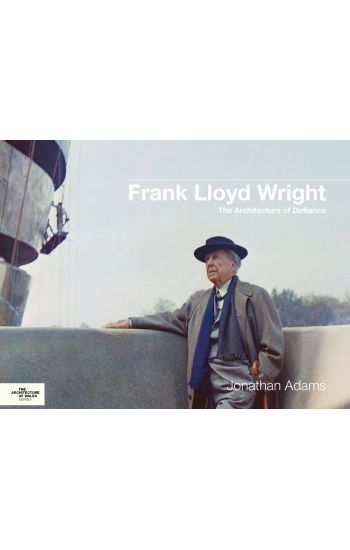
The story of Frank Lloyd Wright’s life is no less astounding than his greatest architectural works. He enmeshed himself eagerly in myth and hearsay, and revelled in the extravagance of his creative persona. Throughout his long career, Wright strongly resisted the suggestion that his accomplishments owed anything to earthly influences. As much as he wanted his achievements to be recognised, he wanted them to be unaccountable – but they are not. This book reveals for the first time how his unbreakable self-belief and startling creative defiance both originated in the liberal religious and philosophical attitudes woven into his personality during his childhood – deliberately so by his mother and by his many aunts and uncles, to honour the fierce Welsh radicalism of their ancestors.
Frank Lloyd Wright

Frank Lloyd Wright

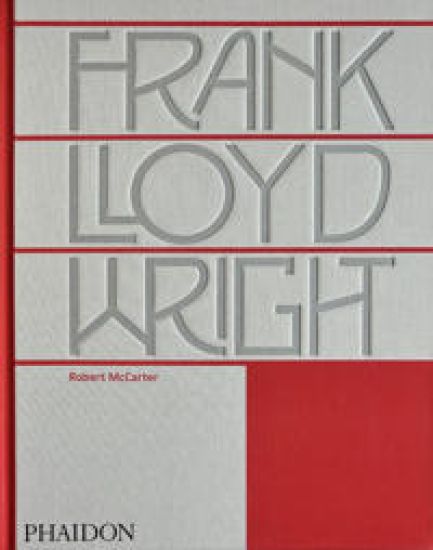
Robert McCarter

PHAIDON PRESS LTD
2025
sidottu
A comprehensive monograph on Frank Lloyd Wright, one of the great masters of modern architecture This comprehensive monograph on the renowned twentieth-century architect, Frank Lloyd Wright, explores both his major architectural designs and many of his minor projects in detail. Robert McCarter analyses Wright’s work chronologically, exploring each building’s spatial experience, material and tectonic character, and relationship to the landscape. Now in a fully revised and updated new edition, this definitive account of the life and work of the modern master features an extensive selection of archival drawings, specially commissioned photographs, redrawn plans, and detailed drawings, as well as a complete list of Wright’s buildings and projects compiled by the Frank Lloyd Wright Archives.
Frank Lloyd Wright

Frank Lloyd Wright

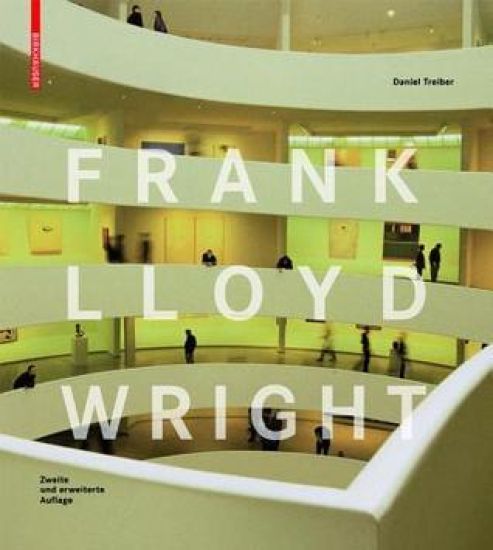
Daniel Treiber

Birkhauser
2008
sidottu
Frank Lloyd Wright (1867–1959) exercised a shaping influence on architectural history throughout the world as only very few other architects beside him have done. His structures – developed from landscape, program, material, and construction – are highly individual and independent of the stylistic developments of modern architecture. His constant attempts to invent new things gave rise to the idiosyncratic forms and constructions that are typical of his work. The author, Daniel Treiber, has produced a well-researched and thorough presentation that highlights the fundamental aspects of the American architect’s work that are relevant from a contemporary perspective. He systematically investigates the forms, types, and strategies of Wright’s oeuvre and accompanies his outstanding texts with a lavish offering of photographs and plans. Thanks to his many years of experience teaching design and architectural history at the École d’architecture in Lille, France, and elsewhere, the author possesses a deep and comprehensive expert knowledge of his subject.
Frank Lloyd Wright

Frank Lloyd Wright

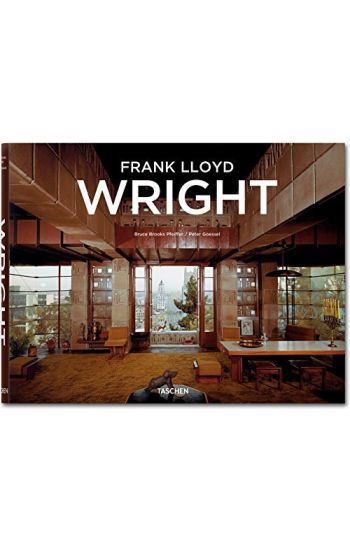
Bruce Brooks Pfeiffer

Taschen GmbH
2015
sidottu
A building by Frank Lloyd Wright (1867-1959) is at once unmistakably individual, and evocative of an entire era. Notable for their exceptional understanding of an organic environment, as well as for their use of steel and glass to revolutionize the interface of indoor and outdoor, Wright’s designs helped announce the age of modernity, as much as they secured his own name in the annals of architectural genius. This meticulous compilation from TASCHEN’s previous three-volume monograph assembles the most important works from Wright’s extensive, paradigm-shifting oeuvre into one authoritative and accessibly priced overview of America's most famous architect. Based on unlimited access to the Frank Lloyd Wright Archives in Taliesin, Arizona, the collection spans the length and breadth of Wright’s projects, both realized and unrealized, from his early Prairie Houses, through the Usonian concept home, epitomized by Fallingwater, the Tokyo years, his progressive “living architecture” buildings, right through to later schemes like the Guggenheim Museum, New York, and fantastic visions for a better tomorrow in the “living city.” Author Bruce Brooks Pfeiffer, who served as Wright’s apprentice during the 1950s, discusses recent research on Wright and gives his own insights on these game-changing buildings.
Frank Lloyd Wright

Frank Lloyd Wright

McCarter Robert

Reaktion Books
2006
nidottu
The life and architecture of Frank Lloyd Wright (1867-1959) have been much-studied, yet there is a consistent division between analyses of his architecture, which exclude any discussion of his daily life, and books that tell the often sensational tale of his life, with barely a passing reference to the buildings themselves. The result is that, despite the large number of volumes on Wright, the most essential part of his life - his life as an architect, working, as he said, 'in the cause of architecture' - remains virtually unexplored. "Frank Lloyd Wright" offers an account of Wright's life as an architect, the ideas, beliefs and relationships that shaped his life and work, and the manner in which these affected, and are reflected in, his architecture. During a tumultuous life and extensive career which includes such hugely defining buildings as the Guggenheim Museum, Fallingwater, Taliesin, Unity Temple, and the prolific Prairie Houses, Wright endeavoured to shape the emerging and evolving American democracy, its mode of dwelling, and its relation to the traditional conception of the city. Fusing ancient construction geometries with contemporary ideals of Transcendental philosophy, Wright sought to develop an appropriate architecture for the new world of the twentieth century. In doing so, he served as the primary inspiration for the emergence of Modern architecture around the world. Robert McCarter examines how Wright's architecture crystallized key conceptions of both private dwelling and public citizenship for American society, and relates how, through his work and writings, Wright developed relationships with key leaders of the arts, industry and society. He analyses how and why Wright maintained that architecture was the 'background or framework' for daily life, never the literal 'object' of our attention, as well as Wright's belief that architects have the most significant ethical responsibilities to improve the larger society and culture to which they belong. In exploring Wright's life, times and culture, Robert McCarter shows how Wright was an architect of astonishing ability, whose works continue to shape the world around us, fifty years after his death.
Frank Lloyd Wright

Frank Lloyd Wright

Huxtable Ada Louise

Penguin USA
2008
pokkari
Pulitzer Prize?winning critic Ada Louise Huxtable's biography of America's greatest architect Renowned architecture critic Ada Louise Huxtable's biography Frank Lloyd Wright looks at the architect and the man, from his tumultuous personal life to his long career as a master builder. Along the way she introduces Wright's masterpieces, from the tranquil Fallingwater to Taliesin, rebuilt after tragedy and murder-not only exploring the mind of the man who drew the blueprints but also delving into the very heart of the medium, which he changed forever.