One Way Ticket To Kansas: The Autobiography Of Frank M. Stahl is a memoir written by Frank M. Stahl. The book chronicles Stahl's life, from his childhood in Kansas to his career in the military, as well as his experiences as a businessman and community leader. Stahl shares his perspective on the challenges and opportunities he faced throughout his life, including his time in the Navy during World War II and his work as a successful entrepreneur. The book also explores Stahl's personal life, including his marriage and family, and his involvement in various civic organizations. Through his story, Stahl offers insight into the history and culture of Kansas, as well as the values and beliefs that have shaped his life. Overall, One Way Ticket To Kansas is a compelling and inspiring memoir that offers a unique perspective on American life and the human experience.This scarce antiquarian book is a facsimile reprint of the old original and may contain some imperfections such as library marks and notations. Because we believe this work is culturally important, we have made it available as part of our commitment for protecting, preserving, and promoting the world's literature in affordable, high quality, modern editions, that are true to their original work.
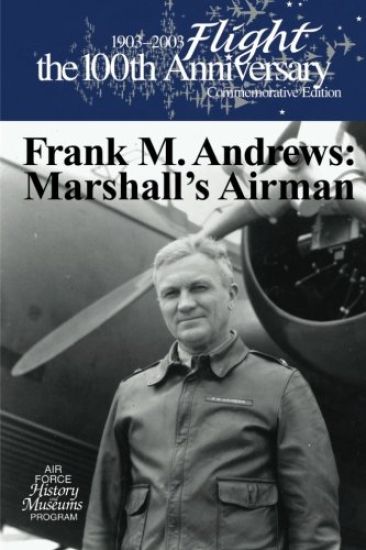
As we conclude our year-long recognition of the 100th anniversary of powered flight, we take this opportunity to recognize and pay tribute to airmenof the past and present. We do this with an eye toward inspiring airmen of the future.General Frank M. Andrews was an inspirational figure in our history and it is fitting that we highlight his accomplishments and contributions in the creation, shaping, and development of the United States Air Force. As the organizer and commander of the prewar General Headquarters (GHQ) Air Force, he was the first airman to have centralized nationwide command of Air Corpsbombardment, attack, and pursuit units. The advent of GHQ Air Force marked one of the first decisive steps on the road to the birth of a separate air service. Nevertheless, likely due to his personal modesty and untimely death in a B-24crash in, May 1943, while commanding the European Theater of Operations, he has been a background figure in our history. General George C. Marshall, wartime Chief of Staff of the Army, captured the magnitude of his tragic loss to the Allied war effort by characterizing Andrews as one of the nation's "few great captains."As we celebrate the Centennial of Flight, I'd like to encourage the use of upcoming venues to spread-the word about lesser-known, selfless warriors, such as General Andrews, who epitomize the values we highlight to airmen today. On March 7, 2003, we formally named the Air Combat Command headquarters building after General Andrews. We are also close to establishing anendowed scholarship fund in his memory for Air Force Academy Preparatory School Cadets and creation of a permanent "Andrews" exhibit in the USAF Museum at Wright-Patterson AFB. Additionally, we plan to integrate his story into our professional military education programs.Memorializing General Andrews is one example of how we can commemorate the Centennial of Flight, emphasizing the tremendous impact anindividual's efforts and contributions can have on aviation and the Air Force. Thank you for your support of this important project for aviation, the United States Air Force, and our nation.
The Old Man of the 103rd is a biography of Frank M. Hume, written by Colby L. McIntyre. The book tells the story of Hume's life, from his childhood in rural Indiana to his service in World War II and his later career as a businessman and philanthropist. Hume was a member of the 103rd Infantry Division, which saw heavy fighting in Europe during the war, and the book includes detailed accounts of his experiences on the battlefield. McIntyre also explores Hume's personal life, including his marriage and family, and his involvement in charitable organizations like the United Way and the Boy Scouts of America. The Old Man of the 103rd offers a fascinating look at the life of a man who lived through some of the most significant events of the 20th century, and whose legacy continues to impact his community today.This scarce antiquarian book is a facsimile reprint of the old original and may contain some imperfections such as library marks and notations. Because we believe this work is culturally important, we have made it available as part of our commitment for protecting, preserving, and promoting the world's literature in affordable, high quality, modern editions, that are true to their original work.
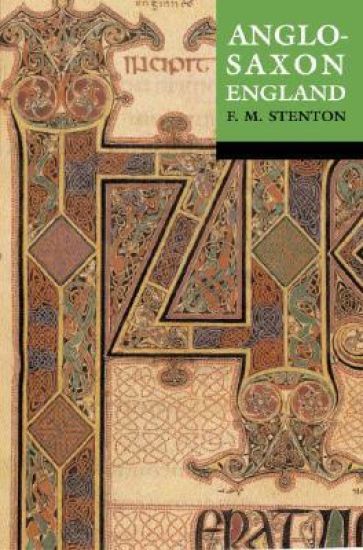
Covers the emergence of the earliest English kingdoms to the establishment of the Anglo-Norman monarchy in 1087. Professor Stenton examines the development of English society, from the growth of royal power to the establishment of feudalism after the Norman Conquest.
Discussing the development of English society, from the growth of royal power to the establishment of feudalism after the Norman Conquest, this book focuses on the emergence of the earliest English kingdoms and the Anglo-Norman monarchy in 1087. It also describes the chief phases in the history of the Anglo-Saxon church, drawing on many diverse examples; the result is a fascinating insight into this period of English history.
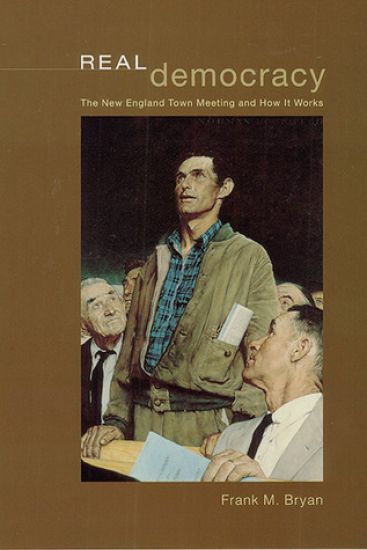
Relying on an astounding collection of more than three decades of firsthand research, Frank M. Bryan examines one of the purest forms of American democracy, the New England town meeting. At these meetings, usually held once a year, all eligible citizens of the town may become legislators; they meet in face-to-face assemblies, debate the issues on the agenda, and vote on them. And although these meetings are natural laboratories for democracy, very few scholars have systematically investigated them.A nationally recognized expert on this topic, Bryan has now done just that. Studying 1,500 town meetings in his home state of Vermont, he and his students recorded a staggering amount of data about them—238,603 acts of participation by 63,140 citizens in 210 different towns. Drawing on this evidence as well as on evocative "witness" accounts—from casual observers to no lesser a light than Aleksandr Solzhenitsyn—Bryan paints a vivid picture of how real democracy works. Among the many fascinating questions he explores: why attendance varies sharply with town size, how citizens resolve conflicts in open forums, and how men and women behave differently in town meetings. In the end, Bryan interprets this brand of local government to find evidence for its considerable staying power as the most authentic and meaningful form of direct democracy.Giving us a rare glimpse into how democracy works in the real world, Bryan presents here an unorthodox and definitive book on this most cherished of American institutions.
The second annual volume of the International Place Branding Yearbook; this collection looks at the case for applying brand and marketing strategies and to the economic, social, political and cultural development of cities, towns and regions around the world to help them compete in the global, national and local markets.
Everyone can learn new or more effective coping skills and strategies to deal with times of loss, crisis, and disability. Being aware of possible options or of how others fare in coping with difficult situations is better than groping in the dark. It is hoped that the real life experiences and coping skills presented here will help others in dealing with similar issues and challenges.
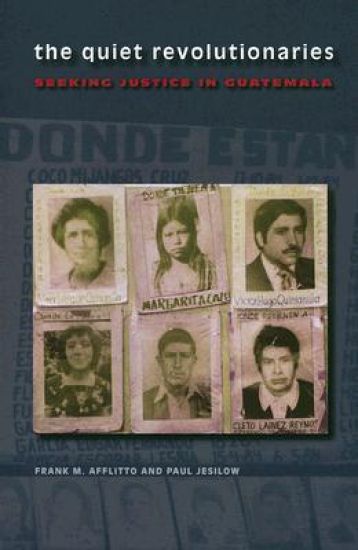
The last three decades of the twentieth century brought relentless waves of death squads, political kidnappings, and other traumas to the people of Guatemala. Many people fled the country to escape the violence. Yet, at the same moment, a popular movement for justice brought together unlikely bands of behind-the-scenes heroes, blurring ethnic, geographic, and even class lines. The Quiet Revolutionaries is drawn from interviews conducted by Frank Afflitto in the early 1990s with more than eighty survivors of the state-sanctioned violence. Gathered under frequently life-threatening circumstances, the observations and recollections of these inspiring men and women form a unique perspective on collective efforts to produce change in politics, law, and public consciousness. Examined from a variety of perspectives, from sociological to historical, their stories form a rich ethnography. While it is still too soon to tell whether stable, long-term democracy will prevail in Guatemala, the successes of these fascinating individuals provide a unique understanding of revolutionary resistance.
An important study that establishes what Victorian writers said about Greek culture and how their interpretations both molded and reflected the attitudes and values of the Victorian age.“No doubt about it, The Greek Heritage in Victorian Britain is a formidable and ground-breaking achievement…. One of the most important and far-reaching investigations of the roots of intellectual history to be published in decades, a book to be read and reread,… to be annotated, argued with, and debated on specific issues for years to come. It is a truly monumental achievement.”—Peter Green, Times Literary Supplement“[This book], which makes major contributions to our understanding of the intellectual life of the last century, will be of great interest to students of Victorian art, literature, and ideas in both England and America.”—George p. Landow, American Historical Review“Readable, intelligent, though, witty, and magisterial… It is the book on its subject…. Turner’s study has changed, changed utterly, the Victorian landscape.”—Richard Tobias, Victorian Poetry“Turner’s is an intelligent critical study of great value.”—Hugh Lloyd-Jones, London Review of Books
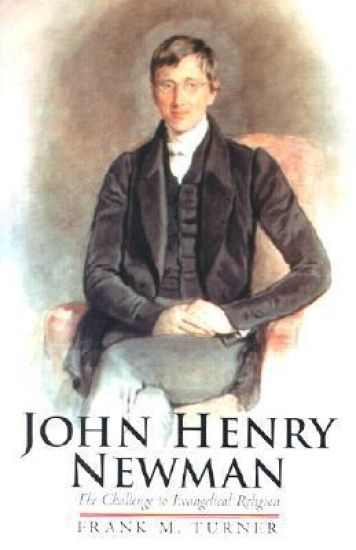
One of the most controversial religious figures of the nineteenth century, John Henry Newman (1801-1890) began his career as a priest in the Church of England but converted to the Roman Catholic Church in 1845. He became a cardinal in 1879. Between 1833 and 1845 Newman, now best known for his autobiographical Apologia Pro Vita Sua and The Idea of a University, was the aggressive leader of the Tractarian Movement within Oxford University. Newman, along with John Keble, Richard Hurrell Froude, and E. B. Pusey, launched an uncompromising battle against the dominance of evangelicalism in early Victorian religious life. By 1845 Newman's radically outspoken views had earned him censure from Oxford authorities and sharp criticism from the English bishops. Departing from previous interpretations, Turner portrays Newman as a disruptive and confused schismatic conducting a radical religious experiment. Turner demonstrates that Newman's passage to Rome largely resulted from family quarrels, thwarted university ambitions, the inability to control his followers, and his desire to live in a community of celibate males.