Kirjahaku
Etsi kirjoja tekijän nimen, kirjan nimen tai ISBN:n perusteella.
1000 tulosta hakusanalla Franklin H Redelius


Franklin H. Eshelman: Early 20th Century Pennsylvania-Deutch Landscape Painter
Sandy Hargrove
Createspace Independent Publishing Platform
2017
nidottu
Franklin H. Eshelman used his experience in making decorative glass and painting to produce hundreds of landscapes of rural Berks County, Pennsylvania. His paintings have preserved a record of 20th Century Pennsylvania-Deutch country-side.This book (2nd edition) is a genealogical record of his Eshelman ancestors who settled in Pennsylvania in 1733, a biography of Franklin H. Eshelman, and a catalogue of 25 of his landscapes.
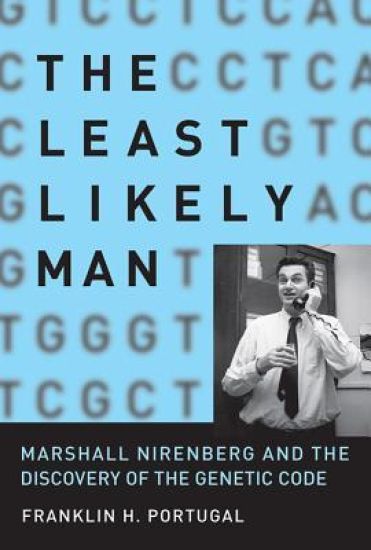
How unassuming government researcher Marshall Nirenberg beat James Watson, Francis Crick, and other world-famous scientists in the race to discover the genetic code.The genetic code is the Rosetta Stone by which we interpret the 3.3 billion letters of human DNA, the alphabet of life, and the discovery of the code has had an immeasurable impact on science and society. In 1968, Marshall Nirenberg, an unassuming government scientist working at the National Institutes of Health, shared the Nobel Prize for cracking the genetic code. He was the least likely man to make such an earth-shaking discovery, and yet he had gotten there before such members of the scientific elite as James Watson and Francis Crick. How did Nirenberg do it, and why is he so little known? In The Least Likely Man, Franklin Portugal tells the fascinating life story of a famous scientist that most of us have never heard of.Nirenberg did not have a particularly brilliant undergraduate or graduate career. After being hired as a researcher at the NIH, he quietly explored how cells make proteins. Meanwhile, Watson, Crick, and eighteen other leading scientists had formed the "RNA Tie Club" (named after the distinctive ties they wore, each decorated with one of twenty amino acid designs), intending to claim credit for the discovery of the genetic code before they had even worked out the details. They were surprised, and displeased, when Nirenberg announced his preliminary findings of a genetic code at an international meeting in Moscow in 1961. Drawing on Nirenberg's "lab diaries," Portugal offers an engaging and accessible account of Nirenberg's experimental approach, describes counterclaims by Crick, Watson, and Sidney Brenner, and traces Nirenberg's later switch to an entirely new, even more challenging field. Having won the Nobel for his work on the genetic code, Nirenberg moved on to the next frontier of biological research: how the brain works.
Authoring Books and Materials for Students, Academics, and Professionals
Franklin H. Silverman
Praeger Publishers Inc
1998
sidottu
Creating a book for the academic or professional market is a major undertaking—one that is likely to require an investment of hundreds of hours. This book offers a complete guide to the process, from weighing the costs and benefits of becoming an author, through negotiating a contract, to marketing the final book.The information, which is presented from an author's perspective, includes: selecting the most appropriate publisher(s) to which to submit a proposal, factors to consider when drafting a proposal, contract negotiation, joint collaboration agreements, time management and other writing tips, academically respectable ways to facilitate marketing, and working with the IRS.

Authoring Books and Materials for Students, Academics, and Professionals
Franklin H. Silverman; Elisabet McHugh
Praeger Publishers Inc
1998
nidottu
Creating a book for the academic or professional market is a major undertaking—one that is likely to require an investment of hundreds of hours. This book offers a complete guide to the process, from weighing the costs and benefits of becoming an author, through negotiating a contract, to marketing the final book.The information, which is presented from an author's perspective, includes: selecting the most appropriate publisher(s) to which to submit a proposal, factors to consider when drafting a proposal, contract negotiation, joint collaboration agreements, time management and other writing tips, academically respectable ways to facilitate marketing, and working with the IRS.

Silverman provides graduate students who intend to pursue a career in academia and tenure-track junior faculty with candid information about developing an adequate publication record. The book also provides graduate students, tenured faculty, and others with information they need to maximize the likelihood of having their articles accepted for publication by peer-reviewed professional, scientific, and scholarly journals. The focus throughout is on how editorial boards and tenure committees tend to function rather than on how they are supposed to function. Anyone dealing with academic publishing will find this book an indispensable resource.Topics dealt with include coping with the fear of writing for publication, options for scholarly publishing, identifying ideal publishing-for-tenure projects, understanding and coping successfully with peer review process, finding the time to write scholarly publications, and standards for writing and organizing scholarly articles for print and electronic journals. It also covers securing permission to include copyrighted material in your work that does not fall under the doctrine of fair use, submission strategies for getting articles published in academically-respectable journals, and gray area plagiarism and other breaches of academic ethics. It shows how to prepare the publication section of a promotion and tenure application. It offers advice on finding funding for beginning scholars and publishing options for surviving post-tenure reviews. Lastly, the book gives practical advice on coping with manuscript rejection.
Silverman provides graduate students who intend to pursue a career in academia and tenure-track junior faculty with candid information about developing an adequate publication record. The book also provides graduate students, tenured faculty, and others with information they need to maximize the likelihood of having their articles accepted for publication by peer-reviewed professional, scientific, and scholarly journals. The focus throughout is on how editorial boards and tenure committees tend to function rather than on how they are supposed to function. Anyone dealing with academic publishing will find this book an indispensable resource.Topics dealt with include coping with the fear of writing for publication, options for scholarly publishing, identifying ideal publishing-for-tenure projects, understanding and coping successfully with peer review process, finding the time to write scholarly publications, and standards for writing and organizing scholarly articles for print and electronic journals. It also covers securing permission to include copyrighted material in your work that does not fall under the doctrine of fair use, submission strategies for getting articles published in academically-respectable journals, and gray area plagiarism and other breaches of academic ethics. It shows how to prepare the publication section of a promotion and tenure application. It offers advice on finding funding for beginning scholars and publishing options for surviving post-tenure reviews. Lastly, the book gives practical advice on coping with manuscript rejection.

Superb, step-by-step guide enables even beginners to build heirloom pieces by Hepplewhite, Chippendale, Phyfe, other masters. Detailed, precise construction drawings, measurements. Full instructions. Over 500 illus.



Topics discussed include the importance of communicating course goals and requirements, enhancing students' motivation, presenting subject matter clearly, establishing an examination and grading policy that students are likely to regard as fair, utilizing class time well, being available and helpful to students outside of class, encouraging students' curiosity and facilitating research, and selecting textbooks.
Collegiality and Service for Tenure and Beyond
Franklin H. Silverman
Praeger Publishers Inc
2003
sidottu
This book candidly provides assistant professors and graduate sutdents contemplating a career in academia with practical information that will facilitate their meeting collegiality and service expectations for promotion and tenure.The focus is on meeting departmental and institutional expectations for collegiality and service. While a superior record for collegiality and service are unlikely to compensate for a weak teaching or publishing record, an inadequate record for one or both of these can result in denial of tenure and promotion. Following the recommendations in this book can substantially increase the likelihood of meeting collegiality and service expectations.

The Get Real Guide to Retirement: The Balanced, Down-to-Earth Guide to a Rewarding and Happy Retirement
Franklin H. Schapiro; Judith C. Pagel
Cache La Poudre Press, LLC
2015
nidottu
When planning for your retirement, do many of those "heavenly retirement destinations" sound just a little too good to be true? Do you find that the "recommended" retirement savings sound just wonderful for millionaires but a tad absurd for the rest of us? Would you like some real answers to your retirement questions? The authors of the Get Real Guide to Retirement provide balanced no nonsense answers to the full gamut of retirement issues. Unlike those books that cover only finances or how to be happy, the Get Real Guide tells you what you really need to know about: - Checking out that idyllic retirement mecca - The advantages of renting in retirement - Calculating a realistic goal for your retirement funds - Supplementing your savings when you don't have enough - Planning for living on your own - Getting the most from your doctor visits - Uncluttering mind and home - Why you can't remember stuff anymore - Staying active and happy - Getting your dream retirement job - Making yours the best retirement ever Judith C. Pagel and Franklin H. Schapiro are in an excellent position to provide retirement advice, particularly to the next group of retirees, the Baby Boomers. Both Frank and Judy came into this world just two years before the start of the Baby Boom. As such, they spent a good part of their life experiencing problems which the Baby Boomers would face, but they faced them two years before the Boomers would. (Think of issues like an overly competitive job market and career ladder, and now retirement.) These two big data, high tech doctorates have now been retired a little over six years. They enthusiastically share their first hand retirement experiences with you, both good and bad. You will particularly like those issues that just do not get mentioned in other retirement books, i.e., those experiences you only know about because you have been there. Frank and Judy have been there - recently. They also share their expertise gained in business and academics. For money management issues, Frank's last position was in wealth management at one of the nation's largest banks. For house and home and using 21st century skills, Judy brings her experience from her last position as an IT project manager working at a Fortune 50 company. Also of interest, she was recently diagnosed with a long term physical disability, putting her in the unique position of experiencing early many of the issues advancing age will bring.


Shakespeare's Insomnia, and the Causes Thereof
Franklin H (Franklin Harvey) Head
Anson Street Press
2025
pokkari