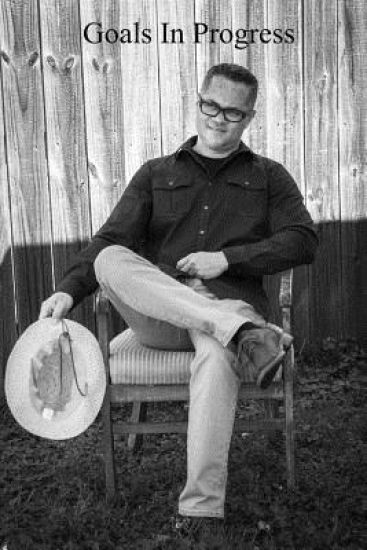
Goals In Progress is dedicated to helping readers identify, understand, and achieve financial independence through their goals. This is a compendium of the articles that made GIP an oasis on the internet. In this book, I offer an insight behind every article. I also offer a short story to explain how this way of life affected me for the better, and I could not keep this to myself. The main reason this site exists is to see things differently, to explore a different point of view of reality. I share my way of thinking through short stories, managerial experience, job seeking, ways to pay for college and finances. Every article is based on true events, which are my experiences on the subject. Basically, all the good, bad, and ugly experiences that made me and led me to success.
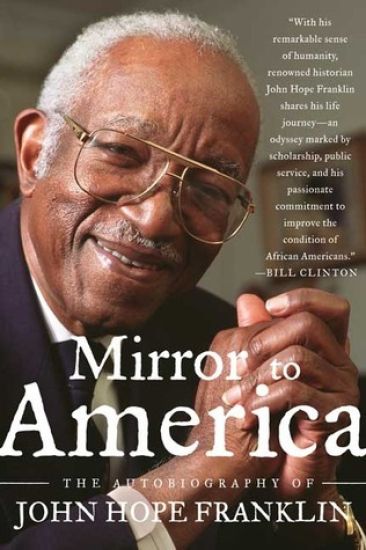
John Hope Franklin lived through America's most defining twentieth-century transformation, the dismantling of legally protected racial segregation. A renowned scholar, he has explored that transformation in its myriad aspects, notably in his 3.5-million-copy bestseller, "From Slavery to Freedom." Born in 1915, he, like every other African American, could not help but participate: he was evicted from whites-only train cars, confined to segregated schools, threatened once with lynching and consistently subjected to racism's denigration of his humanity. Yet he managed to receive a Ph.D. from Harvard; become the first black historian to assume a full professorship at a white institution, Brooklyn College; and be appointed chair of the University of Chicago's history department and, later, John B. Duke Professor at Duke University. He has reshaped the way African American history is understood and taught and become one of the world's most celebrated historians, garnering over 130 honorary degrees. But Franklin's participation was much more fundamental than that.From his effort in 1934 to hand President Franklin Roosevelt a petition calling for action in response to the Cordie Cheek lynching, to his 1997 appointment by President Clinton to head the President's Initiative on Race, and continuing to the present, Franklin has influenced with determination and dignity the nation's racial conscience. Whether aiding Thurgood Marshall's preparation for arguing "Brown v. Board of Education" in 1954, marching to Montgomery, Alabama, in 1965, or testifying against Robert Bork's nomination to the Supreme Court in 1987, Franklin has pushed the national conversation on race toward humanity and equality, a life long effort that earned him the Presidential Medal of Freedom, the nation's highest civilian honor, in 1995. Intimate, at times revelatory, "Mirror to America" chronicles Franklin's life and this nation's racial transformation in the twentieth century, and is a powerful reminder of the extent to which the problem of America remains the problem of color."
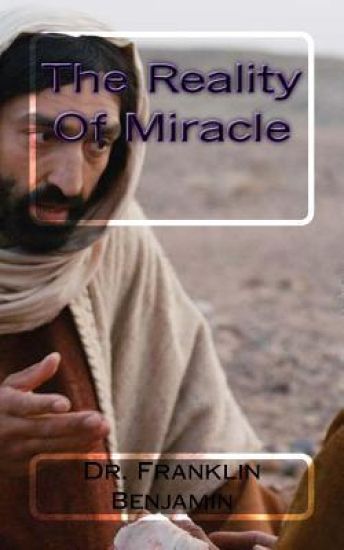
It's tempting sometimes to fall into the habit of thinking that God only hears the prayers of those who have achieved some level of holiness above the average. Have you ever found your-self asking your pastor or priest to pray for something as if their prayers are likely to ring louder in the ears of God than yours? We're taught, Jesus won't hear your prayers if your motives are selfish. And, Jesus won't answer you if you don't believe the right things about him. But in the Bible we find Jesus not just answering, but honoring, the request of a woman made out of selfish motives and based on an entirely false assumption about him. The nameless woman's story appears in all 3 gospels (Mark 5:25-34, Matthew 9:20-22, Luke 8:43-48) and it's one of Jesus' strangest and yet most touching miracles. In all three accounts, the healing of the bleeding woman is presented as an interruption to a larger story; Jesus raising Jairus' daughter from the dead. Jairus, a synagogue leader has approached Jesus, asking him to heal his dying child, and the two of them, together with the disciples, are making their way through a dense crowd of onlookers and supplicants toward Jairus' house. En route, the nameless woman approaches Jesus in secret, blending in with the thronging crowd, believing if she can merely touch the fringe of Jesus' cloak she might be healed. We're told she had been subject to vaginal bleeding for 12 years. She's spent all her money on remedies and treatments, only to find herself destitute and alone, a shadow person dwelling at the edges of society. She would have been viewed as a niddah, that is, a menstruating woman and therefore ceremonially unclean. But she wasn't menstruating. She was continuo-usly bleeding, which effectively made her a per-manent niddah, in a constant state of uncleann-ess. The implications of this are tragic. At this time, no man would put up with this condition. As a single woman, a very rare thing, she lived an extremely tenuous existence in the ancient Near East. It would appear she was unable to carry a child or give birth. She would have been barred entry to the synagogue or temple. She was broke. As an unmarried, childless, penniless woman, unable to enter religious premises or make offerings to God, I can't emphasize enough the social and religious isolation she would have endured, not to mention the discomfort of her physical condition. Little wonder she believes she can't approach Jesus directly. Instead, she tries to steal a miracle from him by touching the fringe of his garment. At first this might seem like an odd decision, but there was some precedent for this. The Pharisees at that time had taken to wearing the tzitzit - extra-long fringes or tassels on their prayer shawls or clothing. In Matthew 23:5, Jesus berates them for such outward displays of religiosity, bemoaning, "They make their phylacteries wide and the tassels on their garments long." Nonetheless, common people had come to believe that because of the Pharisees' great religious standing their tzitzit was imbued with a mystical power. This might very well be exactly what the Pharisees wanted them to think, but Jesus had scorned them for behaving so. There's no power in a Pharisee's tzitzit whatsoever, he declares. It's all for show. They're charlatans. Unaware of this, and assuming Jesus to be equivalent to a Pharisee, the bleeding woman comes to believe that if she could just touch the fringe of his clothing she would be healed. This whole situation is so desperately sad. A filthy, hungry, sick woman, who dare not appear openly in public or approach a holy man face-to-face, slinks furtively through the crowd, edging her way toward Jesus, not knowing there's actually no special power in the fringe of his robe. And yet... Mark's Gospel says that upon touching Jesus' cloak, "Immediately her bleeding stopped and she felt in her body that she was freed from her suffering." (Mk 5:29) It's weird, isn
Many people today are familiar with miracle stories in the Bible - the parting of a sea, water turned to wine, and, most frequently in the New Testament, healings, even of blindness, leprosy, and the reversal of recent death. Yet it is not just people in the first century who have believed in miracles. Various polls peg U.S. belief in miracles at roughly 80 percent. One survey suggested that 73 percent of U.S. physicians believe in miracles, and 55 percent claim to have personally witnessed treatment results they consider miraculous. Even more striking than the number of people who believe in miracles is the number who claim to have witnessed or experienced them. For example, a 2006 Pew Forum survey studied charismatic and Pentecostal Christians in 10 countries. From these 10 countries alone, the number of charismatic Christians who claim to have witnessed or experienced divine healing comes out to roughly 200 million people. This estimate was not, however, the most surprising finding of the survey. The same survey showed that more than one-third of Christians in these same countries who do not claim to be charismatic or Pentecostal report witnessing or experiencing divine healing. What are we to make of such claims? At the very least, they testify that many people around the world today are experiencing cures in a context of deep religious faith. Numerous medical studies have shown that faith and faith communities provide a coping resource that often facilitates better health outcomes. A number of these global reports, however, exceed even our best current expectations for what "faith" can produce. In September 2010, Southern Medical Journal published an article showing that some people in Mozambique, tested before and after prayer, experienced significant recovery of hearing or eyesight. The Medical Bureau at Lourdes has long examined evidence for extraordinary recoveries. This book is full of testimony of real healing power of our Lord and savior Jesus Christ
Words can be like little mirrors because they reflect even the slightest aspect of a person's character when spoken. Whether knowingly or unknowingly to a person when you tally up what they mostly say and do at some point, can reveal traces of their personality. So in contrast, this list of life-changing revelations I present to you in this book are the little mirrors that reflect different aspects of a person's life. But when you put each revelation together as you would little pieces of glass to form one large mirror, it uncovers much more of a dominant core reflection revealing a person as a whole.
Is there is a quota on miracles? If so, I'm 'way over my share. This is the story of Mary, her two major accidents, the people who came from everywhere to help her - phone operators, doctors, nursing staff, pastors and their churches, the Rabbi and his congregation, priests and their congregations, friends, musicians, the visions, the visits from the spirits on the other side and visits from the people "up there" - extra terrestrials - every word is true - I couldn't make this stuff up. Truth is stranger than fiction.
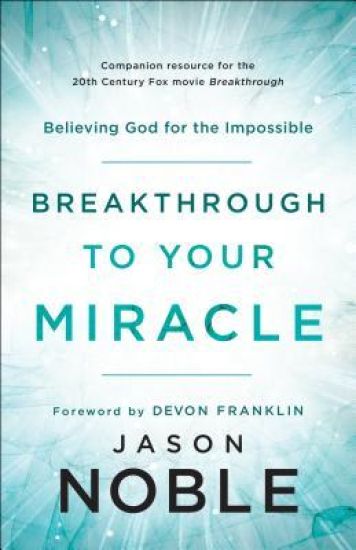
Throughout his ministry, Pastor Jason Noble has witnessed miracles. And he was there when John Smith--a young boy who had fallen through ice and been declared dead--walked out of the hospital two weeks after being surrounded by prayer. Why, he asks, don't believers see more wonders like this one?In this powerful companion to the major motion picture Breakthrough, with a foreword from DeVon Franklin, Noble- reveals the heart of miracles- explores inspiring biblical and present-day accounts- shows how God works in believers to invade the natural with the supernatural- provides principles and tools to help readers welcome the miraculousGod longs to work wonders in your life. Let this book help you believe with boldness!
The Star-Spangled Mirror captures the dilemma of America's continuing reliance on an enduring fallacy of foreign policy-the assumption that other people ought to share our view of world order. Dr. Richard Kerry argues that from the time of Woodrow Wilson's aim to organize the world order in accordance with assumptions of democratic universalism, this vision of the world has remained central to U.S. foreign policy. This book will be considered an important addition to the history of American foreign policy and as required reading for current and future policy makers.
Kak rozhdajutsja knigi? Ot avtorskoj zadumki do publikatsii knigu vedet za soboj redaktor - vazhnejshaja figura v knigoizdanii. Imenno redaktory stojat za vsemi velikimi pisateljami, vystupaja serymi kardinalami knizhnogo mira. Odnako dobitsja uspekha v knizhnom biznese ne tak prosto, osobenno esli vy - zhenschina, zhivuschaja v XX veke. Takoj zhenschinoj byla Dzhudit Dzhons, kotoraja za 50 let raboty s knigami iz-za kulis izmenila oblik literatury ot Nju-Jorka do Parizha. Ustroivshis na rabotu v izdatelstvo, ona ne zakhotela dovolstvovatsja privychnoj dlja zhenschin rolju sekretarshi. Obladaja tonkim literaturnym chutem, ona postroila uspeshnuju kareru v to vremja, kogda knizhnym mirom zapravljali muzhchiny. Dzhon Apdajk, Enn Tajler, Dzhon Khersi - vot lish nemnogie imena, s kotorymi Dzhudit Dzhons poznakomila chitatelej vsego mira. Blagodarja ee izdatelskomu talantu chitateli otkryli dlja sebja melankholichnye i predelno otkrovennye stikhi Silvii Plat, pronzitelnyj dnevnik Anny Frank o zhizni pod natsistskoj okkupatsiej, a takzhe kulinarnye knigi Dzhulii Chajld, izvestnoj po filmu s Meril Strip v glavnoj roli. Eto vdokhnovljajuschaja istorija vljublennoj v knigi zhenschiny, kotoraja proignorirovala obschestvennye ozhidanija, posledovav za svoej mechtoj. Istorik Sara Franklin pokazyvaet dolgij put Dzhudit ot prostoj assistentki do glavnogo redaktora, polnyj vzletov i padenij, vstrech i rasstavanij, no samoe glavnoe - nadezhdy."Ja nigde ne mogla najti izobrazhenie Dzhudit, kotoroe by khotja by otchasti demonstrirovalo ee pytlivyj um i tonkij vkus, ee mnogogrannost i pronitsatelnost, ee nakhodchivost i khitrost... Napisav etu knigu, ja popytalas otdat dolzhnoe ej kak redaktoru i kak zhenschine" (Sara Franklin).
A beautiful story about friendship and learning to be strong when things get hard.Last spring, Pansy chickened out right before going to spring break camp, even though she’d promised her best friend, Anna, they’d go together. It was just like when they went to get their hair cut for Locks of Love, and only one of them walked out with a new hairstyle.But Pansy never got the chance to make it up to Anna. At camp, Anna contracted meningitis and a dangerously high fever, and she hasn’t been the same since. Now all Pansy wants is her daring best friend back—not the silent girl in the wheelchair who has to go to a special school.When Pansy discovers that Anna is getting a surgery that might cure her, she realizes this could be her chance—she’ll become the friend Anna always deserved—even if it means taking risks and trying new things (like those scary roller skates).Pansy’s chasing extraordinary, hoping she reaches it in time for her friend’s triumphant return. But what lies at the end of her journey might not be exactly what she had expected—or wanted.
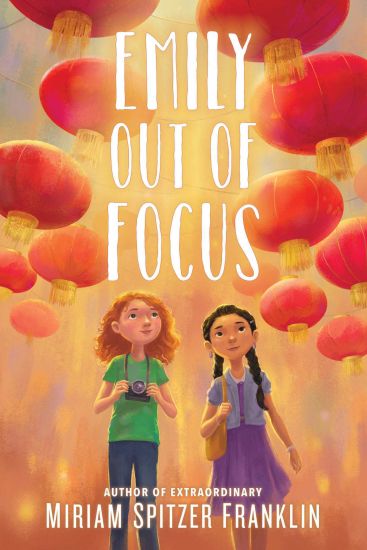
From the author of Extraordinary and Call Me Sunflower, Emily Out of Focus is a warm and winning exploration of the complexity of family, friendship, and identity that readers will love.Twelve-year-old Emily is flying with her parents to China to adopt and bring home a new baby sister. She’s excited but nervous to travel across the world and very aware that this trip will change her entire life. And the cracks are already starting to show the moment they reach the hotel—her parents are all about the new baby and have no interest in exploring.In the adoption trip group, Emily meets Katherine, a Chinese-American girl whose family has returned to China to adopt a second child. The girls eventually become friends and Katherine reveals a secret: she’s determined to find her birth mother, and she wants Emily’s help.New country, new family, new responsibilities—it’s all a lot to handle, and Emily has never felt more alone.
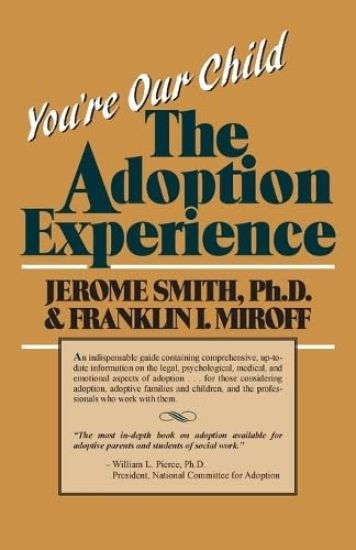
This revised and expanded edition of You're Our Child brings current a contemporary classic in the adoption field. Among the topics covered by Smith and Miroff are: entitlement, genetic aspects of adoption, the adopted adolescent, the telling, confidentiality, birth parents, the telling process, psychological development, sealed records findings, medical history, the law, and nature/history.
When you love yourself fully, then you can attract someone that loves themselves fully. You get the best of both worlds. Don't look for your other half in romance or friendships. You aren't two half souls with half bodies coming together to make one person. You're two people coming together and only coming together if it benefits your life.Have you ever wondered why you attract the same situations in your life over and over again? What is the key to this pattern? You. The Mirror Paradox will show you simple but key elements to your attractions, discomforts, and even dis-eases. Your mental, physical, and spiritual health is important, and the factors to dealing with your health can be very simple. I want you to empower yourself to take control of every aspect of your healing. Through the lens of the mirror we can accurately identify what steps we need to take in order to take control back. Tune into this mirror. Use this mirror to your advantage. This mirror will help you heal on every level. Even when you cannot fully heal yourself, it will show you there is something to heal. Then you can go to someone who can help you heal. Your body will talk to you, learn to listen. When you learn to quite your mind you can essentially listen to your body. By embracing that you are not a victim you will essentially stop giving your power away. When you learn to harness your own power, you will be able to walk through life unscathed by others emotions, actions or re-actions. How do you transmute fear into power? You let the fear know you see it. You let the fear know you are scared. Love yourself just for being able to see that fear. Forgive yourself for not facing the fear sooner. When you do this, you will face your emotions, you won't hide from them. I want to lead you into the fire, the fire that will burn off any of the old stagnant unneeded parts of yourself that are left. Do no attach yourself to any outcome -- just expect change. Unattached to that outcome, just start flowing through life with your truth.I have struggled for the good of all the lessons in this book. Through my struggles came great lessons in healing and hope. How will you define your life and take back the control of your healing?