Kirjojen hintavertailu. Mukana 11 244 527 kirjaa ja 12 kauppaa.

Kirjahaku

Etsi kirjoja tekijän nimen, kirjan nimen tai ISBN:n perusteella.

1000 tulosta hakusanalla Franz Schubert

Franz Schubert

Franz Schubert

McKay

Clarendon Press
1997
nidottu
Franz Schubert (1797-1828) was born in Vienna of immigrant parents. During his short life he produced an astonishing amount of music. Symphonies, chamber music, opera, church music, and songs (more than 600 of them) poured forth in profusion. His 'Trout' Quintet, his 'Unfinished' Symphony, the three last piano sonatas, and above all his song cycles Die Schone Mullerin and Winterreise have come to be universally regarded as belonging to the very greatest works of music. Who was the man who composed this amazing succesion of masterpieces, so many of which were either entirely ignored or regarded as failures during his lifetime? In her new biography, Elizabeth Norman McKay paints a vivid portrait of Schubert and his world. She explores his family background, his education and musical upbringing, his friendships, and his brushes and flirtations with the repressive authorities of Church and State. She discusses his experience of the arts, literature and theatre, and his relations with the professional and amateur musical world of his day. Schubert's manic-depressive temperament became of increasing significance in his life, and McKay shows how it was partly responsible for his social inadequacies, professional ineptitude, and idiosyncracies in his music. She examines Schubert's uneven physical decline after he contracted syphilis, traces its affect on his music, his hedonism, and sensuality.
Franz Schubert

Franz Schubert

Lawrence Kramer

Cambridge University Press
2003
pokkari
This is the first book to examine Schubert’s songs as active shaping forces in the culture of their era rather than as mere reflections of it. Responding to rising new forms of social organisation, Schubert discovered that songs could serve as a medium for shuffling and reshuffling the basic building blocks of identity and desire, especially sexual desire. His songs project a kaleidoscopic array of unexpected human types, all of whom are eligible for a sympathetic response, even the strangest and most disconcerting. Schubert sought to validate these subjective types without subordinating them to a central social or sexual norm. The book describes and contextualises this process and tracks it concretely in a wide variety of songs. Combining close attention to both music and poetry, the book addresses both specialists and non-specialists in a lively, accessible style unburdened by excessive jargon.
Franz Schubert

Franz Schubert

Henry Frost

Distant Mirror
2020
pokkari
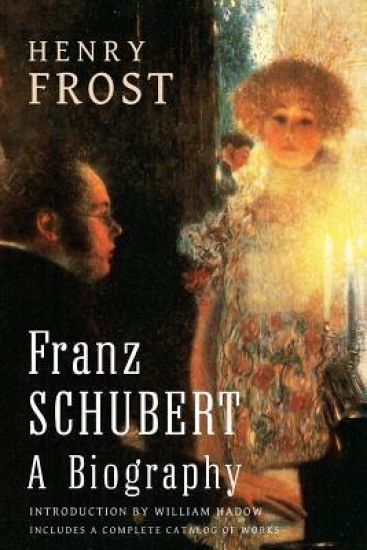
Clarity of outline, conciseness, and formal beauty are excellent things in musical works, but an exquisite fancy, a noble imagination, and a lofty poetic spirit are of infinitely greater account; and no one ever possessed these inestimable gifts in greater measure than Franz Schubert.This new edition of Henry Frost's 1892 biography of Franz Schubert has been edited and revised. The original references to pieces by Opus number have been replaced with the more commonly used D numbers. Many illustrations of places and people have been added throughout the text, and a complete catalog of Schubert's works has been included.Contents1Introduction and overview by William Henry Hadow.2- Schubert's unique position among composers.- Birth and parentage.- Early instruction in music, and evidence of extraordinary talent.- Admission to the Imperial Chapel and Stadtconvict.- School experiences and first compositions.- Salieri.- Symphony No. 1 in D.- He decides to leave the Convict.3- Schubert's experience as a school teacher.- Friendship with Mayrhofer.- Works from 1814; Des Teufels Lustschloss, Mass in F, etc.- Extraordinary productiveness in 1815.- Operas, symphonies, masses, and songs.- Characteristics of Schubert's Lieder.- Diary kept in 1816.- Der Erlk nig.- Cantatas and symphonies.- He applies for a position.- Franz von Schober.- He leaves his father's school.4- Johann Michael Vogl.- Josef Huttenbrenner.- Piano sonatas.- Overtures in Italian style.- He becomes music teacher to the Esterhazy family.- His residence with Mayrhofer.- Excursion in upper Austria.- Rossini.- Goethe.- His first commissions for the stage.- Die Zwillingsbruder.- Die Zauberharfe.- Contemporary criticism.- The oratorio Lazarus.- The Fantasia in C.5- The first publications.- Enthusiasm of his friends.- Schubertiaden.- The symphony in E.- Schubert and Beethoven.- Alfonso and Estrella; performance at Weimar.- The mass in A flat.- The unfinished symphony in B minor.- Schubert and Weber.- Rosamunde.- Fierabras.- Die Verschwornen, or Der hauslicne Krieg.- Die schone Mullerin.- Publications in 1823.6- Schubert's temporary depression.- Diary and letters.- Second visit to Zelesz.- Love for Caroline Esterhazy.- Compositions; the duet sonata in C.- Travels in Steyr.- Restored cheerfulness.- Efforts to gain employment.- Schindler's singular story.- Negotiations with foreign publishers.- Present from the Musikfreunde.- Beethoven's funeral.- Visit to the Pachlers at Gratz.- Failing health.- Rochlitz and Der Erste Ton7- Great productiveness in 1828.- Symphony in C.- Mass in E flat.- Schwanengesang.- Last sonatas.- Disappointments.- His last illness and death.8- Posthumous honours.- Personal qualities.- Schubert's position in music.- General survey of works
Franz Schubert

Franz Schubert

Henry Frost

Createspace Independent Publishing Platform
2013
pokkari
Clarity of outline, conciseness, and formal beauty are excellent things in musical works, but an exquisite fancy, a noble imagination, and a lofty poetic spirit are of infinitely greater account; and no one ever possessed these inestimable gifts in greater measure than Franz Schubert. "With faith man steps forth into the world. Faith is far ahead of understanding and knowledge; for to understand anything, I must first of all believe something. Faith is the higher basis on which weak understanding rears its first columns of proof; reason is nothing but faith analysed." - Franz Schubert This new edition of Henry Frost's 1892 biography of Franz Schubert has been edited and revised. The original references to pieces by Opus number have been replaced with the more commonly used D numbers. Many illustrations of places and people have been added throughout the text, and a complete catalog of Schubert's works has been included. Contents 1 Introduction and overview by William Henry Hadow. From the eleventh edition of The Encyclopaedia Britannica (1911). 2 - Schubert's unique position among composers. - His birth and parentage. - Early instruction in music, and evidence of extraordinary talent. - Admission to the Imperial Chapel and Stadtconvict. - School experiences and first compositions. - Salieri. - Symphony No. 1 in D. - He decides to leave the Convict. 3 - Schubert's experience as a school teacher. - Friendship with Mayrhofer. - Works from 1814; Des Teufels Lustschloss, Mass in F, etc. - Extraordinary productiveness in 1815. - Operas, symphonies, masses, and songs. - Characteristics of Schubert's Lieder. - Diary kept in 1816. - Der Erlk nig. - Cantatas and symphonies. - He applies for a position. - Franz von Schober. - He leaves his father's school. 4 - Johann Michael Vogl. - Josef Huttenbrenner. - Piano sonatas. - Overtures in Italian style. - He becomes music teacher to the Esterhazy family. - His residence with Mayrhofer. - Excursion in upper Austria. - Rossini. - Goethe. - His first commissions for the stage. - Die Zwillingsbruder. - Die Zauberharfe. - Contemporary criticism. - The oratorio Lazarus. - The Fantasia in C. 5 - The first publications. - Enthusiasm of his friends. - Schubertiaden. - The symphony in E. - Schubert and Beethoven. - Alfonso and Estrella; performance at Weimar. - The mass in A flat. - The unfinished symphony in B minor. - Schubert and Weber. - Rosamunde. - Fierabras. - Die Verschwornen, or Der hauslicne Krieg. - Die schone Mullerin. - Publications in 1823. 6 - Schubert's temporary depression. - Diary and letters. - Second visit to Zelesz. - Love for Caroline Esterhazy. - Compositions; the duet sonata in C. - Travels in Steyr. - Restored cheerfulness. - Efforts to gain employment. - Schindler's singular story. - Negotiations with foreign publishers. - Present from the Musikfreunde. - Beethoven's funeral. - Visit to the Pachlers at Gratz. - Failing health. - Rochlitz and Der Erste Ton 7 - Great productiveness in 1828. - Symphony in C. - Mass in E flat. - Schwanengesang. - Last sonatas. - Disappointments. - His last illness and death. 8 - Posthumous honours. - Personal qualities. - Schubert's position in music. - General survey of works
Franz Schubert

Franz Schubert

Heinrich Kreissle Von Hellborn

Createspace Independent Publishing Platform
2013
nidottu
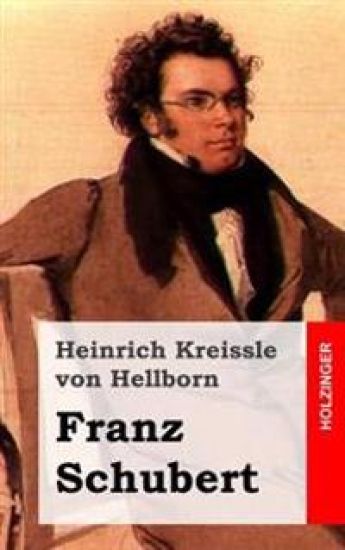
Heinrich Kreissle von Hellborn: Franz Schubert Edition Holzinger. Taschenbuch Berliner Ausgabe, 2013 Vollst ndiger, durchgesehener Neusatz bearbeitet und eingerichtet von Michael Holzinger Erstdruck: Wien (Carl Gerolds Sohn) 1865. Textgrundlage ist die Ausgabe: Kreissle von Hellborn, Heinrich: Franz Schubert. Wien: Carl Gerold's Sohn, 1865. Herausgeber der Reihe: Michael Holzinger Reihengestaltung: Viktor Harvion Umschlaggestaltung unter Verwendung des Bildes: Wilhelm August Rieder: Aquarell Franz Schubert, Mai 1825, unten signiert von Rieder und Schubert. Gesetzt aus Minion Pro, 10 pt
Franz Schubert

Franz Schubert

Paule de Bouchet

MOONLIGHT PUBLISHING LTD
2017
muu
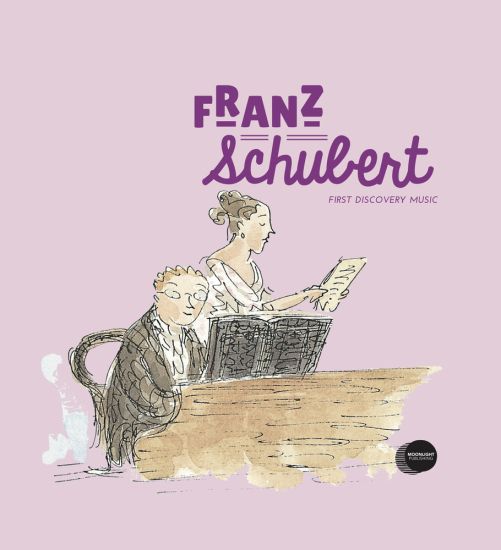
An illustrated biography about Schubert’s childhood and how he came to become a great composer. The accompanying CD contains recordings of some of his most famous works as well as the narration of the story. At the age of seven, Franz Schubert already knew as much about music as his teacher. Did you know that Schubert was part of a string quartet with his father and two brothers. By the age of fifteen he was already composing piano pieces, string quartets, and even a symphony. Read about Schubert and listen to his songs, his chamber music, his piano music and his symphonies.