Die rührend-komische Geschichte eines Jungen, der ein Murmeltier sein wollte, wenigstens einen Winter lang. Franz und das Murmeltier Albert sind unzertrennlich - bis der erste Schnee fällt, da ist Albert auf einmal spurlos verschwunden. Das sei ganz normal bei Murmeltieren, sagt Franz' Vater, die hielten nämlich Winterschlaf. Hört sich anstrengend an, denkt Franz, aber was sein Freund Albert aushält, schafft er auch: Er wird Winterschlaf halten, oben auf dem Dachboden, in einer großen alten Kiste. Jedenfalls wird er's versuchen ... Ein Lehrstück über Natur und Freundschaft des bekannten Künstlers Hans Traxler.
Geoffrey Chaucer var et skvat og Leonardo da Vinci en overvurderet hegnsmaler. Gamle Franz kan recitere Shakespeare, udlufte bremser og spille en habil sonate på blokfløjte. Det hele bedre end de fleste og på den halve tid. Han kan fortælle 1000 eventyr, endnu flere løgne og er Messias selv, når det kommer til fuldemandskvad. Han kender alle dambrug på denne side af Ejderen, kan rydde et skumdiskotek på en time og skyder fornuftigt med både seksløber, Stinger-missiler og slangebøsse. Så hvis du er i tvivl om, hvad Franz kan gøre for dig, så spørg hellere dig selv, hvad du kan gøre for Franz? Eller hvad vi kan gøre for hinanden? Er du klar, min dreng, til at tage en svingom? Da den 14-årige enspænder, Max, en dag får en kat af sine forældre, ændres hans liv. Franz er nemlig ikke som nogen anden kat, og snart er Max viklet dybt ind i de mystiske og vanvittige ting, der omgiver katten. En situation der rykker ved hans virkelighed og alt, han nogensinde har lært. Inden længe er Max kastet ud i et skørt eventyr, der leger med de mægtigste kræfter i universet, imens han samtidig forsøger at holde styr på alle kattens vanvittige lektioner om livet, om verdensordenen, og om hvordan man bedst spiser grillmad. En ældgammel fejde, farverige fjender og en småpsykotisk storesøster er alle ingredienser i, hvad der hurtigt bliver starten på en historie, verden aldrig har set magen til. Mikkel Wendelboe, f. 1988, uddannet i kommunikation og geografi fra Roskilde Universitet. Arbejder som TV-vært, forfatter, kommentator og journalist.
Franz Joseph Gall (1758-1828) was always a controversial figure, as was his doctrine, later called phrenology. Although often portrayed as a discredited buffoon, who believed he could assess a person's strengths and weaknesses by measuring cranial bumps, he was, in fact, a serious physician-scientist, who strove to answer timely questions about the mind, brain, and behavior. In many ways a remarkable visionary, his seminal ideas would become tenets of modern behavioral neuroscience. Among other things, he was the first scientist to promote publicly the idea of specialized cortical areas for diverse higher functions, while taking metaphysics out of his new science of mind. Moreover, although he obviously placed too much emphasis on "tell-tale" skull features (mistakenly believing that the cranium faithfully reflects the features of underlying brain areas), he fully understood the strength of "convergent operations," conducting neuroanatomical, developmental, cross-species, gender-comparison, and brain-damage studies on both humans and animals in his attempts to unravel the mysteries of brain organization. Rather than looking upon Gall's "organology" as one of science's great mistakes, this book provides a fresh look at the man and his doctrine. The authors delve into his motives, what was known about the brain during the 1790s, and the cultural demands of his time. Gall is rightfully presented as an early-19th-century biologist, anthropologist, philosopher, and physician with an inquisitive mind and a challenging agenda--namely, how to account for species and individual differences in behavior. In this well-researched book, readers learn why, starting as a young physician in Vienna and continuing his life's work in Paris, he chose to study the mind and the brain, why he employed his various methods, why he relied so heavily on cranial features, and why he wrote what he did in his books. Frequently using Gall's own words, they show his impact in various domains, including his approach to the insane and criminals, before concluding with his final illness and more lasting legacy.
Franz Schubert (1797-1828) was born in Vienna of immigrant parents. During his short life he produced an astonishing amount of music. Symphonies, chamber music, opera, church music, and songs (more than 600 of them) poured forth in profusion. His 'Trout' Quintet, his 'Unfinished' Symphony, the three last piano sonatas, and above all his song cycles Die Schone Mullerin and Winterreise have come to be universally regarded as belonging to the very greatest works of music. Who was the man who composed this amazing succesion of masterpieces, so many of which were either entirely ignored or regarded as failures during his lifetime? In her new biography, Elizabeth Norman McKay paints a vivid portrait of Schubert and his world. She explores his family background, his education and musical upbringing, his friendships, and his brushes and flirtations with the repressive authorities of Church and State. She discusses his experience of the arts, literature and theatre, and his relations with the professional and amateur musical world of his day. Schubert's manic-depressive temperament became of increasing significance in his life, and McKay shows how it was partly responsible for his social inadequacies, professional ineptitude, and idiosyncracies in his music. She examines Schubert's uneven physical decline after he contracted syphilis, traces its affect on his music, his hedonism, and sensuality.
"The Shaping of American Anthropology is a book which is outstanding in many respects. Stocking is probably the leading authority on Franz Boas; he understands Boas's contributions to American anthropology, as well as anthropology in general, very well. . . . He is, in a word, the foremost historian of anthropology in the world today. . . . The reader is both a collection of Boas's papers and a solid 23-page introduction to giving the background and basic assumptions of Boasian anthropology."—David Schneider, University of Chicago "While Stocking has not attempted to present a person biography, nevertheless Boas's personal characteristics emerge not only in his scholarly essays, but perhaps more vividly in his personal correspondence. . . . Stocking is to be commended for collecting this material together in a most interesting and enjoyable reader."—Gustav Thaiss, American Anthropologist
Franz Rosenzweig's near-conversion to Christianity in the summer of 1913 and his subsequent decision three months later to recommit himself to Judaism is one of the foundational narratives of modern Jewish thought. In this new account of events, Benjamin Pollock suggests that what lay at the heart of Rosenzweig's religious crisis was not a struggle between faith and reason, but skepticism about the world and hope for personal salvation. A close examination of this important time in Rosenzweig's life, the book also sheds light on the full trajectory of his philosophical development.
A highly original and engaging appraisal of Kafka’s life, work, legacy, and thought Franz Kafka was the poet of his own disorder. Throughout his life he struggled with a pervasive sense of shame and guilt that left traces in his daily existence—in his many letters, in his extensive diaries, and especially in his fiction. This stimulating book investigates some of the sources of Kafka’s personal anguish and its complex reflections in his imaginary world.In his query, Saul Friedländer probes major aspects of Kafka’s life (family, Judaism, love and sex, writing, illness, and despair) that until now have been skewed by posthumous censorship. Contrary to Kafka’s dying request that all his papers be burned, Max Brod, Kafka’s closest friend and literary executor, edited and published the author’s novels and other works soon after his death in 1924. Friedländer shows that, when reinserted in Kafka’s letters and diaries, deleted segments lift the mask of “sainthood” frequently attached to the writer and thus restore previously hidden aspects of his individuality.
An engrossing new biography of Franz Liszt, the musical revolutionary who became the world’s first international megastar"Makes a significant contribution to our knowledge of Liszt as a man and superstar. Hilmes shines a light into the shadows behind a life lived in the spotlight."—Andrew Taylor, Times Hungarian composer Franz Liszt (1811–1886) was an anomaly. A virtuoso pianist and electrifying showman, he toured extensively throughout the European continent, bringing sold-out audiences to states of ecstasy while courting scandal with his frequent womanizing. Drawing on new, highly revealing documentary sources, including a veritable treasure trove of previously unexamined material on Liszt’s Weimar years, best-selling author Oliver Hilmes shines a spotlight on the extraordinary life and career of this singularly dazzling musical phenomenon. Whereas previous biographies have focused primarily on the composer’s musical contributions, Hilmes showcases Liszt the man in all his many shades and personal reinventions: child prodigy, Romantic eccentric, fervent Catholic, actor, lothario, celebrity, businessman, genius, and extravagant show-off. The author immerses the reader in the intrigues of the nineteenth-century European glitterati (including Liszt’s powerful patrons, the monstrous Wagner clan) while exploring the true, complex face of the artist and the soul of his music. No other Liszt biography in English is as colorful, witty, and compulsively readable, or reveals as much about the true nature of this extraordinary, outrageous talent.
A thought-provoking account of the life and work of Franz Boas and his influential role in shaping modern anthropology Franz Boas (1858–1942) is widely acknowledged for his pioneering work in the field of cultural anthropology. His rigorous studies of variations across societies were aimed at demonstrating that cultures and peoples were not shaped by biological predispositions. This book traces Boas’s life and intellectual passions from his roots in Germany and his move to the United States in 1884, partly in response to growing antisemitism in Germany, to his work with First Nations communities and his influential role as a teacher, mentor, and engaged activist who inspired an entire generation. Drawing from Boas’s numerous but rarely read writings, Noga Arikha brings to life the man and the ideas he developed about the complex interplay of mind and culture, biology and history, language and myth. She provides a comprehensive picture of the cultural contexts in which he worked, of his personal and professional relationships, and of his revolutionary approach to fieldwork. He was celebrated in his lifetime for the cultural relativism he developed and the arguments he marshaled against entrenched racialism. But his was a constant battle, and Arikha shows how urgently relevant his voice and legacy have become again today.
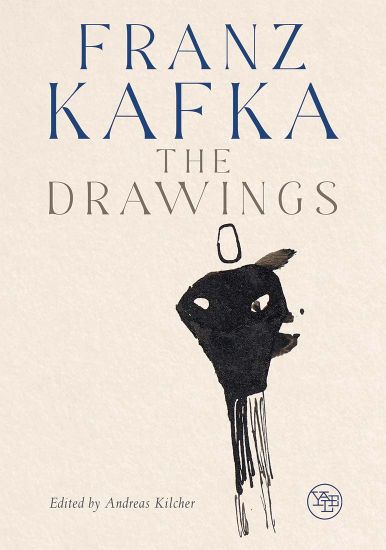
The first book to publish the entirety of Franz Kafka’s graphic output, including more than 100 newly discovered drawings “The figures he drew stand alone as stories in themselves.”—Lauren Christensen, New York Times Book Review “A sensational new book [that] reveals these hitherto hidden artworks for the first time. . . . This valuable volume allows us to see how, for Kafka, word and image walk arm in arm.”—Benjamin Balint, Jewish Review of Books The year 2019 brought a sensational discovery: hundreds of drawings by the writer Franz Kafka (1883–1924) were found in a private collection that for decades had been kept under lock and key. Until now, only a few of Kafka’s drawings were widely known. Although Kafka is renowned for his written work, his drawings are evidence of what his literary executor Max Brod termed his “double talent.” Irresistible and full of fascinating figures, shifting from the realistic to the fantastic, the grotesque, the uncanny, and the carnivalesque, they illuminate a previously unknown side of the quintessential modernist author. Kafka’s drawings span his full career, but he drew most intensively in his university years, between 1901 and 1907. An entire booklet of drawings from this period is among the many new discoveries, along with dozens of loose sheets. Published for the first time in English, these newly available materials are collected with his known works in a complete catalogue raisonné of more than 240 illustrations, reproduced in full color. Essays by Andreas Kilcher and Judith Butler provide essential background for this lavish volume, interpreting the drawings in their own right while also reconciling their place in Kafka’s larger oeuvre.
Max Brod, a successful novelist, was a boyhood companion of Kafka's and remained closely tied to him until Kafka's death in 1924. He was undoubtedly the one man whom Kafka trusted more than any other, and it is to Brod, as his literary executor and editor, that we are indebted for rescuing and bringing to light Kafka's work. Out of a lifelong devoted friendship, Brod drew this account of Kafka's youth, family and friends, his struggle to recognize himself as a writer, his sickness, and his last days. Franz Kafka gives us not only a more vivid and lifelike picture of Kafka than that painted by any of his contemporaries, but also a fascinating portrayal of the complicated interaction between two writers of different temperaments but similar backgrounds who together helped shape the future of twentieth-century literature.
Considered the father of modern American anthropology, Franz Boas introduced the relativistic, culture-centered methods and principles of inquiry that continue to dominate the field. This study analyzes the development of his thought and his contributions to racial and ethnic theory in the context of his own ethnicity and personal experience with persecution. The author focuses primarily on Boas's attempt to fuse science with political and social activism--an effort to insure that his ideological contributions to science had practical relevance to the difficult issues facing American society.Hyatt fills in the details of Boas's background, from his early years in Germany to his emigration to the United States in the late 1880s, and discusses his pivotal role in transforming anthropology from an amateur pursuit into a rigorous academic discipline. The author examines Boas's attacks on those who used science to promulgate theories of racial inferiority based on alleged differences in mental ability. He traces the origins of Boas's own theories and the use he made of them in working for equal rights for immigrants and African Americans. This is the first biographical study to focus on the historical meaning of Boas's contributions and the motivating forces that shaped his work. Essential for courses in race and ethnicity, sociology, the history of anthropology, 20th-century American history, American intellectual history, theories of culture, and related subjects.