The Carlisle Northern Development Route (CNDR) is a major road around the western side of Carlisle. Prior to its construction, there was an extensive programme of archaeological excavation, carried out along its route by Oxford Archaeology, between May 2008 and April 2011. The excavations recorded archaeological and palaeoenvironmental remains at several sites (termed ‘parcels’) along this route, including highly significant remains dating to the Mesolithic and Neolithic periods at Stainton West (Parcel 27 North), a site situated on the floodplain north of the River Eden. These related to a Mesolithic seasonal, aggregation encampment, dating between c. 6000 cal BC and c. 4300 cal BC. This was on an island between two palaeochannels and was associated with domestic features and an in-situ flaked-lithic assemblage of over 300,000 pieces, dominated by a narrow-blade lithic technology. Waterlogged deposits of organic sediment and the remains of a beaver lodge and dam in the main palaeochannel defining the western edge of the island, also contained a wealth of palaeoenvironmental evidence relevant to the earlier part of the period in which the encampment was occupied. Neolithic activity began in c. 3800-3700 cal BC comprising the construction of a wooden platform in the main palaeochannel, which was associated with the intentional deposition of tree-felling debris, coarse-stone tools, flaked lithics, pottery, and wooden artefacts, including a paddle and two ‘tridents’. Palaeoenvironmental remains relating to this activity were also recovered, providing evidence for an elm decline, and herding and small-scale arable farming. Later Neolithic activity was also evident in the form of two burnt mounds, established during the first half of the third millennium cal BC. The investigations also revealed evidence for Chalcolithic and Bronze Age activity, which included a sequence of burnt mounds at Stainton West, used until approximately 1600 cal BC. Several other sites along the scheme provided evidence for settlement and agriculture, dating between the twenty-third and the ninth centuries cal BC, which included structures, roundhouses, boundary ditches, ceramics, and plant remains. During the construction works, a transect across the Hadrian’s Wall Roman frontier was also examined at Knockupworth. This identified the initial, Hadrianic, phase of Turf Wall, the subsequent slighting of both this and the Vallum earthworks to the south, and the Stone Wall constructed, around AD 158-60, when the Hadrianic frontier was reoccupied following abandonment of the Antonine Wall. Important evidence for early medieval activity was also revealed. Five apparently near-contemporary rectangular posthole buildings dated to the early eighth to mid-tenth centuries AD, and probably formed a small agricultural settlement. Other remains along the route related to the agricultural landscape that existed in the later medieval and post-medieval periods.
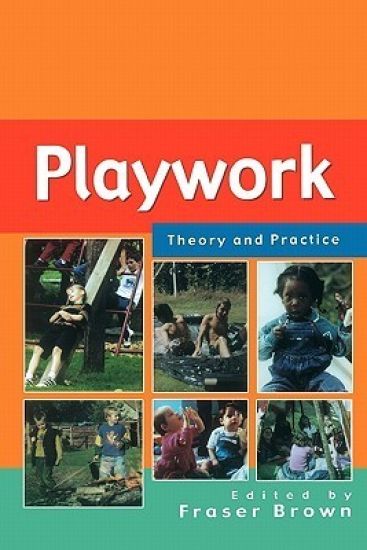
"[An] excellent book... With its breadth of discourse, it held my attention throughout. ... This book is informative, but also challenges views on the play experience and the playwork profession. It will be of interest to all those that work and play with young children. The place of playwork and playworkers... is described with passion: readers cannot help but be totally absorbed by this book." Early Years, Vol 24, No 1, March 2004Children learn and develop through their play. In today's world the opportunities for that to happen are increasingly restricted. The profession of playwork seeks to reintroduce such opportunities, and so enable children to achieve their full potential.This book brings together many leading names in the playwork field, to produce a text that has something for everyone. The in-depth exploration of a range of theoretical perspectives will appeal to both playwork students and practising playworkers. Experienced practitioners offer sound practical advice about ways of improving playwork practice. There are chapters on the role of adventure playgrounds (past, present and future); the challenge of starting a playwork section in a local authority; and the value of networking. Contributors explore the essence of play; the historical roots of playwork; and the role of play cues in human and animal behaviour. There is an exploration of the astounding impact of a therapeutic playwork project on the development of a group of abandoned children in Romania. The final chapter reinforces the need for playworkers to be reflective practitioners in all aspects of their work.
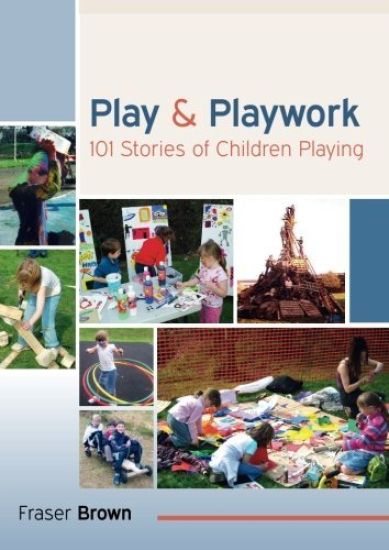
Children like to play. They get all sorts of benefits from playing. They get the most benefit from play when they are in control of what they are doing. Yet there are lots of circumstances today that mean children are not able to control their own play and that's where playwork comes in, where the role of the playworker is to create environments that enable children to take control of their playing. This book aims to explore the similarities, differences and tensions that exist between play and playwork including appropriate definitions and the conflict around the role of the adult. Fraser Brown proposes a play to playwork continuum, where playing can be considered a 'developmental and evolutionary' activity and playwork a 'compensatory' activity. Helpfully structured around the aspects considered by the author as most important for playwork, this book uses 101 fascinating stories of children playing to illuminate a range of play and playwork theories. The rich array of powerful stories - drawn from the casebooks of eminent and experienced playworkers - speak for themselves whilst at the same time triggering theoretical explorations that are interwoven with the stories in each chapter.Mesmerizing, absorbing and original, this is essential reading for playwork students and practitioners, as well as for students and practitioners of early years, childhood, children's health and wellbeing, and children’s social care.
"The editors take readers through a breathtaking landscape of perspectives on the foundations of playwork. ... This book invites you to reflect (see Palmer, p51). But above all, it is one that inspires action."Children and Society"Foundations of Playwork is a must read for anyone with an interest in playwork or children's services. It shows the breadth, depth and value of our work with and on behalf of children."Mike Greenaway, Director of Play Wales Play impacts on all aspects of human behaviour and development, including the social, physical, cognitive, creative, emotional and spiritual worlds. The profession of playwork endeavours to provide enriched play environments with a view to enabling children achieve their full potential.This book provides a holistic overview of contemporary play and playwork. Straightforward and accessible, it covers topics such as playwork identity; play environments; the role of the playworker; values and ethics; play and playwork theory; and at the heart of the book, a special chapter located at the cutting-edge of 21st century play theory.The authors position play and playwork within the broader social context of the management and development of play settings, work within and between different sectors of the children's workforce, and the socio-legal framework of children's rights, and legislation. The book has international interest, considering playwork in the UK, US and Romania. It looks at diverse settings such as prisons, hospitals, parks, adventure playgrounds and play centres, schools, youth settings and nurseries.Contributions from many of the leading names in playwork offer the most current theory and practice in the field. They present approaches to playwork using a range of techniques such as case studies and critiques, applied and emergent theorizing, story-telling and reflection. This encourages the reader to gain a breadth of perspective and develop their own contribution to the playwork tradition.Foundations of Playwork is a vital resource for playwork students, practitioners, members of the children's workforce, carers and parents.
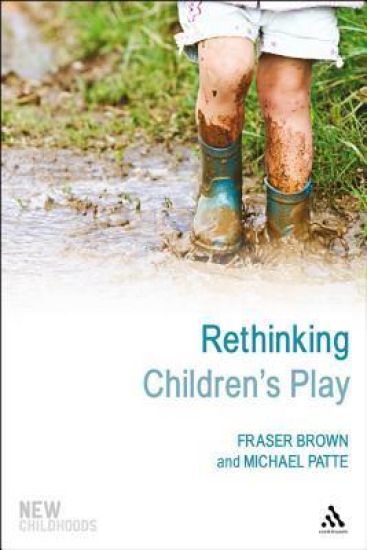
Rethinking Children's Play examines attitudes towards, and experiences of, children's play. Fraser Brown and Michael Patte draw on a wide range of thought, research and practice from different fields and countries to debate, challenge and re-appraise long held beliefs, attitudes and ways of working and living with children in the play environment.Children need to play and the benefits of play are many and varied, but they are too often underestimated by parents, educators, politicians and society in general. The authors apply a playwork perspective to a wide range of settings populated by children, both formal and informal, to explore the idea that children's learning and development derives substantially from their opportunities to engage with a rich play environment that is supportive of the play process.Thoughts are provoked through examples of research, reflections on research, activities, key points and guidance on further reading.Rethinking Children's Play is essential for all those studying childhood at undergraduate and graduate level and of great interest to those working with children in any field.
The Oxford Handbook for the Foundation Programme returns in a new edition, guiding medical students and newly-qualified doctors through the Foundation Programme and beyond with the most up-to-date information and clinical guidance. This new edition has been fully revised to reflect the latest clinical guidelines, as well as changes to career structures and the Foundation Programme curriculum. It includes two entirely new chapters on primary care and care at the end of life, as well as featuring updated content on healthcare-related infection control, obstetrics and gynaecology, and surgery. Distilling the expertise of two senior clinicians and the first-hand experience of two new junior authors, this pocket handbook provides guidance on all facets of starting out as a newly qualified doctor, from applying to the Foundation Programme to career progression and choosing a specialty, from interpreting results to performing practical procedures. Covering aspects that are rarely tackled in medical school, this is your ultimate survival guide.
Hilary Fraser provides a comprehensive and thorough survey of English prose in the nineteenth century which draws from a wide variety of fields including art, literary theory and criticisim, biography, letters, journals, sermons, and travel reportage. Through these works the cultural, social, literary and political life of the twentieth century - a period of great intellectual activity - can be charted, discussed and assessed.For the first time, an inclusive critical survey of nineteenth-century non-fiction is presented, that traces the century's ideological and cultural upheavals as they are registered in the literary textures of some of its most widely read and influential writings.The book explores the relations between writers who are generally perceived as occupying different discursive spheres, for example between John Stuart Mill, Florence Nightingale and Mrs Beeton; between Cardinal Newman, Elizabeth Gaskell and Hannah Cullwick; and between Charles Darwin, David Livingstone and Henry Mayhew. The establishment and development of different genres and their interactions over the century are clearly mapped. The genre of the periodical essay, a distinctively modern and flexible form catering to the mass readership, is the subject of the introduction, and then more specialist fields are discussed, covering scientific writing, travel and exploration literature, social reportage, biography, autobiography, journals, letters, religious and philosophical prose, political writing and history.
Britain since 1707 is the first single-volume book to cover the complex and multi-layered history of Great Britain from its inception until 2007. Bringing together political, economic, social and cultural history, the book offers a reliable and balanced account of the nation over a 300 year period. It looks at major developments – such as the Enlightenment, the growth of democracy and gender change – while also tracing the distinctive experience of different, the book’s additional features include: social and ethnic groups through the decades. Fully integrating Scotland, Wales and the Irish experience, the book’s comprehensive sweep includes coverage of the industrial revolution, the British Empire, the two world wars and today’s multicultural society. Ideally structured to support courses and classes on British history · ‘Focus On’ sections with original documents and sources · Timelines and tables to aid understanding · Historical sources and further reading suggestions at the end of each chapter · Illuminating contemporary illustrations From Queen Anne to Gordon Brown, this wide-ranging and accessible book provides a complete and up-to-date history of Britain. Offering a coherent account of the evolution of the nation and its people, it will be essential reading for all students of British history.
Britain since 1707 is the first single-volume book to cover the complex and multi-layered history of Great Britain from its inception until 2007. Bringing together political, economic, social and cultural history, the book offers a reliable and balanced account of the nation over a 300 year period. It looks at major developments – such as the Enlightenment, the growth of democracy and gender change – while also tracing the distinctive experience of different, the book’s additional features include: social and ethnic groups through the decades. Fully integrating Scotland, Wales and the Irish experience, the book’s comprehensive sweep includes coverage of the industrial revolution, the British Empire, the two world wars and today’s multicultural society.Ideally structured to support courses and classes on British history· ‘Focus On’ sections with original documents and sources· Timelines and tables to aid understanding · Historical sources and further reading suggestions at the end of each chapter · Illuminating contemporary illustrations From Queen Anne to Gordon Brown, this wide-ranging and accessible book provides a complete and up-to-date history of Britain. Offering a coherent account of the evolution of the nation and its people, it will be essential reading for all students of British history.
The second edition of Paediatric Nursing in Australia: Principles for Practice brings the important care of the child and young person to life, by equipping students with essential knowledge and skills to become informed and capable partners in the nursing care of children, young people and their families across a variety of clinical and community settings. The text develops students' critical thinking and problem-solving skills by exploring contemporary issues impacting on the health of children, young people and their families. This new edition features the latest research and case studies, coupled with reflection points and learning activities in each chapter. Further resources, including links to video and web content, multiple-choice questions and critical-thinking problems, are available on the updated instructor companion website at www.cambridge.edu.au/academic/paediatricnursing. Written by a team of experienced nurses within the field, Paediatric Nursing in Australia: Principles for Practice, 2nd edition is grounded in current care delivery and is an essential resource in preparing future nurses for practice in paediatric settings throughout Australia.
The 18th century was a wealth of knowledge, exploration and rapidly growing technology and expanding record-keeping made possible by advances in the printing press. In its determination to preserve the century of revolution, Gale initiated a revolution of its own: digitization of epic proportions to preserve these invaluable works in the largest archive of its kind. Now for the first time these high-quality digital copies of original 18th century manuscripts are available in print, making them highly accessible to libraries, undergraduate students, and independent scholars.The Age of Enlightenment profoundly enriched religious and philosophical understanding and continues to influence present-day thinking. Works collected here include masterpieces by David Hume, Immanuel Kant, and Jean-Jacques Rousseau, as well as religious sermons and moral debates on the issues of the day, such as the slave trade. The Age of Reason saw conflict between Protestantism and Catholicism transformed into one between faith and logic -- a debate that continues in the twenty-first century.++++The below data was compiled from various identification fields in the bibliographic record of this title. This data is provided as an additional tool in helping to insure edition identification: ++++British LibraryT106431Edinburgh: printed by and for Gavin Alston, 1781. iv,295, 1]p.; 12
By The Sweat of Your Brow is a true story of one who believed himself to be called by God to serve. The calling, training, and forty plus years of service is told in stories of laughter, tears, suspense, pain, and joy.