A comparison of the opposed military systems along the English/Welsh border - Anglo-Norman and Celtic - in the 12th century. Between 1066 and 1282 two quite different societies were juxtaposedalong the Welsh Marches: a feudally-based Anglo-Norman one, and aCeltic Welsh one. It has been conventional to consider the formerto have been more sophisticated and developed than the latter but, in fact, the situation was more complex, and during more than two centuries of attacks and campaigns each society borrowed from the other. This book is the first comparative study of the twomilitary systems. It considers issues pertinent to the entire border region, and, indeed, to other medieval marches. Specific topics examined include: the nature of Welsh military service, Welsh tactics and the English response, the development and functioning of Clun (a representative border castlery), the local command in Shropshire and the so-called "wardens" of the March, and the extent to which Welsh military customs influenced those of the Marches and of England. FREDERICK SUPPE is Professor of History at Ball State University.
"An authoritative account of the semantic conception of theories by one of its chief developers. Suppe has always seen the semantic conception as providing a way of moving beyond empiricist philosophies of science. This book provides the definitive account of his views not only on the issue of realism, but also on a variety of other issues central to the philosophy of science." -- Ronald N. Giere, author of Explaining Science: A Cognitive Approach
Frederick Albert Hughes (1890-1988) was well known among the brethren as a man of God who cared deeply for the honour of the Lord Jesus and the preciousness of the saints. His writings reflect his heart for God and His people. In this book he expounds the importance, relevance, meaning and infinite privilege and joy of observing the Lord's Supper. On the very eve of His betrayal, arrest and crucifixion the Lord Jesus gathered His disciples round Him, and after the Passover Supper He inaugurated this simple memorial of Himself. In the Bread and the Cup He signified that He was about to give Himself - His body and His blood - for us. Then He added, "This do in remembrance of Me"; so challenging the hearts of all the redeemed to obey and respond to such supreme devotion and love. It is sad to record that the import and appeal of our Lord's institution appear largely to have been lost in ritual and formality within Christendom. Many take it as a means of grace for sinners, whereas the Lord's Supper is a simple memorial to believers of the One who died for them. In a day when spiritual truths are being despised or neglected as never before it is necessary to remind all true-hearted Christians of the supreme virtue and recompense in remembering our Lord in obedience to His request. As the Lord Jesus manifests Himself in the breaking of bread we may experience the joy of heart-felt response to the One who gave all for us, and of true worship to the Father whom He came to declare.
== Special Edition for Low Vision Readers ==A detailed account of the brutal battle near Sharpsburg, Maryland on September 17, 1862, which was the bloodiest single-day battle in American history. About Super Large PrintAll our books are published with a font designed for maximum readability at twice the size of traditional Large Print books. You can see a sample of it at our website superlargeprint.com To view all our books available on Amazon, click the link for Super Large Print above, where it says (Author) for more information visit: superlargeprint.com KEEP ON READING
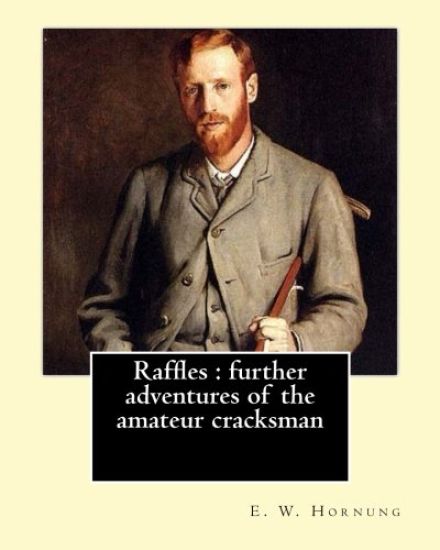
Ernest William Hornung (7 June 1866 - 22 March 1921) was an English author and poet known for writing the A. J. Raffles series of stories about a gentleman thief in late 19th-century London. Hornung was educated at Uppingham School; as a result of poor health he left the school in December 1883 to travel to Sydney, where he stayed for two years. He drew on his Australian experiences as a background when he began writing, initially short stories and later novels. In 1898 he wrote "In the Chains of Crime", which introduced Raffles and his sidekick, Bunny Manders; the characters were based partly on his friends Oscar Wilde and his lover, Lord Alfred Douglas, and also on the characters of Sherlock Holmes and Dr. Watson, created by his brother-in-law, Arthur Conan Doyle. The series of Raffles short stories were collected for sale in book form in 1899, and two further books of Raffles short stories followed, as well as a poorly received novel. Aside from his Raffles stories, Hornung was a prodigious writer of fiction, publishing numerous books from 1890, with A Bride from the Bush to his 1914 novel The Crime Doctor. The First World War brought an end to Hornung's fictional output. His son, Oscar, was killed at the Second Battle of Ypres in July 1915. Hornung joined the YMCA, initially in England, then in France, where he helped run a canteen and library. He published two collections of poetry during the war, and then, afterwards, one further volume of verse and an account of his time spent in France, Notes of a Camp-Follower on the Western Front. Hornung's fragile constitution was further weakened by the stress of his war work. To aid his recuperation, he and his wife visited the south of France in 1921. He fell ill from influenza on the journey, and died on 22 March 1921, aged 54. Although much of Hornung's work has fallen into obscurity, his Raffles stories continued to be popular, and have formed numerous film and television adaptations. Hornung's stories dealt with a wider range of themes than crime: he examined scientific and medical developments, guilt, class and the unequal role played by women in society. Two threads that run through a sizeable proportion of his books are Australia and cricket; the latter was also a lifelong passion. Frederick Coffay Yohn (February 8, 1875 - June 6, 1933), often recognized only by his initials, F. C. Yohn, was an artist and magazine illustrator.
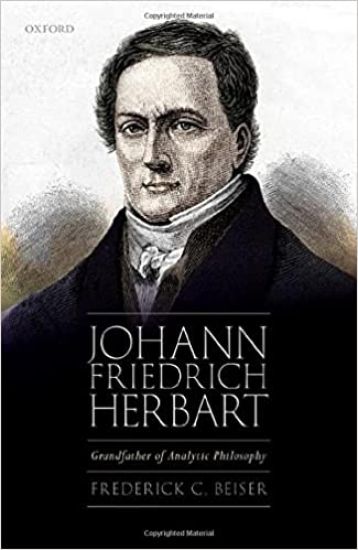
Though little known today, Johann Friedrich Herbart was one of the leading philosophers of his age, the competitor of Schelling and Hegel. Although he was trained by Fichte, Herbart soon became a critic of the idealist tradition and developed a philosophy antithetical to it. His own philosophy was opposed to the idealist tradition in important respects: he defended a dualism between the factual and normative; he was an ontological pluralist rather than monist; and he accepted crucial Kantian dualisms that had been rejected by the idealists. Herbart was also an important forerunner of analytic philosophy, first in breaking with the idealist tradition, and second in insisting that the proper method of philosophy is the analysis of concepts rather than speculation about the universe as a whole. In the first intellectual biography of Herbart in English, Frederick C. Beiser studies the development of one of 19th-century Germany's most important philosophers, from his education in Oldenburg and Jena to his final years in Göttingen.
Philosophy of Life explores the intellectual movement called Lebensphilosophie, which flourished in Germany from 1870 until 1920. Author Frederick C. Beiser focuses on its most prominent members: Friedrich Nietzsche, Wilhelm Dilthey, and Georg Simmel. Lebensphilosophie appeared at a critical movement in Western culture; it was a response to several important cultural developments of the late 19th century: atheism, relativism, historicism and pessimism. The Lebensphilosophen believed that meaning of life had to be found in life itself and denied the relevance of any transcendent realm of meaning. To affirm the value of life, they reacted against Schopenhauer's pessimism; they proclaimed that the joys of life outweighed its sorrows, and that there is an infinite value in living life to its fullest. They developed a radical individualist ethic, which proclaimed the value of individual self-realization above all other goods. As part of this radical individualism, they disputed the existence of absolute moral values; and by insisting on the historicity of life, they affirmed the relativity of all values. This was the first intellectual movement in the Western tradition to develop an entirely secular and humanist conception of life. Many of its doctrines are familiar to students of Nietzsche; but readers will find that he was only one of an entire intellectual movement.
This is the first full study in English of the German historicist tradition. Frederick C. Beiser surveys the major German thinkers on history from the middle of the eighteenth century until the early twentieth century, providing an introduction to each thinker and the main issues in interpreting and appraising his thought. The volume offers new interpretations of well-known philosophers such as Johann Gottfried Herder and Max Weber, and introduces others who are scarcely known at all, including J. A. Chladenius, Justus Möser, Heinrich Rickert, and Emil Lask. Beyond an exploration of the historical and intellectual context of each thinker, Beiser illuminates the sources and reasons for the movement of German historicism--one of the great revolutions in modern Western thought, and the source of our historical understanding of the human world.
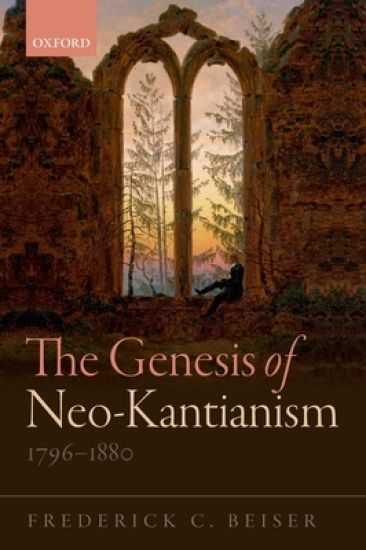
Frederick C. Beiser tells the story of the emergence of neo-Kantianism from the late 1790s until the 1880s. He focuses on neo-Kantianism before official or familiar neo-Kantianism, i.e., before the formation of the various schools of neo-Kantianism in the 1880s and 1890s (which included the Marburg school, the Southwestern school, and the Göttingen school). Beiser argues that the source of neo-Kantianism lies in three crucial but neglected figures: Jakob Friedrich Fries, Johann Friedrich Herbart, and Friedrich Beneke, who together form what he calls 'the lost tradition'. They are the first neo-Kantians because they defended Kant's limits on knowledge against the excesses of speculative idealism, because they upheld Kant's dualisms against their many critics, and because they adhered to Kant's transcendental idealism. Much of The Genesis of Neo-Kantianism, 1796-1880 is devoted to an explanation for the rise of neo-Kantianism. Beiser contends that it became a greater force in the decades from 1840 to 1860 in response to three major developments in German culture: the collapse of speculative idealism; the materialism controversy; and the identity crisis of philosophy. As he goes on to argue, after the 1860s neo-Kantianism became a major philosophical force because of its response to two later cultural developments: the rise of pessimism and Darwinism.
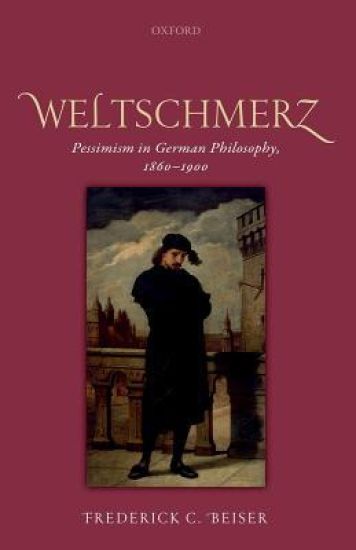
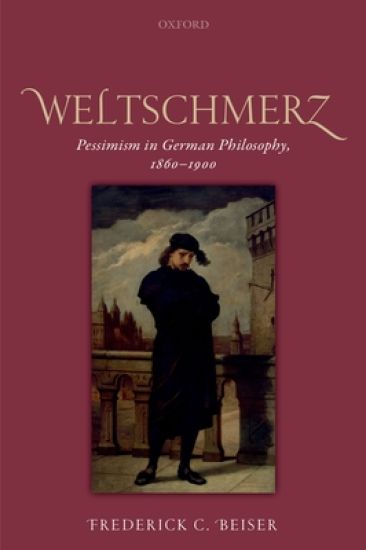
Weltschmerz is a study of the pessimism that dominated German philosophy in the second half of the nineteenth century. Pessimism was essentially the theory that life is not worth living. This theory was introduced into German philosophy by Schopenhauer, whose philosophy became very fashionable in the 1860s. Frederick C. Beiser examines the intense and long controversy that arose from Schopenhauer's pessimism, which changed the agenda of philosophy in Germany away from the logic of the sciences and toward an examination of the value of life. He examines the major defenders of pessimism (Philipp Mainländer, Eduard von Hartmann and Julius Bahnsen) and its chief critics, especially Eugen Dühring and the neo-Kantians. The pessimism dispute of the second half of the century has been largely ignored in secondary literature and this book is a first attempt since the 1880s to re-examine it and to analyze the important philosophical issues raised by it. The dispute concerned the most fundamental philosophical issue of them all: whether life is worth living.
Frederick C. Beiser tells the story of the emergence of neo-Kantianism from the late 1790s until the 1880s. He focuses on neo-Kantianism before official or familiar neo-Kantianism, i.e., before the formation of the various schools of neo-Kantianism in the 1880s and 1890s (which included the Marburg school, the Southwestern school, and the Göttingen school). Beiser argues that the source of neo-Kantianism lies in three crucial but neglected figures: Jakob Friedrich Fries,
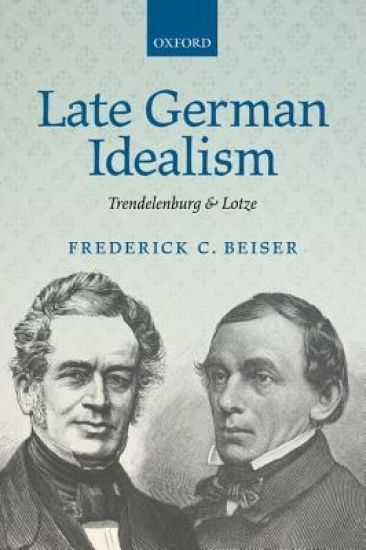
Frederick C. Beiser presents a study of the two most important idealist philosophers in Germany after Hegel: Adolf Trendelenburg and Rudolf Lotze. Trendelenburg and Lotze dominated philosophy in Germany in the second half of the nineteenth century. They were important influences on the generation after them, on Frege, Brentano, Dilthey, Kierkegaard, Cohen, Windelband and Rickert. Late German Idealism is the first book on this significant but neglected chapter in European philosophical history. It provides a general introduction to every aspect of the philosophy of Trendelenburg and Lotze--their logic, metaphysics, ethics and aesthetics--but it is also a study of their intellectual development, from their youth until their death. Their philosophy is placed in the context of their lives and culture.
Weltschmerz is a study of the pessimism that dominated German philosophy in the second half of the nineteenth century. Pessimism was essentially the theory that life is not worth living. This theory was introduced into German philosophy by Schopenhauer, whose philosophy became very fashionable in the 1860s. Frederick C. Beiser examines the intense and long controversy that arose from Schopenhauer's pessimism, which changed the agenda of philosophy in Germany away from the logic of the sciences and toward an examination of the value of life. He examines the major defenders of pessimism (Philipp Mainländer, Eduard von Hartmann and Julius Bahnsen) and its chief critics, especially Eugen Dühring and the neo-Kantians. The pessimism dispute of the second half of the century has been largely ignored in secondary literature and this book is a first attempt since the 1880s to re-examine it and to analyze the important philosophical issues raised by it. The dispute concerned the most fundamental philosophical issue of them all: whether life is worth living.
This book is the first complete intellectual biography of Hermann Cohen (1842-1918) and the only work to cover all his major philosophical and Jewish writings. Frederick C. Beiser pays special attention to all phases of Cohen's intellectual development, its breaks and its continuities, throughout seven decades. The guiding goal behind Cohen's intellectual career, he argues, was the development of a radical rationalism, one committed to defending the rights of unending enquiry and unlimited criticism. Cohen's philosophy was therefore an attempt to defend and revive the Enlightenment belief in the authority of reason; his critical idealism an attempt to justify this belief and to establish a purely rational worldview. According to this interpretation, Cohen's thought is resolutely opposed to any form of irrationalism or mysticism because these would impose arbitrary and artificial limits on criticism and enquiry. It is therefore critical of those interpretations which see Cohen's philosophy as a species of proto-existentialism (Rosenzweig) or Jewish mysticism (Adelmann and Köhnke). Hermann Cohen: An Intellectual Biography attempts to unify the two sides of Cohen's thought, his philosophy and his Judaism. Maintaining that Cohen's Judaism was not a limit to his radical rationalism but a consistent development of it, Beiser contends that his religion was one of reason. He concludes that most critical interpretations have failed to appreciate the philosophical depth and sophistication of his Judaism, a religion which committed the believer to the unending search for truth and the striving to achieve the cosmopolitan ideals of reason.
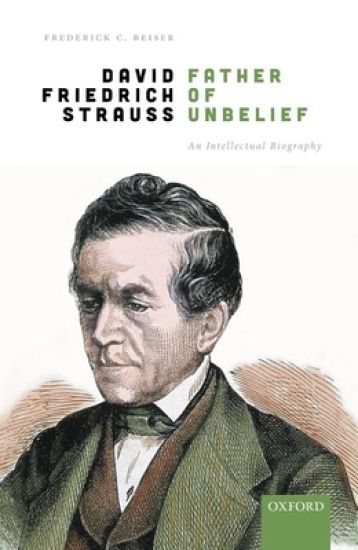
David Friedrich Strauss is a central figure in 19th century intellectual history. The first major source for the loss of faith in Christianity in Germany, his work Das Leben Jesu was the most scandalous publication in Germany during his time. His book was a critique of the claims to historical truth of the New Testament, which had been the mainstay of Protestantism since the Reformation. As the father of unbelief, his critique of Christianity preceded that of Nietzsche, Marx, Feuerbach, and Schopenhauer. His views imposed a harsh fate upon him - he was persecuted for his beliefs by religious and political authorities and was denied employment in the university and government, forcing him to live as a free-lance writer. He led a wandering and isolated life as an outcast. Here, Frederick C. Beiser studies the intellectual development of Strauss and recounts his fate, which began in faith as a young man but finally ended in unbelief.