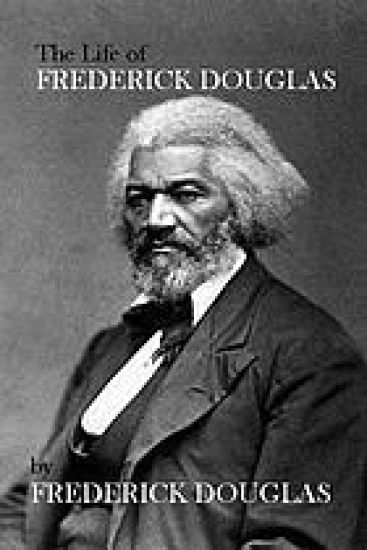
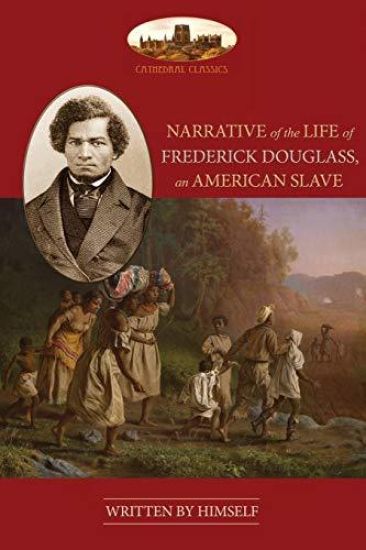
Douglass' Narrative begins with the few facts he knows about his birth and parentage; his father is a slave owner and his mother is a slave named Harriet Bailey. Here and throughout the autobiography, Douglass highlights the common practice of white slave owners raping slave women, both to satisfy their sexual hungers and to expand their slave populations. In the first chapter, Douglass also makes mention of the hypocrisy of Christian slave owners who used religious teachings to justify their abhorrent treatment of slaves; the religious practice of slave owners is a recurrent theme in the text.Throughout the next several chapters, Douglass describes the conditions in which he and other slaves live. As a slave of Captain Anthony and Colonel Lloyd, Douglass survives on meager rations and is often cold. He witnesses brutal beatings and the murder of a slave, which goes unnoticed by the law or the community at large. Douglass argues against the notion that slaves who sing are content; instead, he likens singing to crying - a way to relieve sorrow. Douglass also draws attention to the false system of values created by slavery, in which allegiance to the slave master is far stronger than an allegiance to other slaves.When he is seven or eight years old, Douglass is sent to Baltimore to live with the Auld family and care for their son, Thomas. Mrs. Auld gives Douglass reading lessons until her husband intervenes; Douglass continues his lessons by trading bread for lessons with poor neighborhood white boys and by using Thomas' books. Soon, Douglass discovers abolitionist movements in the North, including those by Irish Catholics.Several years later, as a result of his original owner's death, Douglass finds himself being lent to a poor farmer with a reputation for "breaking" slaves. Douglass spends a year with Covey, who cruelly and brutally whips the slave until Douglass finally fights him. From that day on, Covey leaves Douglass alone.Douglass lives for a time with William Freeland, a kind master, and Douglass finds a family among the other slaves there. Douglass becomes a Sunday school teacher to other slaves, a position he enjoys. Although this situation is better than any he has experienced, it is still a far cry from freedom, so Douglass attempts to escape by canoeing up the Chesapeake Bay. He is caught and eventually finds himself working again for Hugh Auld in Baltimore. First, he runs errands for shipyard workers, but he after some of the workers heckle and strike Douglass, he fights back and is nearly beaten to death. Working at a different shipyard after the fight, Douglass becomes proficient at ship caulking, but he is forced to turn his wages over to Auld. Douglass soon makes an arrangement with Auld to hire himself out and give Auld a set amount of wages each week. Douglass is allowed to pocket the rest, thus saving enough for his escape to New York.After his escape, Douglass is advised to move to New Bedford, Massachusetts, and he settles there with his new wife, Anna Murray. Douglass makes a living doing odd jobs; he is unable to find work as a caulker, however, because the white caulkers refuse to work with blacks, fearing the former slaves will take over their jobs. Although he still fears being caught and returned to the South, Douglass attends an anti-slavery convention, where he is encouraged to speak. This forms the beginning of his life in the public eye, speaking and writing in favor of the abolition of slavery.
Collected here are both of Frederick Douglass' magazine articles: "My Escape from Slavery," and "Reconstruction," as well as his address "The Hypocrisy of American Slavery." These pieces show Douglass at his rhetorical best. Important reading for anyone wanting more after reading his Autobiographies.
Born into slavery, Frederick Douglass ignored his master's veto on black education and taught himself to read and write. Escaping to the Northern States in 1838, Douglass became an ardent abolitionist, campaigning passionately against all aspects of human bondage.His 'Narrative' is a classic of black emancipation: a life story replete with tales of cruelty and oppression, of courage and love. Like a later victim of black subjugation - Nelson Mandela -it is Douglass' ability to control his anger and resentment in the face of almost intolerable provocation that most impresses the reader. While bitingly ironic at times, his prose remains reasoned and restrained and his compassion even allows him to pity the dehumanizing effects of slavery on the slave owners themselves. Douglass' story is all the more powerful for these qualities.
"He is a lover of his country who rebukes and does not excuse its sins." -Frederick DouglassFrederick Douglass is born a slave (perhaps the bastard son of his owner), separated from his mother at a young age, and raised in ignorance for a horizon-less life of servitude. In his own words, Douglass tells about the habitual mistreatment he suffered-the graphic abuse only matched in intensity by his continual desire for freedome. Learning to read and becoming a Christian transformed Douglass's life, and his escape from slavery set him on the path to become a powerful orator and one of America's greatest champions for human rights.This Canon Classic was written during the violent decades of the mid-1800s and began to open the public's eyes to the horrors of slavery in America. Unlike many other thrift editions, our classics are printed on thicker text stock and feature individualized designs that prioritize readability by means of proper margins, leading, characters per line, font, trim size, etc. Each book's materials and layout combine to make the classics a simple and striking addition to classrooms and homes, ideal for introducing the best of literary culture and human experience to the next generation.
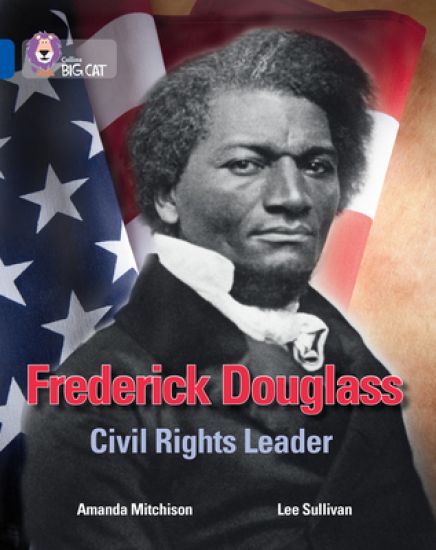
Build your child’s reading confidence at home with books at the right level Antislavery campaigner, author, diplomat and political statesmen, Frederick Douglass was one of the greatest men of his age. Having been enslaved himself, Frederick fought publicly against slavery and was an inspiration in the fight for social and political change. Written by Amanda Mitchison, find out about this life-long battle to fight for equality. Sapphire/Band 16 books offer longer reads to develop children's sustained engagement with texts and are more complex syntactically.Text type: A biographyCurriculum links: History, CitizenshipThis book has been quizzed for Accelerated Reader.
HarperCollins is proud to present its incredible range of best-loved, essential classics. You have seen how a man was made a slave; you shall see how a slave was made a man. Born into slavery during the early nineteenth century, Frederick Douglass escaped to freedom before he was twenty-one years old. From the moment he arrived in New York City, he felt a need to tell his story, one that mirrored so many people still enslaved in the South with no hope of escape. As an orator and preacher, Douglass was an abolitionist, supporter of women’s suffrage and staunch defender of equality for all. In his first autobiographical work, published in 1845, The Narrative of Frederick Douglass describes how he went from slave to a free man.
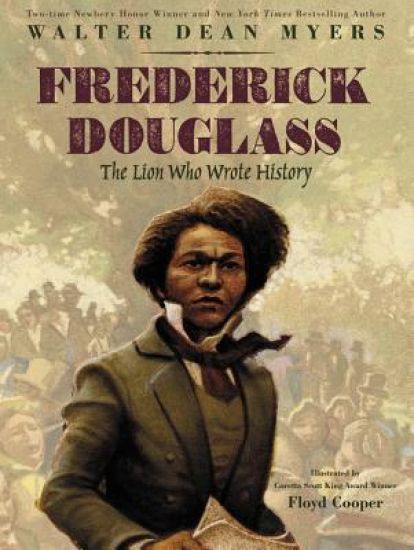
"The go-to Frederick Douglass biography for younger students" (Booklist starred review).In this powerful picture book biography, New York Times bestselling author Walter Dean Myers and acclaimed artist Floyd Cooper take readers on an inspiring journey through the life of Frederick Douglass.Frederick Douglass was born into slavery in the South, taught himself to read, and grew up to become an icon. He was a leader of the abolitionist movement, a celebrated writer, an esteemed speaker, and a social reformer, proving that "once you learn to read, you will be forever free."The story of one of America's most revered figures is brought to life by the text of award-winning author Walter Dean Myers and the sweeping, lush illustrations of artist Floyd Cooper. This picture book biography draws on Frederick Douglass's autobiographies and includes a timeline, making it an excellent source for reports."A stirring testament to the power of words and daring action to create change" (Publishers Weekly starred review).
"The go-to Frederick Douglass biography for younger students" (Booklist starred review).In this powerful picture book biography, New York Times bestselling author Walter Dean Myers and acclaimed artist Floyd Cooper take readers on an inspiring journey through the life of Frederick Douglass.Frederick Douglass was born into slavery in the South, taught himself to read, and grew up to become an icon. He was a leader of the abolitionist movement, a celebrated writer, an esteemed speaker, and a social reformer, proving that "once you learn to read, you will be forever free."The story of one of America's most revered figures is brought to life by the text of award-winning author Walter Dean Myers and the sweeping, lush illustrations of artist Floyd Cooper. This picture book biography draws on Frederick Douglass's autobiographies and includes a timeline, making it an excellent source for reports."A stirring testament to the power of words and daring action to create change" (Publishers Weekly starred review).
An autobiography of author who was born into slavery in Maryland in 1818. He describes his life as a slave - the cruelty he suffered at the hands of plantation owners; his struggles to educate himself in a world where slaves are deliberately kept ignorant; and ultimately, his fight for his right to freedom.
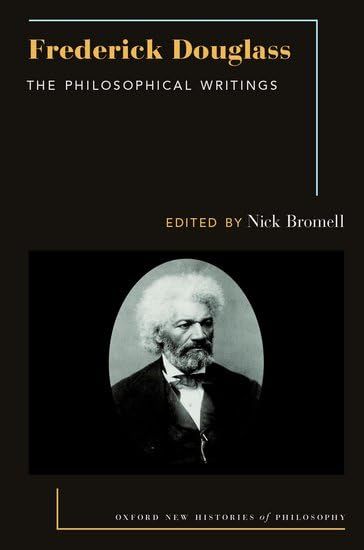
A newly edited collection of the seminal writings and speeches of a legendary writer, orator, and civil rights leader.The life of Frederick Douglass is nothing less than the history of America in the 19th century from slavery to reconstruction. His influence was felt in the political sphere, major social movements, literary culture, and even international affairs. His resounding words tell not only his own remarkable story, but also that of a burgeoning nation forced to reckon with its tremulous moral ground. This compact volume offers a full course on a necessary historical figure, giving voice once again to a man whose guiding words are needed now as urgently as ever. The Portable Frederick Douglass includes the full range of Douglass's writings, from autobiographical writings that span from his life as a slave child to his memories of slavery as an elder statesman in the late 1870s; his protest fiction (one of the first works of African American fiction); his brilliant oratory, constituting the greatest speeches of the Civil War era, which launched his political career; and his journalistic essays that range from cultural and political critique toart, literature, law, history, philosophy, and reform.
A new edition of the classic African American autobiography, now with with the inclusion of Douglass's other works.The pre-eminent American slave narrative published in 1845, the Narrative powerfully details the life of the abolitionist Frederick Douglass from his birth into slavery in 1818 to his escape to the North in 1838: how he endured the daily physical and spiritual brutalities of his owners and drivers, how he learned to read and write, and how he grew into a man who could only live free or die.Also included in this edition are Douglass's famous oration The Meaning of the Fourth of July to the Negro and his only known work of fiction, the novella The Heroic Slave.Frederick Augustus Washington Bailey was born into slavery in 1818 in Tuckahoe, Maryland. He changed his surname to Douglass to conceal his identity after escaping slavery in 1838 and making his way to Philadelphia and New York. Having been taught to read by the wife of one of his former owners, Douglass wrote later that literacy was his 'pathway from slavery to freedom', and in 1845 he published his instantly bestselling Narrative of the Life of Frederick Douglass, an American Slave. Renowned as the foremost African American advocate against slavery and segregation of his time, he repeatedly risked his own freedom as an antislavery lecturer, writer and publisher. He died in Washington, D.C., in 1895, and after lying in state in the nation's capital, was buried in the Mount Hope Cemetery in Rochester, New York.Ira Dworkin is Associate Director of the Prince Alwaleed Center for American Studies and Research and Assistant Professor of English and Comparative Literature at The American University in Cairo.
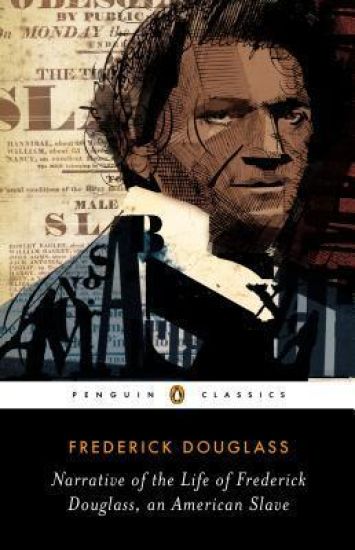
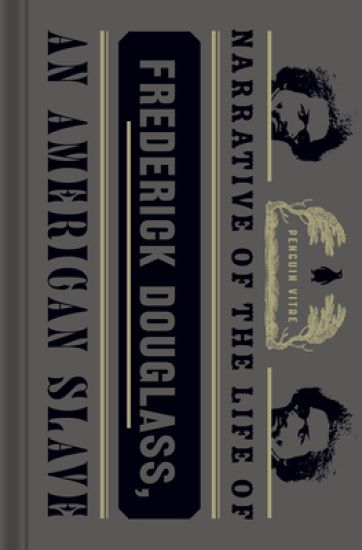
An updated edition of a classic African American autobiography, with new supplementary materials A Penguin Vitae Edition The preeminent American slave narrative first published in 1845, Frederick Douglass's Narrative powerfully details the life of the abolitionist from his birth into slavery in 1818 to his escape to the North in 1838, how he endured the daily physical and spiritual brutalities of his owners and driver, how he learned to read and write, and how he grew into a man who could only live free or die. In addition to Douglass's classic autobiography, this new edition also includes his most famous speech "What to the Slave Is the Fourth of July?" and his only known work of fiction, The Heroic Slave, which was written, in part, as a response to Harriet Beecher Stowe's Uncle Tom's Cabin. Penguin Classics presents Penguin Vitae, loosely translated as "Penguin of one's life," a deluxe hardcover series featuring a dynamic landscape of classic fiction and nonfiction that has shaped the course of our readers' lives. Penguin Vitae invites readers to find themselves in a diverse world of storytellers, with beautifully designed classic editions of personal inspiration, intellectual engagement, and creative originality.