
Kirjahaku
Etsi kirjoja tekijän nimen, kirjan nimen tai ISBN:n perusteella.
1000 tulosta hakusanalla Frederick G Jones

The Teaching of Geography in Relation to the World Community
H. J. Fleure; George H. Green; Celia Evans; J. Lloyd Jones; Frederic Evans; H. G. Wells
Cambridge University Press
2016
pokkari
Originally published in 1933, as part of The School and World Community Series, this book presents a series of accounts regarding the teaching of geography in the context of a global community. The text covers a variety of topics, including racial prejudice, world citizenship and film. This book will be of value to anyone with an interest in geography and the history of education.

General History of the World, from the earliest times until the year 1831. Translated from the German, and continued to 1840, by F. Jones. First American edition.
Carl Wenceslaus Von Rotteck; Frederick Jones
British Library, Historical Print Editions
2011
pokkari

General History of the World, from the earliest times until the year 1831. Translated from the German, and continued to 1840, by F. Jones. First American edition.
Carl Wenceslaus Von Rotteck; Frederick Jones
British Library, Historical Print Editions
2011
pokkari
Title: General History of the World, from the earliest times until the year 1831. Translated from the German, and continued to 1840, by F. Jones. First American edition.Publisher: British Library, Historical Print EditionsThe British Library is the national library of the United Kingdom. It is one of the world's largest research libraries holding over 150 million items in all known languages and formats: books, journals, newspapers, sound recordings, patents, maps, stamps, prints and much more. Its collections include around 14 million books, along with substantial additional collections of manuscripts and historical items dating back as far as 300 BC.The GENERAL HISTORICAL collection includes books from the British Library digitised by Microsoft. This varied collection includes material that gives readers a 19th century view of the world. Topics include health, education, economics, agriculture, environment, technology, culture, politics, labour and industry, mining, penal policy, and social order. ++++The below data was compiled from various identification fields in the bibliographic record of this title. This data is provided as an additional tool in helping to insure edition identification: ++++ British Library Rotteck, Carl Wenceslaus, von; Jones, Frederick M.A.; 1840, 1841. 4 vol.; 8 . 9008.k.4.
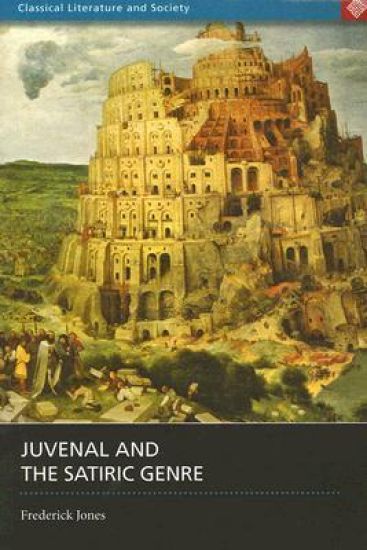
While claiming to stand outside literature altogether, Roman verse satire was the most aggressively literary of Roman genres, Juvenal's particularly so. In the opening lines of the corpus, his performance creates an arena in which the various genres of his Graeco-Roman cultural inheritance jostle to be heard, and are suppressed by his own generic identity. Juvenal and the Satiric Genre considers the fluid nature of the generic field, and how Juvenal comes out of and fits into it. Specifically, it measures his use of names, his ambiguous and sometimes hostile relations with other genres, especially the queen of genres, epic, against his inherited and stated aim (of criticizing malefactors by name), and considers how the aspect of performance impinges on his multi-faceted satiric voice. This challenging series considers Greek and Roman literature primarily in relation to genre and theme. It also aims to place writer and original addressee in their social context. The series will appeal to both scholar and student, and to anyone interested in our classical inheritance.
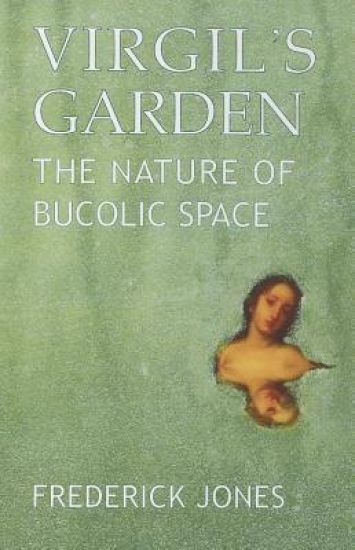
Virgil’s book of bucolic verse, the Eclogues, defines a green space separate from the outside worlds both of other Roman verse and of the real world of his audience. However, the boundaries between inside and outside are deliberately porous. The bucolic natives are aware of the presence of Rome, and Virgil himself is free to enter their world. Virgil's bucolic space is, in many ways, a poetic replication of the public and private gardens of his Roman audience - enclosed green spaces which afforded the citizen sheltered social and cultural activities, temporary respite from the turbulence of public life, and a tamed landscape in which to play out the tensions between the simple ideal and the complexities of reality. This book examines the Eclogues in terms of the relationship between its contents and its cultural context, making connections between the Eclogues and the representational modes of Roman art, Roman concepts of space and landscape, and Roman gardens.
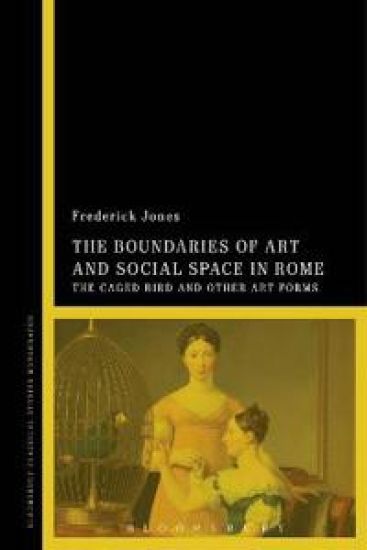
This volume focuses on four cultural phenomena in the Roman world of the late Republic - the garden, a garden painting, tapestry, and the domestic caged bird. They accept or reject a categorisation as art in varying degrees, but they show considerable overlaps in the ways in which they impinge on social space. The study looks, therefore, at the borderlines between things that variously might or might not seem to be art forms. It looks at boundaries in another sense too. Boundaries between different social modes and contexts are embodied and represented in the garden and paintings of gardens, reinforced by the domestic use of decorative textile work, and replicated in the bird cage. The boundaries thus thematised map on to broader boundaries in the Roman house, city, and wider world, becoming part of the framework of the citizen's cognitive development and individual and civic identities. Frederick Jones presents a novel analysis that uses the perspective of cognitive development in relation to how elements of domestic and urban visual culture and the broader world map on to each other. His study for the first time understands the domestic caged bird as a cultural object and uniquely brings together four disparate cases under the umbrella of ‘art’.

Virgil’s book of bucolic verse, the Eclogues, defines a green space separate from the outside worlds both of other Roman verse and of the real world of his audience. However, the boundaries between inside and outside are deliberately porous. The bucolic natives are aware of the presence of Rome, and Virgil himself is free to enter their world. Virgil's bucolic space is, in many ways, a poetic replication of the public and private gardens of his Roman audience - enclosed green spaces which afforded the citizen sheltered social and cultural activities, temporary respite from the turbulence of public life, and a tamed landscape in which to play out the tensions between the simple ideal and the complexities of reality. This book examines the Eclogues in terms of the relationship between its contents and its cultural context, making connections between the Eclogues and the representational modes of Roman art, Roman concepts of space and landscape, and Roman gardens.

This volume focuses on four cultural phenomena in the Roman world of the late Republic - the garden, a garden painting, tapestry, and the domestic caged bird. They accept or reject a categorisation as art in varying degrees, but they show considerable overlaps in the ways in which they impinge on social space. The study looks, therefore, at the borderlines between things that variously might or might not seem to be art forms. It looks at boundaries in another sense too. Boundaries between different social modes and contexts are embodied and represented in the garden and paintings of gardens, reinforced by the domestic use of decorative textile work, and replicated in the bird cage. The boundaries thus thematised map on to broader boundaries in the Roman house, city, and wider world, becoming part of the framework of the citizen's cognitive development and individual and civic identities. Frederick Jones presents a novel analysis that uses the perspective of cognitive development in relation to how elements of domestic and urban visual culture and the broader world map on to each other. His study for the first time understands the domestic caged bird as a cultural object and uniquely brings together four disparate cases under the umbrella of ‘art’.


Black Rose: A Book of Poems and Short Stories
Frederick Jones
Createspace Independent Publishing Platform
2013
nidottu

A Treatise Of The Law Concerning The Liabilities And Rights Of Common Carriers (1827)
George Frederick Jones
KESSINGER PUBLISHING, LLC
2008
nidottu

A Treatise Of The Law Concerning The Liabilities And Rights Of Common Carriers (1827)
George Frederick Jones
KESSINGER PUBLISHING, LLC
2008
sidottu

The Colonization Of The Middle States And Maryland
Frederick Robertson Jones
Kessinger Pub
2007
pokkari

Presents an organised, comprehensive and easy to understand overview of the lighting design process. It covers every topic from the nature of light itself, through selecting the correct equipment, to preparing project plans and the finished design documents. Using a dummy example the student is taken through an entire project step by step where the full range of alternatives and design processes are illustrated. The easy to read conversational tone makes the novice feel at home with complex technical concepts and provides an excellent introduction to all newcomers to the subject. The book is ideal for those working in architecture, electrical engineering and interior design who will one day design lighting systems for others to build. A companion website runs alongside the book, at http://litinterior.com/, supporting distance learning projects, providing manufacturers data, calculation engines and downloadable courses for carrying our design exercises. The content of the courses will be linked directly to the book. Includes US codes and standards.

The Colonization of the Middle States and Maryland
Frederick Robertson Jones
Heritage Books
2013
pokkari

History Of Taxation In Connecticut, 1636-1776 (1896)
Frederick Robertson Jones
KESSINGER PUBLISHING, LLC
2009
pokkari