One of the difficulties that all psychiatrists encounter when they see patients for less than fifty minutes is how to be empathic while on the run. Nowadays the psychiatrist, often behind schedule, has but a Twenty Minute Hour to evaluate a patient’s level of functioning and current symptoms and side effects; to judge their responsiveness to medication; to do some teaching about medication and/or disease management; and finally to complete the chart. Prime Time gives pointers from an experienced clinician on how to deal more effectively and efficiently within time constraints. It is designed to assist psychiatrists with medication and evaluation, and to allow for psychotherapy in addition to the requisite psychopharmacology. The primer provides a number of short cuts and clinical maneuvers in initiating and ending sessions that can help promote positive transference, assist effective flow of information, and aid in closing out the session without falling behind schedule.
One of the difficulties that all psychiatrists encounter when they see patients for less than fifty minutes is how to be empathic while on the run. Nowadays the psychiatrist, often behind schedule, has but a Twenty Minute Hour to evaluate a patient’s level of functioning and current symptoms and side effects; to judge their responsiveness to medication; to do some teaching about medication and/or disease management; and finally to complete the chart. Prime Time gives pointers from an experienced clinician on how to deal more effectively and efficiently within time constraints. It is designed to assist psychiatrists with medication and evaluation, and to allow for psychotherapy in addition to the requisite psychopharmacology. The primer provides a number of short cuts and clinical maneuvers in initiating and ending sessions that can help promote positive transference, assist effective flow of information, and aid in closing out the session without falling behind schedule.
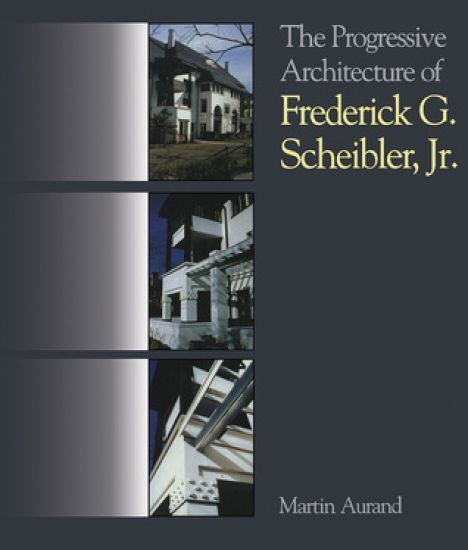
Frederick G. Scheibler, Jr. (1872–1958) was the rare turn-of-the-century American architect who looked to progressive movements such as Art Nouveau and Arts and Crafts for inspiration, rather than conventional styles. His fresh house designs and plans for apartment buildings and multifamily "group cottages" feature dramatic massing, rich detailing, and a wide variety of materials. Scheibler envisioned each building as a work of art, integrating architecture and ornamentation. Prized today, his best works are scattered throughout Pittsburgh's East End and eastern suburbs.This richly illustrated volume, the first comprehensive study of Scheibler, includes 125 historic and contemporary photographs and drawings, a catalogue raisonné of all of his known projects—including many not recorded in any other published source—a list of books in his library, and a selected bibliography.
Lieutenant Frederick G. Schwatka lived a short, but adventurous life filled with notable exploits largely forgotten today. He is best remembered, to the extent remembered at all, as leading an historic Arctic sledge journey while searching for the written records of the ill-fated expedition commanded by the British explorer Sir John Franklin. Schwatka accomplished one of the nineteenth century's most outstanding feats of northern travel by virtue of an open-minded willingness to place his personal trust and reliance in his Inuit companions, who proved instrumental to that success. But Schwatka's eventful life embodied far more than one noteworthy trek to the Far North. His was a remarkable career that merits wider recognition. The proud son of hardy Oregon pioneers, motivated by a spirit of Manifest Destiny, Frederick Schwatka was an enthusiastic participant and meaningful contributor to the country's western and northern expansion. During his lifetime, his restless nature led him to pursue his own course and a wide range of professional undertakings, first as a cavalry officer in the U.S. Army, and then as an intrepid explorer, travel writer and nineteenth-century media personality. Though he could forge sound relationships in the field, he was a contentious figure whose headstrong individualism struggled within the confines of a strict military bureaucracy and with the scientific establishment. Nonetheless, he rose to become one of the most prominent explorers and well-known Americans during his lifetime and thus achieved a level of fame he so desired. As an explorer-for-hire, with his prolific pen and an engaging style, the tales of his adventures brought widespread publicity to the distant and unfamiliar lands of his travels, including the then newly acquired territory of Alaska. Drawing upon diaries, correspondence, and other archival and published sources from the time, Big Wolf brings to light the full story of this controversial man of such varied talents. As the first full-length biography of Schwatka, this book examines Schwatka's role in rolling back an untamed frontier and filling in its "blank" spaces, his rise to fame, and his role in shaping our understanding of those little-known regions and their peoples.
Lieutenant Frederick G. Schwatka lived a short, but adventurous life filled with notable exploits largely forgotten today. He is best remembered, to the extent remembered at all, as leading an historic Arctic sledge journey while searching for the written records of the ill-fated expedition commanded by the British explorer Sir John Franklin. Schwatka accomplished one of the nineteenth century's most outstanding feats of northern travel by virtue of an open-minded willingness to place his personal trust and reliance in his Inuit companions, who proved instrumental to that success. But Schwatka's eventful life embodied far more than one noteworthy trek to the Far North. His was a remarkable career that merits wider recognition. The proud son of hardy Oregon pioneers, motivated by a spirit of Manifest Destiny, Frederick Schwatka was an enthusiastic participant and meaningful contributor to the country's western and northern expansion. During his lifetime, his restless nature led him to pursue his own course and a wide range of professional undertakings, first as a cavalry officer in the U.S. Army, and then as an intrepid explorer, travel writer and nineteenth-century media personality. Though he could forge sound relationships in the field, he was a contentious figure whose headstrong individualism struggled within the confines of a strict military bureaucracy and with the scientific establishment. Nonetheless, he rose to become one of the most prominent explorers and well-known Americans during his lifetime and thus achieved a level of fame he so desired. As an explorer-for-hire, with his prolific pen and an engaging style, the tales of his adventures brought widespread publicity to the distant and unfamiliar lands of his travels, including the then newly acquired territory of Alaska. Drawing upon diaries, correspondence, and other archival and published sources from the time, Big Wolf brings to light the full story of this controversial man of such varied talents. As the first full-length biography of Schwatka, this book examines Schwatka's role in rolling back an untamed frontier and filling in its "blank" spaces, his rise to fame, and his role in shaping our understanding of those little-known regions and their peoples.
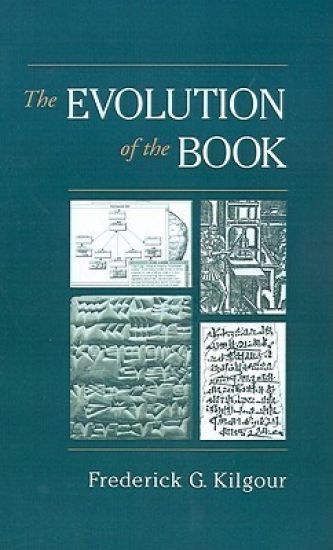
Kilgour's study is a concise history of the book as we know it in all its forms, starting from the very beginning with the invention of writing and concluding at the present time with the electronic revolution and what it may hold for the future. Kilgour himself is a highly respected figure among the bibliophile set. He brings a lifetime's accumulation of knowledge and an historian's curiosity to the writing of this book, which should be picked up enthusiastically by libraries as a tribute and indespensable guide to the object whose legacy they are dedicated to preserving.
Frederick G. Whelan, a leading scholar of Enlightenment political thought, provides an illuminating and incisive interpretation of key eighteenth and nineteenth century European political thinkers' accounts and assessments of the societies and political institutes of the non-Western world. These writers opened up a major new comparative dimension for political theory and its project both to explain and evaluate different political regimes. While the intellectual confrontation of European thinkers with alien cultures tended on the whole to confirm Westerners' sense of the superiority of their own institutions, it was also characterized – during the Enlightenment more so than later – by convictions regarding a common humanity and a corresponding sympathetic curiosity about different ways of life, however primitive or exotic they might appear. This book will be of interest to students and scholars of both political philosophy and thought as well as historians of this important period of history.
Frederick G. Whelan, a leading scholar of Enlightenment political thought, provides an illuminating and incisive interpretation of key eighteenth and nineteenth century European political thinkers' accounts and assessments of the societies and political institutes of the non-Western world. These writers opened up a major new comparative dimension for political theory and its project both to explain and evaluate different political regimes. While the intellectual confrontation of European thinkers with alien cultures tended on the whole to confirm Westerners' sense of the superiority of their own institutions, it was also characterized – during the Enlightenment more so than later – by convictions regarding a common humanity and a corresponding sympathetic curiosity about different ways of life, however primitive or exotic they might appear. This book will be of interest to students and scholars of both political philosophy and thought as well as historians of this important period of history.
The Chemistry of Heterocyclic Compounds, since its inception, has been recognized as a cornerstone of heterocyclic chemistry. Each volume attempts to discuss all aspects – properties, synthesis, reactions, physiological and industrial significance – of a specific ring system. To keep the series up-to-date, supplementary volumes covering the recent literature on each individual ring system have been published. Many ring systems (such as pyridines and oxazoles) are treated in distinct books, each consisting of separate volumes or parts dealing with different individual topics. With all authors are recognized authorities, the Chemistry of Heterocyclic Chemistry is considered worldwide as the indispensable resource for organic, bioorganic, and medicinal chemists.
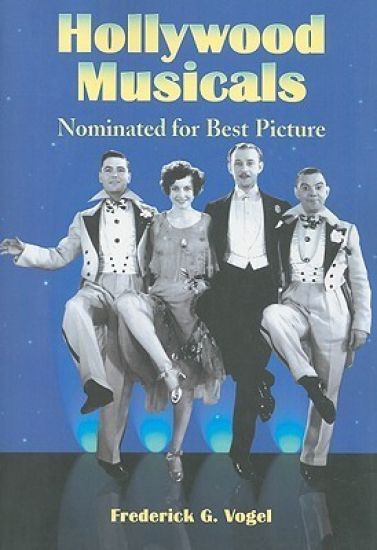
Only one year after the presentation of the first Academy Awards on May 16, 1929, two musicals joined the select group of five films nominated for Best Picture. One, The Broadway Melody, won the award, and since then, 37 additional musicals have received Best Picture nominations. Of those, nine have won the award. This book covers all 39 Hollywood musicals nominated for Best Picture. It explains why each film was nominated and why the winners won, points out the influences that guided the productions, and discusses these films' influences on succeeding films. Plot descriptions are provided, along with facts about the acting, direction, choreography, and orchestration; complete cast and production credits; and comments from critics.
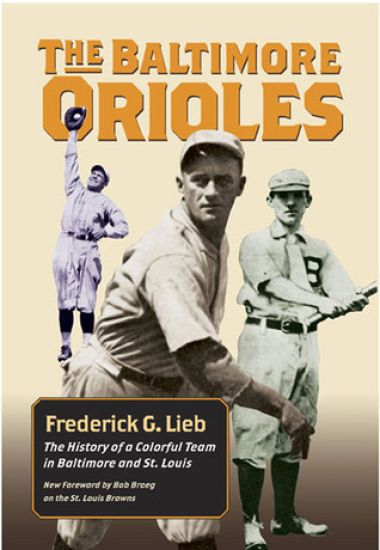
With a legacy that spans two fiercely loyal baseball towns a half-nation apart, the Baltimore Orioles - originally the St. Louis Browns - rank among baseball's most storied teams. One of the fifteen celebrated team histories commissioned by G. P. Putnam's Sons in the 1940s and 1950s, The Baltimore Orioles: The History of a Colorful Team in Baltimore and St. Louis chronicles the club's early history and is reissued on the fiftieth anniversary of their first season in Baltimore. Hall of Fame sportswriter Frederick G. Lieb begins with the history of baseball in Baltimore from its pre-Civil War beginnings and its major-league debut as the Lord Baltimores in 1872 to the championship seasons of the National League Orioles in 1894, '95, and '96 when the roster included Willie Keeler, Joe Kelley, Kid Gleason, Roger Bresnahan, Joe McGinnity, and John McGraw. After the turn of the century, Baltimore was briefly home to the Orioles of the American League from 1901 to 1902, then, after losing its franchise to New York, had to settle for the AAA International League Orioles until 1954. Under the leadership of Jack Dunn, the minor-league Orioles, while developing the talents of Babe Ruth, Lefty Grove, and other future major-league stars, won seven straight International League pennants from 1919 to 1926. Here, too, is the colorful history of the precursors to the current Orioles, the lovable and luckless St. Louis Browns, augmented for this edition with a new foreword from St. Louis sportswriter Bob Broeg on the escapades of the Brownies. Though they lost more than a thousand games and captured only a single pennant in fifty-three seasons, the Browns remain a legendary part of national lore. Taking their lead in different eras from larger-than-life figures such as Branch Rickey, Rogers Hornsby, Urban Shocker, and the Barnum of Baseball, Bill Veeck, the Browns ""boasted a one-armed outfielder, a hired hypnotist, the mighty midget [Eddie Gaedel] and - even the best ballplayer in the land - George Sisler,"" as Broeg recalls in his foreword. Originally published in 1955 and featuring twenty-two photographs, The Baltimore Orioles history concludes with the new American League team's first season in Baltimore, finishing seventh in the league but garnering the lasting adoration of their new hometown.
Theodore of Mopsuestia was hailed in his lifetime as one of the outstanding theologians and bishops in the second half of the fourth and early fifth centuries. He was then and still is respected as the preeminent spokesperson for the School of Antioch's unwavering defense of Christ's full humanity and its exegetical approach to the Scriptures. But within ten years after his death in 428, his enemies began to attack him openly, eventually succeeding in condemning both his works and person at the Second Council of Constantinople in 553. He has since been declared by some as the ""Father of Nestorianism."" In this book, Frederick G. McLeod first establishes the principal influences that shaped Theodore's exegetical outlook. He then draws out the typology that Theodore sees present between Adam and Christ's humanity, exploring three major roles that Christ's humanity plays as the head of all human immortal existence, the bond of the universe, and the perfect image of God. Next McLeod shows how Theodore's customary word for Christ's ""person"" (prosopon) ought to be understood in a functional way. The book concludes by applying these insights to the 71 excerpts that were used to condemn Theodore at the Second Council of Constantinople and proposing that these passages can be interpreted in a different, non-heretical way. This book enables one to judge Theodore's christological statements in the wider context of how he conceives of Christ's roles in salvation. It establishes clearly how Christ can be said to be a true mediator between the Father and all creation. It also makes one aware of the communal dimensions and relationships contained in the notion of ""person."" Finally, it indicates how the body plays an essential role in human and cosmic salvation.
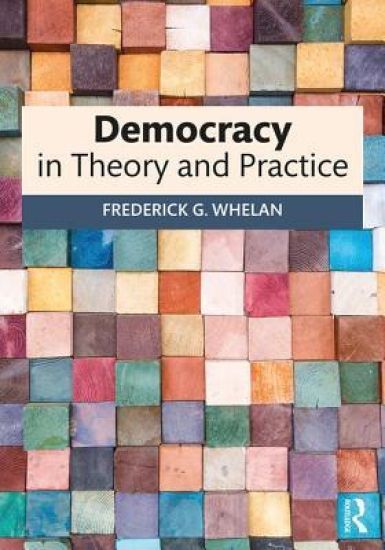
Democracy in Theory and Practice presents an authoritative overview of democratic theory today. Its distinctive approach links theory to practice, emphasizing the wide variety of institutions and procedures through which core democratic principles are implemented and the normative and practical dimensions of the choices to be made among these alternatives. Designed for courses at both the undergraduate and graduate level, the book features eighteen chapters organized thematically and divided into sections and subsections for easy reference; historical and current examples, citations for specific ideas, annotated references, and further readings throughout enhance the volume's utility for students, scholars, and researchers. Sidebars give biographical sketches of classic theorists and democratic ideas from the US founders and constitutional tradition. Featured topics discussed include: Majority Rule; Participation; Deliberation; Accountability; Representation; Constitutionalism; Electoral Laws; Parties; Legislative, Executive, and Judicial Functions. The Boundary Problem; The "All-Affected" Principle; Contested Senses of Liberal and Procedural Democracy; The Pros and Cons of Term Limits; Proportional Representation; Referendums; Problems of Democratic Transparency and Reversibility. Written by a leading authority in the field, Frederick G. Whelan encourages us to think of the many alternative ways of putting democracy into practice and of these alternatives as requiring choices. This diversity means that there is no unique or correct democratic outcome from a given set of preferences, since outcomes are shaped by the methods followed in reaching them.
Democracy in Theory and Practice presents an authoritative overview of democratic theory today. Its distinctive approach links theory to practice, emphasizing the wide variety of institutions and procedures through which core democratic principles are implemented and the normative and practical dimensions of the choices to be made among these alternatives. Designed for courses at both the undergraduate and graduate level, the book features eighteen chapters organized thematically and divided into sections and subsections for easy reference; historical and current examples, citations for specific ideas, annotated references, and further readings throughout enhance the volume's utility for students, scholars, and researchers. Sidebars give biographical sketches of classic theorists and democratic ideas from the US founders and constitutional tradition. Featured topics discussed include: Majority Rule; Participation; Deliberation; Accountability; Representation; Constitutionalism; Electoral Laws; Parties; Legislative, Executive, and Judicial Functions. The Boundary Problem; The "All-Affected" Principle; Contested Senses of Liberal and Procedural Democracy; The Pros and Cons of Term Limits; Proportional Representation; Referendums; Problems of Democratic Transparency and Reversibility. Written by a leading authority in the field, Frederick G. Whelan encourages us to think of the many alternative ways of putting democracy into practice and of these alternatives as requiring choices. This diversity means that there is no unique or correct democratic outcome from a given set of preferences, since outcomes are shaped by the methods followed in reaching them.
This work has been selected by scholars as being culturally important and is part of the knowledge base of civilization as we know it.This work is in the public domain in the United States of America, and possibly other nations. Within the United States, you may freely copy and distribute this work, as no entity (individual or corporate) has a copyright on the body of the work.Scholars believe, and we concur, that this work is important enough to be preserved, reproduced, and made generally available to the public. To ensure a quality reading experience, this work has been proofread and republished using a format that seamlessly blends the original graphical elements with text in an easy-to-read typeface.We appreciate your support of the preservation process, and thank you for being an important part of keeping this knowledge alive and relevant.