

Kirjahaku
Etsi kirjoja tekijän nimen, kirjan nimen tai ISBN:n perusteella.
1000 tulosta hakusanalla Frederick Keeney

For his version of the Aeneid, Dryden formed a style vigorous yet refined and drew on the deep understanding of political unrest he had acquired during the Civil Wars of 1642-51 and the Glorious Revolution of 1688.
F W Keene was a respected Elder who ministered amongst the Primitive and Old School Baptists in the USA. His many writings in the various Primitive Baptist and Old School Baptists Magazines are being brought together in a series of volumes, this being the third volume in the series. Included are Twenty-eight of Elder Keene's expository, Allegorical and Doctrinal writings. A Foreword by Mr James E North, the editor of this volume,is also included
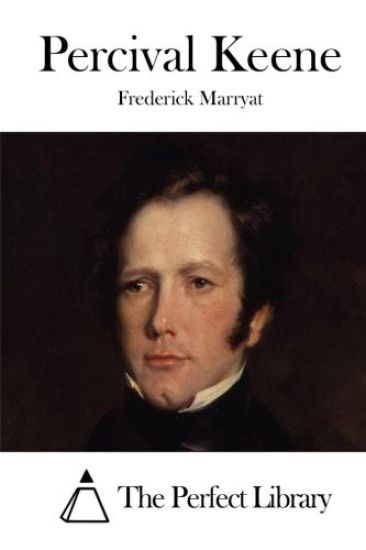
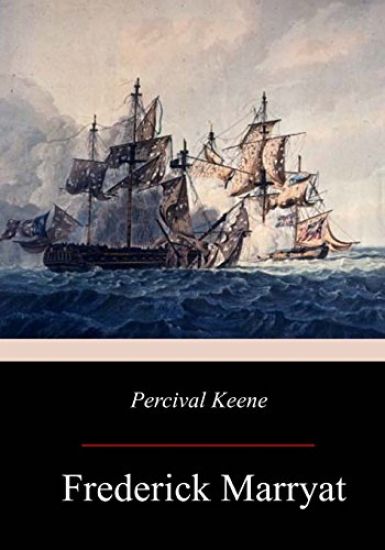
Percival Keene (1842) is a novel by Frederick Marryat. Inspired by the author’s experience as a captain in the Royal Navy, Percival Keene is a tale of bravery, identity, and the manifold reasons for men to take to the high seas. Frequently funny, often profound, Marryat’s novel is an underappreciated classic of nineteenth century fiction. “‘Dead! Well, fathers do die sometimes; you must get on how you can without one. I don’t think fathers are of much use, for, you see, mothers take care of you till you’re old enough to go to sea. My father did nothing for me, except to help mother to lick me, when I was obstropolous.’” Percival Keene is a troubled young man: raised by his mother and grandmother, he gains a reputation for troublemaking and disobedience early on. At school, he lashes out against bullying teacher Mr. O’Gallagher by adding poison to his sandwiches, knowing that the man will steal his lunch as usual. On Guy Fawkes Day, however, Percival finally crosses the line by setting off fireworks underneath O’Gallagher’s office, destroying the school and nearly killing the Irishman. Years later, having lost his chance at receiving an education, Percival enlists in the Royal Navy. While serving on the H.M. Calliope, he discovers that his father may not have been the marine Ben Keene, but rather his employer Captain Delmar. With a beautifully designed cover and professionally typeset manuscript, this edition of Frederick Marryat’s Percival Keene is a classic of British literature reimagined for modern readers.
Percival Keene (1842) is a novel by Frederick Marryat. Inspired by the author’s experience as a captain in the Royal Navy, Percival Keene is a tale of bravery, identity, and the manifold reasons for men to take to the high seas. Frequently funny, often profound, Marryat’s novel is an underappreciated classic of nineteenth century fiction. “‘Dead! Well, fathers do die sometimes; you must get on how you can without one. I don’t think fathers are of much use, for, you see, mothers take care of you till you’re old enough to go to sea. My father did nothing for me, except to help mother to lick me, when I was obstropolous.’” Percival Keene is a troubled young man: raised by his mother and grandmother, he gains a reputation for troublemaking and disobedience early on. At school, he lashes out against bullying teacher Mr. O’Gallagher by adding poison to his sandwiches, knowing that the man will steal his lunch as usual. On Guy Fawkes Day, however, Percival finally crosses the line by setting off fireworks underneath O’Gallagher’s office, destroying the school and nearly killing the Irishman. Years later, having lost his chance at receiving an education, Percival enlists in the Royal Navy. While serving on the H.M. Calliope, he discovers that his father may not have been the marine Ben Keene, but rather his employer Captain Delmar. With a beautifully designed cover and professionally typeset manuscript, this edition of Frederick Marryat’s Percival Keene is a classic of British literature reimagined for modern readers.

This work has been selected by scholars as being culturally important and is part of the knowledge base of civilization as we know it.This work is in the public domain in the United States of America, and possibly other nations. Within the United States, you may freely copy and distribute this work, as no entity (individual or corporate) has a copyright on the body of the work.Scholars believe, and we concur, that this work is important enough to be preserved, reproduced, and made generally available to the public. To ensure a quality reading experience, this work has been proofread and republished using a format that seamlessly blends the original graphical elements with text in an easy-to-read typeface.We appreciate your support of the preservation process, and thank you for being an important part of keeping this knowledge alive and relevant.
One of Marryat's most entertaining follows adventures, Percival Keene follows namesake character, a low-born seaman, on a mission to discover and claim his true parentage and identity. Young Keene endures baffles both great and small, a stint on board a pirate ship, a stormy romance, and near-execution at the hands of Napoleon himself, all told with Marryat's trademark panache. A page-turning nautical yarn with brilliant historical re-creations of life and war at sea.
Implication, Readers' Resources, and Thomas Gray's Pindaric Odes
Frederick M. Keener
University of Delaware Press
2012
sidottu
Implication, Readers' Resources, and Thomas Gray's Pindaric Odes presents an account of “the Poets’ Secret,” the quite belated, historically recent, discovery by scholars and critics of something many poets have recognized and employed for ages: the sense expressed by allusively parallel parts within a text—thus expressed intratextually rather than only intertextually. Inferential perception of the implicit sense produced logically and linguistically—by enthymemes, implicatures, and other intratextual features, as well as intertextual ones—can be indispensable for readers’ comprehension of literary as well as other texts, especially their difficult passages. Implication, Readers' Resources, and Thomas Gray's Pindaric Odes addresses these elusive matters as they have historically been posed by Thomas Gray’s Pindaric odes of 1757, and mainly the first of them, “The Progress of Poesy,” a poem that readers have more or less knowledgeably struggled to understand from the outset. The process of disclosing that ode’s sense can be aided by new further reference to Paradise Lost, in the context of Gray’s largely unpublished Commonplace Book, with its extensive, little-studied, and very pertinent use of Plato and Locke.
Implication, Readers' Resources, and Thomas Gray's Pindaric Odes
Frederick M. Keener
University of Delaware Press
2014
nidottu
Implication, Readers' Resources, and Thomas Gray's Pindaric Odes presents an account of “the Poets’ Secret,” the quite belated, historically recent, discovery by scholars and critics of something many poets have recognized and employed for ages: the sense expressed by allusively parallel parts within a text—thus expressed intratextually rather than only intertextually. Inferential perception of the implicit sense produced logically and linguistically—by enthymemes, implicatures, and other intratextual features, as well as intertextual ones—can be indispensable for readers’ comprehension of literary as well as other texts, especially their difficult passages. Implication, Readers' Resources, and Thomas Gray's Pindaric Odes addresses these elusive matters as they have historically been posed by Thomas Gray’s Pindaric odes of 1757, and mainly the first of them, “The Progress of Poesy,” a poem that readers have more or less knowledgeably struggled to understand from the outset. The process of disclosing that ode’s sense can be aided by new further reference to Paradise Lost, in the context of Gray’s largely unpublished Commonplace Book, with its extensive, little-studied, and very pertinent use of Plato and Locke.
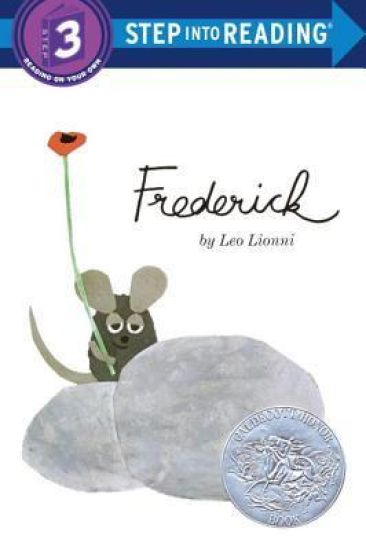
Leo Lionni's Caldecott Honor-winning story is now available as a Step 3 Step into Reading book--perfect for children who are ready to read on their own. Winter is coming, and all the mice are gathering food . . . except for Frederick. But when the days grow short and the snow begins to fall, it's Frederick's stories that warm the hearts and spirits of his fellow field mice. Lionni's enduringly popular tale makes a winning addition to the Step into Reading line, letting young children enjoy this classic all by themselves.