Kirjahaku
Etsi kirjoja tekijän nimen, kirjan nimen tai ISBN:n perusteella.
1000 tulosta hakusanalla Fredric Brown

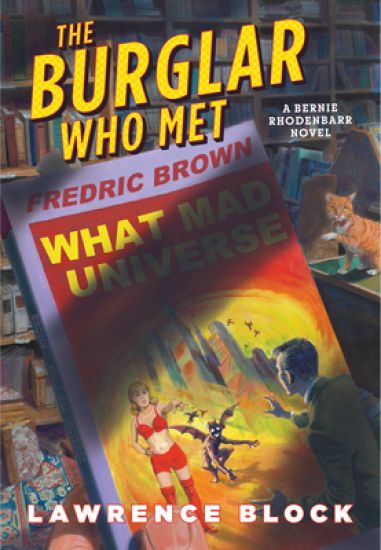
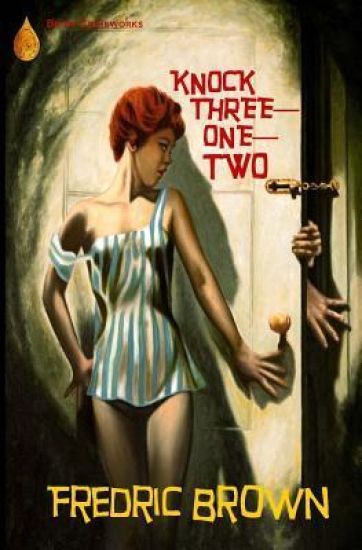
Suppose you're Bernie Rhodenbarr.You've got a dream job, running your own cozy secondhand bookstore, complete with Raffles, your caudally challenged cat. It's in Greenwich Village, and your best friend's dog grooming salon is two doors away, and the two of you lunch together and meet for drinks after work.And you've got another way to make a buck. Every once in a while you put your conscience on the shelf and let yourself into someone else's residence, and you leave with more than you came with. You're a burglar, and you know it's wrong, but you love it.And you're good at it. You've got two ways to make a living, one larcenous, the other literary and legitimate, and you're good at both of them.Nice, huh?Until the 21st Century pulls the rug out from under you. All of a sudden the streets of your city are so overpopulated with security cameras and closed-circuit TV that you have to lock yourself in the bathroom to have an undocumented moment. And locks, which used to provide the recreational pleasure of a moderately challenging crossword puzzle, have become genuinely pickproof.Meanwhile, internet booksellers have muscled your legit enterprise into obsolescence. The new breed of customers browse your bookshop, find what they're looking for, then whip out their phones and order their books online.Wonderful. You had two ways to make a living, and neither of them works anymore.But suppose you keep on supposing, okay?Suppose you wake up one morning in a world just like the one in which you fell asleep-but with a couple of differences.The first one you notice doesn't amount to much. The Metrocard in your wallet has somehow changed color and morphed into what seems to be called a SubwayCard. That's puzzling, but you swipe it at the turnstile same as always, and it gets you on the subway, so what difference does it make?But that's not the only thing that's changed. The Internet's up and running, as robust as ever, but nobody seems to be using it to sell books. Doors are secured not with pickproof electronic gizmos but with good old reliable Rabson locks, the kind you can open with your eyes closed. And what happened to all those security cameras? Where'd they go?All of a sudden you've got your life back, and your bookshop's packed with eager customers, and how are you gonna find time to steal something?Well, just suppose one of the world's worst human beings has recently acquired one of the world's most glamorous gems. When the legendary Kloppmann Diamond is up for grabs, what can you possibly do but grab it?And what could possibly go wrong?

Earthmen Bearing Gifts by Frederic Brown, Science Fiction, Fantasy
Fredric Brown
Aegypan
2011
pokkari
But this is a Fredric Brown story -- and you know that a perfect setup doesn't follow through in a Fredric Brown story. Something really and truly terrible is about to happen. Like, maybe the end of the world. Or worse
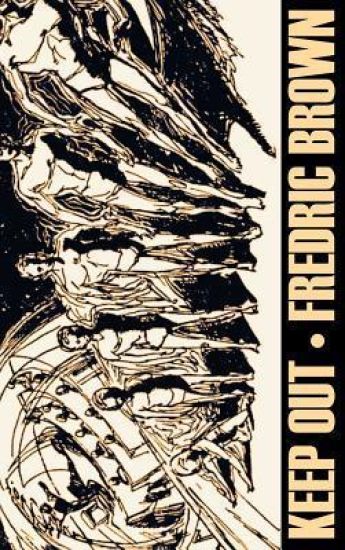
For fifty years he had tried to colonize Mars and all his efforts had failed. Besides this dome which had been built for us there was only one other outpost, another glassite dome much smaller and less than a mile away. It had looked as though mankind could never spread to the other planets of the solar system besides Earth for of all of them Mars was the least inhospitable; if he couldn't live here there was no use even trying to colonize the others.
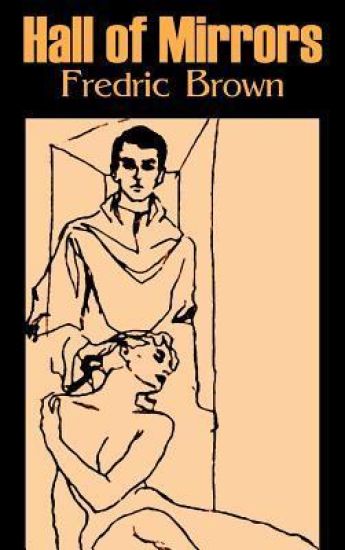
Hall of Mirrors by Frederic Brown, Science Fiction, Fantasy, Adventure
Fredric Brown
Aegypan
2011
sidottu
For an instant you think it is temporary blindness, this sudden dark that comes in the middle of a bright afternoon.It must be blindness, you think; could the sun that was tanning you have gone out instantaneously, leaving you in utter blackness?Then the nerves of your body tell you that you are standing, whereas only a second ago you were sitting comfortably, almost reclining, in a canvas chair. In the patio of a friend's house in Beverly Hills. Talking to Barbara, your fiancee. Looking at Barbara -- Barbara in a swim suit -- her skin golden tan in the brilliant sunshine, beautiful. . . .
Hall of Mirrors by Frederic Brown, Science Fiction, Fantasy, Adventure
Fredric Brown
Aegypan
2011
pokkari
For an instant you think it is temporary blindness, this sudden dark that comes in the middle of a bright afternoon.It must be blindness, you think; could the sun that was tanning you have gone out instantaneously, leaving you in utter blackness?Then the nerves of your body tell you that you are standing, whereas only a second ago you were sitting comfortably, almost reclining, in a canvas chair. In the patio of a friend's house in Beverly Hills. Talking to Barbara, your fiancee. Looking at Barbara -- Barbara in a swim suit -- her skin golden tan in the brilliant sunshine, beautiful. . . .




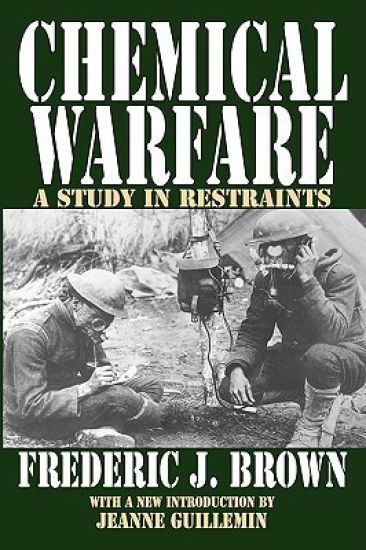
In the aftermath of 9/11, the potential terror of weapons of mass destruction--from nuclear, biological, and chemical to dirty bombs--preoccupies national security experts. In Chemical Warfare, Frederic J. Brown, presents a cogent, innovative framework for understanding the historical forces that have restrained the use of WMD and how they continue to have relevance today. Analyzing both world wars, he argues that the restraints on use were complex and often unpredictable and ranged from the political to the technological. The author offers a detailed examination of American chemical warfare policy as it was shaped by industry and public sentiment, as well as national and military leaders. The organization of the book into three parts reflects the importance of battlefield experiences during the First World War and of international political restraints as they evolved during the interwar years and culminated in "no first use" policies by major powers in World War II. Part I examines the use of chemical weapons in World War I as it influenced subsequent national policy decisions. Part II focuses on the evolution of political, military, economic, and psychological restraints from 1919 to 1939. Part III discusses World War II during two critical periods: 1939 to early 1942, when the environment of the war was being established largely without American influence; and during 1945, when the United States faced no credible threat of retaliation to deter its strategic and battlefield use of chemical weapons. Written at the height of controversy about the U.S. use of chemicals in Vietnam, Chemical Warfare offers a valuable historical perspective, as relevant now in its analysis of chemical and also nuclear policy as it was when first published.
In the aftermath of 9/11, the potential terror of weapons of mass destruction--from nuclear, biological, and chemical to dirty bombs--preoccupies national security experts. In Chemical Warfare, Frederic J. Brown, presents a cogent, innovative framework for understanding the historical forces that have restrained the use of WMD and how they continue to have relevance today. Analyzing both world wars, he argues that the restraints on use were complex and often unpredictable and ranged from the political to the technological. The author offers a detailed examination of American chemical warfare policy as it was shaped by industry and public sentiment, as well as national and military leaders. The organization of the book into three parts reflects the importance of battlefield experiences during the First World War and of international political restraints as they evolved during the interwar years and culminated in "no first use" policies by major powers in World War II. Part I examines the use of chemical weapons in World War I as it influenced subsequent national policy decisions. Part II focuses on the evolution of political, military, economic, and psychological restraints from 1919 to 1939. Part III discusses World War II during two critical periods: 1939 to early 1942, when the environment of the war was being established largely without American influence; and during 1945, when the United States faced no credible threat of retaliation to deter its strategic and battlefield use of chemical weapons. Written at the height of controversy about the U.S. use of chemicals in Vietnam, Chemical Warfare offers a valuable historical perspective, as relevant now in its analysis of chemical and also nuclear policy as it was when first published.

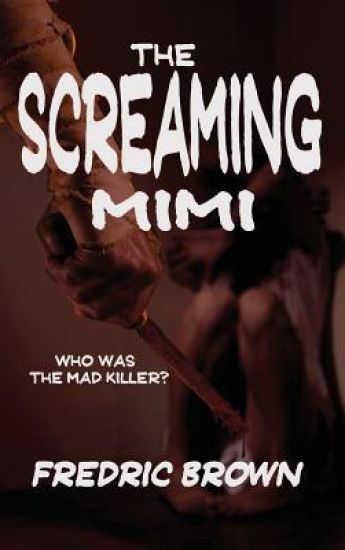


From legendary master Fredric Brown An ex-newspaperman finds crime going on, based on radio scripts he wrote.