

Kirjahaku
Etsi kirjoja tekijän nimen, kirjan nimen tai ISBN:n perusteella.
950 tulosta hakusanalla Friedhelm A. E. Schmidt
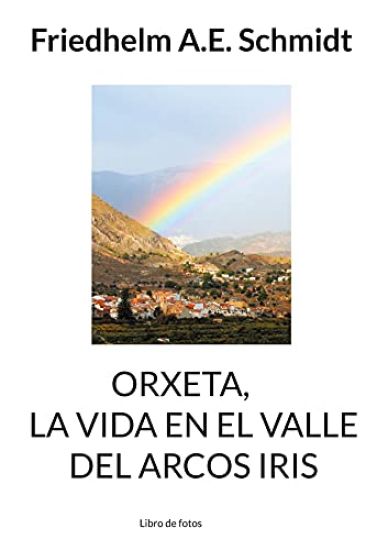
Orxeta, La vida en El Valle del Arcos Iris
Friedhelm A. E. Schmidt
BoD - Books on Demand
2021
sidottu


Joseph Beuys–Manresa – A Spiritual Geography
Friedhelm Mennekes; Pilar Parcerisas; Henning Christiansen; Björn Nörgaard; Klaus–d. Pohl
Editorial Tenov S.L.
2022
nidottu
The first performances by Joseph Beuys were a radical turning point for twentieth-century art. Beuys saw art as a transformative action that is both personal and communal, and his expanded artistic practice engaged spirituality, personal mythology, political structures, and symbolic materials. For Manresa, one of his legendary performance actions, which took place on December 15, 1966 in Düsseldorf, he collaborated with the Danish artists Henning Christiansen and Bjørn Nørgaard. This book presents never-before-seen materials from the performance, including texts, images, scripts, and preparatory drawings, alongside contributions from scholars and critics that offer further insight. Friedhelm Mennekes, an art critic and Jesuit priest, analyses Saint Ignatius of Loyola’s imprint on Beuys’s work while elucidating its spiritual complexity, looking beyond the popular vision of the artist as shaman. Pilar Parcerisas examines Beuys’s spiritual geography, explaining the importance the town of Manresa within it and also laying out the physical and mystical coordinates of Eurasia, a site that was always present in Beuys’s work. Klaus-D. Pohl addresses the paradoxical union between Beuys’s mysticism and the neo-Dadaists of Fluxus. Beuys’s collaborator Bjørn Nørgaard recalls his time working with the German artist and reflects on the paths he opened up. Finally, art historian Harald Szeemann considers the possibility of liberating politics through spirituality.


The Holocaust Boxcar - A Powerful Admonition Against Anti-Semitism
Joachim Reppmann; Friedhelm Caspari
Joachim Reppmann
2016
pokkari
"You must know everything that happened then. And why it happened." This is the appeal made by the Auschwitz survivor Esther Bejarano to the present and future generations. In doing this, she issues a mandate not only to Germans, but to all the nations, to go beyond remembering and memorializing the millions of victims of National Socialist tyranny by understanding its historical context. On May 8, 1985, Richard von Weizs cker said as a former president of the Federal Republic, "It is not a matter of overcoming the past. That simply cannot be done. It is not possible to make it 'undone.' But anyone who closes his eyes to the past becomes blind to the present. Anyone who does not remember that inhumanity exists, becomes susceptible to new dangers of infection."
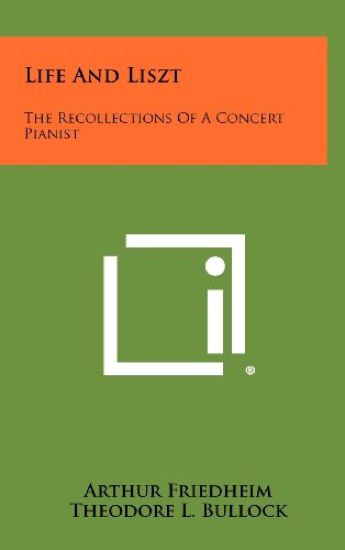
Life and Liszt: The Recollections of a Concert Pianist
Arthur Friedheim; Theodore L. Bullock
Literary Licensing, LLC
2012
sidottu
""Life and Liszt: The Recollections of a Concert Pianist"" is a memoir written by Arthur Friedheim, a renowned concert pianist who was a student and friend of Franz Liszt. The book is a fascinating account of Friedheim's life and career as a pianist, as well as his personal experiences with Liszt, one of the greatest pianists and composers of the 19th century. Friedheim shares his memories of Liszt's teaching methods, his performances, and his personal life. He also provides insights into the world of classical music during the late 19th and early 20th centuries, including the challenges and rewards of being a touring pianist. The book is a valuable resource for anyone interested in classical music, piano performance, and the life and work of Franz Liszt. It is a beautifully written and engaging memoir that offers a unique perspective on one of the most influential figures in the history of classical music.This scarce antiquarian book is a facsimile reprint of the old original and may contain some imperfections such as library marks and notations. Because we believe this work is culturally important, we have made it available as part of our commitment for protecting, preserving, and promoting the world's literature in affordable, high quality, modern editions, that are true to their original work.
Life and Liszt: The Recollections of a Concert Pianist
Arthur Friedheim; Theodore L. Bullock
Literary Licensing, LLC
2012
nidottu
Nouveau théâtre allemand . Par MM. Friedel et de Bonneville
Friedel-A
Hachette Livre Bnf
2018
pokkari

Friedel and Gina: A True Story of Sisterhood and Survival During the Holocaust
Jeremy Dronfield
Quill Tree Books
2026
sidottu
LÉquation de Fredholm et ses applications a la physique mathématique (Edition1)
Edward John Bidwell; John Henry Cody
Alpha Editions
2023
nidottu
Some Essentials of Religion, a classical book, has been considered important throughout the human history, and so that this work is never forgotten we at Alpha Editions have made efforts in its preservation by republishing this book in a modern format for present and future generations. This whole book has been reformatted, retyped and designed. These books are not made of scanned copies of their original work and hence the text is clear and readable.
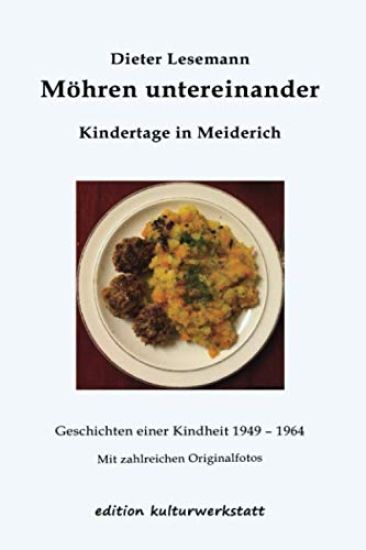
Der Autor ber sein Buch: "30 Jahre lang dauerte mein Unterricht an der Bronkhorst-Schule. Sechs Jahrg nge von Klasse 5 bis 9 habe ich begleitet. Als die Zahl der Ausl nder in den 80-er Jahren wuchs, waren auch die Bem hungen um Integration ebenfalls gestiegen. Die Berichte in diesem Buch habe ich von ehemaligen Sch lern, die ich auf der von-der-Mark-Strasse (Fu g ngerzone in Meiderich) oder bei Klassentreffen getroffen habe, erz hlt bekommen. Aus der Sch lerzeitung wurden auch einige entnommen. Alle Anekdoten beinhalten pers nliche Erlebnisse in einer Klasse, mit Klassenkameraden im Umfeld der Schule und bei Schullandheimaufenthalten. Hinzu kommen eigene Beobachtungen und Erinnerungen an die 30-j hrige Schulzeit."
Historian, philosopher, critic, playwright, journalist, and actor, Egon Friedell was a key figure in the extraordinary flowering of Viennese culture between the two world wars. His masterpiece, A Cultural History of the Modern Age, demonstrates the intellectual universality that Friedell saw as guarantor of the continuity and regeneration of European civilization.Following a brilliant opening essay on cultural history and why it should be studied, the first volume begins with an analysis of the transformation of the Medieval mind as it evolved from the Black Death to the Thirty Years War. The emphasis is on the spiritual and cultural vortex of civilization, but Friedell never forgets the European roots in pestilence, death, and superstition that animate a contrary drive toward reason, refinement, intellectual curiosity, and scientific knowledge. While these values reached their apogee during the Renaissance, Friedell shows that each cultural victory is precarious, and Europe was always in danger of slipping back into barbarism. Friedell's historical vision embraces the whole of Western culture and its development. It is a consistent probing for the divine in the world's course and is, therefore, theology; it is research into the basic forces of the human soul and is, therefore, psychology; it is the most illuminating presentation of the forms of state and society and, therefore, is politics; the most varied collection of all art-creations and is, therefore, aesthetics.Thomas Mann regarded Friedell as one of the great stylists in the German language. Like the works of the great novelist, A Cultural History of the Modern Age offers a dramatic history of the last six centuries, showing the driving forces of each age. The new introduction provides a fascinating biographical sketch of Friedell and his cultural milieu and analyzes his place in intellectual history.

This is the second volume of Friedell's monumental A Cultural History of the Modern Age. A key figure in the flowering of Viennese culture between the two world wars, this three volume work is considered his masterpiece. The centuries covered in this second volume mark the victory of the scientifi c mind: in nature-research, language-research, politics, economics, war, even morality, poetry, and religion. All systems of thought produced in this century, either begin with the scientifi c outlook as their foundation or regard it as their highest and fi nal goal.Friedell claims three main streams pervade the eighteenth century: Enlightenment, Revolution, and Classicism. In ordinary use, by "Enlightenment" we mean an extreme rationalistic tendency of which preliminary stages were noted in the seventeenth century. Th e term "Classicism", is well understood.Under the term "Revolution" Friedell includes all movements directed against what has been dominant and traditional. Th e aims of such movements were remodeling the state and society, banning all esthetic canons, and dethronement of reason by sentiment, all in the name of the "Return to Nature." Th e Enlightenment tendency might be seen as laying the ground for an age of revolution. Th is second volume continues Friedell's dramatic history of the driving forces of the twentieth century.
Volume three of A Cultural History of the Modern Age finishes a journey that begins with Descartes in the first volume and ends with Freud and the psychoanalytical movement in the third volume. Friedell describes the contents of these books as a series of performances, starting with the birth of the man of the Modern Age, followed by flowering of this epoch, and concludes with the death of the Modern Age.This huge landscape provides an intertwining of the material and the cultural, the civil and the military, from the high points of creative flowering in Europe to death and emptiness. The themes convey multiple messages: romanticism and liberalism opens the cultural scene, encased in a movement from The Congress of Vienna and its claims of peaceful co-existence to the Franco-German War. The final segment covers the period from Bismarck's generation to World War I. In each instance, the quotidian life of struggle, racial, religious, and social class is seen through the lens of the mighty figures of the period.The works of the period's great figures are shown in the new light of the human search for symbolism, the search for superman, the rise of individualism and decline of history as a source for knowledge. This third volume is painted in dark colors, a foreboding of the world that was to come, of political extremes, and intellectual exaggerations. The author looks forward to a postmodern Europe in which there is a faint glean of light from the other side. What actually appeared was the glare of Nazism and Communism, each claiming the future.
Historian, philosopher, critic, playwright, journalist, and actor, Egon Friedell was a key figure in the extraordinary flowering of Viennese culture between the two world wars. His masterpiece, A Cultural History of the Modern Age, demonstrates the intellectual universality that Friedell saw as guarantor of the continuity and regeneration of European civilization.Following a brilliant opening essay on cultural history and why it should be studied, the first volume begins with an analysis of the transformation of the Medieval mind as it evolved from the Black Death to the Thirty Years War. The emphasis is on the spiritual and cultural vortex of civilization, but Friedell never forgets the European roots in pestilence, death, and superstition that animate a contrary drive toward reason, refinement, intellectual curiosity, and scientific knowledge. While these values reached their apogee during the Renaissance, Friedell shows that each cultural victory is precarious, and Europe was always in danger of slipping back into barbarism. Friedell's historical vision embraces the whole of Western culture and its development. It is a consistent probing for the divine in the world's course and is, therefore, theology; it is research into the basic forces of the human soul and is, therefore, psychology; it is the most illuminating presentation of the forms of state and society and, therefore, is politics; the most varied collection of all art-creations and is, therefore, aesthetics.Thomas Mann regarded Friedell as one of the great stylists in the German language. Like the works of the great novelist, A Cultural History of the Modern Age offers a dramatic history of the last six centuries, showing the driving forces of each age. The new introduction provides a fascinating biographical sketch of Friedell and his cultural milieu and analyzes his place in intellectual history.
This is the second volume of Friedell's monumental A Cultural History of the Modern Age. A key figure in the flowering of Viennese culture between the two world wars, this three volume work is considered his masterpiece. The centuries covered in this second volume mark the victory of the scientifi c mind: in nature-research, language-research, politics, economics, war, even morality, poetry, and religion. All systems of thought produced in this century, either begin with the scientifi c outlook as their foundation or regard it as their highest and fi nal goal.Friedell claims three main streams pervade the eighteenth century: Enlightenment, Revolution, and Classicism. In ordinary use, by "Enlightenment" we mean an extreme rationalistic tendency of which preliminary stages were noted in the seventeenth century. Th e term "Classicism", is well understood.Under the term "Revolution" Friedell includes all movements directed against what has been dominant and traditional. Th e aims of such movements were remodeling the state and society, banning all esthetic canons, and dethronement of reason by sentiment, all in the name of the "Return to Nature." Th e Enlightenment tendency might be seen as laying the ground for an age of revolution. Th is second volume continues Friedell's dramatic history of the driving forces of the twentieth century.
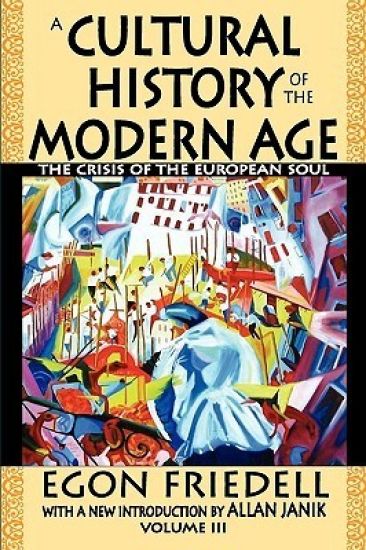
Volume three of A Cultural History of the Modern Age finishes a journey that begins with Descartes in the first volume and ends with Freud and the psychoanalytical movement in the third volume. Friedell describes the contents of these books as a series of performances, starting with the birth of the man of the Modern Age, followed by flowering of this epoch, and concludes with the death of the Modern Age.This huge landscape provides an intertwining of the material and the cultural, the civil and the military, from the high points of creative flowering in Europe to death and emptiness. The themes convey multiple messages: romanticism and liberalism opens the cultural scene, encased in a movement from The Congress of Vienna and its claims of peaceful co-existence to the Franco-German War. The final segment covers the period from Bismarck's generation to World War I. In each instance, the quotidian life of struggle, racial, religious, and social class is seen through the lens of the mighty figures of the period.The works of the period's great figures are shown in the new light of the human search for symbolism, the search for superman, the rise of individualism and decline of history as a source for knowledge. This third volume is painted in dark colors, a foreboding of the world that was to come, of political extremes, and intellectual exaggerations. The author looks forward to a postmodern Europe in which there is a faint glean of light from the other side. What actually appeared was the glare of Nazism and Communism, each claiming the future.