Kirjojen hintavertailu. Mukana 11 342 296 kirjaa ja 12 kauppaa.

Kirjahaku

Etsi kirjoja tekijän nimen, kirjan nimen tai ISBN:n perusteella.

1000 tulosta hakusanalla Friedrich Wilhelm Nietzsche

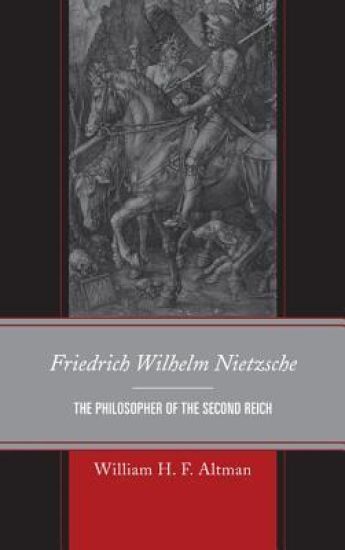
Friedrich Wilhelm Nietzsche

Friedrich Wilhelm Nietzsche

William H. F. Altman

Lexington Books
2012
sidottu
When careful consideration is given to Nietzsche’s critique of Platonism and to what he wrote about Bismarck, Kaiser Wilhelm, and to Germany’s place in “international relations” (die Große Politik), the philosopher’s carefully cultivated “pose of untimeliness” is revealed to be an imposture. As William H. F. Altman demonstrates, Nietzsche should be recognized as the paradigmatic philosopher of the Second Reich, the short-lived and equally complex German Empire that vanished in World War One. Since Nietzsche is a brilliant stylist whose seemingly disconnected aphorisms have made him notoriously difficult for scholars to analyze, Friedrich Wilhelm Nietzsche is presented in Nietzsche’s own style in a series of 155 brief sections arranged in five discrete “Books,” a structure modeled on Daybreak. All of Nietzsche’s books are considered in the context of the close and revealing relationship between “Friedrich Wilhelm Nietzsche” (named by his patriotic father after the King of Prussia) and the Second Reich. In “Preface to ‘A German Trilogy,’” Altman joins this book to two others already published by Lexington Books: Martin Heidegger and the First World War: Being and Time as Funeral Oration and The German Stranger: Leo Strauss and National Socialism.
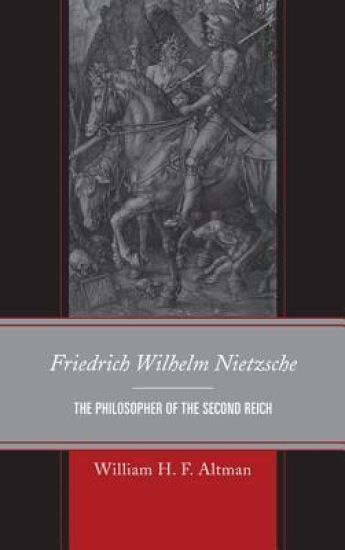
Friedrich Wilhelm Nietzsche

Friedrich Wilhelm Nietzsche

William H. F. Altman

Lexington Books
2014
nidottu
When careful consideration is given to Nietzsche’s critique of Platonism and to what he wrote about Bismarck, Kaiser Wilhelm, and to Germany’s place in “international relations” (die Große Politik), the philosopher’s carefully cultivated “pose of untimeliness” is revealed to be an imposture. As William H. F. Altman demonstrates, Nietzsche should be recognized as the paradigmatic philosopher of the Second Reich, the short-lived and equally complex German Empire that vanished in World War One. Since Nietzsche is a brilliant stylist whose seemingly disconnected aphorisms have made him notoriously difficult for scholars to analyze, Friedrich Wilhelm Nietzsche is presented in Nietzsche’s own style in a series of 155 brief sections arranged in five discrete “Books,” a structure modeled on Daybreak. All of Nietzsche’s books are considered in the context of the close and revealing relationship between “Friedrich Wilhelm Nietzsche” (named by his patriotic father after the King of Prussia) and the Second Reich. In “Preface to ‘A German Trilogy,’” Altman joins this book to two others already published by Lexington Books: Martin Heidegger and the First World War: Being and Time as Funeral Oration and The German Stranger: Leo Strauss and National Socialism.
Nietzsches Zarathustra Auslegen: Thesen, Positionen Und Entfaltungen Zu Also Sprach Zarathustra Von Friedrich Wilhelm Nietzsche
Nietzsche selbst schrieb einst uber seinen Zarathustra, dieser sei 'das tiefste Buch, das die Menschheit hat ...] Aber mit dem kann man nicht anfangen'. Tatsachlich machte es Nietzsche seinen Leserinnen und Lesern nicht einfach: Der durchwegs kryptisch gehaltene Text erschwert das philosophische Verstehen des Werkes enorm, stellt dem Versuch eiliger Aneignung bewusst Hindernisse in den Weg. Es gibt wohl kaum ein philosophisches Werk, das die Auslegung derart erschwert und zugleich einfordert, wie 'Also sprach Zarathustra'. Der vorliegende Sammelband setzt genau dort an. Chronologisch und detailliert werden die Werkabschnitte des Zarathustra verstehend ausgelegt, ohne dabei unkritisch dessen Inhalte zu ubernehmen. Der Band 'Nietzsches Zarathustra Auslegen' bietet unter Berucksichtigung der aktuellen Forschung nicht bloss eine adaquate und anspruchsvolle Lesehilfe zum Zarathustra, sondern zeigt daruber hinaus spannende neue Zusammenhange im Denken Nietzsches auf.
Friedrich Nietzsche, philosophische Sammlung

Friedrich Nietzsche, philosophische Sammlung

Friedrich Wilhelm Nietzsche

Createspace Independent Publishing Platform
2016
nidottu
Der Friedrich Wilhelm Nietzsche (1844 -1900) isch en d tsche Filosof u klassische Filolog gsi. Vo 1869 bis 1879 isch er Prof sser ar Uni Basu gse. r het i sim L be Morau, Religion, Filosofi, W sseschafte u au Kunst kritisiert. Was er schpeziell agriffe het isch die chrischtlechi Morau u di chrischtlechi u platonischtischi Metaf sik gsi. Bekannt isch sin Satz Gott isch toot. r het sech gfrogt, was Woret berhoupt isch. W g all d m meine einigi, sini Filosofi sig deschtruktiv. As sis Hoptwerch gelt s Buech: Also sprach Zarathustra, wo an Religiosstifter Zarathustra erinneret. In diesem Buch: Also Sprach Zarathustra Jenseits von Gut und Bose Ecce Homo Menschliches, Allzumenschliches Die Geburt der Tragoedie Gotzen-Dammerung
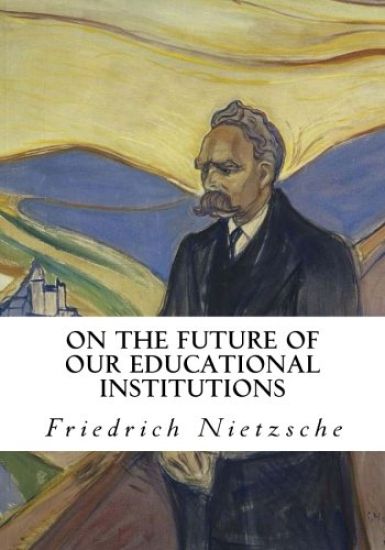
On the Future of Our Educational Institutions: Friedrich Nietzsche

On the Future of Our Educational Institutions: Friedrich Nietzsche

Friedrich Wilhelm Nietzsche

Createspace Independent Publishing Platform
2016
nidottu
Friedrich NietzscheOn The Future of our Educational InstitutionsTranslated, With Introduction, ByJ.M. KennedyThis book is intended for calm readers, --for men who have not yet been drawn into the mad headlong rush of our hurry-skurrying age, and who do not experience any idolatrous delight in throwing themselves beneath its chariot-wheels. It is for men, therefore, who are not accustomed to estimate the value of everything according to the amount of time it either saves or wastes. In short, it is for the few. These, we believe, "still have time." Without any qualms of conscience they may improve the most fruitful and vigorous hours of their day in meditating on the future of our education; they may even believe when the evening has come that they have used their day in the most dignified and useful way, namely, in the meditatio generis futuri. No one among them has yet forgotten to think while reading a book; he still understands the secret of reading between the lines, and is indeed so generous in what he himself brings to his study, that he continues to reflect upon what he has read, perhaps long after he has laid the book aside. And he does this, not because he wishes to write a criticism about it or even another book; but simply because reflection is a pleasant pastime to him. Frivolous spendthrift Thou art a reader after my own heart; for thou wilt be patient enough to accompany an author any distance, even though he himself cannot yet see the goal at which he is aiming, --even though he himself feels only that he must at all events honestly believe in a goal, in order that a future and possibly very remote generation may come face to face with that towards which we are now blindly and instinctively groping. Should any reader demur and suggest that all that is required is prompt and bold reform; should he imagine that a new "organisation" introduced by the State, were all that is necessary, then we fear he would have misunderstood not only the author but the very nature of the problem under consideration.CONTENTSPREFACE.INTRODUCTION.FIRST LECTURE.SECOND LECTURE.THIRD LECTURE.FOURTH LECTURE.FIFTH LECTURE.
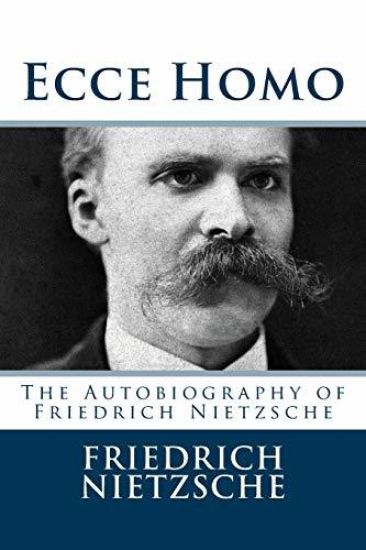
Ecce Homo: The Autobiography of Friedrich Nietzsche

Ecce Homo: The Autobiography of Friedrich Nietzsche

Friedrich Wilhelm Nietzsche

Createspace Independent Publishing Platform
2018
nidottu
Ecce Homo is the last original book written by philosopher Friedrich Nietzsche before his final years of insanity that lasted until his death in 1900. It was written in 1888 and was not published until 1908. According to one of Nietzsche's most prominent English translators, Walter Kaufmann, the book offers "Nietzsche's own interpretation of his development, his works, and his significance." The book contains several chapters with ironic self-laudatory titles, such as "Why I Am So Wise", "Why I Am So Clever", "Why I Write Such Good Books" and "Why I Am a Destiny". Walter Kaufmann, in his biography Nietzsche: Philosopher, Psychologist, Antichrist noticed the internal parallels, in form and language, to Plato's Apology which documented the Trial of Socrates. In effect, Nietzsche was putting himself on trial with this work, and his sardonic judgments and chapter headings are mordant, mocking, self-deprecating, sly, and they turn this trial against his future accusers, distorters, and superficial judges.
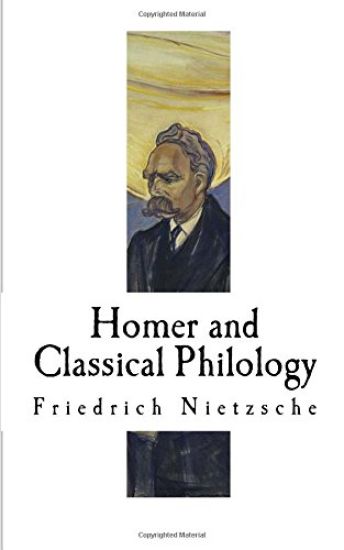
Homer and Classical Philology: Friedrich Nietzsche

Homer and Classical Philology: Friedrich Nietzsche

Friedrich Wilhelm Nietzsche

Createspace Independent Publishing Platform
2017
nidottu
Homer and Classical PhilologyFriedrich NietzscheInaugural Address delivered at Bale University, 28th of May 1869.At the present day no clear and consistent opinion seems to be held regarding Classical Philology. We are conscious of this in the circles of the learned just as much as among the followers of that science itself. The cause of this lies in its many-sided character, in the lack of an abstract unity, and in the inorganic aggregation of heterogeneous scientific activities which are connected with one another only by the name "Philology." It must be freely admitted that philology is to some extent borrowed from several other sciences, and is mixed together like a magic potion from the most outlandish liquors, ores, and bones.
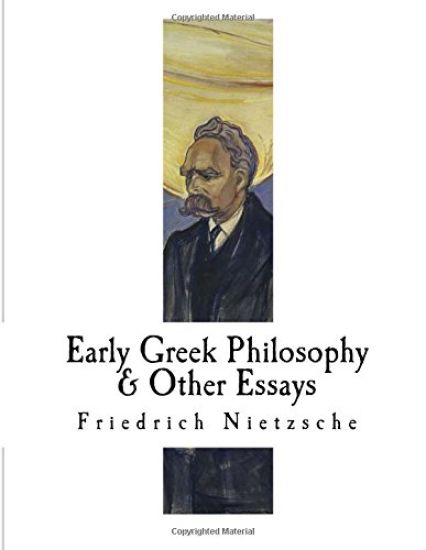
Early Greek Philosophy & Other Essays: Friedrich Nietzsche

Early Greek Philosophy & Other Essays: Friedrich Nietzsche

Friedrich Wilhelm Nietzsche

Createspace Independent Publishing Platform
2017
nidottu
Early Greek Philosophy & Other EssaysBy Friedrich NietzscheTranslated By Maximilian A. MuggeThe essays contained in this volume treat of various subjects. With the exception of perhaps one we must consider all these papers as fragments. Written during the early Seventies, and intended mostly as prefaces, they are extremely interesting, since traces of Nietzsche's later tenets--like Slave and Master morality, the Superman--can be found everywhere. But they are also very valuable on account of the young philosopher's daring and able handling of difficult and abstruse subjects. "Truth and Falsity," and "The Greek Woman" are probably the two essays which will prove most attractive to the average reader.
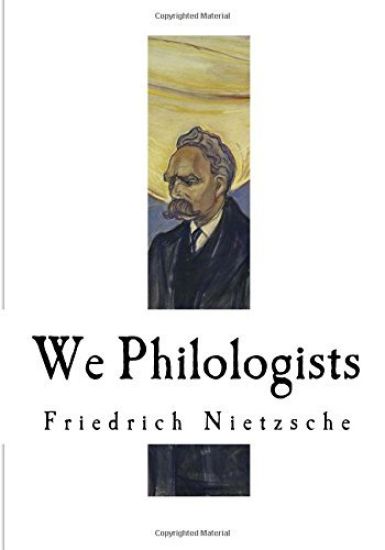
We Philologists: Friedrich Nietzsche

We Philologists: Friedrich Nietzsche

Friedrich Wilhelm Nietzsche

Createspace Independent Publishing Platform
2017
nidottu
We PhilologistsFriedrich NietzscheTranslated by J. M. KennedyThe subject of education was one to which Nietzsche, especially during his residence in Basel, paid considerable attention, and his insight into it was very much deeper than that of, say, Herbert Spencer or even Johann Friedrich Herbart, the latter of whom has in late years exercised considerable influence in scholastic circles. Nietzsche clearly saw that the "philologists" (using the word chiefly in reference to the teachers of the classics in German colleges and universities) were absolutely unfitted for their high task, since they were one and all incapable of entering into the spirit of antiquity. Although at the first reading, therefore, this book may seem to be rather fragmentary, there are two main lines of thought running through it: an incisive criticism of German professors, and a number of constructive ideas as to what classical culture really should be.