Bernie the Banana Slug lives under a strawberry patch, but now he is lost in the forest. He makes new friends who will help him find his way home. Look for more adventures of Bernie the Banana Slug and his friends, written & illustrated by G. Michael Smith.
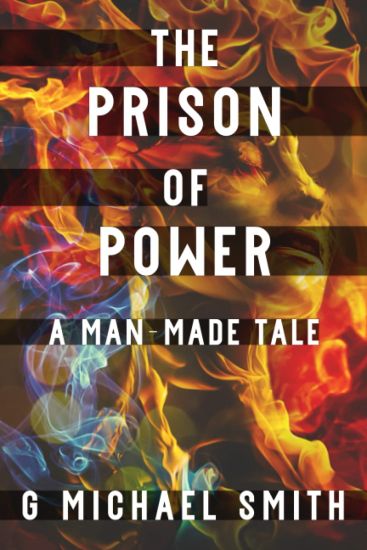
The atomic incident of 2026 was the catalyst of a worldwide movement, historically called #MeNow. Over the intervening years, the #MeNow philosophy became more proactive and morphed into #WeNow then #FeNow then finally #WOW, an acronym for World Order by Women. This was the beginning of the new age. There were several women on the brink of taking power in their respective countries. The threat of a nuclear conflict opened the floodgates for the females of the species to take control of almost all governments. That was the start. Different countries had different rules for the male of the species. Some were more open, allowing the males more freedom to assume roles of authority. Others were more controlling and restricted male roles in society to a strictly working class. The "Land of the Free" became the most male restrictive society of all.
The atomic incident of 2026 was the catalyst of a worldwide movement, historically called #MeNow. Over the intervening years, the #MeNow philosophy became more proactive and morphed into #WeNow then #FeNow then finally #WOW, an acronym for World Order by Women. This was the beginning of the new age. There were several women on the brink of taking power in their respective countries. The threat of a nuclear conflict opened the floodgates for the females of the species to take control of almost all governments. That was the start. Different countries had different rules for the male of the species. Some were more open, allowing the males more freedom to assume roles of authority. Others were more controlling and restricted male roles in society to a strictly working class. The "Land of the Free" became the most male restrictive society of all.
Jayne Wu is an inexplicably lucky 13-year-old in a future Earth obsessed with its own survival. The Swarm, a meteor field billions of kilometers across, will soon smash through the solar system, destroying all life-and possibly the planet itself. The only hope for humankind's survival are the biomes: twelve asteroid-sized escape vessels constructed in orbit to travel to and colonize distant worlds with the best Earth can offer.Jayne (nicknamed Thirteen) wants only to leave the Nursery, train to be a Technical Electrical Mechanical Fixer, and become part of the "great adventure." And, of course, play GravBall.But Jayne's mind is extraordinary, and she soon attracts attention from the organized crime Consortium, the Sentinels, the World Police, and the Forevers: a cabal of ultra-rich who will stop at nothing to subvert society's colonization plans to their own diabolical ends. They all want to use her. To survive, Jayne must decide who to trust.
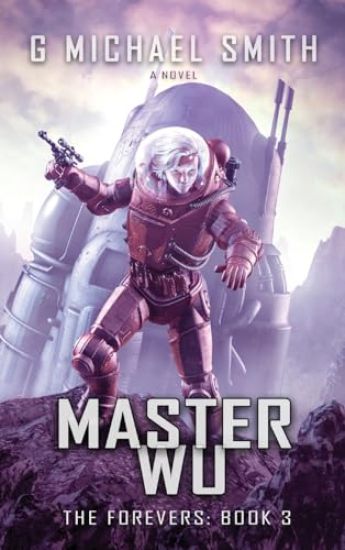
Seventeen-year-old Jayne Wu is literally battling inside her own mind against Dr. Winter Bancroft, evil neuroscientist of The Forevers. Jayne has Dr. Pincet and the Sentinels on her side-but can they really counter the Consortium and the Forevers? Spike and Rafferty are both vying for Jane's romantic attention, but who has time for men when the future of humankind is on the line? Jayne becomes the ultimate impostor, driving ever deeper into the danger, trying to destroy the Forevers and lure the sociopathic Dr. William Thurston into the open to capture him. If she fails, it could jeopardize mankind's plan for survival and certainly her own. Closer than ever to succumbing to the voices within, how long can Jayne Wu hold out?
This is a story about a detective as opposed to a detective story. Mathew Brown aka Augustus Cervantes discovers early in life that he has some very special skills. Skills that manifest in what many consider very odd personality traits. Most notably, he claims he can find anything with a little help from a nebulous place in his mind that he calls the canvas. Having built a lucrative career finding treasured missing objects for wealthy patrons, he's contacted by a woman desperate to recover a meaningful family heirloom. This seemingly "impossible" task is just the kind of challenge for Cervantes' special skills. He accepts the case, referring to it as "The Mystery of the Lost Pocket Watch." Little does he know, he's also attracted the attention of a local crime syndicate with their own agenda associated with the missing time piece. As chaos ensues, intrigue multiplies when Cervantes discovers a clue to the whereabouts of the long-lost watch. The nature of the case and the others who are hot on his trail lead to a chase across Europe filled with murder and mayhem, and an outcome that, for the first time ever, he can't predict.
Tina was little. Being little was a good thing. She used that to get her own way. And everyone had always treated her like she was special. But things were changing and Tina needed a plan. A plan she didn't have, that is, until she met Little Trouble--a monster who helped her devise a way to become special again. But when things did not go as planned...Little Trouble invited Big Trouble. And when that did not work, Big Trouble invited Terrible Trouble. And that is when things went horribly wrong.
One day Lily told a lie. It wasn't a big lie. It didn't hurt anyone. She thought lies that didn't hurt anyone were okay, especially if the lies helped you a little. And they did help her...at first. The little lies turn into medium lies. Medium lies turn into big lies. Big lies turn into MONSTER lies. But Lily's lies turn into real monsters with buggy eyes and big slimy teeth. They appear everywhere and taunt her. Lily cannot escape until she discovers the one thing that can destroy a Lie Monster, especially an Eleventy-Headed one.
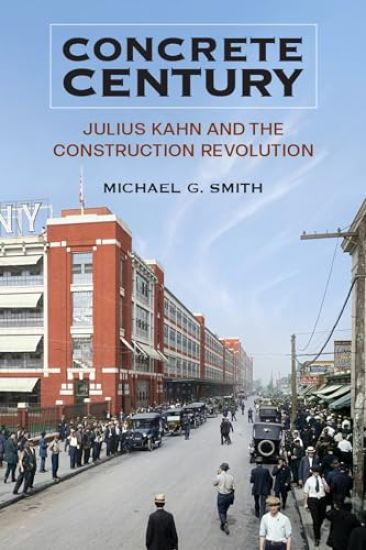
At the turn of the 20th century, industrial manufacturing was expanding dramatically while factory buildings remained fire-prone relics of an earlier age. That is, until a 28-year-old civil engineer finally achieved what engineers around the world had unsuccessfully attempted. Working in his brother’s basement in Detroit, Julius Kahn invented the first practical and scientific method of reinforcing concrete with steel bars, which finally made it possible to construct strong, fireproof buildings. After Kahn founded a company in 1903 to manufacture and sell his reinforcement bars, his system of construction became the most widely used throughout the world. Drawing upon Kahn’s personal correspondence, architectural drawings, company records, and contemporary news and journal articles, Michael G. Smith reveals how this man—whose family had immigrated to the US to escape antisemitism in Germany—played an important role in the rise of concrete. Concrete not only turned the tide against widespread destruction of buildings by fire, it also paved the way for our modern economy. Concrete Century will delight readers intrigued by architecture and construction technology alike with the true origin story of modern concrete buildings.
"The Hand-Sculpted House inspired me to learn and do more and transformed how I saw homes and building in general."—Mother Earth News "If you follow it word for word you will build yourself a house no matter who you are."—Builder Paul Dillon, quoted in The Irish Times Are you ready for the Cob Cottage? This is a building method so old and so simple that it has been all but forgotten in the rush to synthetics. A cob cottage, however, might be the ultimate expression of ecological design, a structure so attuned to its surroundings that its creators refer to it as “an ecstatic house.” The authors build a house the way others create a natural garden. They use the oldest, most available materials imaginable–earth, clay, sand, straw, and water–and blend them to redefine the future (and past) of building. Cob (the word comes from an Old English root, meaning “lump”) is a mixture of non-toxic, recyclable, and often free materials. Building with cob requires no forms, no cement, and no machinery of any kind. Builders actually sculpt their structures by hand. Building with earth is nothing new to America; the oldest structures on the continent were built with adobe bricks. Adobe, however, has been geographically limited to the Southwest. The limits of cob are defined only by the builder’s imagination. Cob offers answers regarding our role in Nature, family and society, about why we feel the ways that we do, about what’s missing in our lives. Cob comes as a revelation, a key to a saner world. Cob has been a traditional building process for millennia in Europe, even in rainy and windy climates like the British Isles, where many cob buildings still serve as family homes after hundreds of years. Cob houses (or cottages, since they are always efficiently small by American construction standards) are not only compatible with their surroundings, they ARE their surroundings, literally rising up from the earth. They are full of light, energy-efficient, and cozy, with curved walls and built-in, whimsical touches. They are delightful. They are ecstatic.
The central theme of Competition and Cost Accounting is that strategic considerations may make it desirable for a firm to have divisions and Product managers internalize something other than their true costs. In the case of transfer Prices, a high transfer Price serves as a means of promoting tacit collusion. When transfer Prices are not observable to the rival firm, decentralization, motivated by the superior knowledge of divisions about their own costs, can promote tacit collusion. In the case of Product cost Measurement, an inferior cost allocation system that just spreads costs evenly can promote tacit collusion. The authors show that it may not be an equilibrium for firms to adopt a more accurate cost system or compete in multiple markets. The strategic nature of their interaction with their rivals may influence their cost and cost accounting choices in surprising ways. After an introduction, the authors analyze the strategic value of transfer Prices in both Bertrand and Cournot Settings. They demonstrate the importance of observability and commitment, and show that even in the absence of observability and commitment, decentralization to exploit the private information of upstream managers can have strategic consequences through double marginalization. These strategic effects become stronger with observability and commitment. They also analyze the strategic value of cost allocation systems in both Bertrand and Cournot Settings before concluding the monograph.
When sex, money and drugs are involved the person who will win has to put " The G In GAME''. Nicole a young, gorgeous black lawyer gets caught in a web fill with lust, love and mixed emotions. Nicole doesnt want anything to do with her husband Robert, who's law firm she runs, but she has fallen for Miquel the mail boy all while she's having a secret affair with her secetary Tina who is slow to the game, but is forced to learn it quickly. Robert gets framed by Nicole but he ends up with Tina and a new addiction.When Tina finds out that Robert is broke she leaves him. Greg gets out of prison from serving eleven years with plans of reuniting with his son Miquel and his niece Meko. On his first night out Meko introduced him to Tina who informed him that she knew his son after they engaged in passionate sex. Robert got killed that very night after he left the club with two strippers.the following morning one of the strippers called and informed Tina of Roberts death.Knowing that Greg's son was with Robert's wife Greg and Tina decided to go to the address Greg had for his son to make sure that he was okay and to inform Robert's wife of his death, but when Nicole opens Miquel's front door to find Greg on the other side, her past catches up with her present. Delhia returns from Jamaica to investigate her sons murder because the story she heard behind his death didnt add up to her. During her investigation Delhia's past comes back to haunt her and she ends up falling in love with Tina, who has been doin some investigation of her own and she has also formed '' The Ice Cream Clique" along with Chocolate and Vanilla who just so happened to be the two strippers Robert left the strip club with the night of his death
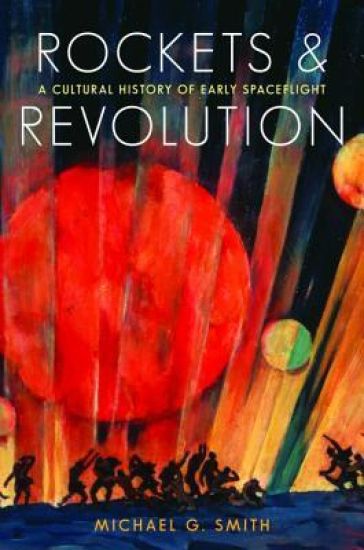
Rockets and Revolution offers a multifaceted study of the race toward space in the first half of the twentieth century, examining how the Russian, European, and American pioneers competed against one another in the early years to acquire the fundamentals of rocket science, engineer simple rockets, and ultimately prepare the path for human spaceflight. Between 1903 and 1953, Russia matured in radical and dramatic ways as the tensions and expectations of the Russian revolution drew it both westward and spaceward. European and American industrial capacities became the models to imitate and to surpass. The burden was always on Soviet Russia to catch up-enough to achieve a number of remarkable “firsts” in these years, from the first national rocket society to the first comprehensive surveys of spaceflight. Russia rose to the challenges of its Western rivals time and again, transcending the arenas of science and technology and adapting rocket science to popular culture, science fiction, political ideology, and military programs. While that race seemed well on its way to achieving the goal of space travel and exploring life on other planets, during the second half of the twentieth century these scientific advances turned back on humankind with the development of the intercontinental ballistic missile and the coming of the Cold War.
This engaging survey of the Space Age links science and technology with politics and popular culture, war and peace, and crises and controversies. It examines the history of spaceflight as a mirror of human thought and action across the Earth.The volume encompasses the new astronomy and sciences of the modern era, the early dreamers and pioneers after 1903, the national competitions of the First World War, the rocket states that prepared for the Second World War, the rivalries and “space race” of the Cold War between the US and USSR, as well as more recent developments including the Space Shuttle, the International Space Station, national space programs, orbital technologies, transhumanism, and military and commercial ventures in space. It also stresses the importance of geography in the geopolitics of spaceflight competition and in the nature of the planetary biosphere. Taking a chronological approach to lived human experience and threshold achievements, the chapters show how these themes have been reflected in literature, art, music, film, and our new digital worlds.This book is essential reading for students of the history of the Space Age, as well as an excellent companion to courses on twentieth-century science and technology, the Cold War, and American history.
This engaging survey of the Space Age links science and technology with politics and popular culture, war and peace, and crises and controversies. It examines the history of spaceflight as a mirror of human thought and action across the Earth.The volume encompasses the new astronomy and sciences of the modern era, the early dreamers and pioneers after 1903, the national competitions of the First World War, the rocket states that prepared for the Second World War, the rivalries and “space race” of the Cold War between the US and USSR, as well as more recent developments including the Space Shuttle, the International Space Station, national space programs, orbital technologies, transhumanism, and military and commercial ventures in space. It also stresses the importance of geography in the geopolitics of spaceflight competition and in the nature of the planetary biosphere. Taking a chronological approach to lived human experience and threshold achievements, the chapters show how these themes have been reflected in literature, art, music, film, and our new digital worlds.This book is essential reading for students of the history of the Space Age, as well as an excellent companion to courses on twentieth-century science and technology, the Cold War, and American history.