
Kirjahaku
Etsi kirjoja tekijän nimen, kirjan nimen tai ISBN:n perusteella.
1000 tulosta hakusanalla G W Leibniz

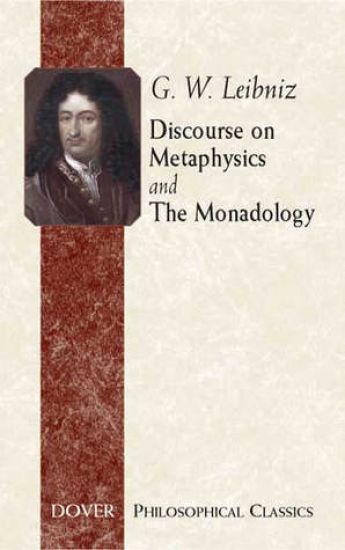
Two of Leibniz's most studied and often quoted works appear in this volume. Published in 1686, the "Discourse on Metaphysics consists of the philosopher's explanation of individual perception as an expression of the rest of the universe from a unique perspective. The whole world--the best of all possible worlds, as he famously remarks--is thus contained in each individual substance. "The Monadology, written in 1714, offers a concise synopsis of Leibniz's philosophy, establishing the laws of final causes, which underlie God's free choice to create the best possible world--a world that serves as dynamic and perfectly ordered evidence of the wisdom of its creator. Translated by George R. Montgomery.
G.W. Leibniz
Routledge
1993
muu
Gottfried Wilhelm Leibniz (1646-1716) was one of the seventeenth century's most important thinkers. A philosopher, mathematician and scientist, his work is comparable in scope and importance only to that of Newton and Descartes. His work dominated German philosophy until Kant, and was revived in the early part of this century when his important work on logic was re-discovered. This four volume set contains 97 of the most important essays ever written about Leibniz's work. The selection has been made to bring out the scope of Leibniz's work in all the areas he wrote upon, as well as its importance to contemporary philosophy and the history of philosophy. It will be an essential reference work for anyone concerned with seventeenth century philosophy and science, as well as to all Leibniz specialists.
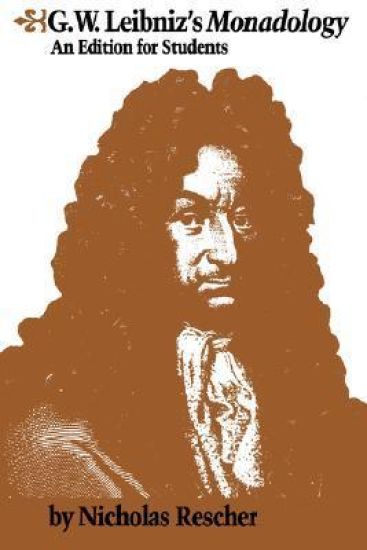
G.W. Leibniz's Monadology , one of the most important pieces of the Leibniz corpus, is at once one of the great classics of modern philosophy and one of its most puzzling productions. Because the essay is written in so condensed and compact a fashion, for almost three centuries it has baffled and beguiled those who have read it for the first time. Nicholas Rescher accompanies the text of the Monadology section-by-section with relevant excerpts from other Leibnizian writings. Using these brief sections as an outline, Rescher collects together some of Leibniz's widely scattered discussions of the matters at issue. The result serves a dual purpose of providing a commentary on the Monadology by Leibniz himself, while at the same time supplying an exposition of his philosophy using the Monadology as an outline.

G.W. Leibniz's Monadology , one of the most important pieces of the Leibniz corpus, is at once one of the great classics of modern philosophy and one of its most puzzling productions. Because the essay is written in so condensed and compact a fashion, for almost three centuries it has baffled and beguiled those who have read it for the first time. Nicholas Rescher accompanies the text of the Monadology section-by-section with relevant excerpts from other Leibnizian writings. Using these brief sections as an outline, Rescher collects together some of Leibniz's widely scattered discussions of the matters at issue. The result serves a dual purpose of providing a commentary on the Monadology by Leibniz himself, while at the same time supplying an exposition of his philosophy using the Monadology as an outline.

G.W. Leibniz. Double Revolution and Praefatio: Some interpretive Musters for Leibniz' Political Project, with Reference to the Conceptual Founding of
William F. Drischler
Createspace Independent Publishing Platform
2015
nidottu
Wissenschaftlicher Aufsatz aus dem Jahr 2008 im Fachbereich Philosophie - Philosophie des 17. und 18. Jahrhunderts, Note: 1.0, Georg-August-Universit t G ttingen, Sprache: Deutsch, Abstract: Diese Arbeit besch ftigt sich mit G.W. Leibniz' Monadologie aus dem Jahre 1714, die in neunzig knapp gehaltenen Paragraphen seine wohl bekannteste Schrift zur Substanzphilosophie ist und, so wird h ufig behauptet, nur deswegen geschrieben wurde, um noch vor dem Ableben einen berblick ber das eigene philosophische System zu geben. Seine Monadentheorie beschr nkt sich jedoch nicht allein auf die Substanzen, insofern sie ebenfalls als holistische Theorie zum Weltzusammenhang und zur Bedeutung und Wirkungsweise Gottes zu verstehen ist. Leibniz verband in ihr Metaphysik (Ontologie), Physik (Gesetze der Natur und der K rper) und Theologie (Gott und die Gesetze der Moral) zu einem harmonischen Gleichgewicht, und reanimierte in seinem Projekt die seinerzeit unpopul ren aristotelischen substantiellen Formen. Ein genauer Blick auf die innere Struktur des Argumentationsganges der Monadologie und auf die innere Vielfalt an behandelten Themen offenbart, wie K chy gezeigt hat, eine perspektivische Architektonik, durch die die Argumentation von unterschiedlichen Blickwinkeln aus zu einer Synthese ihrer Hypothesen gef hrt wird. Mit der Besch ftigung mit dem Metaphysischen bezweckt Leibniz prim r die Aufbietung einer ganzheitlichen Antwort auf zentrale Fragen der Metaphysik, obwohl sie sich bei ihm vorrangig auf die Ontologie reduzieren lassen: Was ist? Was sind die grundlegenden Komponenten der Welt? Die Beantwortung dieser Fragen als Hauptanliegen erkannt, kann dann au erdem nachgewiesen werden, dass Leibniz sich zu Gunsten seiner zentralen Fragestellung genau sieben Themenkomplexen zuwendet, die jeweils als spezifische Perspektiven und als Widerspiegelungen des gemeinsamen, bergeordneten Grundproblems der Monadologie hervortreten. Gem dieses Interpretationsmodells der perspektivis
G.W. Leibniz, Interrelations between Mathematics and Philosophy
Springer
2016
nidottu
Up to now there have been scarcely any publications on Leibniz dedicated to investigating the interrelations between philosophy and mathematics in his thought. In part this is due to the previously restricted textual basis of editions such as those produced by Gerhardt. Through recent volumes of the scientific letters and mathematical papers series of the Academy Edition scholars have obtained a much richer textual basis on which to conduct their studies - material which allows readers to see interconnections between his philosophical and mathematical ideas which have not previously been manifested. The present book draws extensively from this recently published material. The contributors are among the best in their fields. Their commissioned papers cover thematically salient aspects of the various ways in which philosophy and mathematics informed each other in Leibniz's thought.
G.W. Leibniz, Interrelations between Mathematics and Philosophy
Springer
2015
sidottu
Up to now there have been scarcely any publications on Leibniz dedicated to investigating the interrelations between philosophy and mathematics in his thought. In part this is due to the previously restricted textual basis of editions such as those produced by Gerhardt. Through recent volumes of the scientific letters and mathematical papers series of the Academy Edition scholars have obtained a much richer textual basis on which to conduct their studies - material which allows readers to see interconnections between his philosophical and mathematical ideas which have not previously been manifested. The present book draws extensively from this recently published material. The contributors are among the best in their fields. Their commissioned papers cover thematically salient aspects of the various ways in which philosophy and mathematics informed each other in Leibniz's thought.
Rechts- und Staatsphilosophie bei G.W. Leibniz
Mohr Siebeck
2020
nidottu
Der Band beleuchtet Leibniz' Rechts- und Staatsphilosophie im Kontext seiner Metaphysik, Logik, Erkenntnistheorie und Moralphilosophie. Auch die Rezeption seiner Rechts- und Staatsphilosophie wird in den Beiträgen reflektiert. Gerade im Hinblick auf die aktuelle Diskussion um die politische Gestaltung Europas und die kosmopolitische Gestaltung der Globalisierung verdient seine Philosophie Aufmerksamkeit - nicht zuletzt auch auf Grund interner Spannungen, die das politische Selbstverständnis Europas bis heute kennzeichnen.
Erziehungsphilosophische Aspekte Im Werk Von G.W. Leibniz
Werner Wiater
Peter Lang GmbH
1990
nidottu
Erziehungsphilosophie befasst sich kritisch-analytisch mit den anthropologischen, teleologischen und wissenschaftstheoretischen Grundlagen der Padagogik. Richtet sie den Blick auf die Anfange der wissenschaftlichen Padagogik, so sieht sie sich an G.W. Leibniz, den Systematiker des 17./18. Jahrhunderts, verwiesen. Er hat mit seinen padagogisch bedeutsamen Schriften und seinen Erziehererfahrungen bereits vor I. Kant den neuzeitlichen Erziehungsbegriff und die Entwicklung einer praktischen Wissenschaft von der Erziehung vorbereitet. Leibnizens erziehungsphilosophische Konzeption wird deshalb nicht nur dargestellt, sondern auch in die aktuelle Diskussion um eine handlungs- und systemtheoretische Fundierung der Padagogik einbezogen."
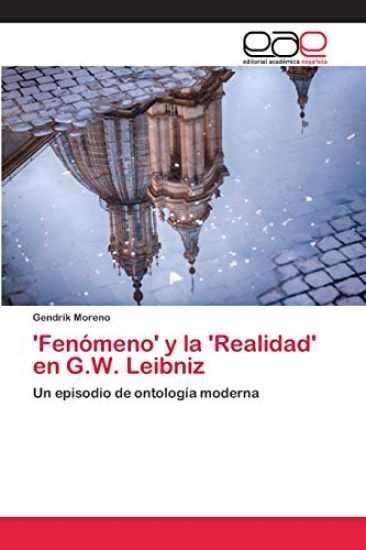
Este trabajo explora dos categor as fundamentales de la metaf sica leibniziana: la del Fen meno y la de la Realidad. All donde la tradici n que le precede ha escindido abiertamente estas dos regiones ontol gicas, Leibniz ha cre do encontrar una muy particular soluci n de continuidad entre estos dos planos, configurando un particular episodio de ontolog a moderna. Los escritos que se confrontaron fueron considerados bajo un tipo de investigaci n anal tica y de dise o documental, par metros que allanaron la labor de revisi n, interpretaci n, comentario y cr tica filos fica. De suerte que, encontramos que la realidad leibniziana es indivisa, inteligible, simple, unitaria, representativa; al un sono, aut rquica, porque busca su completitud o perfecci n, y apetitiva o din mica porque est en constante acto. Sobre el fen meno, hallamos que es un 'resultado', 'producto' o 'eco' de las diferentes configuraciones de agregados mon dicos, cuyo criterio unificador lo proporciona la percepci n y el entendimiento humano. Por ltimo, los criterios interactivos entre planos ontol gicos los encontramos en la lectura metaf sica de 'fuerza' y en la gnoseol gica de 'percepci n' y 'apercepci n'.

Die Abhangigkeitsbeziehungen Zwischen Den Beiden Philosophischen Vermachtnisschriften Des Freiherrn G.W. Von Leibniz
Christian Edzard Kreipe
Nabu Press
2011
pokkari
The selections contained in these volumes from the papers and letters of Leibniz are intended to serve the student in two ways: first, by providing a more adequate and balanced conception of the full range and penetration of Leibniz's creative intellectual powers; second, by inviting a fresher approach to his intellectual growth and a clearer perception of the internal strains in his thinking, through a chronological arrangement. Much confusion has arisen in the past through a neglect of the develop ment of Leibniz's ideas, and Couturat's impressive plea, in his edition of the Opuscu/es et fragments (p. xii), for such an arrangement is valid even for incomplete editions. The beginning student will do well, however, to read the maturer writings of Parts II, III, and IV first, leaving Part I, from a period too largely neglected by Leibniz criticism, for a later study of the still obscure sources and motives of his thought. The Introduction aims primarily to provide cultural orientation and an exposition of the structure and the underlying assumptions of the philosophical system rather than a critical evaluation. I hope that together with the notes and the Index, it will provide those aids to the understanding which the originality of Leibniz's scientific, ethical, and metaphysical efforts deserve.
The selections contained in these volumes from the papers and letters of Leibniz are intended to serve the student in two ways: first, by providing a more adequate and balanced conception of the full range and penetration of Leibniz's creative intellectual powers; second, by inviting a fresher approach to his intellectual growth and a clearer perception of the internal strains in his thinking, through a chronological arrangement. Much confusion has arisen in the past through a neglect of the develop ment of Leibniz's ideas, and Couturat's impressive plea, in his edition of the Opuscu/es et fragments (p. xii), for such an arrangement is valid even for incomplete editions. The beginning student will do well, however, to read the maturer writings of Parts II, III, and IV first, leaving Part I, from a period too largely neglected by Leibniz criticism, for a later study of the still obscure sources and motives of his thought. The Introduction aims primarily to provide cultural orientation and an exposition of the structure and the underlying assumptions of the philosophical system rather than a critical evaluation. I hope that together with the notes and the Index, it will provide those aids to the understanding which the originality of Leibniz's scientific, ethical, and metaphysical efforts deserve.


G. W. Leibniz und der Gelehrtenhabitus
Bohlau Verlag
2016
isokokoinen pokkari
"Lithuanus", "Caesarinus Furstenerius" und "de la Vallee" sind nur drei der Pseudonyme, unter denen Gottfried Wilhelm Leibniz reiste, korrespondierte und selbst politisch brisante Schriften publizierte. Dass es sich nicht um eine speziell Leibnizsche Praktik der Maskierung, sondern vielmehr um ein zentrales Muster des gelehrten Habitus um 1700 handelt, thematisieren die Beitrage dieses Sammelbandes. Sie rucken dabei die Kultur der Dissimulation, wie sie etwa in Deutschland, Grossbritannien oder Italien gepflegt wurde, ins Zentrum ihrer Betrachtung. Der thematische Bogen spannt sich dabei von Dechiffrierungstechniken uber Selbstrezensionen bis hin zu burokratischen Praktiken den Briefwechsel Leibniz' betreffend.

Dimitrie Cantemir - G. W. Leibniz and the Academy of Berlin
Gabriela Pohoat¿
Lap Lambert Academic Publishing
2017
nidottu