Kirjojen hintavertailu. Mukana 11 699 587 kirjaa ja 12 kauppaa.

Kirjahaku

Etsi kirjoja tekijän nimen, kirjan nimen tai ISBN:n perusteella.

1000 tulosta hakusanalla G. J. Barker-Benfield

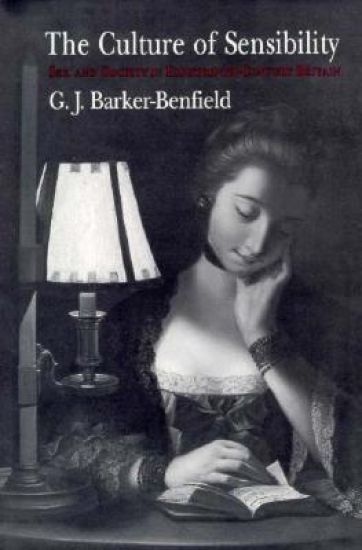
The Culture of Sensibility

The Culture of Sensibility

G. J. Barker-Benfield

University of Chicago Press
1992
sidottu
G. J. Barker-Benfield documents the emergence of the culture of sensibility that transformed British society of the eighteenth century. His account focuses on the rise of new moral and spiritual values and the struggle to redefine the group identities of men and women. Drawing on the full spectrum of eighteenth-century thought from Adam Smith to John Locke, from the Earl of Shaftesberry to Dr. George Cheyne, and especially Mary Wollstonecraft, Barker-Benfield offers an innovative and compelling way to understand how Britain entered the modern age.
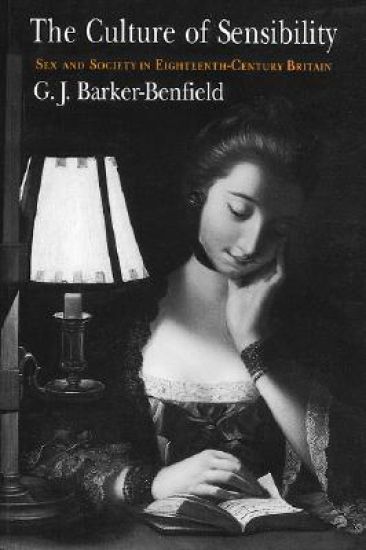
The Culture of Sensibility

The Culture of Sensibility

G. J. Barker-Benfield

University of Chicago Press
1996
nidottu
G. J. Barker-Benfield documents the emergence of the culture of sensibility that transformed British society of the eighteenth century. His account focuses on the rise of new moral and spiritual values and the struggle to redefine the group identities of men and women. Drawing on the full spectrum of eighteenth-century thought from Adam Smith to John Locke, from the Earl of Shaftesberry to Dr. George Cheyne, and especially Mary Wollstonecraft, Barker-Benfield offers an innovative and compelling way to understand how Britain entered the modern age.
Abigail and John Adams

Abigail and John Adams

G. J. Barker-Benfield

University of Chicago Press
2010
sidottu
During the many years that they were separated by the perils of the American Revolution, John and Abigail Adams exchanged hundreds of letters. Writing to each other of public events and private feelings, loyalty and love, revolution and parenting, they wove a tapestry of correspondence that has become a cherished part of American history and literature. With "Abigail and John Adams:, historian G. J. Barker-Benfield mines those familiar letters to a new purpose: teasing out the ways in which they reflected - and helped transform - a language of sensibility, inherited from Britain but, amid the revolutionary fervor, becoming Americanized. Sensibility - a heightened moral consciousness of feeling, rooted in the theories of such thinkers as Descartes, Locke, and Adam Smith and including a 'moral sense' akin to the physical senses - threads throughout these letters. As Barker-Benfield makes clear, sensibility was the fertile, humanizing ground on which the Adamses not only founded their marriage, but also the 'abhorrence of injustice and inhumanity' they and their contemporaries hoped to plant at the heart of the new nation. Bringing together their correspondence with a wealth of fascinating detail about life and thought, courtship and sex, gender and parenting, and class and politics in the revolutionary generation and beyond, "Abigail and John Adams" draws a lively, convincing portrait of a marriage endangered by separation, yet surviving by the same ideas and idealism that drove the revolution itself. A feast of ideas that never neglects the real lives of the man and woman at its center, "Abigail and John Adams" takes readers into the heart of an unforgettable union in order to illuminate the first days of our nation - and explore our earliest understandings of what it might mean to be an American.
Ignatius Sancho and the British Abolitionist Movement, 1729-1786

Ignatius Sancho and the British Abolitionist Movement, 1729-1786

G. J. Barker-Benfield

Springer International Publishing AG
2023
sidottu
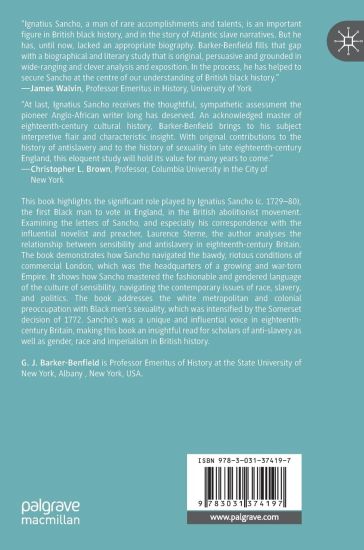
This book highlights the significant role played by Ignatius Sancho (c. 1729-80), the first black man to vote in England, in the British abolitionist movement. Examining the letters of Sancho, and especially his correspondence with the influential novelist and preacher, Laurence Sterne, the author analyses the relationship between sensibility and antislavery in eighteenth-century Britain. The book demonstrates how Sancho navigated the bawdy, riotous conditions of commercial London, which was the headquarters of a growing and war-torn Empire. It shows how Sancho mastered the fashionable and gendered language of the culture of sensibility, navigating the contemporary issues of race, slavery, and politics. The book also touches on the White metropolitan and colonial preoccupation with Black men’s sexuality, which was intensified by the Somerset decision of 1772. Sancho’s was a unique and influential voice in eighteenth-century Britain, making this book an insightful read for scholars of anti-slavery as well as gender, race and imperialism in British history.
Ignatius Sancho and the British Abolitionist Movement, 1729-1786

Ignatius Sancho and the British Abolitionist Movement, 1729-1786

G. J. Barker-Benfield

Springer International Publishing AG
2024
nidottu
This book highlights the significant role played by Ignatius Sancho (c. 1729-80), the first black man to vote in England, in the British abolitionist movement. Examining the letters of Sancho, and especially his correspondence with the influential novelist and preacher, Laurence Sterne, the author analyses the relationship between sensibility and antislavery in eighteenth-century Britain. The book demonstrates how Sancho navigated the bawdy, riotous conditions of commercial London, which was the headquarters of a growing and war-torn Empire. It shows how Sancho mastered the fashionable and gendered language of the culture of sensibility, navigating the contemporary issues of race, slavery, and politics. The book also touches on the White metropolitan and colonial preoccupation with Black men’s sexuality, which was intensified by the Somerset decision of 1772. Sancho’s was a unique and influential voice in eighteenth-century Britain, making this book an insightful read for scholars of anti-slavery as well as gender, race and imperialism in British history.
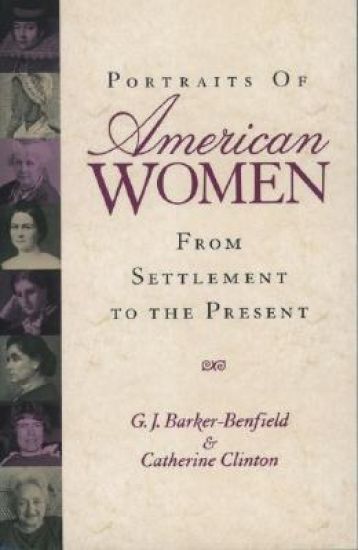
Portraits of American Women

Portraits of American Women

G. J. Barker-Benfield; Catherine Clinton

Oxford University Press Inc
1998
nidottu
Until recently, the "womanless" American history was the norm. But in fact, without a history of women we neglect consideration of gender dynamics, sex roles, and family and sexual relations -- the very fundamentals of human interaction. In Portraits of American Women, editors G.J. Barker-Benfield and Catherine Clinton present twenty-five short essays on American women beginning with Pocahontas and ending with Betty Friedan. These essays aim to locate the histories of women and men together by period and to provide a sense of their continuities through the whole gallery of the American past. The editors selected women who made "significant contributions in the public realm," be they in the areas of art, literature, political engagement, educational activities, or reform movements. Included here are portraits of such women luminaries as Georgia O'Keeffe, Margaret Mead, Elizabeth Cady Stanton, and Charlotte Perkins Gilman, to name a few. Clearly women's lives provide a vital perspective through which the great panorama of social change in the American past can be understood. Each portrait is fashioned to appeal to a wide range of readers, and all include sound scholarship and accessible prose, and raise provocative issues to illuminate women's lives within a broad range of historical transformations.
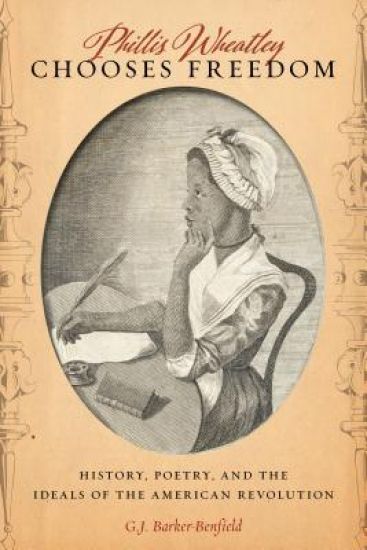
Phillis Wheatley Chooses Freedom

Phillis Wheatley Chooses Freedom

G.J. Barker-Benfield

New York University Press
2018
sidottu
The dramatic story of Phillis Wheatley, a free, black poet who resisted the pressures of arranged marriage, truly embodying the ideals of the American Revolution There is an uncomfortable paradox at the heart of the American Revolution: many of the men leading the war for independence were slave owners, contradicting the ideal of freedom that they claimed to represent. Meanwhile, abolitionist sentiments of the time contained contradictions as well. Abolitionists encouraged freed Christianized slaves to return to Africa. In this way, they hoped to send more missionaries to Africa in order to Christianize the continent and, at the same time, to send free blacks away from America. This tension is revealed through the dramatic story of Phillis Wheatley, an African-American poet who refused to marry a man she had never met and return with him to Africa as a missionary. She was enslaved in Africa as a child and transported to Boston, where she was sold to an evangelical family. Agreeing to the proposed marriage – arranged by Congregationalist minister Samuel Hopkins – would have echoed the social mores of the time, particularly those for enslaved black women. However, due to her prodigious talents as a poet, Wheatley won her freedom a year prior to Hopkins' arrangement, allowing her to take her future into her own hands. G.J. Barker-Benfield considers Wheatley's story and Hopkins's plan in the broader context of the American Revolution. The ideals of the revolution motivated Hopkins and some of his contemporaries to propose freeing African slaves and thus address the "monstrous inconsistency" fundamental to the white slave owners leading the revolution. In so doing, they presented themselves as freedom fighters who resisted the threat of slavery at the hands of British tyranny. Wheatley challenged this inconsistency and, taking the revolutionaries' rhetoric seriously, called for liberty for all human hearts: women's and men's, blacks' and whites'.
Promoting Self-Change from Problem Substance Use

Promoting Self-Change from Problem Substance Use

Harald Klingemann; Linda C. Sobell; J. Barker; J. Blomqvist; W. Cloud; T. Ellinstad; D. Finfgeld; R. Granfield; D. Hodgings; G. Hunt; C. Junker; F. Moggi; S. Peele; R. Smart; M. Sobell; J. Tucker

Springer
2001
sidottu
For many years, what has been known about recovery from addictive behaviors has come solely from treatment studies. Only recently has the study of recoveries in the absence of formal treatment or self-help groups provided an alternative source of information. This book on the process of self-change from addictive behaviors is the first of its kind, as it presents more than research findings. Rather, it presents the process of self-change from several different perspectives - environmental, cross-cultural, prevention and interventions at both societal and individual level. It provides strategies for how health care practitioners and government policy makers alike can aid and foster self-change. Directions for future research priorities are also presented.
Promoting Self-Change from Problem Substance Use

Promoting Self-Change from Problem Substance Use

Harald Klingemann; Linda C. Sobell; J. Barker; J. Blomqvist; W. Cloud; T. Ellinstad; D. Finfgeld; R. Granfield; D. Hodgings; G. Hunt; C. Junker; F. Moggi; S. Peele; R. Smart; M. Sobell; J. Tucker

Springer
2001
nidottu
For many years, what has been known about recovery from addictive behaviors has come solely from treatment studies. Only recently has the study of recoveries in the absence of formal treatment or self-help groups provided an alternative source of information. This book on the process of self-change from addictive behaviors is the first of its kind, as it presents more than research findings. Rather, it presents the process of self-change from several different perspectives - environmental, cross-cultural, prevention and interventions at both societal and individual level. It provides strategies for how health care practitioners and government policy makers alike can aid and foster self-change. Directions for future research priorities are also presented.
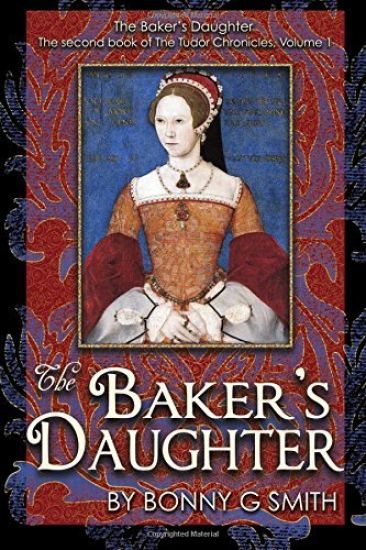
The Baker's Daughter, Volume 1: The second book of the Tudor Chronicles, Volume 1

The Baker's Daughter, Volume 1: The second book of the Tudor Chronicles, Volume 1

Kimberly J. Sluis; Bonny G. Smith

Createspace Independent Publishing Platform
2018
nidottu
The Baker's Daughter The second book of the Tudor ChroniclesVolume 1 of 2(Book Two:1533-1558)Sequel to The Nymph from HeavenThe Baker's Daughter is the story of Queen Mary Tudor, Henry VIII and Katharine of Aragon's ill-fated and unfortunate daughter. How did a sweet, beautiful princess, the apple of her father's eye from birth, become the fearsome tyrant known as Bloody Mary? Mary's tragic tale is told with an objectivity, sympathy and understanding that is reflected in the title of the book; the discontent of the English people with Mary's proposed match with the Spaniard, King Philip of Spain, was cruelly expressed in a broadsheet circulating London at the time of Mary's ill-fated marriage: "The baker's daughter, in her russet gown; better than Queen Mary without her crown."
Industrial Drying of Foods

Industrial Drying of Foods

Christopher G.J. Baker

Chapman and Hall
1997
sidottu
Drying is traditionally defined as that unit operation which converts a liquid, solid or semi-solid feed material into a solid product of significantly lower moisture content. In most, although not all, cases it involves the application of thermal energy, which causes water to evaporate into the vapour phase. In practice, this definition encompasses a number of technologies which differ markedly in, for example, the manner in which energy is supplied to the foodstuff and in which product is transported through the dryer. Depending on the dryer type, the residence time may vary from a few seconds to several hours. Dryers designed to handle liquid feedstocks are naturally quite different from those intended to process moist solids. Even within these two broad categories, however, many distinct varieties of dryer have evolved to meet specific process­ ing needs. The dryer is frequently the last processing stage in the manufacture of a dehydrated food product. As such, it may not only bring about the desired reduction in moisture content but may also have a significant effect on a number of other properties, such as flavour, colour, texture, viability, and nutrient retention, for example. These properties, which are generally considered to affect the perceived quality of the end product, are often influenced by the temperature- moisture content-time profiles experienced by the foodstuff as it moves through the dryer. The underlying chemistry and physics are highly complex and, broadly speaking, only poorly understood.
Food Industries Manual

Food Industries Manual

Christopher G.J. Baker; M.D. Ranken; R.C. Kill

Chapman and Hall
1997
sidottu
It is a measure of the rapidity of the changes The work has been revised and updated, and taking place in the food industry that yet another following the logic of the flow sheets there is some edition of the Food Industries Manual is required simplification and rearrangement among the chap­ after a relatively short interval. As before, it is a ters. Food Packaging now merits a separate pleasure to be involved in the work and we hope chapter and some previous sections dealing mainly that the results will continue to be of value to with storage have been expanded into a new readers wanting to know what, how and why the chapter covering Food Factory Design and Opera­ food industry does the things which it does. tions. For this edition we have made a major depar­ There is one completely new chapter, entitled ture from the style of earlier editions by comple­ Alcoholic Beverages, divided into Wines, Beers tely revising the layout of many of the chapters. and Spirits. There is a strain of thought which Previously the chapters were arranged as a series does not yet consider the production of those of notes on specific topics, set out in alphabetical drinks to be a legitimate part of the food industry, order in the manner of an encyclopaedia.