
Kirjahaku
Etsi kirjoja tekijän nimen, kirjan nimen tai ISBN:n perusteella.
1000 tulosta hakusanalla G. K. Jayaram

G. K. Chesterton is remembered as a brilliant creator of nonsense and satirical verse, author of the Father Brown stories and the innovative novel, The Man who was Thursday, and yet today he is not counted among the major English novelists and poets. However, this major new biography argues that Chesterton should be seen as the successor of the great Victorian prose writers, Carlyle, Arnold, Ruskin, and above all Newman. Chesterton's achievement as one of the great English literary critics has not hitherto been fully recognized, perhaps because his best literary criticism is of prose rather than poetry. Ian Ker remedies this neglect, paying particular attention to Chesterton's writings on the Victorians, especially Dickens. As a social and political thinker, Chesterton is contrasted here with contemporary intellectuals like Bernard Shaw and H. G. Wells in his championing of democracy and the masses. Pre-eminently a controversialist, as revealed in his prolific journalistic output, he became a formidable apologist for Christianity and Catholicism, as well as a powerful satirist of anti-Catholicism. This full-length life of G. K. Chesterton is the first comprehensive biography of both the man and the writer. It draws on many unpublished letters and papers to evoke Chesterton's joyful humour, his humility and affinity to the common man, and his love of the ordinary things of life.
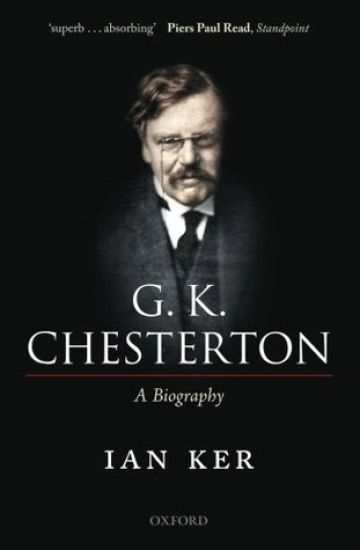
G. K. Chesterton is remembered as a brilliant creator of nonsense and satirical verse, author of the Father Brown stories and the innovative novel, The Man who was Thursday, and yet today he is not counted among the major English novelists and poets. However, this major new biography argues that Chesterton should be seen as the successor of the great Victorian prose writers, Carlyle, Arnold, Ruskin, and above all Newman. Chesterton's achievement as one of the great English literary critics has not hitherto been fully recognized, perhaps because his best literary criticism is of prose rather than poetry. Ian Ker remedies this neglect, paying particular attention to Chesterton's writings on the Victorians, especially Dickens. As a social and political thinker, Chesterton is contrasted here with contemporary intellectuals like Bernard Shaw and H. G. Wells in his championing of democracy and the masses. Pre-eminently a controversialist, as revealed in his prolific journalistic output, he became a formidable apologist for Christianity and Catholicism, as well as a powerful satirist of anti-Catholicism. This full-length life of G. K. Chesterton is the first comprehensive biography of both the man and the writer. It draws on many unpublished letters and papers to evoke Chesterton's joyful humour, his humility and affinity to the common man, and his love of the ordinary things of life.


Lent and Easter Wisdom from G.K. Chesterton
G. K. Chesterton; Thom (CON) Satterlee; Robert (CON) Moore-Jumonville
Liguori Publications,U.S.
2008
pokkari
G. K. Chesterton is one of the few Christian thinkers admired and quoted equally by Christians of all types and even by non-Christians. Each daily reflection in this book--from Ash Wednesday through the Second Sunday of Easter--begins with thoughts from the finest writings of Chesterton on an appropriate theme and supported by Scripture, a prayer, and a suggested activity for spiritual growth. View sample pages. "Paperback"
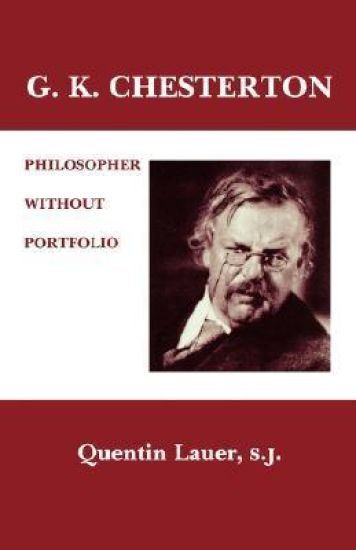
It is an indisputable fact that the credentials of Gilbert Keith Chesterton (1874–1936) were by no means those of a professional philosopher. He had no degree in the subject and he never attended a university. Nor was he widely or deeply read in the tradition of Western philosophy. He was, nonetheless, a truly philosophical thinker: convincing, persuasive, provocative, controversial. Despite all this, no one has, up to the present, devoted an entire book to the examination and analysis of his properly philosophical thinking and writing. This book attempts to range far and wide in the writings of Chesterton, perhaps even to betray him slightly by trying to systematize his thought. It is, however, not betraying Chesterton to claim that there is one central theme around which all his thinking and writing can be ordered: the theme of the grandeur of the reality of human, created in the image of God and participating in the beauty of divine creativity. His philosophy, if we want to characterize it in any one way, is a philosophy of life, of human living, with all that implies of rationality and freedom, of truth and paradox, of religion and morality, or faith and hope and love—in short, of all that makes human living spectacularly worthwhile.

Contains three of Chesterton's most influential works. In Heretics, Chesterton sets forth one of the most telling critiques of contemporary religious notions ever. The Blatchford Controversies are the spirited public debate which led to the writing of Heretics. Then in Orthodoxy, Chesterton accepts the challenge of his opponents and sets forth his own reasons for accepting the Christian Faith.
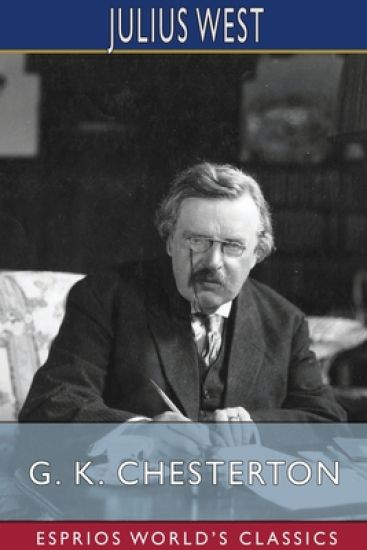
Julius West (born Julius Rappoport) (21 March 1891 - 1918) was a historian, poet, and translator who prepared a Fabian Tract on John Stuart Mill and a critical study of G. K. Chesterton. He translated Chekhov into English and produced a number of other works including a history of Chartism that was published posthumously. He travelled to Russia at the time of the 1917 revolution and saw Lenin and Trotsky speak. At the time of the British 1901 census, the family were living at Sumatra Road, Hampstead. Julius had a sister, Anne M. Rappoport. By 1911, West was living at 24 Gordon Mansions, St. Pancras, London, and his occupation was shown as "librarian and clerk student London University]". He is shown as single and working for a "political organization".
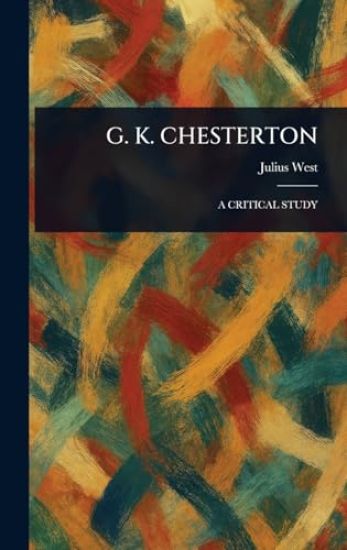

Originally published in 1939, this book was formed from the Le Bas Prize Essay for 1938. Given the relatively concise nature of the text, biographical exposition is avoided in favour of a detailed analysis of Chesterton's philosophical standpoint and literary achievements. There are seven chapters discussing the following areas: 'Background and Influences'; 'Orthodoxy and the Catholic Church'; 'Political Beliefs'; 'The Novels'; 'The Essays'; 'The Poems'; 'Style and Argument'. This book will be of value to anyone with an interest in the works of Chesterton, philosophy and literary criticism.
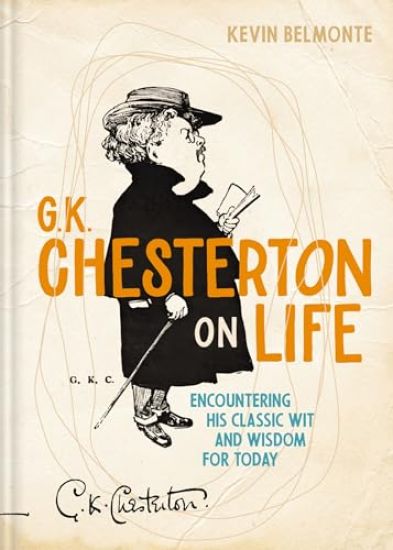
A towering figure of his era, Chesterton's exceptional intellect and deep faith allowed him to explore history, politics, economics, philosophy, theology, and the art of storytelling with unparalleled depth and wit. His classics, Heretics, Orthodoxy, and The Everlasting Man, are not just milestones in Christian thought but works that profoundly influenced thinkers like C. S. Lewis, shaping their spiritual journeys.For modern readers hungry to experience Chesterton's enduring insights, G. K. Chesterton on Life by Kevin Belmonte uncovers a treasure trove of his most potent reflections. Organized alphabetically by topic, this collection makes Chesterton's timeless truths accessible, accompanied by full original source documentation for deeper exploration.What makes this collection special?Chesterton's Witty and Wise Sayings: A handpicked selection of quotations that inspire, provoke thought, and elicit smiles with every read.Poster-Style Pages: Popular quotes presented as stunning page breaks create a collector's edition vibe, elevating the reading experience.A Meaningful Gift: Perfect for literary enthusiasts, deep thinkers, and quote collectors, this book is an ideal gift for special occasions like Christmas, birthdays, or graduations.Chesterton's words are an invitation to reflect on life's greater purpose and to delight in the beauty of wisdom and humor intertwined. Whether seeking spiritual nourishment or intellectual stimulation, this collection offers a beacon of light for anyone who yearns for truth wrapped in grace.


All Things Considered: (G.K. Chesterton Classics Collection)
G. K. Chesterton
Createspace Independent Publishing Platform
2015
nidottu