Kirjojen hintavertailu. Mukana 11 244 527 kirjaa ja 12 kauppaa.

Kirjahaku

Etsi kirjoja tekijän nimen, kirjan nimen tai ISBN:n perusteella.

1000 tulosta hakusanalla GEORGE ELIOT

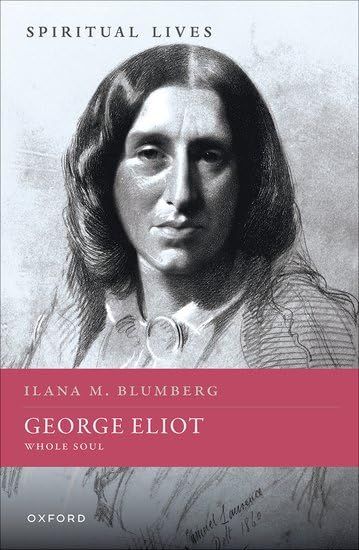
George Eliot

George Eliot

Ilana M. Blumberg

Oxford University Press
2024
sidottu
The girl who would become George Eliot began her professional writing life with a poem bidding farewell to all books but the Bible. How did a young Christian poet become the great realist novelist whose commitment to religious freethinking made her so iconoclastic that she could not be buried in in Westminster Abbey? Memorialized there today by a stone lain in the Poets' Corner in 1980, George Eliot wrote herself and her fellow Victorians through turbulent decades of moral and historical doubt in religious orthodoxy, alongside the unrelenting need to articulate a compelling modern faith in its place. Unafraid to confront the most difficult existential questions of her time, George Eliot wrote immensely popular novels that wrestled with problems whose hold has barely lessened in the last 150 years: the pervasiveness of human suffering and the injustice of its measures; the tension between fulfilling our ethical obligations to others and pursuing our own well-being; the impetus to act virtuously in this world without any guarantee of reward, and the need to make some "religion" in life, something beyond our own immediate, fluctuating desires. In this new account of George Eliot's spiritual life, George Eliot: Whole Soul, Ilana Blumberg reveals to us a writer who did not simply lose her faith once and for all on her way to becoming an adult, but devoted the full span of her career to imagining a wide religious sensibility that could inform personal and social life. As we range among Eliot's letters, essays, translations, poetry, and novels, we encounter here a writer whose extraordinary art and intellect offer us company, still today, in the search for modern meaning.
George Eliot

George Eliot

Juliette Atkinson

Oxford University Press
2025
nidottu
Very Short Introductions: Brilliant, Sharp, Inspiring George Eliot pushed the boundaries of fiction and of Victorian society. She was an extraordinary woman whose unconventional life meant that she was judged harshly by family, friends, and strangers. Eliot wanted to draw attention to the feelings and motivations of ordinary people, so that we might feel more generous towards each other. But human beings are complex, and to capture that complexity Eliot drew on an astonishing range of philosophical, psychological, and scientific ideas. She hoped her work might do good, yet she was clear-eyed about the limits of both human sympathy and the novel. In this Very Short Introduction, Juliette Atkinson explores the ideas feeding Eliot's fiction and looks at the literary techniques - such as narrative voice, genre, imagery, structure, and syntax - that she used to embody them. These shape her recurrent themes: the stifling nature of gossip, the hardships experienced by commonplace individuals, the duty of practising fellow-feeling and the difficulty of doing so. Atkinson argues that George Eliot was a social outcast who became a sage, through the creation of some of the most influential novels ever written in English. ABOUT THE SERIES: The Very Short Introductions series from Oxford University Press contains hundreds of titles in almost every subject area. These pocket-sized books are the perfect way to get ahead in a new subject quickly. Our expert authors combine facts, analysis, perspective, new ideas, and enthusiasm to make interesting and challenging topics highly readable.
George Eliot

George Eliot

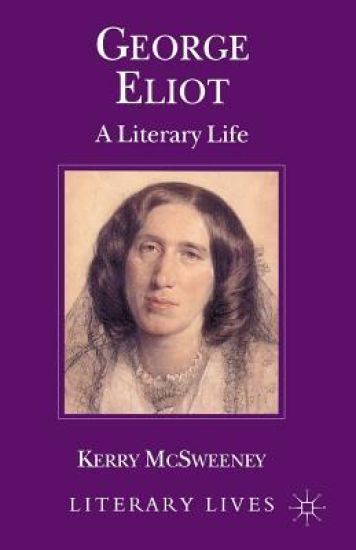
K. McSweeney

Palgrave Macmillan
1996
nidottu
George Eliot (Marian Evans) as a writer of fiction is the central theme of this literary life. The events of Eliot's formative years, together with the growth of her renowned intellect, are outlined, giving us an insight into the creative talent responsible for some of the best-known novels in the English-language. Her views on other novels and novelists are detailed and we follow the development of her craft as writer as it evolved from the faithful representation of everyday life, as in Scenes of Clerical Life, through to the more complex considerations of Middlemarch and Daniel Deronda.
George Eliot

George Eliot

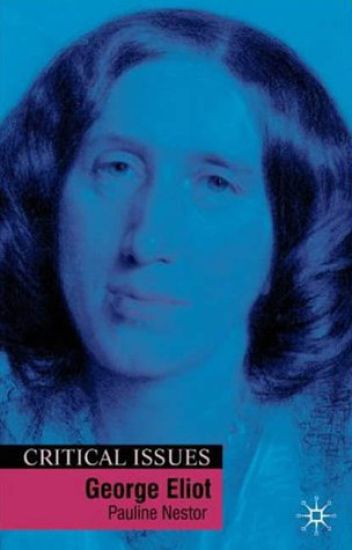
Pauline Nestor

Red Globe Press
2002
nidottu
George Eliot was one of the great thinkers of her time, a figure central to the main currents of thought and belief in the nineteenth century. Yet when this distinguished public intellectual turned to fiction writing at the age of thirty-six, she regarded it not as a lesser pursuit, but as the distillation of all of her knowledge and ideas. For Eliot, fiction enabled the consideration of life 'in its highest complexity', and had the capacity not merely to elicit, but actually to create, moral sentiment by surprising readers into the recognition of realities other than their own.In this new study, Pauline Nestor offers a challenging reassessment of Eliot's contribution to the critical debates, both of her age and of her own era. In particular, she examines the author's literary expolration of ethics, especially in relation to the negotiation of difference. Nestor argues compellingly that, through a reading of their sophisticated drama of otherness, Eliot's novels can be seen as freshly relevant to contemporary theoretical debates in feminism, moral philosophy, post-colonial studies and psychoanalysis.Covering the writer's complete body of major fiction, this is an indispensable voume for anyone studying the work of one of the most important and influential novelists of the nineteenth century.
George Eliot

George Eliot

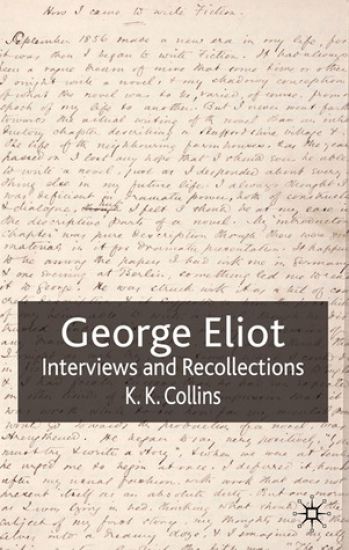
K. Collins

Palgrave Macmillan
2010
sidottu
Spanning her entire life, the fully annotated selections in this volume include well known recollections of the great Victorian novelist plus a large assortment not found in her biographies. Altogether they provide a fresh, vivid, and sometimes startling portrait of a controversial genius.
George Eliot

George Eliot

Routledge
1995
sidottu
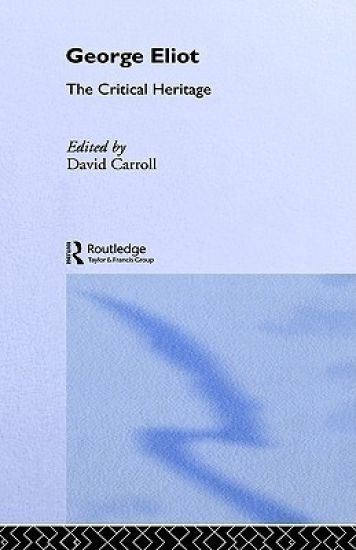
The Critical Heritage gathers together a large body of critical sources on major figures in literature. Each volume presents contemporary responses to a writer's work, enabling students and researchers to read for themselves, for example, comments on early performances of Shakespeare's plays, or reactions to the first publication of Jane Austen's novels.The carefully selected sources range from landmark essays in the history of criticism to journalism and contemporary opinion, and little published documentary material such as letters and diaries. Significant pieces of criticism from later periods are also included, in order to demonstrate the fluctuations in an author's reputation.Each volume contains an introduction to the writer's published works, a selected bibliography, and an index of works, authors and subjects.The Collected Critical Heritage set will be available as a set of 68 volumes and the series will also be available in mini sets selected by period (in slipcase boxes) and as individual volumes.
George Eliot

George Eliot

Jan Jedrzejewski

Routledge
2007
sidottu
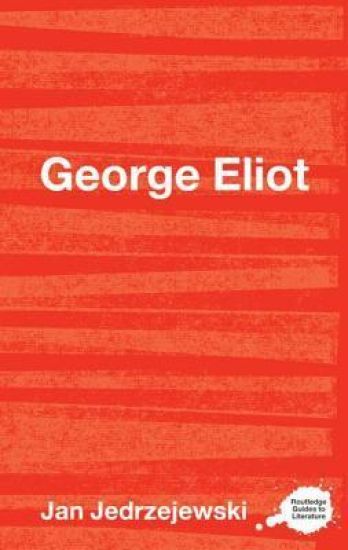
As a woman in an illegal marriage, publishing under a male pseudonym, George Eliot was one of the most successful yet controversial writers of the Victorian period. Today she is considered a key figure for women’s writing and her novels, including The Mill on the Floss and Middlemarch, are commonly ranked as literary classics.This guide to Eliot’s enduringly popular work offers:an accessible introduction to the contexts and many interpretations of Eliot’s texts, from publication to the present an introduction to key critical texts and perspectives on Eliot’s life and work, situated in a broader critical history cross-references between sections of the guide, in order to suggest links between texts, contexts and criticism suggestions for further reading. Part of the Routledge Guides to Literature series, this volume is essential reading for all those beginning detailed study of George Eliot and seeking not only a guide to her works but also a way through the wealth of contextual and critical material that surrounds them.
George Eliot

George Eliot

Jan Jedrzejewski

Routledge
2007
nidottu
As a woman in an illegal marriage, publishing under a male pseudonym, George Eliot was one of the most successful yet controversial writers of the Victorian period. Today she is considered a key figure for women’s writing and her novels, including The Mill on the Floss and Middlemarch, are commonly ranked as literary classics.This guide to Eliot’s enduringly popular work offers:an accessible introduction to the contexts and many interpretations of Eliot’s texts, from publication to the present an introduction to key critical texts and perspectives on Eliot’s life and work, situated in a broader critical history cross-references between sections of the guide, in order to suggest links between texts, contexts and criticism suggestions for further reading. Part of the Routledge Guides to Literature series, this volume is essential reading for all those beginning detailed study of George Eliot and seeking not only a guide to her works but also a way through the wealth of contextual and critical material that surrounds them.
George Eliot

George Eliot

Routledge
2009
nidottu
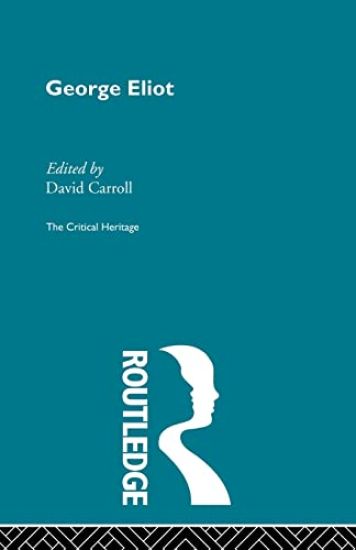
The Critical Heritage gathers together a large body of critical sources on major figures in literature. Each volume presents contemporary responses to a writer's work, enabling students and researchers to read for themselves, for example, comments on early performances of Shakespeare's plays, or reactions to the first publication of Jane Austen's novels. The carefully selected sources range from landmark essays in the history of criticism to journalism and contemporary opinion, and little published documentary material such as letters and diaries. Significant pieces of criticism from later periods are also included, in order to demonstrate the fluctuations in an author's reputation. Each volume contains an introduction to the writer's published works, a selected bibliography, and an index of works, authors and subjects. The Collected Critical Heritage set will be available as a set of 68 volumes and the series will also be available in mini sets selected by period (in slipcase boxes) and as individual volumes.
George Eliot

George Eliot

R. T. Jones

Cambridge University Press
1970
sidottu
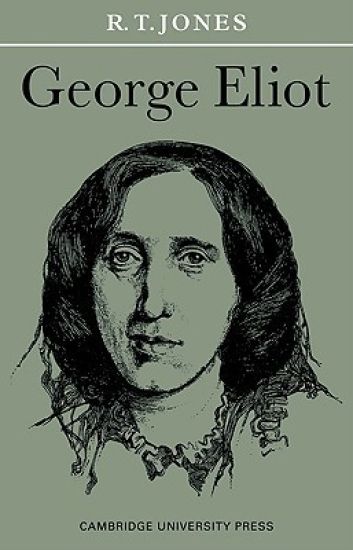
Mr Jones treats the main novels in chronological sequence examining with the aid of extensive quotation George Eliot's means of description and characterisation and the moral purpose of her fiction. He emphasises her appeal to the inner life of her readers, as exemplified in her frequent use of such phrases as 'Have we not all…' George Eliot assumes that no human act or emotion is entirely unconnected with what we have all done or felt at some time. Her sympathy with human weakness often carries her to the point where she has difficulty in reconciling her tolerance with her moral purpose. This book gives a useful introduction to George Eliot's novels. As in the other books in the series British Authors: Introductory Critical Studies, the author assesses his subject simply and clearly, using as a basis the internal evidence of the novels themselves rather than biographical detail.
George Eliot's 'Daniel Deronda' Notebooks

George Eliot's 'Daniel Deronda' Notebooks

George Eliot

Cambridge University Press
2008
pokkari
George Eliot's notebooks from the years 1872–77 contain memoranda of her reading while she was preparing for and writing Daniel Deronda, together with the 'Oriental Memoranda' and other notes she recorded in the year following the novel's publication. Above all, the notebooks reveal her acquisition of a wide range of learning about Judaism and provide insight into the creative process of integrating that learning into Daniel Deronda. One of these notebooks is published in this 1996 book; others are offered in new transcriptions. They are all presented in a form which demonstrates the intellectual coherence underlying the diversity of the memoranda: translations are provided for the notes in German, French, Italian, Greek, and Hebrew; explanatory notes are offered, and interpretative links are made to the novel; primary sources are traced and the chronology of Eliot's reading outlined.
George Eliot

George Eliot

Joan Bennett

Cambridge University Press
1948
pokkari
Mrs Bennett finds in George Eliot's work the beginnings of certain modern developments of the novel, notably her respect for unity of design, her interest in the complexity of human personality and experience and beneath a contemporary naturalism, a feeling towards symbolic presentation. Some of the moral problems implicit in the character-studies and situations best the minds of the best of her contemporaries: some are still relevant. And an awareness of moral problems - a novelist's acceptance of novel-writing as a serious and responsible job - is now characteristic of the best modern fiction. The first three chapters of Bennett's book are biographical and deal chiefly with the formative years. The remaining eight, after defining in general George Eliot's qualities as a novelist, discuss the novels one by one and illustrate the deeper aspects of their author's outlook.
George Eliot

George Eliot

R. T. Jones

Cambridge University Press
1970
pokkari
Mr Jones treats the main novels in chronological sequence examining with the aid of extensive quotation George Eliot's means of description and characterisation and the moral purpose of her fiction. He emphasises her appeal to the inner life of her readers, as exemplified in her frequent use of such phrases as 'Have we not all…' George Eliot assumes that no human act or emotion is entirely unconnected with what we have all done or felt at some time. Her sympathy with human weakness often carries her to the point where she has difficulty in reconciling her tolerance with her moral purpose. This book gives a useful introduction to George Eliot's novels. As in the other books in the series British Authors: Introductory Critical Studies, the author assesses his subject simply and clearly, using as a basis the internal evidence of the novels themselves rather than biographical detail.
George Eliot's 'Daniel Deronda' Notebooks

George Eliot's 'Daniel Deronda' Notebooks

George Eliot

Cambridge University Press
1996
sidottu
George Eliot's notebooks from the years 1872–77 contain memoranda of her reading while she was preparing for and writing Daniel Deronda, together with the 'Oriental Memoranda' and other notes she recorded in the year following the novel's publication. Above all, the notebooks reveal her acquisition of a wide range of learning about Judaism and provide insight into the creative process of integrating that learning into Daniel Deronda. One of these notebooks is published in this 1996 book; others are offered in new transcriptions. They are all presented in a form which demonstrates the intellectual coherence underlying the diversity of the memoranda: translations are provided for the notes in German, French, Italian, Greek, and Hebrew; explanatory notes are offered, and interpretative links are made to the novel; primary sources are traced and the chronology of Eliot's reading outlined.
The Journals of George Eliot

The Journals of George Eliot

George Eliot

Cambridge University Press
1999
sidottu
The Journals of George Eliot publishes for the first time the entire text of the surviving journals of the great Victorian novelist, and constitutes a new text by her - the closest she came to autobiography. The journals span her life from 1854, when she entered into a common-law union with George Henry Lewes, to her death in 1880, revealing the professional writer George Eliot as well as the remarkable woman Marian Evans. Many aspects of her writing life are illuminated, such as the separation of ‘George Eliot’ - and the account of her work’s public reception - from her ‘private’ self, at the time she began to write fiction. The journals present a George Eliot of many moods, not only the serious sybilline figure so admired in her later years. The edition’s extensive apparatus includes a chronology, introduction, headnotes to each diary, and an annotated index supplying valuable contextual and explanatory information.
The Journals of George Eliot

The Journals of George Eliot

George Eliot

Cambridge University Press
2000
pokkari
The Journals of George Eliot publishes for the first time the entire text of the surviving journals of the great Victorian novelist, and constitutes a new text by her - the closest she came to autobiography. The journals span her life from 1854, when she entered into a common-law union with George Henry Lewes, to her death in 1880, revealing the professional writer George Eliot as well as the remarkable woman Marian Evans. Many aspects of her writing life are illuminated, such as the separation of ‘George Eliot’ - and the account of her work’s public reception - from her ‘private’ self, at the time she began to write fiction. The journals present a George Eliot of many moods, not only the serious sybilline figure so admired in her later years. The edition’s extensive apparatus includes a chronology, introduction, headnotes to each diary, and an annotated index supplying valuable contextual and explanatory information.