Kirjojen hintavertailu. Mukana 11 244 527 kirjaa ja 12 kauppaa.

Kirjahaku

Etsi kirjoja tekijän nimen, kirjan nimen tai ISBN:n perusteella.

1000 tulosta hakusanalla Gabor Palos

Simplified Lindy Hop for Men

Simplified Lindy Hop for Men

Gabor Palos

Gabor Palos
2024
pokkari
A practical guide for learning the leader's part of the swing dance known as Lindy Hop. Includes information on swing music and swing dancing, description of basic and intermediate 8-count and 6-count steps, Charleston steps, break steps and footwork variations, dancing to fast and slow music, tips on learning to dance, group classes, practicing and social dancing. It will greatly add to your understanding of Lindy Hop and help you move along the learning curve. Read it before your first Lindy class.
Simplified Balboa for Men

Simplified Balboa for Men

Gabor Palos

Gabor Palos
2024
pokkari
This book is a practical guide for learning the leader's part of the fast and smooth swing dance called Balboa. Includes description of common steps, tips on learning, practising and social dancing. It will greatly add to your understanding of swing dancing and help you along your learning curve. Read it before you go to your first Balboa class.
Israelis, Palästinenser und Deutsche in Berlin

Israelis, Palästinenser und Deutsche in Berlin

Sa’ed Atshan; Katharina Galor

De Gruyter
2021
isokokoinen pokkari
Berlin ist die Heimat der größten palästinensischen Diasporagemeinschaft Europas und einer der größten israelischen Diasporagemeinschaften der Welt. Sa'ed Atshan und Katharina Galor untersuchen in diesem Buch die asymmetrischen Erfahrungen dieser beiden Gruppen. Die Erfahrungen werden in Bezug auf deutsche offizielle Positionen und Diskurse analysiert, insbesondere im Hinblick auf Fragen von Vergangenheitsbewältigung. Die tief empfundene Schuld des Holocaust, der Kampf gegen Antisemitismus und die außergewöhnlichen Beziehungen Deutschlands zum israelischen Staat sind einige der Faktoren, die die besondere Behandlung der Israelis in Deutschland erklären. Palästinenser berichten dagegen von verschiedenen Formen der Zensur. Die palästinensische Diaspora befindet sich in einer prekären Lage in einem Klima von um sich greifendem Rassismus in Deutschland. Gleichzeitig konnten viele Palästinenser sich mit erheblichem Sozialkapital ein neues Leben in Berlin aufbauen. Das Buch beleuchtet die unterschiedlichen Erfahrungen von Israelis und Palästinensern in Berlin und diskutiert die vielfältigen Auswirkungen des moralischen Dreiecks zwischen Deutschen, Israelis und Palästinensern. „[…] ein außerordentliches Buch, in jeder Hinsicht ungewöhnlich: Sehr persönlich, altmodisch investigativ (eine Art archäologisch- soziologische Tiefengrabung), und von moralischer Wucht.“ Michael Naumann, Rektor, Barenboim-Said Akademie „Sa’ed Atshan und Katharina Galor führen reichhaltige und seltene Dialoge – miteinander und mit ihren Informanten – und kommen dadurch zu einer Neudefinition des ‚moralischen Dreiecks‘ zwischen Palästinensern, Juden und Deutschen, während alle Beteiligten in Berlin agieren, reagieren, interagieren, sich widersetzen und sich aussöhnen." Homi K. Bhabha, Anne F. Rothenberg Professor of the Humanities, Harvard University
Gabor Szilasi

Gabor Szilasi

Gabor Szilasi

McGill-Queen's University Press
1997
nidottu
Premiere anthologie consacree au travail du photographe montrealais Gabor Szilasi, cette publication retrospective retrace l'evolution d'un artiste et de son regard. Depuis son emigration de la Hongrie en 1957, Szilasi est devenu un pionnier de la photographie d'art au Quebec. Ses descriptions des gens et de leur mode de vie offre un temoignage visuel unique sur la vie contemporaine. L'ouvrage compte plus de quatre-vingt-dix reproductions en deux tons et en couleurs des oeuvres de Szilasi, dont ses celebres etudes sur la Beauce, Charlevoix et d'autres regions du Quebec. On trouvera egalement une collection de photographies de rue et de portraits realises a Montreal, une serie recente de portraits feminins au polaroid, ainsi qu'un choix de photographies realisees en Hongrie, en Italie et en Pologne. L'ouvrage comprend un essai critique de l'historien de l'art David Harris sur le travail de Szilasi, de meme qu'une chronologie et une bibliographie detaillees.
Gabor Analysis and Algorithms

Gabor Analysis and Algorithms

Birkhauser Boston Inc
1997
sidottu
In his paper Theory of Communication [Gab46], D. Gabor proposed the use of a family of functions obtained from one Gaussian by time-and frequency­ shifts. Each of these is well concentrated in time and frequency; together they are meant to constitute a complete collection of building blocks into which more complicated time-depending functions can be decomposed. The application to communication proposed by Gabor was to send the coeffi­ cients of the decomposition into this family of a signal, rather than the signal itself. This remained a proposal-as far as I know there were no seri­ ous attempts to implement it for communication purposes in practice, and in fact, at the critical time-frequency density proposed originally, there is a mathematical obstruction; as was understood later, the family of shifted and modulated Gaussians spans the space of square integrable functions [BBGK71, Per71] (it even has one function to spare [BGZ75] . . . ) but it does not constitute what we now call a frame, leading to numerical insta­ bilities. The Balian-Low theorem (about which the reader can find more in some of the contributions in this book) and its extensions showed that a similar mishap occurs if the Gaussian is replaced by any other function that is "reasonably" smooth and localized. One is thus led naturally to considering a higher time-frequency density.
Gabor Peterdi: Twenty-Five Years of His Prints, 1934-1959
Gabor Peterdi: Twenty-Five Years Of His Prints, 1934-1959 is a book written by Una E. Johnson that provides a comprehensive overview of the work of Hungarian-American artist Gabor Peterdi. The book covers a period of twenty-five years, from 1934 to 1959, during which Peterdi produced a significant body of work in printmaking.The book features a collection of Peterdi's prints, including etchings, aquatints, and lithographs, accompanied by detailed descriptions and analysis of each piece. The author also provides a biography of Peterdi, tracing his artistic development and exploring the influences that shaped his work.In addition to the prints themselves, the book also includes essays by prominent art critics and historians, offering insights into Peterdi's contributions to the world of printmaking and his place in the broader context of modern art.Overall, Gabor Peterdi: Twenty-Five Years Of His Prints, 1934-1959 is a valuable resource for anyone interested in the work of this important artist, as well as for scholars and students of modern art and printmaking.This scarce antiquarian book is a facsimile reprint of the old original and may contain some imperfections such as library marks and notations. Because we believe this work is culturally important, we have made it available as part of our commitment for protecting, preserving, and promoting the world's literature in affordable, high quality, modern editions, that are true to their original work.
Gabor Szegö: Collected Papers

Gabor Szegö: Collected Papers

Gabor P. Szegö

Springer-Verlag New York Inc.
2011
nidottu
1. 1. Definition of L-forms. In the years 1907-1911 O. Toeplitz [21, 22, 23, 24]* studied a class of quadratic forms whose matrix is of the follO\\"ing type: (Ll) C-2 C_I Co C-n-I Cn-I The elements Cn are given complex constants. Toeplitz designated these forms as L-forms and investigated in detail their relation to the analytic function defined in a neighborhood of the unit circle by the Laurent series 2; C z", n = n - 00, . . . , 00; this series is assumed to be convergent in a certain circular ring rl
Gabor Analysis and Algorithms

Gabor Analysis and Algorithms

Springer-Verlag New York Inc.
2012
nidottu
In his paper Theory of Communication [Gab46], D. Gabor proposed the use of a family of functions obtained from one Gaussian by time-and frequency­ shifts. Each of these is well concentrated in time and frequency; together they are meant to constitute a complete collection of building blocks into which more complicated time-depending functions can be decomposed. The application to communication proposed by Gabor was to send the coeffi­ cients of the decomposition into this family of a signal, rather than the signal itself. This remained a proposal-as far as I know there were no seri­ ous attempts to implement it for communication purposes in practice, and in fact, at the critical time-frequency density proposed originally, there is a mathematical obstruction; as was understood later, the family of shifted and modulated Gaussians spans the space of square integrable functions [BBGK71, Per71] (it even has one function to spare [BGZ75] . . . ) but it does not constitute what we now call a frame, leading to numerical insta­ bilities. The Balian-Low theorem (about which the reader can find more in some of the contributions in this book) and its extensions showed that a similar mishap occurs if the Gaussian is replaced by any other function that is "reasonably" smooth and localized. One is thus led naturally to considering a higher time-frequency density.
Gabor Szilasi

Gabor Szilasi

McCord Museum of Canadian History
2019
sidottu
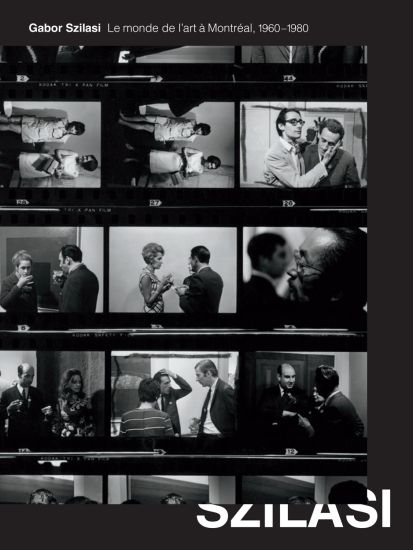
Né en 1928 en Hongrie, Gabor Szilasi est l'un des photographes vivants les plus connus du Québec. Peu après s'être établi à Montréal en 1959, Szilasi commence à photographier les nombreux vernissages d'expositions artistiques auxquels il assiste avec sa femme, l'artiste Doreen Lindsay. Pendant plus de deux décennies, il produit de vastes archives photographiques des personnages constituant la communauté montréalaise des arts visuels, dont un certain nombre va façonner l'histoire de l'art au Canada. Prolongement d'une exposition solo des photographies de Szilasi au Musée McCord en 2017, cet ouvrage renferme trois essais, une entrevue et plus d'une centaine d'images qui saisissent, avec la franchise, la perspicacité et l'esprit caractéristiques du photographe, certains des changements radicaux qu'a connus le monde de l'art à Montréal au cours des années 1960 et 1970. La remarquable collection de travaux de Szilasi - environ 3 600 négatifs en tout - offre un rare aperçu de la vie sociale des artistes canadiens au cours d'une période de grande effervescence et de possibilités de création exceptionnelles. Gabor Szilasi : Le monde de l'art à Montréal, 1960-1980 invite à réfléchir sur les gains et les pertes réalisés depuis lors. Mises en lumière plus de cinquante ans après avoir été fixées sur pellicule, les images présentées dans ce livre révèlent la place centrale occupée par l'un des principaux photographes du Canada dans le milieu auquel il s'identifie.
Gabor Szilasi

Gabor Szilasi

Zoë Tousignant

McCord Museum of Canadian History
2019
sidottu
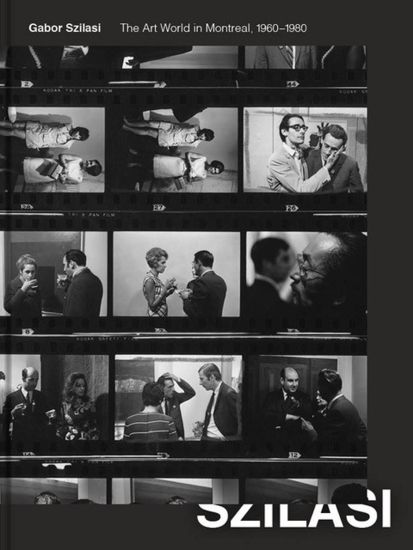
Born in Hungary in 1928, Gabor Szilasi is one of Quebec's best-known living photographers. Soon after settling in Montreal in 1959, Szilasi began photographing the many art openings that he regularly attended with his wife, artist Doreen Lindsay. Over the next two decades he produced an extensive photographic record of the individuals who comprised Montreal's visual arts community, a number of whom would shape the history of art in Canada. Expanding on a solo exhibition of Szilasi's photographs that took place at the McCord Museum in 2017, the book features three essays, an interview, and over one hundred images that capture, with characteristic candour, perspicacity, and wit, some of the radical changes that affected Montreal's art world throughout the 1960s and 1970s. Szilasi's significant body of work - totalling approximately 3,600 negatives - provides a rare look at the social lives of Canadian artists during a time of great effervescence and creative possibility. Gabor Szilasi: The Art World in Montreal invites reflection on what has since been lost and gained. Brought to light over fifty years after they were taken, the images featured in this book reveal the centrality of one of Canada's leading photographers to the milieu he calls home.