Kirjojen hintavertailu. Mukana 11 342 296 kirjaa ja 12 kauppaa.

Kirjahaku

Etsi kirjoja tekijän nimen, kirjan nimen tai ISBN:n perusteella.

1000 tulosta hakusanalla Gabriela Totti

A Desobediência Civil como Direito Fundamental

A Desobediência Civil como Direito Fundamental

Gabriela Totti

Novas Edicoes Academicas
2018
pokkari
O presente livro visa abordar o tema da desobedi ncia civil a luz da Constitui o Federal Brasileira de 1988, tendo por objetivo de constatar a possibilidade de reconhecer este instituto como sendo um Direito Fundamental impl cito em decorr ncia da cl usula aberta contida no artigo 5 , par grafo segundo da pr pria Constitui o Federal. Buscar-se- demonstrar a legitimidade da desobedi ncia civil por meio desta abertura constitucional, a qual permite o reconhecimento de outros direitos e garantias que n o estejam de maneira expl cita na Carta Magna. Para que seja poss vel alcan ar este objetivo foram escolhidos os princ pios do Estado Democr tico de Direito, Soberania Popular e Cidadania, sendo estes os princ pios aptos a fundamentar o reconhecimento da desobedi ncia civil como um Direito Fundamental impl cito.
Ziviler Ungehorsam als Grundrecht

Ziviler Ungehorsam als Grundrecht

Gabriela Totti

Verlag Unser Wissen
2024
pokkari
Dieses Buch befasst sich mit der Frage des zivilen Ungehorsams im Lichte der brasilianischen Bundesverfassung von 1988, mit dem Ziel, die M glichkeit der Anerkennung dieses Instituts als implizites Grundrecht aufgrund der in Artikel 5, zweiter Absatz der Bundesverfassung selbst enthaltenen ffnungsklausel zu berpr fen. Ziel ist es, die Legitimit t des zivilen Ungehorsams durch diese verfassungsrechtliche ffnung aufzuzeigen, die die Anerkennung anderer Rechte und Garantien erm glicht, die in der Magna Carta nicht ausdr cklich genannt sind. Um dieses Ziel zu erreichen, wurden die Prinzipien des demokratischen Rechtsstaates, der Volkssouver nit t und der Staatsb rgerschaft ausgew hlt, da dies die Prinzipien sind, die die Anerkennung des zivilen Ungehorsams als implizites Grundrecht unterst tzen k nnen.
Civil Disobedience as a Fundamental Right

Civil Disobedience as a Fundamental Right

Gabriela Totti

Our Knowledge Publishing
2024
pokkari
This book aims to address the issue of civil disobedience in the light of the Brazilian Federal Constitution of 1988, with the objective of verifying the possibility of recognising this institute as an implicit Fundamental Right as a result of the open clause contained in article 5, second paragraph of the Federal Constitution itself. The aim is to demonstrate the legitimacy of civil disobedience through this constitutional opening, which allows for the recognition of other rights and guarantees that are not explicitly stated in the Magna Carta. In order to achieve this objective, the principles of the Democratic State of Law, Popular Sovereignty and Citizenship were chosen, as these are the principles that can support the recognition of civil disobedience as an implicit Fundamental Right.
La désobéissance civile comme droit fondamental

La désobéissance civile comme droit fondamental

Gabriela Totti

Editions Notre Savoir
2024
pokkari
Ce livre a pour but d'aborder la question de la d sob issance civile la lumi re de la Constitution f d rale br silienne de 1988, dans le but de v rifier la possibilit de reconna tre cet institut comme un droit fondamental implicite en raison de la clause ouverte contenue dans l'article 5, deuxi me paragraphe de la Constitution f d rale elle-m me. Il s'agit de d montrer la l gitimit de la d sob issance civile travers cette ouverture constitutionnelle, qui permet de reconna tre d'autres droits et garanties qui ne sont pas explicitement nonc s dans la Magna Carta. Pour atteindre cet objectif, les principes de l' tat de droit d mocratique, de la souverainet populaire et de la citoyennet ont t choisis, car ce sont les principes qui peuvent soutenir la reconnaissance de la d sob issance civile en tant que droit fondamental implicite.
La disobbedienza civile come diritto fondamentale
Questo libro si propone di affrontare il tema della disobbedienza civile alla luce della Costituzione federale brasiliana del 1988, con l'obiettivo di verificare la possibilit di riconoscere questo istituto come un Diritto fondamentale implicito per effetto della clausola aperta contenuta nell'articolo 5, secondo comma, della stessa Costituzione federale. L'obiettivo quello di dimostrare la legittimit della disobbedienza civile attraverso questa apertura costituzionale, che consente il riconoscimento di altri diritti e garanzie non esplicitati nella Magna Charta. Per raggiungere questo obiettivo, sono stati scelti i principi dello Stato democratico di diritto, della sovranit popolare e della cittadinanza, in quanto sono i principi che possono sostenere il riconoscimento della disobbedienza civile come diritto fondamentale implicito.
Ariskopi : en bok om och till Aris Fioretos

Ariskopi : en bok om och till Aris Fioretos

Paul Auster; Anna Bengtsson; Magnus Bergh; Mats Bigert; Lars Bergström; Daniel Birnbaum; Mircea Cartarescu; Love Derwinger; Kjell Espmark; Magnus Florin; Jörgen Gassilewski; Durs Grünbein; Gunnar D. Hansson; Gabriel Itkes-Sznap; Elfriede Jelinek; Stefan Jonsson; Mara Lee; Claudia Lindén; Arne Melberg; Lothar Müller; Ernst Osterkamp; Daniel Pedersen; Håkan Rehnberg; Mikael van Reis; Monika Rinck; Hans Ruin; Cecilia Sjöholm; Sophie Tottie; Jan Wagner; Sven-Olov Wallenstein; Ola Wallin; Magnus William-Olsson

Ersatz
2021
nidottu
En bok om och till Aris Fioretos. Redaktör Cecilia SjöholmRedaktörsassistent Astrid GrelzOmslag Håkan LiljemärkerBegränsad upplaga: 250 exemplar Medverkande:Paul Auster Anna Bengtsson Magnus Bergh Bigert & Bergström Daniel Birnbaum Mirces Cartarescu Love Derwinger Kjell Espmark Magnus Florin Jörgen Gassilewski Durs Grünbein Gunnar D. Hansson Gabriel Itkes-SznapElfriede Jelinek Stefan Jonsson Mara Lee Claudia Lindén Arne Melberg Lothar Müller Ernst Osterkamp Daniel Pedersen Håkan Rehnberg Mikael van Reis Monika Rinck Hans Ruin Cecilia Sjöholm Sophie Tottie Jan Wagner Sven-Olov Wallenstein Ola Wallin Magnus William-Olsson
Gabriela

Gabriela

Jorge Amado

Bloomsbury Publishing PLC
2005
pokkari
When Gabriela came to the Brazilian town of Ilheus, things would never be the same again In 1925, the town's cacao plantations are flourishing and progress reigns, but Nacib the Arab's most desperate worry is that his cook has walked out of his bar. He ventures over to the market to hire a migrant worker to help him and comes across a young mulatto girl named Gabriela who is wild and has hair filthy with dust. But something in her voice makes him take a chance, and it seems he's not the only man who's noticed her. Suddenly there is more to think about than everyday concerns: love affairs, murder, banquets, funerals, desire, hatred, vengeance and miracles.
Gabriela

Gabriela

Greg Crane

Createspace Independent Publishing Platform
2012
nidottu
In Gabriela, readers learn that the torch of Mafia leadership in the Paterlini family has been passed to Gabriel Paterlini's daughter and approved by his brothers Raphael and Angelo. To make her "bones", Gabriela embvarks on a mission to Greece to recover a fleet of ships owned by a woman, Zoi Agne, which were confiscated on the high seas by the Greek prime minister for the value of its cargo. A tale of intrigue, ruthlessness, and murder ensues.
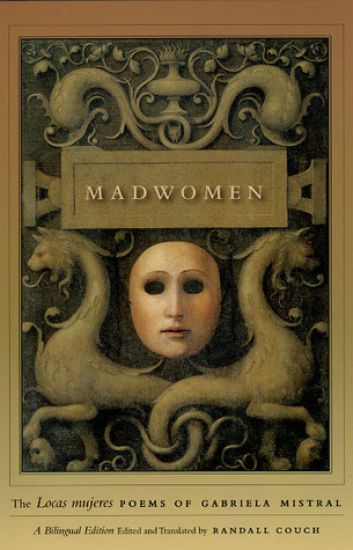
Madwomen – The "Locas mujeres" Poems of Gabriela Mistral, a Bilingual Edition

Madwomen – The "Locas mujeres" Poems of Gabriela Mistral, a Bilingual Edition

Gabriela Mistral; Randall Couch

University of Chicago Press
2009
nidottu
Gabriela Mistral (1889-1957) is one of the most important and enigmatic figures in twentieth-century Latin American literature. The Locas mujeres poems collected here are among Mistral's most complex and compelling, exploring facets of the self in extremis - poems marked by the wound of blazing catastrophe and its aftermath of mourning. Madwomen promises to reveal a profound poet to a new generation while reacquainting Spanish readers with a stranger, more complicated 'madwoman' than most have ever known.
Gabriela, Clove and Cinnamon

Gabriela, Clove and Cinnamon

Jorge Amado

VINTAGE
2006
nidottu
Ilh us in 1925 is a booming town with a record cacao crop and aspirations for progress, but the traditional ways prevail. When Colonel Mendon a discovers his wife in bed with a lover, he shoots and kills them both. Political contests, too, can be settled by gunshot... No one imagines that a bedraggled migrant worker who turns up in town-least of all Gabriela herself-will be the agent of change. Nacib Saad has just lost the cook at his popular caf and in desperation hires Gabriela. To his surprise she turns out to be a great beauty as well as a wonderful cook and an enchanting boon to his business. But what would people say if Nacib were to marry her? Lusty, satirical and full of intrigue, Gabriela, Clove and Cinnamon is a vastly entertaining panorama of small town Brazilian life.
Gabriela and His Grace

Gabriela and His Grace

Liana De la Rosa

Little, Brown Book Group
2025
pokkari
The final story in a brand-new historical romance series, The Luna Sisters, featuring three intrepid Mexican heiresses who take London Society by storm as they find their happily ever afters.
Gabriela Mistral's Struggle with God and Man

Gabriela Mistral's Struggle with God and Man

Martin C. Taylor

McFarland Co Inc
2012
pokkari
Chilean poet, educator, diplomat, and feminist Gabriela Mistral (1889-1957) rose from poverty in the foothills of the Andes to become the first Latin American to win the Nobel Prize in Literature in 1945. This volume provides both a detailed biography of the author and a careful analysis of her writing. Chronicling the personal, psychological, and social currents of Mistral's life and times, it addresses such topics as her finances, illness, and sexuality. Literary analysis considers the sacred and secular influences on Mistral's oevre, including Catholicism, the Hebraic tradition, Theosophy, and Buddhism. By recounting Mistral's intelligence and perseverance in overcoming her life's obstacles to reach the pinnacle of her field, this book establishes her as a model for Chileans and for humanity.
Gabriela Mistral's Letters to Doris Dana

Gabriela Mistral's Letters to Doris Dana

University of New Mexico Press
2018
sidottu
The Nobel Prize–winning poet Gabriela Mistral is celebrated by her native Chile as the “mother of the nation” even though she spent most of her life in Mexico, Europe, and the United States. Throughout the Spanish-speaking world and especially in Chile, Mistral was characterized as a sad, traditionally Catholic spinster. Yet her voluminous correspondence with Doris Dana, long believed to be her secretary, reveals that the two women were lovers from 1948 until Mistral’s death in 1957. These letters, published in Spanish in 2010 and now translated for the first time into English, provide insight into her work as a poet and illuminate her perspectives on politics, especially war and human rights. The correspondence also sheds light on the poet’s personal life and corrects the long-standing misperceptions of her as a lonely, single, heterosexual woman.
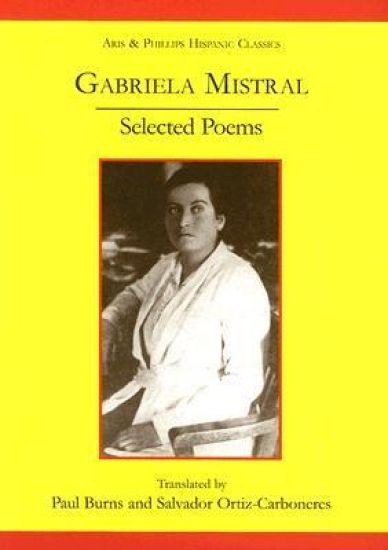
Gabriela Mistral: Selected Poems

Gabriela Mistral: Selected Poems

Salvador Ortiz-Carboneres; Paul Burns

Aris Phillips Ltd
2006
sidottu
Gabriela Mistral (1889-1967), Chile's 'other' great poet of the twentieth century, is little known outside the Spanish-speaking world, and unlike Pablo Neruda has not been extensively translated into English. She deserves better, particularly as the first Latin American recipient of the Nobel Prize for Literature (1945), and this selection of her poetry is designed to introduce her to an English-speaking public. Born Lucila Godoy Alcayaga in the Elqui valley in the 'little north' of Chile, she became a schoolteacher at the age of fifteen and went on to become an educator of international renown, an architect of educational reform in Mexico, and a cultural administrator at the League of Nations. She began publishing prose and verse pieces in newspapers and reviews at about the same age. Four major collections of her poems were published in her lifetime: Desolacion (Desolation) in 1922, Ternura (Tenderness) in 1924, Tala (Felling) in 1938, and Lagar (Wine Press) in 1954, followed by Poema de Chile published after her death. Poems from each of these five collections are included here. The landscape and people of her native Chile are a constant theme in her work, even though she lived most of her adult life away from Chile, largely as a consul - unpaid for many years - in Europe, Brazil, and the U.S.A., where she died. Her great love of children, who were the main preoccupation of her life and whom she both understood and respected; motherhood, and her lack of it; loss of people she loved; religious faith, tested and at times unorthodox, are other abiding themes. Her language is direct, passionate, rooted in local usage. The whole of her work, in prose as well as in verse, is a reflection of the absolute integrity of her life.
Gabriela Mistral: Selected Poems

Gabriela Mistral: Selected Poems

Salvador Ortiz-Carboneres; Paul Burns

Aris Phillips Ltd
2006
nidottu
Gabriela Mistral (1889-1967), Chile's 'other' great poet of the twentieth century, is little known outside the Spanish-speaking world, and unlike Pablo Neruda has not been extensively translated into English. She deserves better, particularly as the first Latin American recipient of the Nobel Prize for Literature (1945), and this selection of her poetry is designed to introduce her to an English-speaking public. Born Lucila Godoy Alcayaga in the Elqui valley in the 'little north' of Chile, she became a schoolteacher at the age of fifteen and went on to become an educator of international renown, an architect of educational reform in Mexico, and a cultural administrator at the League of Nations. She began publishing prose and verse pieces in newspapers and reviews at about the same age. Four major collections of her poems were published in her lifetime: Desolacion (Desolation) in 1922, Ternura (Tenderness) in 1924, Tala (Felling) in 1938, and Lagar (Wine Press) in 1954, followed by Poema de Chile published after her death. Poems from each of these five collections are included here. The landscape and people of her native Chile are a constant theme in her work, even though she lived most of her adult life away from Chile, largely as a consul - unpaid for many years - in Europe, Brazil, and the U.S.A., where she died. Her great love of children, who were the main preoccupation of her life and whom she both understood and respected; motherhood, and her lack of it; loss of people she loved; religious faith, tested and at times unorthodox, are other abiding themes. Her language is direct, passionate, rooted in local usage. The whole of her work, in prose as well as in verse, is a reflection of the absolute integrity of her life.
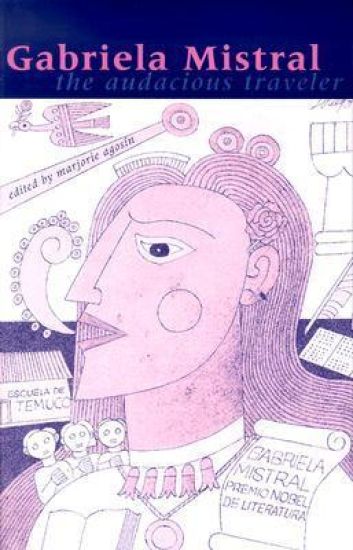
Gabriela Mistral

Gabriela Mistral

Ohio University Press
2003
pokkari
Gabriela Mistral is the only Latin American woman writer to be awarded the Nobel Prize in Literature. Even so, her extraordinary achievements in poetry, narrative, and political essays remain largely untold. Gabriela Mistral: The Audacious Traveler explores boldly and thoughtfully the complex legacy of Mistral and the way in which her work continues to define Latin America. Edited by Professor Marjorie Agosín, Gabriela Mistral: The Audacious Traveler addresses for the first time the vision that Mistral conveyed as a representative of Chile during the drafting of the United Nations Human Rights Declaration. It depicts Mistral as a courageous social activist whose art and writings against fascism reveal a passionate voice for freedom and justice. The book also explores Mistral's Pan-American vision and her desire to be part of a unified American hemisphere as well as her concern for the Caribbean and Brazil. Readers will learn of her sojourn in Brazil, her turbulent years as consul in Madrid, and, finally, her last days on Long Island. Students of her poetry, as well as general readers, will find Gabriela Mistral: The Audacious Traveler an insightful collection dedicated to the life and work of an inspiring and original artist. The contributors are Jonathan Cohen, Joseph R. Slaughter, Verónica Darer, Patricia Varas, Eugenia Muñoz, Darrell B. Lockhart, Ivonne Gordon Vailakis, Santiago Daydí-Tolson, Diana Anhalt, Ana Pizarro, Randall Couch, Patricia Rubio, Elizabeth Horan, Emma Sepúlveda, Luis Vargas Saavedra, and Marie-Lise Gazarian-Gautier.
Gabriela's Dance Recital / El recital de danza de Gabriela
Gabriela's Dance Recital / El recital de danza de Gabriela is a bilingual (English / Spanish) picture book. It stars Gabriela, a young ballerina who is nervous about her upcoming dance recital. When Gabriela explains her fears about the recital to her family, they help calm her nerves and prepare her for the performance. This multicultural children's book, which features a bilingual, biracial family, is relatable for any young dancer. Readers will take away age-appropriate relaxation techniques and sports psychology tactics from the story, which they can employ when facing their own fears.This ballet book for girls was adapted from the award-winning, bilingual personalized children's book Dance Recital / El recital de danza. The personalized book won two International Latino Book Awards, a National Indie Excellence Award, and a Moonbeam Children's Book Award.This 32-page, fully illustrated, hardcover storybook was written in English and Spanish by Jill Barletti and illustrated by Jelena Brezovec. Both Gabriela's Dance Recital and Dance Recital are published by Snowflake Stories, LLC.